

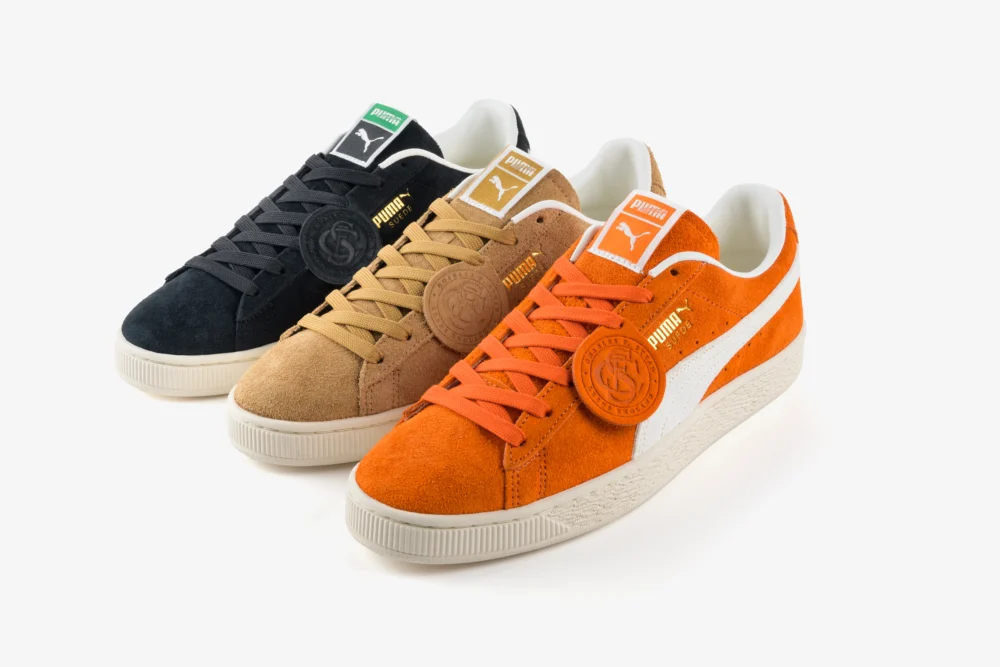
The iconic leaping cat of Herzogenaurach is currently navigating one of the most turbulent periods in its modern history. Puma, the world’s third-largest sportswear manufacturer, concluded its 2025 fiscal year on a somber note, reporting a significant contraction in sales and a bottom line that has swung deep into the red. While the headline figures—highlighted by a staggering 20.1% currency-adjusted drop in fourth-quarter revenue—are jarring, they represent the painful opening chapters of a deliberate "strategic reset" orchestrated by Chief Executive Officer Arthur Hoeld. As the brand attempts to strip away years of over-commercialization and heavy discounting, the road to recovery appears long, with the company warning stakeholders that 2026 will be yet another "year of transition" before any meaningful growth returns in 2027.
The financial data released in Berlin paints a picture of a brand in the midst of a controlled burn. For the full year of 2025, Puma’s annual sales retreated to 7.29 billion euros, an 8.1% decline in currency-adjusted terms compared to the 8.39 billion euros recorded in 2024. While these figures were marginally better than the direst market consensus, they underscore the magnitude of the challenge facing Hoeld, who inherited a brand that had arguably lost its premium luster in favor of chasing volume. The collapse was most acute in the final three months of the year, where sales plummeted to 1.56 billion euros. This 20.1% Q4 decline was not merely a byproduct of weak consumer sentiment but a direct result of management’s decision to aggressively "clean up" the marketplace.
Arthur Hoeld, a veteran of the sportswear industry who spent over a quarter-century at Puma’s cross-town rival Adidas, took the helm in July 2025. His tenure has been defined by a "medicine-first" approach. Upon his arrival, Hoeld diagnosed Puma with a chronic dependency on promotional activity and a bloated product portfolio that lacked the sharp, performance-oriented edge of its competitors. "Puma has become too commercial, overexposed in the wrong channels, with too many discounts," Hoeld told industry analysts and journalists. His remedy has been swift and surgical: taking back unsold stock from retailers, slashing the number of stock-keeping units (SKUs), and reducing the brand’s presence in "down-market" discount channels that erode brand equity.
This "cleaning up" process has come at a significant human and financial cost. As part of a broader corporate streamlining, Puma is in the process of cutting approximately 1,400 corporate roles globally. These layoffs are intended to create a more agile organization, but they also reflect the grim reality of a company that is shrinking to eventually grow. The financial impact of these moves is most visible in the company’s earnings before interest and taxes (EBIT). In 2024, Puma was a profitable enterprise, boasting an EBIT of nearly 550 million euros. By the end of 2025, that figure had inverted into a massive loss, with EBIT falling to minus 357.2 million euros. Although this loss was slightly narrower than the most pessimistic analyst projections, it marks a stark departure from the brand’s historically steady performance.
Geographically, no corner of the globe was spared from the downturn. The Americas, once a primary engine of growth for Puma, saw the most dramatic full-year decline, with sales sliding by 10%. North America remains a particularly thorny problem for the brand. The region has become a battlefield of high inventory levels and aggressive price-slashing, a cycle Puma is desperately trying to exit. By limiting supply and pulling back from wholesalers who rely on deep discounts, Puma is sacrificing short-term revenue to regain its status as a premium lifestyle and performance brand.
In Europe, the Middle East, and Africa (EMEA), Puma’s home turf, currency-adjusted sales fell by 6.9%. Meanwhile, the Asia Pacific (APAC) region saw a 7.4% decrease. However, the narrative in Asia took a dramatic turn in January when the Chinese sportswear powerhouse Anta Sports struck a landmark deal to become Puma’s largest shareholder. Anta, which has successfully revitalized brands like Fila and Arc’teryx within the Chinese market, has pledged to leverage its massive retail footprint and supply chain expertise to help Puma regain its footing in the world’s second-largest economy. This partnership is viewed by many as Puma’s "wild card"—a potential catalyst that could accelerate its recovery in the East even as it struggles in the West.
The product categories themselves reflected the broad-based retreat. Puma’s core footwear division, which remains the heart of the brand’s identity, saw sales decrease by 7.1% on a currency-adjusted basis. This decline is particularly concerning given the current "sneaker culture" boom, where competitors like New Balance and Hoka have found significant traction. Puma’s apparel division fared even worse, dropping 9.7%, while accessories fell by 8.5%. The common thread across these categories was a lack of "hero" products that could cut through the noise without the crutch of a sale tag. Hoeld’s strategy involves simplifying these offerings, focusing on high-performance athletics and high-fashion collaborations that can command full retail prices.
Looking ahead, the forecast remains chilly. Puma’s leadership has been remarkably transparent about the fact that there are no quick fixes on the horizon. The guidance for 2026 suggests that the "fiscal winter" will continue, with sales expected to decline further in the low-to-mid single digits. The company also anticipates that its EBIT will remain in negative territory for the coming year, projecting a loss between 50 million and 150 million euros. The ultimate goal is to return to "above-industry growth" and "healthy profits," but management has circled 2027 as the earliest possible date for such a resurgence.
This multi-year timeline for recovery is a gamble in an industry that moves at the speed of social media trends. While Hoeld’s "reset" is strategically sound from a brand-health perspective, it leaves Puma vulnerable in the short term. The brand is currently caught between the dominance of Nike and Adidas and the surging popularity of "disruptor" brands like On Running. To survive this transition, Puma must successfully navigate the "reset" without losing its cultural relevance entirely.
The Anta deal provides a glimmer of hope and a much-needed infusion of strategic confidence. If Anta can do for Puma what it did for Fila—transforming it from a struggling legacy brand into a high-growth fashion-sport hybrid—the current losses may eventually be seen as the necessary cost of a successful evolution. For now, however, Puma remains in a defensive crouch. The 1,400 job cuts, the hundreds of millions in losses, and the double-digit sales drops are the scars of a brand trying to rediscover its identity. As Arthur Hoeld enters his second year at the helm, the industry will be watching closely to see if the leaping cat can eventually find its footing and jump again, or if this "reset" is the beginning of a long, permanent decline in the hierarchy of global sportswear. For 2026, the mantra remains one of endurance: weathering the storm of the "transition year" in hopes of a 2027 rebirth.