
In the modern landscape of corporate social responsibility and high-level B2B engagement, the "promotional item" has undergone a radical transformation. No longer is a simple screen-printed logo on a generic canvas bag sufficient to convey the prestige of a global organization. For Theirworld—the influential global children’s charity chaired by Sarah Brown—the physical manifestations of their brand need to reflect their commitment to quality, education, and systemic change. When the organization required a sophisticated, durable, and highly specific A4-sized carrier for their stakeholders, they bypassed the world of stock inventory and partnered with The Bag Workshop, a specialized division of The Wurlin Group, to engineer a completely bespoke textile solution.
The resulting project serves as a masterclass in Original Equipment Manufacturing (OEM) within the textile industry. It illustrates the vast chasm between "merchandise" and "engineered products." While standard wholesale bags are often treated as disposable afterthoughts, the Theirworld A4 bags were conceived as long-term assets, designed to house essential documents, journals, and digital devices while maintaining a razor-sharp aesthetic that aligns with the charity’s vibrant visual identity.
The Strategic Shift from Stock to Bespoke
For many organizations, the path of least resistance involves selecting a pre-made bag from a catalog and applying a logo. However, this approach carries inherent limitations. Stock bags come in a restricted palette of "factory reds" or "standard navies" and are almost always two-dimensional "flat totes." When a flat tote is filled with a laptop or a stack of A4 journals, the fabric stretches awkwardly, the corners of the documents become dog-eared, and the brand logo is distorted by the bulging contents.
The Bag Workshop’s approach for Theirworld was fundamentally different. As a premier UK-based OEM bag manufacturer, the team focused on "Material Engineering" and "Structural Design." This meant starting with raw fibers and custom blueprints rather than a finished product. The goal was to create a bag that didn’t just carry the Theirworld logo, but embodied the Theirworld brand through its very construction.
Phase 1: Structural Engineering and the Physics of the Gusset
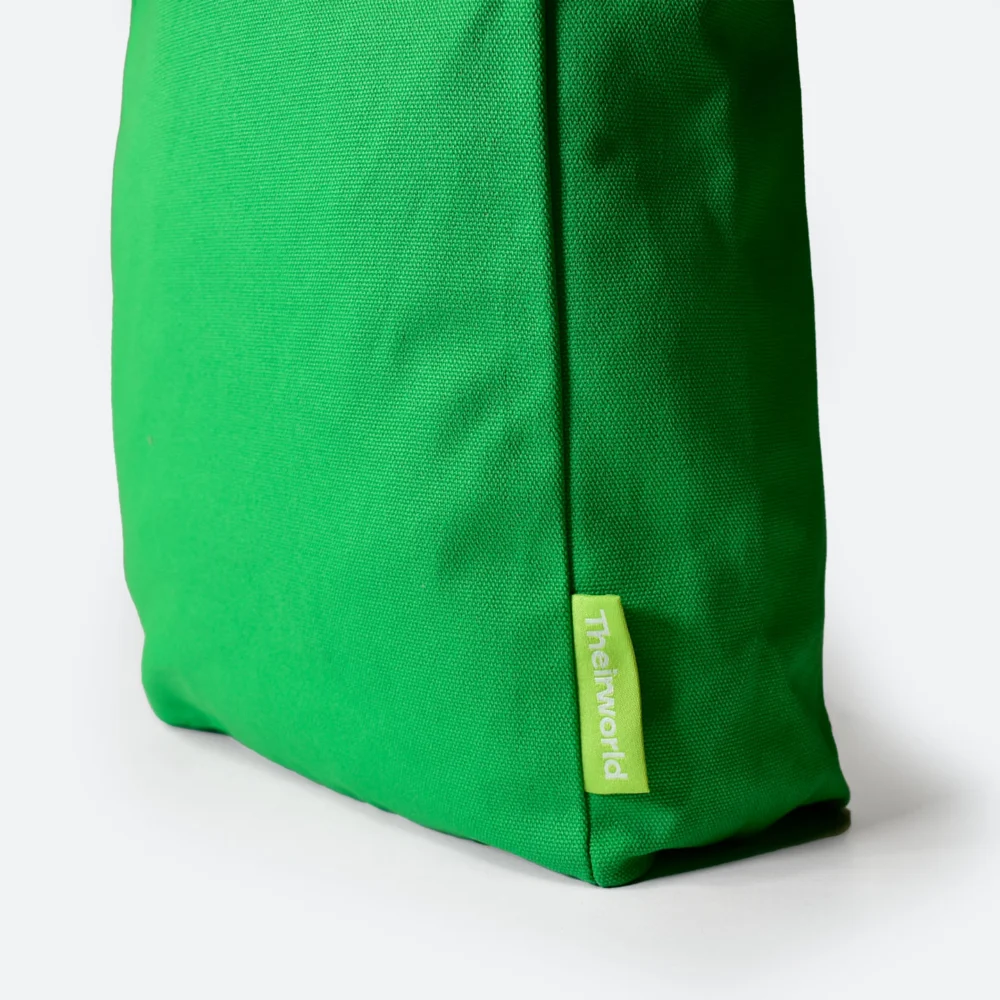
The primary functional requirement was the "A4" designation. In the world of bespoke manufacturing, an A4 bag is not simply a bag that can fit a piece of paper; it is a vessel designed to protect that paper. The Bag Workshop moved away from 2D patterns to a 3D construction. By incorporating side panels and a full bottom gusset, the engineers created a rectangular footprint.
This structural choice serves two purposes. First, it allows the bag to stand upright when placed on a table or floor, a hallmark of luxury luggage. Second, it provides a dedicated volume that prevents "corner crush." By calculating the exact clearance needed for A4 journals, the team ensured that the bag’s contents remain pristine. This level of detail is only possible through OEM manufacturing, where the template is cut specifically for the client’s use case.
Phase 2: The Chemistry of Color – Precision Pantone Matching
One of the most significant challenges in high-end branding is color fidelity. Theirworld’s branding utilizes a specific, vibrant palette that represents energy, hope, and the urgency of their mission. Standard wholesale bags, which are dyed in massive batches using generic pigments, rarely offer a perfect match to a brand’s Pantone references.
To solve this, The Bag Workshop employed a custom-dyeing process. Unlike surface printing, where ink is laid on top of a white or natural fabric, custom dyeing involves treating the raw cotton fibers in a reactive dye bath. This ensures that the color is "locked" into the material. The benefits are three-fold: the color remains vibrant even after heavy use, the fabric retains its soft, natural hand-feel (avoiding the "plastic" texture of heavy screen prints), and the brand color is consistent across the entire surface of the bag, including the gussets and seams.
Phase 3: A Tale of Two Colourways
The project was split into two distinct aesthetic paths, each requiring rigorous quality control to ensure consistency across the production run.
The High-Contrast Pink Variant:
The first design was an exercise in bold, contemporary branding. Utilizing a high-saturation pink base, the bag featured contrasting yellow handles. To further elevate the design, The Bag Workshop implemented contrast stitching. This is a high-risk manufacturing technique; because the thread color stands out so sharply against the fabric, there is zero margin for error in the needlework. Every stitch must be perfectly aligned, showcasing the technical prowess of the partner factories.
The Tonal Green Variant:
The second design focused on monochromatic depth and sophisticated harmony. By using varying shades of green for the body and the handles, the team created a product that felt professional and understated yet unmistakably bespoke. Both variants featured custom-woven labels—another "white label" touch that replaces generic manufacturer tags with the client’s own branding, reinforcing the "luxury" perception of the item.
Phase 4: Ergonomics and Durability – The Webbing Advantage
A bag is only as good as its handles. Most budget totes use "self-fabric" handles, which are simply strips of the bag’s body material folded and sewn. These are prone to fraying, wrinkling, and digging into the user’s shoulder.
For Theirworld, The Bag Workshop specified heavy-duty cotton webbing. Webbing is a specialized woven tape, similar in construction to a seatbelt but made from high-grade cotton fibers. This material provides superior tensile strength, ensuring the bag can carry heavy loads of educational materials without structural failure. Furthermore, the webbing provides a tactile contrast to the smooth cotton body, adding a layer of sensory luxury to the user experience.
The Role of The Wurlin Group as a Structured Partner
Navigating the complexities of international textile manufacturing requires more than just a contact list of factories. As part of The Wurlin Group, The Bag Workshop acts as a project coordinator, managing the entire lifecycle of the product. This includes:
- Global Sourcing: Identifying the specific factory capable of the intricate "sharp corner" gusset stitching required for this project.
- Quality Assurance: Implementing "QC Gates" at the dyeing, cutting, sewing, and finishing stages.
- Logistics: Managing the transition from offshore manufacturing to UK distribution, ensuring that the "White Label" requirements of the agency or brand are met with transparency and efficiency.
Conclusion: Investing in Longevity
The collaboration between Theirworld and The Bag Workshop represents a growing trend among discerning organizations: the move away from disposable "swag" toward "durable assets." By investing in custom-dyed cotton, reinforced structural gussets, and high-spec webbing, Theirworld has created a product that stakeholders will keep for years.
In an era of environmental consciousness, the most sustainable promotional item is the one that is never thrown away. By opting for a luxury tote bag manufacturer that prioritizes engineering over mere assembly, Theirworld has ensured that their brand remains in the hands—and on the shoulders—of their audience long after the initial event has ended.
The Bag Workshop continues to set the standard for OEM bag manufacturing in the UK, proving that even a humble A4 bag, when approached with technical precision and creative vision, can become a powerful tool for global storytelling. Whether for a charity mission or a corporate rebrand, the message is clear: do not settle for "close enough" when you can engineer perfection.