

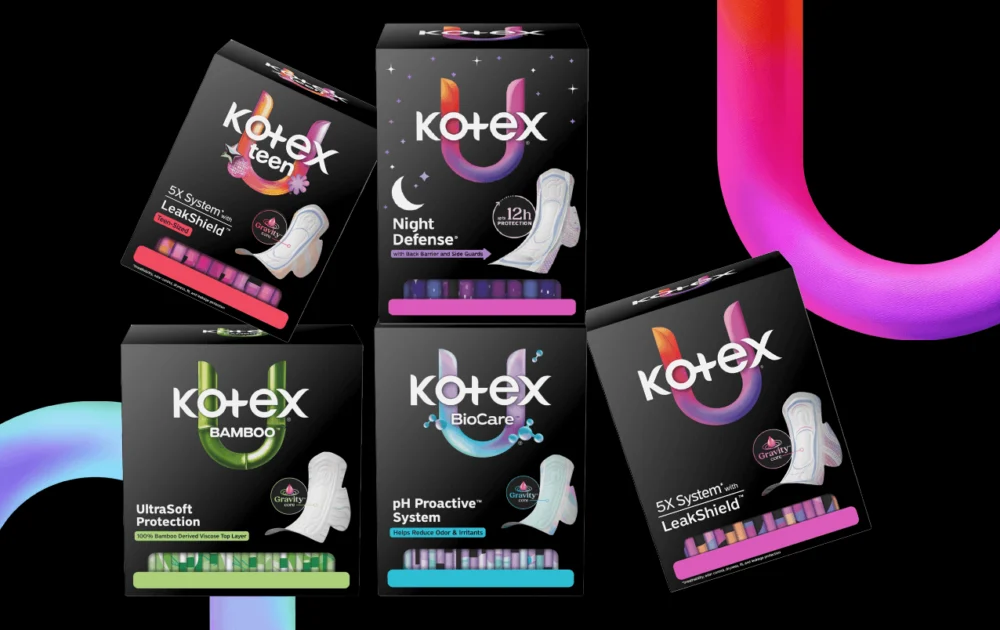
In an era where the "skinfication" of personal care has transformed everything from hair products to body washes, the menstrual care category has long remained a stagnant holdout, defined by clinical aesthetics and utilitarian designs. However, Kotex, a flagship brand under the Kimberly-Clark umbrella, has officially signaled the end of this era. In a move that represents one of the most significant brand overhauls in the history of the feminine hygiene industry, Kotex is replacing its entire product portfolio with a new, technologically advanced assortment. This transition, which has already begun appearing on digital shelves and is slated for a massive brick-and-mortar rollout this spring, is not merely a cosmetic update; it is a fundamental reimagining of what period care should look like, feel like, and accomplish for the modern consumer.
The catalyst for this radical transformation was a sobering piece of internal research that laid bare the deep-seated resentment many women feel toward their current options. According to Kotex’s data, a staggering 82 percent of women report feeling regularly frustrated or dissatisfied with the period products available on the market today. This figure serves as a piercing critique of a category that has historically been slow to innovate, often relying on legacy technologies and marketing tropes that no longer resonate with a savvy, health-conscious, and demanding demographic. Nicole Pawlukowsky, Vice President and General Manager of Marketing at Kotex, noted in a recent interview that the brand felt a moral and commercial obligation to act. Pawlukowsky highlighted that while technology in almost every other consumer sector has advanced exponentially, period care had largely lagged behind, leaving a massive gap between consumer expectations and reality.
The journey to this new portfolio was an intensive, 18-month undertaking that involved direct collaboration with thousands of women across various demographics. This "consumer-first" approach allowed Kotex to identify specific pain points that had been ignored by the broader industry for decades. The result is a three-pronged product strategy designed to address the most common grievances: irritation, environmental concerns, and protection reliability.
At the forefront of this new lineup is the BioCare Ultra Thin Pad. This product is designed to tap into the burgeoning "vaginal wellness" market, which treats the vulva and vagina with the same level of care as facial skin. The BioCare line features a proprietary "pH Proactive" system. Scientific understanding of the vaginal microbiome has grown significantly in recent years, with consumers becoming increasingly aware of how external factors—including the materials used in menstrual pads—can disrupt delicate pH levels, leading to irritation, odor, and discomfort. The pH Proactive system is engineered to optimize the pH levels within the pad itself, acting as a defensive barrier against the irritants and odor-causing bacteria that often flourish during menstruation. This move mirrors trends in the skincare industry, where "barrier repair" and "pH balance" have become essential marketing pillars.
Complementing the BioCare line is the Bamboo Ultra Thin Pad. This addition addresses the growing demand for sustainable, plant-based materials without sacrificing the performance of traditional disposables. The top layer of these pads is crafted from bamboo viscose, a material prized for its softness and moisture-wicking properties. As Gen Z and Millennial consumers increasingly scrutinize the environmental footprint of their purchases, the inclusion of bamboo allows Kotex to compete with "clean" boutique brands that have recently chipped away at the market share of legacy giants. By offering a bamboo option at a mass-market scale, Kotex is effectively democratizing eco-friendly menstrual care.
For those whose primary frustration centers on performance and the fear of leaks, Kotex has introduced the Ultra Thin Pads featuring "Gravity Core" technology. This proprietary innovation is designed for maximum absorption and "lock-in" capability, targeting the heavy-flow days that cause the most anxiety for users. Beyond these three flagship innovations, the overhaul extends to specialized products for teenagers—a demographic that requires unique sizing and branding—as well as enhanced nighttime pads and daily liners.
Perhaps the most visible aspect of this overhaul is the brand’s visual redesign. Kotex is intentionally moving away from the traditional "feminine hygiene" aesthetic, which often relied on soft pastels and floral motifs. Instead, the new packaging takes its cues from the prestige beauty and skincare aisles. The goal is to create a "personalized experience" that makes the shopping process feel more like self-care and less like a chore. This aesthetic shift is a strategic response to the rise of direct-to-consumer brands that have used minimalist, sophisticated packaging to frame period care as a lifestyle choice rather than a medical necessity. By adopting a "beauty-forward" look, Kotex is attempting to recapture the attention of shoppers who may have migrated to more modern-looking competitors.
This massive pivot comes at a time of significant corporate maneuvering for Kimberly-Clark. In November, the parent company sent shockwaves through the consumer goods sector by announcing its intent to acquire Kenvue in a deal valued at approximately $48.7 billion. Kenvue, which was spun off from Johnson & Johnson in 2023, boasts a formidable portfolio of health and beauty brands, including Neutrogena, Aveeno, OGX, and Tylenol. The acquisition, expected to close in the latter half of 2026, signals Kimberly-Clark’s ambition to become a dominant force in the global consumer health ecosystem.
The integration of Kenvue’s dermatological expertise (via Neutrogena and Aveeno) with Kotex’s menstrual care infrastructure creates a powerful synergy. As the lines between "health," "beauty," and "personal care" continue to blur, Kimberly-Clark is positioning itself to own the entire wellness journey of the consumer. The Kotex overhaul can be seen as the first major step in this broader corporate strategy—infusing a legacy hygiene brand with the scientific rigor and aesthetic appeal of a skincare powerhouse.
The history of Kotex itself adds a layer of irony to this modern transformation. Founded in 1920, Kotex was the first brand to bring mass-produced disposable pads to the public, utilizing cellucotton—a material developed for bandages during World War I. For over a century, the brand has been a pioneer, yet even pioneers can fall victim to complacency. The 82 percent dissatisfaction rate was a clear signal that the brand’s historical dominance was no longer a guarantee of future success.
The competitive landscape has never been more crowded. While Kotex battles traditional rivals like Procter & Gamble’s Always and Edgewell’s Playtex, it must also contend with a new wave of "disruptors" such as Rael, The Honey Pot Company, and L. These brands have successfully marketed themselves as being "for women, by women," often highlighting the absence of harsh chemicals and the use of organic materials. Kotex’s new BioCare and Bamboo lines are a direct counter-offensive to these challengers, proving that a global giant can be just as agile and "conscious" as a startup.
Furthermore, the "period equity" and "period positive" movements have changed the cultural conversation around menstruation. No longer a taboo subject to be discussed in hushed tones, menstruation is now framed as a matter of public health and human rights. This cultural shift has empowered consumers to demand better products. They are no longer willing to tolerate pads that feel like diapers, cause rashes, or fail to prevent leaks. Kotex’s decision to listen to "thousands of women" is a recognition that the power dynamic has shifted from the manufacturer to the consumer.
As the new Kotex products hit the shelves of major retailers like Target, Walmart, and CVS this spring, the industry will be watching closely. This is more than just a product launch; it is a test of whether a century-old brand can successfully reinvent itself for a new generation. By leaning into the "beauty aisle" inspiration and addressing the scientific nuances of pH balance and material integrity, Kotex is betting that the path to consumer loyalty lies in treating menstrual care with the same innovation and respect as the rest of the personal care world. If successful, this overhaul could set a new standard for the entire category, forcing competitors to either innovate or be left behind in an aisle that is finally catching up to the 21st century.