

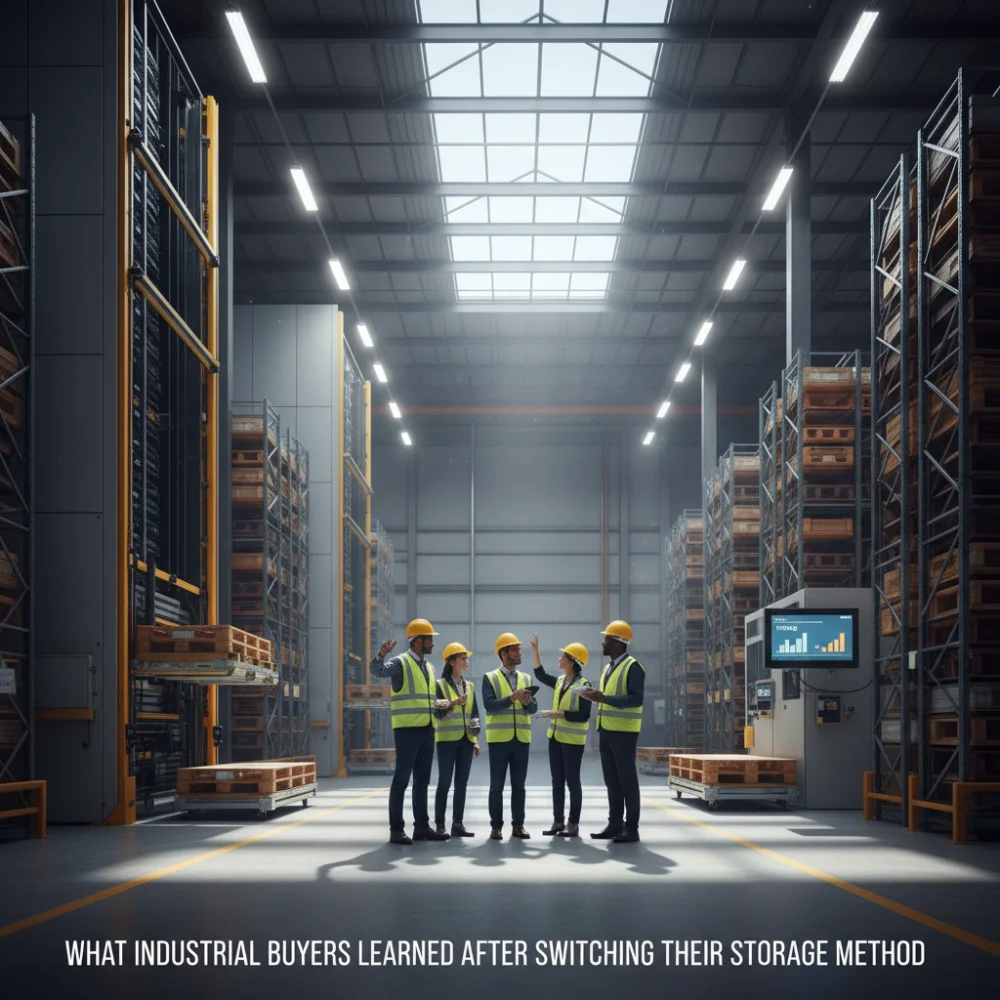
For decades, industrial procurement and logistics departments relied on established, often manual, storage methodologies. These systems, while familiar, frequently masked underlying inefficiencies. The decision to switch storage methods—whether moving from static racking to automated storage and retrieval systems (AS/RS), implementing vertical lift modules (VLMs), or adopting advanced warehouse management software (WMS) integration—is a significant capital and operational commitment. Industrial buyers who have navigated this transition share several universal, hard-won lessons.
Lesson 1: The True Cost of Inefficiency Far Exceeds Initial Investment
The most immediate revelation for many buyers was quantifying the hidden costs associated with their old systems. These costs weren’t just direct labor expenses; they included time wasted searching for parts, increased obsolescence due to poor tracking, and the opportunity cost of floor space utilization. Buyers learned that a high upfront investment in automation or high-density storage often yields a return on investment (ROI) much faster than anticipated once these hidden drains are eliminated.
Key Takeaway: Buyers realized that ‘cheap’ storage solutions are often the most expensive in the long run due to perpetual inefficiencies.
Lesson 2: Inventory Accuracy is the Cornerstone of Modern Logistics
Legacy systems often relied on periodic cycle counts or annual physical inventory, leading to significant discrepancies between system records and physical stock. Switching to integrated systems—especially those using barcoding, RFID, or automated dispensing—forced an immediate, radical improvement in inventory accuracy. Buyers discovered that near-perfect accuracy (99%+) drastically reduced emergency orders, minimized stockouts of critical components, and lowered safety stock requirements.
- Reduced Expedited Shipping Costs: Less need for rush orders to cover stockouts.
- Improved Cash Flow: Capital previously tied up in excess safety stock was freed.
- Enhanced Planning: Accurate data allowed for more reliable forecasting and just-in-time (JIT) integration.
Lesson 3: Safety Improvements Are Not Just a Benefit; They Are a Requirement
Manual handling, climbing ladders, and navigating poorly organized aisles are major sources of workplace accidents. Buyers transitioning to vertical storage solutions or goods-to-person systems found a dramatic reduction in material handling-related injuries. The standardized, controlled environment of modern storage minimizes human error and physical strain.
This shift also highlighted the importance of ergonomics. Buyers learned to prioritize storage solutions that bring items to an ergonomic picking height, reducing bending, reaching, and lifting, which contributes significantly to long-term employee retention and reduced insurance liabilities.
Lesson 4: Space Utilization is a Variable, Not a Constant
Many industrial facilities operate under severe space constraints. Buyers often underestimated the potential density achievable with modern systems. For instance, switching from traditional selective racking to high-density flow rack or AS/RS can reclaim up to 70% of floor space previously dedicated to aisles and staging areas. This newfound space can then be repurposed for value-added activities like kitting, assembly, or expanding production lines.
Lesson 5: Integration Complexity Was Underestimated
While the physical hardware installation might be straightforward, the true challenge often lies in integrating the new storage system with existing enterprise resource planning (ERP) or WMS platforms. Buyers learned that inadequate testing and poor communication between the storage vendor and the existing IT infrastructure lead to significant delays and functionality gaps post-launch.
Crucial Learning Point: Buyers now advise allocating significantly more time and specialized resources for the software integration and data migration phases than they initially budgeted for.