
The upcoming Interpack exhibition serves as the strategic stage for this reveal. For Linx, the event is more than just a showcase; it is a platform to demonstrate how their latest engineering breakthroughs can solve the persistent challenges faced by production managers worldwide. From the need for higher throughput and superior print clarity to the requirement for sustainable marking on increasingly complex packaging substrates, Linx is positioning itself as the primary partner for companies navigating the digital transformation of the production line.
A Holistic Approach to Industrial Coding
While the new inkjet range remains the headline attraction, Linx is ensuring that visitors gain a complete understanding of their technological ecosystem. The company will be demonstrating its full suite of coding and marking solutions, reinforcing its reputation as a "one-stop shop" for manufacturers in sectors ranging from food and beverage to pharmaceuticals and industrial components.
The breadth of the Linx portfolio is designed to accommodate the diverse needs of modern factories. Whether a company requires the speed and versatility of Continuous Inkjet (CIJ) technology, the permanence of laser marking, the precision of thermal transfer overprinting (TTO), or the robust nature of large character marking (LCM), Linx provides a solution tailored to specific material requirements and environmental constraints.
Advancements in Laser Coding Technology
Among the highlights at the Linx booth will be a curated selection of their laser coding machines, which serve as a benchmark for high-speed, non-contact marking. Laser coding has become increasingly vital as manufacturers shift toward high-speed, high-volume production lines where ink contamination must be avoided, and print durability is non-negotiable.
Linx will be showcasing three specific models that demonstrate the versatility of their laser technology:
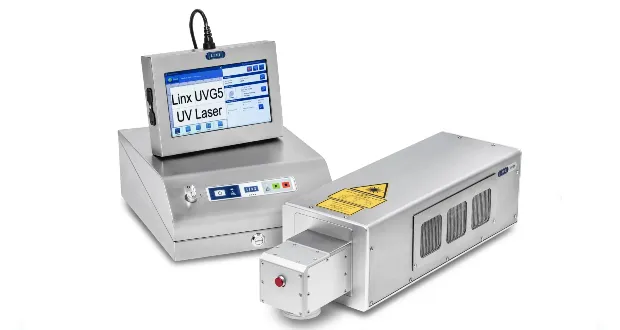
- The Linx UVG5: This model is specifically engineered to handle the challenges posed by modern, eco-friendly packaging materials. As the industry moves toward mono-recyclable films, traditional marking methods often struggle to provide a clean, permanent code without damaging the substrate. The UVG5 is purpose-built to tackle these delicate films, as well as rigid plastics that are historically difficult to mark, ensuring that manufacturers can meet sustainability goals without compromising on regulatory compliance or brand aesthetics.
- The Linx CSL30: Designed for the high-octane pace of beverage and food production, the CSL30 is a workhorse of the laser coding world. It is specifically optimized for high-speed lines, delivering incredibly sharp and durable codes even on notoriously difficult surfaces such as glass and rubber. This makes it an essential tool for the pharmaceutical and cosmetics sectors, where code integrity is critical for supply chain transparency and anti-counterfeiting efforts.
- The Linx FSL20: Representing the pinnacle of precision, the FSL20 fibre laser coder is built for applications that demand high information density. In industries where components are miniature—such as electronics or small-scale medical devices—the FSL20’s fine spot size allows for the placement of large amounts of data, including complex barcodes and 2D matrix codes, within a remarkably small footprint.
Versatility in Flexible Packaging
Beyond the laser segment, Linx will dedicate a significant portion of their exhibition space to their thermal transfer printer (TTO) range. TTO technology is the industry standard for printing high-resolution images, text, and barcodes onto flexible packaging materials.
At Interpack, Linx will demonstrate three models that illustrate the flexibility of this technology. These machines are essential for businesses utilizing bags, pouches, flow wraps, and various labeling solutions. By offering superior print quality that is resistant to smudging and fading, these printers ensure that product information remains legible throughout the entire shelf-life of the product, from the production line to the consumer’s hands.
Future-Proofing with Large Character Marking
Recognizing the growth in logistics and secondary packaging requirements, Linx is also set to provide an exclusive preview of a new model within its large character marking (LCM) printer range. This upcoming launch, scheduled for later this year, is expected to provide manufacturers with a more efficient and cost-effective way to print batch codes, expiration dates, and shipping information directly onto shipping cartons and cases. By reducing the need for pre-printed boxes or adhesive labels, this new solution aligns with the broader industry trend of reducing waste and optimizing warehouse management processes.
A Vision for the Future of Production
Mark Cooper, the Senior Director of Product and Marketing at Linx Printing Technologies, emphasizes the importance of Interpack as a global barometer for the industry. "Interpack provides a global showcase for the packaging industry and it therefore presents the ideal opportunity for us to share with visitors what we believe will be a gamechanger in coding and marking for busy production managers," Cooper stated.
His comments reflect a broader shift in the manufacturing sector. Today’s production managers are under immense pressure to increase line speed, reduce downtime, and adopt more sustainable practices. Linx’s philosophy—combining hardware reliability with intelligent, user-friendly software—is aimed at alleviating these pressures. By integrating their new inkjet range with their existing laser and TTO solutions, Linx is offering more than just hardware; they are offering a strategy for operational excellence.
Why This Matters for the Packaging Industry
The significance of the upcoming launch cannot be overstated. As global regulations regarding product labeling and traceability become more stringent, the burden on manufacturers to provide accurate, permanent, and readable information is at an all-time high. Furthermore, the global push toward a circular economy means that the materials used in packaging are changing rapidly. Old methods of coding are increasingly incompatible with new, recyclable, or bio-based materials.
Linx Printing Technologies is positioning itself at the intersection of these two trends. By continuously innovating their inkjet, laser, and thermal transfer technologies, they are ensuring that their customers remain ahead of the curve. Whether it is through the precision of the FSL20, the versatility of the CSL30, or the sustainable focus of the UVG5, Linx is providing the tools necessary to keep global supply chains moving efficiently and reliably.
As Interpack opens its doors, the industry will be watching to see how Linx’s new inkjet solutions compare to existing benchmarks. For those in attendance, the Linx booth promises to be a focal point for understanding how the next generation of coding technology will reshape the packaging landscape. By prioritizing ease of use, code durability, and material compatibility, Linx is not just launching a new product—they are setting the agenda for the future of industrial identification.