

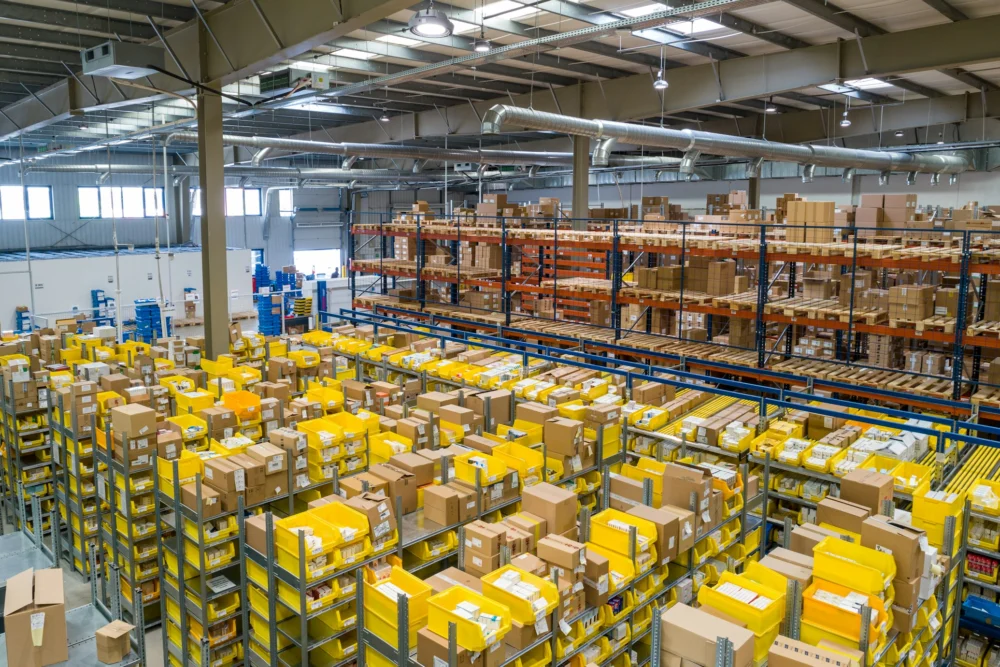
The landscape of industrial storage is undergoing a profound transformation, moving far beyond traditional racking systems. Experts agree that the future hinges on intelligent integration, hyper-density, and seamless connectivity. This evolution is not merely incremental; it represents a fundamental rethinking of how goods are stored, retrieved, and managed within the modern supply chain.
The Dominance of Automated Storage and Retrieval Systems (AS/RS)
Perhaps the most frequently cited trend is the accelerated adoption of Automated Storage and Retrieval Systems (AS/RS). Analysts predict that AS/RS, once considered niche for high-volume operations, will become standard across mid-sized enterprises. The primary driver is labor scarcity and the demand for 24/7 operational capability. Experts highlight that modern AS/RS solutions offer superior space utilization, often reaching 90% density compared to 60-70% for conventional systems.
Furthermore, the integration of advanced robotics, such as shuttle systems and robotic cranes, is making AS/RS more flexible and scalable. Dr. Evelyn Reed, a leading supply chain consultant, notes, “The future AS/RS isn’t just about vertical lift; it’s about dynamic aisle configuration and predictive maintenance built directly into the hardware layer.”
The Rise of Goods-to-Person Technology
The shift from person-to-goods picking to goods-to-person (G2P) is reshaping warehouse footprints. Experts emphasize that G2P technologies, powered by carousels, vertical lift modules (VLMs), and autonomous mobile robots (AMRs), drastically reduce travel time—the single largest non-value-added activity in warehousing. This directly translates to lower operational costs and significantly higher throughput rates.
- AMRs are transitioning from simple transport to complex picking assistance.
- VLMs are being optimized for handling diverse product sizes, not just small totes.
- Integration with Warehouse Execution Systems (WES) ensures optimal batching and sequencing for G2P fulfillment.
Sustainability as a Core Design Principle
The focus on Environmental, Social, and Governance (ESG) criteria is forcing storage solution designers to prioritize sustainability. Industry leaders suggest that future storage infrastructure must minimize energy consumption and material waste. This involves designing lighter, more recyclable racking materials and optimizing systems for lower power draw.
Experts are examining energy-efficient lighting integrated directly into racking structures, as well as exploring modular designs that allow for rapid re-configuration or deconstruction, reducing landfill impact when layouts change. Material science advancements in high-strength, low-weight alloys are critical to this green transition.
Data-Driven Optimization and Digital Twins
The convergence of IoT sensors and big data analytics is creating ‘smart’ storage environments. Sophisticated modeling, often using digital twin technology, allows managers to simulate changes in inventory profiles, throughput demands, and even catastrophic failures before they occur. This predictive capability is paramount.
According to a recent report from the Material Handling Institute, over 70% of major logistics providers are piloting digital twin technology specifically for storage optimization. This allows for proactive slotting strategies, ensuring fast-moving items are always in the most accessible positions based on real-time demand forecasting.
Vertical Density and Micro-Fulfillment Centers (MFCs)
As urban real estate costs skyrocket, the imperative to build upward in storage density intensifies. Experts see a parallel growth in high-bay AS/RS solutions for bulk storage and the proliferation of Micro-Fulfillment Centers (MFCs) closer to the end consumer. MFCs rely heavily on dense, automated storage suitable for single-item picking.