
The global packaging industry stands at a critical crossroads. As consumer demand for convenience rises alongside an urgent planetary need to mitigate plastic waste and carbon emissions, the traditional linear model of "take-make-dispose" is rapidly becoming obsolete. In response to this systemic challenge, a transformative initiative has emerged to bridge the gap between theoretical academic research and practical industrial application. Launched in 2025, the Center for Plastic, Paper and Hybrid Packaging End-of-Life Solutions—commonly known as C3PS—has quickly established itself as the preeminent engine for circular packaging innovation in the United States. Led by the prestigious School of Packaging (SoP) at Michigan State University (MSU), this center represents a fundamental shift in how the world’s most essential materials are designed, utilized, and ultimately reclaimed.
The significance of C3PS cannot be overstated, as it holds the distinction of being the first and only National Science Foundation (NSF) Industry-University Cooperative Research Center (IUCRC) specifically dedicated to solving the complexities of packaging end-of-life. The NSF IUCRC model is a unique federal framework designed to catalyze breakthrough research by fostering long-term partnerships between the public and private sectors. Under this structure, the government provides the organizational backbone and oversight, while industry members provide the funding and real-world challenges that drive the research agenda. For C3PS, this means that the scientists in the lab are not working in a vacuum; they are solving the exact technical bottlenecks that prevent multi-billion-dollar corporations from achieving their sustainability goals.
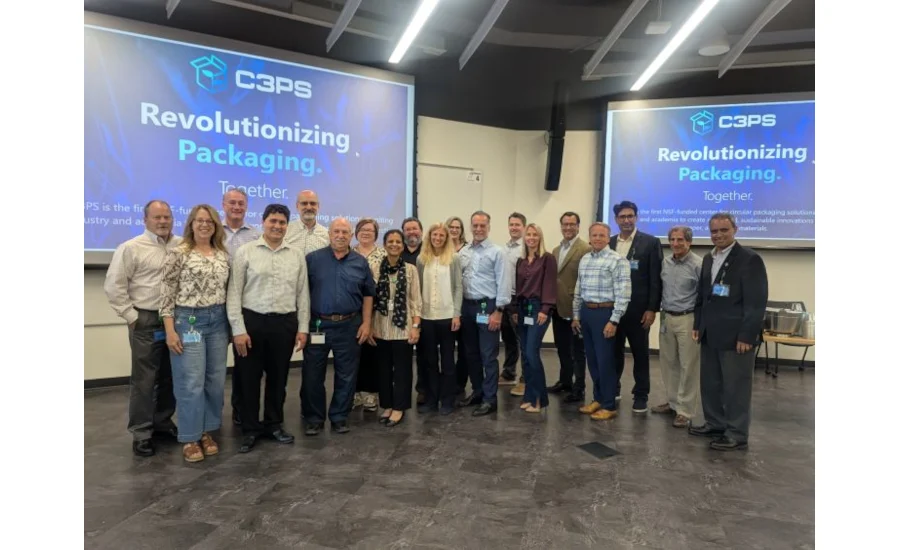
In its first 18 months of operation, C3PS has demonstrated explosive growth, evolving from a visionary concept into a robust national network. Today, the center encompasses 12 universities and a brain trust of more than 40 faculty experts. While Michigan State University serves as the lead administrative and research site, Western Michigan University joined as the initial partner site, bringing specialized expertise in paper and fiber-based packaging. This multi-institutional approach is critical because modern packaging is rarely a mono-material solution. Whether it is a juice carton that combines paperboard, plastic, and aluminum, or a high-barrier food pouch with multiple polymer layers, the "hybrid" nature of modern packaging requires a diverse set of scientific disciplines to decode its end-of-life potential.
The philosophy behind C3PS is rooted in the concept of "pre-competitive research." In the cutthroat world of global manufacturing, companies often guard their internal R&D closely. however, the challenge of creating a truly circular economy—one where waste is designed out of the system—is too large for any single entity to tackle alone. Muhammed Rabnawaz, the Director of C3PS and a professor at the MSU School of Packaging, frequently employs a compelling analogy to describe this collaborative effort. He likens the center’s work to public infrastructure. Just as a logistics company relies on a functional network of public highways to deliver goods, packaging companies rely on a foundational understanding of polymer science, biodegradation, and recycling technology to innovate. It would be economically ruinous for every company to build its own private road system; similarly, C3PS allows companies to pool their resources to build the "scientific roads" that everyone can then use to race toward their own proprietary products.
The financial and operational structure of the center is designed for maximum impact. Industry members contribute annual fees that are funneled into a shared research portfolio. One of the most attractive aspects of the NSF framework is its efficiency: at least 90% of all membership contributions are required to go directly toward funding research projects. This lean model ensures that corporate investments are not swallowed by administrative overhead but are instead used to fund graduate students, laboratory equipment, and pilot-scale testing. Currently, the center boasts 10 active industry members, ranging from material suppliers to global consumer goods brands, and is in advanced negotiations to nearly double that number by early 2027.
The research conducted at C3PS is divided into high-priority areas that reflect the most pressing needs of the industry. In its inaugural year, the center received over 30 research proposals and selected 10 for funding, representing an initial investment of approximately $800,000. These projects generally fall into three strategic categories: advanced recycling technologies, bio-based and biodegradable materials, and the optimization of hybrid packaging systems. By focusing on these areas, C3PS is addressing the "pain points" of the circular economy—such as how to separate fused layers of plastic and paper or how to ensure that "compostable" materials actually break down in municipal facilities.
The leadership of the center is a blend of academic rigor and industrial pragmatism. Tom Wetsch, the Chief Innovation Officer at Pregis and the chairperson of the C3PS Industry Advisory Board, emphasizes that the center is not a competitive arena but an "opportunity landscape." In his view, the goal is to expand the membership base to 30 or 40 companies. This scaling would not just increase the available funding; it would diversify the perspectives at the table, ensuring that the research remains relevant to the entire value chain—from the chemical companies that create resins to the waste management firms that process the final discarded package.
Furthermore, C3PS serves as a vital talent pipeline. The packaging industry is currently facing a significant workforce gap as it transitions toward more complex, sustainable technologies. By involving graduate students and post-doctoral researchers in industry-defined projects, C3PS is training the next generation of leaders. These students graduate with not only a deep understanding of molecular science but also a keen awareness of the economic and regulatory pressures facing the packaging sector. This ensures that when they enter the workforce, they are ready to turn laboratory science into commercial success.
Looking toward the future, the ambitions for C3PS are nothing short of revolutionary. Director Rabnawaz has articulated a vision for the center to become the "Silicon Valley of Packaging." This vision involves creating a geographical and intellectual hub where the world’s leading scientific minds and the most influential industry stakeholders converge. The long-term success of the center will not be measured by the number of academic papers published in prestigious journals, but by the tangible commercial outcomes achieved by its members. The goal is for 30% to 40% of the center’s research projects to result in a commercialized product or process within the next several years.
This push for commercialization is what sets C3PS apart from traditional academic centers. It is an innovation platform designed for speed and scale. As the center aims to add at least three more university research sites in the coming year, its ability to tackle increasingly complex problems will only grow. Whether it is developing new barrier coatings that don’t interfere with paper recycling or creating "smart" packaging that can be sorted more efficiently by AI-driven recycling robots, C3PS is at the forefront of the technological frontier.
In an era where environmental regulations are tightening and consumers are increasingly scrutinizing the environmental footprint of their purchases, C3PS provides a sanctuary for evidence-based progress. It offers a space where the packaging industry can move beyond greenwashing and marketing slogans to invest in the hard science required to make packaging truly safe, sustainable, and circular. By uniting the collective intelligence of academia with the commercial might of the global industry, C3PS is not just solving the problems of today; it is designing the materials and systems of a waste-free tomorrow. As it continues to grow, the center stands as a testament to what can be achieved when competition is set aside in favor of a shared commitment to the health of the planet and the longevity of the industry.