
The industrial landscape is currently navigating a period of profound metamorphosis, characterized by the aggressive integration of Artificial Intelligence (AI) and Machine Learning (ML) into the fabric of production. For the Consumer Packaged Goods (CPG) and flexible packaging sectors, this transition represents more than a mere technological upgrade; it is a fundamental shift in how value is created, protected, and scaled. However, as organizations rush to deploy sophisticated algorithms, a sobering reality has emerged: the efficacy of AI is strictly limited by the quality of the data that feeds it. Without a robust, contextualized, and trusted data foundation, even the most advanced AI initiatives are destined to stall in "pilot purgatory."
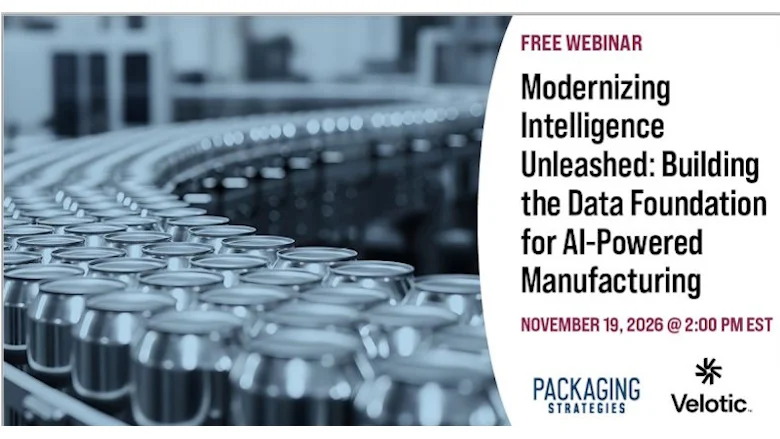
This critical intersection of data integrity and intelligent automation was the focal point of a recent thought leadership webinar hosted by Packaging Strategies. Featuring Joe Gerstl, the Director of Manufacturing Execution Systems (MES) Software at Velotic, the session dissected the architectural requirements for building a factory of the future. The core message was clear: while AI is the engine of modern manufacturing, operational data is the fuel, and currently, many manufacturers are trying to run high-performance engines on unrefined crude.
To understand the urgency of this transformation, one must first look at the unique pressures facing the CPG and packaging industries today. Manufacturers are grappling with unprecedented volatility in raw material costs, tightening environmental regulations, and a labor market characterized by a dwindling pool of experienced operators. In this environment, the margin for error has evaporated. Efficiency is no longer just about speed; it is about precision, waste reduction, and the ability to pivot production lines in real-time.
Joe Gerstl emphasized that the journey toward AI-powered manufacturing does not require a "rip-and-replace" strategy of existing legacy systems. Instead, it necessitates a strategic layer of digital connectivity that bridges the gap between the shop floor and the executive suite. The primary obstacle to this connectivity is the "data silo." On a typical manufacturing floor, a wealth of information is generated every second—sensor readings, motor speeds, temperature fluctuations, and cycle times. However, this data often exists in isolation, trapped within individual Programmable Logic Controllers (PLCs) or proprietary machine interfaces.
The first step in building a scalable data foundation is the transition from raw data collection to data contextualization. Raw data tells you that a motor’s temperature rose by ten degrees; contextualized data tells you that the temperature rose during the processing of a specific batch of recycled polyethylene, under the supervision of a specific shift team, while a particular cooling valve was operating at 40% capacity. This "context" is what transforms noise into actionable intelligence. Without it, AI models cannot accurately identify the root causes of downtime or predict when a component is likely to fail.
A Manufacturing Execution System (MES) serves as the vital connective tissue in this architecture. As Gerstl noted during the webinar, a modern MES acts as the single source of truth for the production environment. It sits between the Enterprise Resource Planning (ERP) system, which handles the business logic, and the Supervisory Control and Data Acquisition (SCADA) systems, which handle the machine logic. By integrating these layers, manufacturers can achieve a level of operational visibility that was previously impossible. This visibility allows for the identification of "invisible" bottlenecks—inefficiencies that don’t cause a total line stoppage but aggregate into significant losses over weeks and months.
The webinar highlighted that for CPG companies, the stakes of data accuracy are particularly high in the realm of flexible packaging. The physical properties of films and laminates can vary based on ambient humidity and temperature, requiring constant adjustments to tension and heat-sealing parameters. AI-powered systems can automate these adjustments, but only if they have access to real-time environmental data correlated with historical performance metrics. This is where the concept of "predictive insights" moves from a buzzword to a bottom-line advantage. Instead of reacting to a defective batch of pouches after they have been produced, an AI-enabled system can detect the subtle signatures of an impending defect and adjust the machinery before the waste occurs.
Furthermore, the discussion delved into the democratization of data. Historically, the insights derived from manufacturing data were the exclusive domain of data scientists or senior engineers. However, the new generation of AI-driven tools is designed to empower the frontline worker. Through intuitive dashboards and mobile interfaces, machine operators can receive real-time guidance based on the data foundation. If a machine begins to vibrate outside of its normal parameters, the system doesn’t just alert the operator; it provides a diagnosis based on thousands of hours of historical data, suggesting a specific maintenance action. This reduces the "knowledge gap" that occurs when veteran employees retire, ensuring that institutional expertise is codified into the digital system.
Scalability was another cornerstone of the webinar’s discourse. Many manufacturers make the mistake of launching massive, all-encompassing digital transformation projects that fail due to their sheer complexity. The recommended approach is to build a modular data foundation that can support specific, high-value use cases—such as Overall Equipment Effectiveness (OEE) tracking or energy management—and then expand. This "start small, think big" philosophy allows companies to prove the Return on Investment (ROI) at each stage, securing the internal buy-in necessary for long-term success.
The role of Velotic, as explained by Gerstl, is to provide the software framework that simplifies this journey. Their focus on MES is rooted in the belief that the shop floor is where the most significant gains in sustainability and productivity are to be found. In the context of the global push for a circular economy, the ability to track the provenance and performance of materials is becoming a regulatory necessity. Digital passports for packaging materials, which track a product from resin pellet to retail shelf, are only possible if the manufacturing stage is fully digitized and transparent.
As the webinar concluded, the overarching theme was one of empowerment through information. The transition to AI-powered manufacturing is not about replacing human intuition, but about augmenting it with an unerring digital memory and the ability to process vast datasets in milliseconds. The companies that will lead the next decade of the CPG and packaging industries are those that recognize data as a strategic asset, equivalent in value to their physical machinery or their brand equity.
In summary, building a data foundation for AI is an exercise in architectural foresight. It requires a commitment to breaking down silos, a focus on contextualizing operational information, and the implementation of robust systems like MES to act as the orchestrator of intelligence. As Joe Gerstl and the team at Velotic demonstrated, the path to the factory of the future is paved with trusted data. For manufacturers ready to move beyond the hype of AI and into the reality of high-performance production, the time to lay that foundation is now. The webinar serves as a roadmap for this journey, offering a blend of strategic vision and practical tactics for an industry at a digital crossroads. By turning the chaos of shop floor information into the clarity of actionable intelligence, manufacturers can finally unlock the full potential of the AI revolution, ensuring resilience, sustainability, and profitability in an increasingly complex global market.