

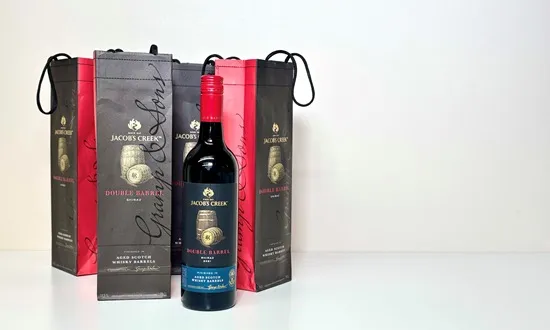
The eagerly anticipated return of Jacob’s Creek’s innovative, ready-to-gift wine packaging solution is set to grace retail shelves, marking a significant enhancement to the consumer’s on-the-go gifting journey. First unveiled in 2021 to address the growing consumer demand for convenience without compromising on presentation or ecological consciousness, this offering marries premium visual appeal with steadfast environmental stewardship. The core of this solution lies in presenting the fine Jacob’s Creek wines nestled securely within bespoke, durable, and remarkably lightweight carriers crafted from Paptic material. This pre-packaged format instantly transforms a standard bottle purchase into an elegant, ready-to-present gift, completely eliminating the often-cluttered necessity for secondary wrapping, ribbons, or additional carrier bags at the point of sale.
The strategic integration of Paptic, a sustainable paper-based material, underscores a broader commitment by Jacob’s Creek to reducing their environmental footprint, aligning with global trends favoring circular economy principles. However, the functional benefit is seamlessly matched by a sophisticated design language meticulously engineered by the creative experts at Packdesign ID. Their role extended beyond mere structural containment; they were tasked with translating the established quality and heritage of the Jacob’s Creek brand into a tangible, tactile exterior that resonates immediately with discerning shoppers.
The resulting carrier bags are distinguished by meticulously customized visual elements and the strategic application of special print effects. These aren’t merely functional sleeves; they are designed artifacts intended to command attention in a crowded retail environment. The tactile quality of the Paptic material, combined with high-fidelity printing, ensures that the bag itself communicates a sense of inherent value, mirroring the quality of the premium wine contained within. This thoughtful detailing ensures that the package doesn’t just carry the product—it actively enhances its perceived worth as a gift.
Maija Olkkonen-Seppo, Chief Executive of Packdesign ID, offered compelling insight into the philosophy driving the design process. She emphasized the crucial synergy achieved by leveraging Paptic’s unique properties. "With Paptic material, we are empowered to design solutions that are not only visually distinctive—cutting through the noise of conventional packaging—but are fundamentally rooted in environmental sustainability," stated Olkkonen-Seppo. She elaborated on the success of the aesthetic execution: "This gift bag successfully speaks the same precise visual language as the Jacob’s Creek bottle nestled inside; it is an unequivocal communicator of the wine’s inherent quality. There is an immense professional reward in engineering packaging that achieves dual objectives: delivering superior shelf impact while actively supporting principles of circularity and material responsibility."
This perspective highlights a critical industry pivot where packaging is no longer viewed as disposable waste but as an integral, value-added component of the product experience. For Jacob’s Creek, the Paptic tote becomes a silent brand ambassador, reinforcing luxury associations while quietly signaling eco-awareness to the modern consumer who increasingly vets purchases based on corporate responsibility.
Esa Torniainen, Chief Strategy Officer at Paptic Ltd, underscored the significance of seeing this established collaboration return to the market, emphasizing the strategic validation it provides for sustainable packaging innovation. "It remains genuinely exciting to witness Jacob’s Creek wines being presented once again encased in these high-performing Paptic gift bags," remarked Torniainen. He positioned the continued partnership as a powerful case study for the industry: "This collaboration serves as a vivid demonstration of how cutting-edge sustainable materials, when fused with strong, strategic design expertise, can converge to create packaging architecture that excels across the board—performing optimally in the high-stakes retail environment while simultaneously delivering tangible benefits for the planet."
The Paptic material itself deserves closer examination as a key enabler of this successful fusion. Unlike traditional plastic films or heavily laminated paper options, Paptic offers a paper-based structure that provides excellent strength and moisture resistance suitable for retail handling, yet is engineered for easier recycling pathways. Its lightweight nature also contributes to a reduced carbon footprint during transportation compared to heavier, multi-material gift boxes.
The initial launch in 2021 positioned Jacob’s Creek ahead of many competitors in offering a truly ‘grab-and-go’ premium gifting option. The re-launch signifies that the market demand not only persisted but likely intensified, justifying the investment in maintaining and refining this specialized packaging line. For retailers, the benefit is streamlined inventory management—a single SKU replaces the need to stock separate bottles and gift-wrapping accessories. For the consumer, the value proposition is clear: immediate elegance and environmental peace of mind.
Furthermore, the customization capability provided by Packdesign ID ensures brand storytelling remains central. The visual narrative woven into the bag’s surface—perhaps featuring subtle embossing, spot UV varnishes, or textures unique to the specific wine vintage or varietal—ensures that even though the format is standardized for efficiency, the presentation retains an artisanal, bespoke feel. This meticulous attention to detail elevates the perceived value significantly beyond the cost of the sustainable bag itself.
In a retail landscape increasingly saturated with visual stimuli, the tactile and visual sophistication of this packaging acts as a vital differentiator. It appeals directly to the impulse buyer looking for a last-minute, sophisticated present, as well as the planned purchaser who values sustainability credentials. The collaboration between a heritage wine brand, a specialized packaging designer, and an innovative material producer illustrates a mature understanding of contemporary market dynamics where product excellence must be matched by responsible and aesthetically pleasing delivery systems.
The enduring success of this ready-to-gift solution, now reinforced by its return to shelves, confirms that consumers are willing to embrace and reward brands that successfully integrate sustainability, convenience, and high-end design into a single, cohesive package. Jacob’s Creek, supported by the material science of Paptic and the design acumen of Packdesign ID, continues to set a high benchmark for thoughtful, responsible, and attractive wine merchandising. The packaging itself becomes part of the gift’s enduring impression, moving beyond mere containment to become a celebrated element of the overall Jacob’s Creek brand experience. This ongoing commitment ensures that when a consumer reaches for a bottle, they are not just selecting wine; they are selecting a complete, ready-made gesture of quality and consideration.