
ExxonMobil’s Signature Polymers portfolio has spearheaded a significant advancement in the flexible packaging industry, demonstrating a viable, high-performance alternative to multi-material structures through the introduction of a novel, ultra-thin, mono-material polyethylene (PE) solution. This innovation, developed in close partnership with leading technology providers Hosokawa Alpine and BW Converting, leverages cutting-edge Machine Direction Orientation (MDO) technology to achieve performance characteristics previously confined to more complex laminates. The development signals a major step toward simplifying packaging recyclability without sacrificing the critical mechanical and aesthetic properties demanded by consumer goods manufacturers, particularly in the food packaging sector.
The core of this technological breakthrough lies in the successful production of 25-micron MDO PE films. To appreciate the magnitude of this achievement, one must consider the traditional reliance on mixed-material laminates—often involving polypropylene (PP) and polyethylene (PE)—to attain the necessary structural integrity for packaging like bread bags. These mixed structures, while functional, present significant challenges for mechanical recycling streams due to the difficulty in separating the different polymer types. By engineering a film that is entirely polyethylene-based yet matches or exceeds the performance metrics of these legacy structures, ExxonMobil is directly addressing a major bottleneck in the circular economy for flexible plastics.
The meticulous engineering behind this 25-micron film focuses on three key performance indicators: stiffness, tear resistance, and optical clarity. Stiffness is crucial for handling, shelf presence, and automated processing; traditional thin PE films often sag or wrinkle, leading to poor presentation. Tear resistance is vital for protecting the contents throughout the supply chain, from high-speed filling lines to consumer handling. Finally, high optical quality—the ability to showcase the product clearly—remains a non-negotiable requirement for appealing shelf display. According to the project partners, the MDO process has successfully imparted the required rigidity and resilience to the thin PE structure, allowing it to compete head-to-head with conventional biaxially oriented polypropylene (BOPP) or PP/PE combinations.
The strategic choice of MDO technology was pivotal. Machine Direction Orientation involves stretching the polymer film in the direction of travel (the machine direction) while heated, which aligns the polymer chains. This molecular alignment significantly enhances mechanical properties, such as tensile strength and stiffness, allowing manufacturers to use substantially less material—a process known as downgauging—while maintaining or improving performance. In this specific application, the 25-micron target thickness represents significant material reduction compared to conventional non-oriented PE films used for similar applications.
The collaboration that brought this solution to fruition involved a comprehensive engagement across the entire packaging value chain, ensuring that the innovation was not just theoretically sound but industrially scalable and immediately deployable. Hosokawa Alpine, a specialist in film processing technology, was instrumental in the extrusion and orientation stages, ensuring the MDO process yielded the precise molecular architecture required for the high-performance mono-material.
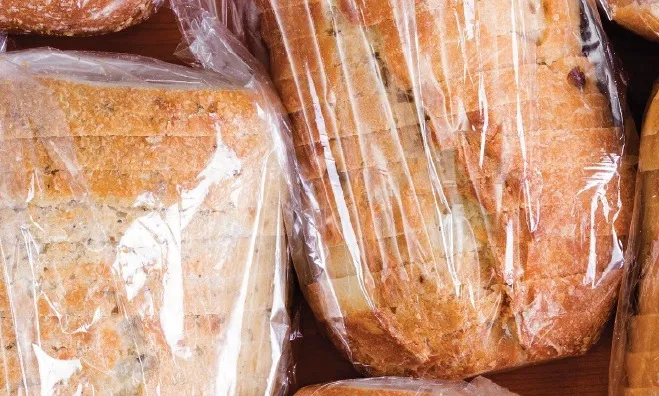
Following the successful film production, the focus shifted to conversion and end-use validation. BW Converting took on the critical task of converting these innovative MDO PE films into functional, gusseted bread bags. Gusseted designs require the film to handle complex folding and sealing operations without splitting or tearing, further testing the material’s inherent strength and processability. The success in converting these thin, oriented films demonstrates the robustness of the MDO PE structure.
Perhaps the most crucial validation step involved compatibility testing on existing filling equipment. The ultimate success of any packaging innovation hinges on its seamless integration into high-volume, established production lines. In this case, the converted bags were tested on Hudson-Sharp Apollo wicketed bag machines—a standard platform for bread and bakery packaging globally. The results confirmed that the new mono-material bags performed flawlessly on these high-speed lines, eliminating the need for costly equipment overhauls for converters looking to adopt more sustainable materials.
Further validation was provided by HOBA (likely referring to an entity specializing in bag closing or handling systems), which confirmed the material’s compatibility across both manual and automated bag closing systems. This included verifying the sealing integrity under various conditions—essential for maintaining freshness and extending shelf life—and ensuring that the bags opened and closed reliably whether handled by a human operator or an automated sealing mechanism. This end-to-end validation confirms the material’s readiness for rapid market adoption.
The implications of this ExxonMobil Signature Polymers launch extend far beyond just bread packaging. The successful development of a high-performing, 25-micron mono-PE film via MDO technology provides a robust template for downgauging and recyclability improvements across numerous flexible packaging segments, including snack foods, dry goods, and certain barrier applications where current mono-material solutions fall short on performance.
For brand owners facing increasing regulatory pressure and consumer demand for sustainable packaging, this MDO PE film offers a tangible pathway to meet ambitious recyclability targets. By eliminating the challenging-to-recycle PP/PE interfaces, the film is designed to be compatible with existing PE recycling streams, potentially enhancing the quality and yield of recycled polyethylene (rPE) feedstock. This supports the broader industry goal of moving toward a truly circular packaging economy.
ExxonMobil’s commitment, as demonstrated through the Signature Polymers portfolio, is clearly focused on marrying material science innovation with real-world operational needs. By proactively collaborating with machinery specialists like Hosokawa Alpine and converters like BW Converting, they have managed to bridge the historical gap between sustainable material design and industrial implementation, setting a new benchmark for what thin-gauge, high-performance flexible packaging can achieve. This launch is poised to accelerate the transition away from hard-to-recycle laminates across the flexible packaging landscape.