
The global packaging industry has reached a definitive crossroads as we transition from the reflective lessons of 2025 into the high-stakes execution phase of 2026. For over a decade, the sector was defined by what many now call the "Era of Aspiration"—a period characterized by sweeping, multi-decade commitments to carbon neutrality and 100% circularity. However, as the calendar turned to 2025, the industry experienced a profound "shock to the system." The lofty, distant goals of 2040 and 2050, once used to signal corporate virtue without immediate operational disruption, have collided with the hard reality of "Impatient Sustainability." This shift represents a fundamental move away from the theoretical and toward the tactical, marking a year where the "Sustainability Philosopher" was largely replaced by the "Sustainability Practitioner."
The divide between these two schools of thought has become the defining feature of the current market. Sustainability Philosophers have historically dominated the boardroom, focusing on systemic redesigns and long-term navigational frameworks. While their work was essential for setting the industry’s North Star, it often suffered from a lack of immediate accountability. By setting targets twenty or thirty years into the future—frequently beyond the tenure of the executives making the pledges—organizations were able to reap the public relations benefits of "boldness" while deferring the painful capital expenditures and supply chain overhauls required for true change. In 2025, this strategy reached its expiration date. The market, driven by more sophisticated consumers and rigorous institutional investors, began to demand proof of progress in six-month cycles rather than twenty-year roadmaps.
Enter the Sustainability Practitioner. This new breed of leader operates under the crushing weight of real-world constraints: fluctuating material costs, fragmented manufacturing capabilities, and increasingly thin margins. For the practitioner, sustainability is not a philosophy; it is an engineering challenge and a procurement requirement. They view the path to a greener future as a series of intense sprints. Their success is not measured in signed manifestos, but in physical product launches, measurable reductions in virgin plastic use, and the successful implementation of regional closed-loop systems. In 2025, we saw these practitioners take the lead, focusing on what can be achieved within the next two quarters to drive a cumulative impact that eventually meets long-term targets.
This shift was catalyzed by an unprecedented wave of regulatory pressure that crested in late 2024 and 2025. We are no longer operating in a voluntary environment. The implementation of the European Union’s Packaging and Packaging Waste Regulation (PPWR) sent shockwaves through global supply chains, mandating strict recycled content thresholds and banning certain single-use formats. Simultaneously, in the United States, the rollout of Extended Producer Responsibility (EPR) programs in states like California, Oregon, and Maine forced brands to internalize the end-of-life costs of their packaging. California’s SB 54, in particular, has become a de facto national standard, requiring all packaging to be recyclable or compostable by 2032 and mandating a 25% reduction in plastic packaging by weight.
The regulatory environment of 2025 also introduced a new level of scrutiny regarding "Green Claims." With the rise of the Green Claims Directive in Europe and updated FTC Green Guides in the U.S., the era of vague terms like "eco-friendly" or "sustainably sourced" has ended. Companies are now required to provide granular supply-chain traceability and third-party data verification. This "recalibration" phase has forced many organizations to walk back previous commitments that were discovered to be scientifically or economically unfeasible, leading to a period of "green hushing" where companies speak less about what they hope to do and more about what they have already audited and verified.

As we look toward 2026, the packaging landscape is being reshaped by this need for immediate, compliant execution. One of the most significant trends is the "operationalization" of sustainability. In previous years, sustainability teams often functioned as parallel audit roles, sometimes isolated from the core business functions of finance and production. Today, those silos are collapsing. Sustainability leads are being integrated into procurement and engineering departments, where their primary task is to reconcile environmental goals with quarterly performance metrics. If a sustainable material choice doesn’t fit into the existing high-speed automation line or exceeds the capital budget for the fiscal year, it is no longer considered a viable solution, regardless of its "philosophical" merit.
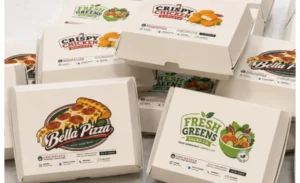
This pragmatism is driving a surge in specific material innovations, particularly in the realm of molded fiber and bio-based barriers. As companies move away from expanded polystyrene (EPS) and single-use plastics to meet 2026 compliance deadlines, molded fiber has emerged as a frontrunner due to its scalability and consumer acceptance. Innovations in PFAS-free coatings and moisture barriers have allowed fiber-based packaging to enter categories—such as fresh protein and high-moisture electronics protection—that were previously reserved for plastics. The success of companies like Palouse Fiber Packaging highlights this trend: the focus is on utilizing regional agricultural waste and rapid-cycle manufacturing to solve immediate logistics problems while simultaneously hitting carbon reduction targets.
Furthermore, the "data-fication" of the package has become a central theme for 2026. To comply with the new traceability requirements, "smart packaging" is moving from a gimmick to a necessity. Digital product passports, powered by QR codes or RFID, are being used to track a package’s journey from the raw material stage to the sorting facility. This data is not just for the consumer; it is for the regulators who demand proof of recycled content and for the EPR schemes that determine the fees a brand must pay based on the recyclability of their portfolio.
However, the transition has not been seamless for everyone. 2025 was a year of "market Darwinism" in the packaging sector. Large legacy organizations with rigid supply chains have struggled to pivot as quickly as the new regulatory landscape demands. Some have floundered under the weight of compliance costs, while others have seen their market share eroded by agile, "practitioner-led" startups that built sustainability into their business models from day one. The "shock to the system" mentioned by industry leaders refers to this realization: sustainability is no longer a premium add-on; it is a license to operate.
Looking ahead to the remainder of 2026 and into 2027, the industry will likely see a consolidation of these trends. The "Impatient Sustainability" movement will mature, focusing on the "missing middle" of the circular economy—collection and sorting infrastructure. While we have made massive strides in creating recyclable materials, the physical infrastructure to process them remains inconsistent. Practitioners are now turning their attention to collaborative investments in chemical recycling and advanced mechanical sorting to ensure that the "recyclable" label on a package is a reality rather than a theoretical possibility.
Ultimately, the reflection on 2025 reveals that the packaging industry has finally outgrown its infancy of vague promises. We have entered an era where leadership is defined by the ability to execute repeatedly in short cycles. The organizations that will thrive in 2026 are those that have successfully merged their environmental ambitions with their quarterly balance sheets. They are the companies that understand that the planet does not care about a 2050 roadmap if the 2026 execution fails. The future of packaging belongs to the practitioners—those who are willing to do the difficult, unglamorous work of changing a nozzle, retooling a press, or auditing a supplier to gain a 2% improvement today, rather than promising a 100% revolution "someday." In the race against climate change and regulatory obsolescence, impatience has become the industry’s greatest virtue.