

The global supply chain is currently undergoing a period of profound transformation, driven by the dual pressures of environmental accountability and a persistent labor shortage. At the heart of this evolution is the palletizing process—the critical "final 50 feet" of the production line where products are secured for their journey through the complex web of global commerce. No longer viewed as a mere back-end utility, palletizing has emerged as a strategic frontier for innovation. Recent breakthroughs in material science and collaborative robotics are demonstrating that businesses can simultaneously enhance their operational efficiency, ensure worker safety, and drastically reduce their carbon footprint. As we move further into the decade, the integration of circular economy principles and user-friendly automation is setting a new standard for how goods are stored, handled, and transported across the globe.
A significant portion of this industry shift is centered on the materials used to unitize and protect cargo. Historically, the wooden pallet and its associated timber collars have been the workhorses of the shipping industry. However, the traditional reliance on wood presents several challenges, particularly in the context of one-way shipments where return logistics are economically or environmentally unfeasible. Recognizing this gap, Nefab, a global leader in sustainable packaging solutions, has pioneered a shift toward fiber-based alternatives. Their latest iteration of the EdgePak Collar represents a paradigm shift in how companies approach load stabilization.

The EdgePak Collar is engineered specifically to replace traditional wooden pallet collars, which are often heavy, prone to splintering, and difficult to dispose of at the destination. By utilizing high-strength, recyclable fiber materials, Nefab has created a solution that offers the structural integrity of wood with a fraction of the weight. This weight reduction is not merely a matter of convenience; it translates directly into lower fuel consumption during transit and a significant reduction in Scope 3 emissions. Furthermore, because these collars are fully recyclable within existing paper streams, they eliminate the "landfill legacy" often associated with one-way wooden packaging. Johan Tegell, Product Area Director at Nefab, notes that many organizations are still tethered to outdated wooden systems that create unnecessary waste. The EdgePak Collar addresses this by providing a customizable, scalable solution that meets the rigorous demands of industrial shipping while aligning with modern ESG (Environmental, Social, and Governance) goals.
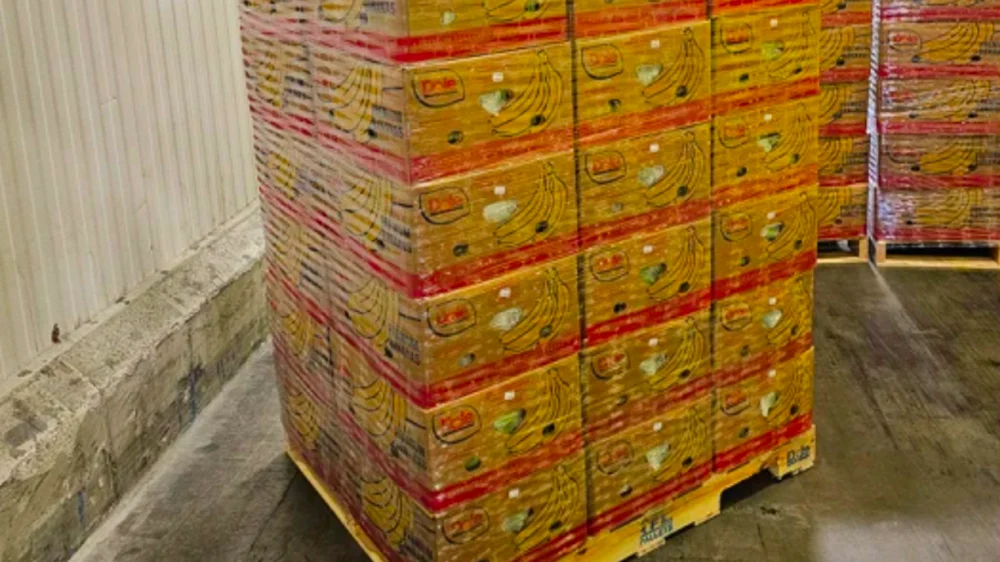
The drive toward "dematerialization"—the process of using less material to achieve the same or better results—is also manifesting in the agricultural sector. Dole Food Company, one of the world’s largest producers of fresh fruit, has recently expanded its commitment to sustainable logistics through the implementation of Oxifilm. This innovative, macro-perforated stretch film is currently being rolled out across Dole’s extensive banana and pineapple operations in Latin America. The challenges of shipping fresh produce are unique; fruits continue to "breathe" and release moisture and gases after being packed. Traditional, solid plastic stretch wrap can trap heat and condensation, leading to premature ripening or spoilage.
Oxifilm solves this through a macro-perforated design that allows for optimal airflow while maintaining the high tension required to keep pallets stable during long-distance maritime transport. The environmental impact of this switch is staggering. By adopting this 100% recyclable film, Dole is able to eliminate approximately 85% of the supplementary materials previously required for pallet stabilization, such as corner boards, heavy-duty plastic straps, and metal clamps. In practical terms, this removes roughly 4 pounds (2.2 kg) of waste from every single pallet shipped. When multiplied by the millions of pallets Dole moves annually, the reduction in plastic waste and raw material consumption represents a monumental leap toward a circular economy in the global food supply chain. This transition illustrates a growing trend where specialized films are replacing multi-component packaging systems, simplifying the recycling process for the end receiver while cutting costs at the source.
While material science addresses the physical footprint of palletizing, the "social" and operational challenges are being tackled through the lens of Industry 4.0 and advanced robotics. The manufacturing and warehousing sectors have long struggled with the physical toll that manual palletizing takes on workers. It is a repetitive, ergonomically taxing task that often leads to chronic injury and high turnover rates. Traditionally, the answer was high-speed industrial robotics, but these systems required massive footprints, expensive safety guarding, and specialized programmers to operate.
Applied Manufacturing Technologies (AMT) is bridging this gap with their newly introduced collaborative palletizing solution. Built around the FANUC CRX-30iA—a robot known for its high payload capacity and "skin" sensors that allow it to stop instantly upon contact with a human—the AMT system is designed for the modern, flexible workspace. Unlike traditional robots that operate behind cages, this "cobot" (collaborative robot) can work side-by-side with human operators. This eliminates the need for expansive safety zones, allowing manufacturers to reclaim valuable floor space.
One of the most significant barriers to automation for small and medium-sized enterprises (SMEs) has been the complexity of software. AMT has addressed this by developing a custom, intuitive user interface (UI) that removes the "black box" of robotic programming. This plug-and-play approach allows warehouse staff to create and modify pallet patterns on the fly without needing a degree in computer science. This democratization of technology is crucial in an era where labor is scarce; it allows companies to upskill their existing workforce, moving employees from back-breaking manual labor to roles as "robot supervisors."

The technical specifications of the FANUC CRX-30iA are particularly noteworthy in the palletizing context. With a 30kg payload capacity, it can handle a wide variety of case sizes and weights that were previously beyond the reach of lighter collaborative robots. This capability, combined with AMT’s engineering expertise as a FANUC Level V Authorized System Integrator, ensures that the system provides the uptime and reliability required for high-throughput environments. By focusing on fast deployment and ease of use, AMT is helping businesses solve the productivity puzzle while simultaneously improving the safety profile of the warehouse floor.
The synergy between these three innovations—Nefab’s fiber-based collars, Dole’s perforated films, and AMT’s collaborative robots—points toward a future where the palletizing station is the most technologically dense part of the production line. We are seeing a convergence where the "container" (the pallet and collar), the "stabilizer" (the film), and the "labor" (the robot) are all evolving toward a more sustainable and efficient model.
Looking ahead, the next phase of palletizing will likely involve the integration of artificial intelligence and machine vision. Imagine a system where the AMT/FANUC cobot uses AI to identify damaged boxes or mismatched SKUs in real-time, while the data regarding the recyclable content of the Nefab collars and Oxifilm is tracked via digital product passports. This level of transparency and intelligence will allow brands to not only claim sustainability but to prove it with granular data.

Furthermore, the shift toward these technologies is being accelerated by changing consumer expectations. As e-commerce continues to dominate the retail landscape, the "unboxing" experience is starting earlier in the supply chain. Retailers are demanding that shipments arrive in shelf-ready, easy-to-recycle packaging that requires minimal labor to process. The innovations highlighted here directly support this demand. By reducing the use of complex straps and clamps (as seen in the Dole case) and moving toward lightweight fiber solutions (as seen with Nefab), companies are making life easier for the retail workers who must eventually break these pallets down.
In conclusion, the advancements in palletizing today are a reflection of a broader industrial shift toward resilience and responsibility. The work of companies like Nefab, Dole, and Applied Manufacturing Technologies proves that the challenges of the modern supply chain—waste, labor shortages, and safety—are not insurmountable. Through the clever application of material science and the thoughtful deployment of collaborative automation, the industry is ensuring that the journey from the factory floor to the store shelf is as efficient, safe, and sustainable as possible. As these technologies continue to mature and gain widespread adoption, the humble pallet will remain at the center of a global effort to build a smarter, greener world of commerce.