

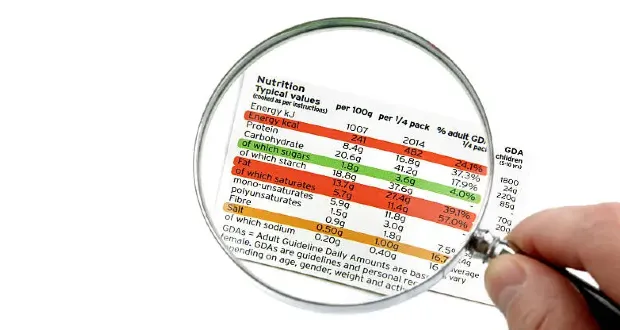
A significant investigation conducted by the leading consumer advocacy organization, Which?, has exposed critical inconsistencies and widespread confusion surrounding the voluntary "traffic light" nutrition labelling system currently employed on food products across the United Kingdom. The findings strongly suggest that the current reliance on voluntary adoption by manufacturers and retailers is failing consumers, prompting a forceful call for the government to establish mandatory, standardized front-of-pack (FOP) nutrition information to genuinely support public health goals in tackling the nation’s escalating obesity crisis.
The research meticulously analyzed the application of the established colour-coded system, which was initially introduced in 2013 to provide an at-a-glance indication of the levels of fat, saturated fat, sugar, and salt, alongside total calorie count. This system utilizes a simple, intuitive spectrum: green signifies low levels, amber indicates medium, and red flags high concentrations of these key nutritional components. However, the core problem identified by Which? lies in its voluntary nature. The investigation revealed a patchwork implementation where some food producers either entirely omit the traffic light graphics or utilize the scheme inconsistently, often failing to display the crucial colour-coding alongside the numerical data. This patchwork approach directly undermines the system’s primary objective: enabling rapid, informed purchasing decisions at the point of sale.
"The UK is grappling with a serious obesity epidemic, and it is unequivocally clear that the existing framework for communicating vital nutritional information on food packaging is inadequate," stated Sue Davies, Head of Food Policy at Which?. "Our research highlights that while consumers value the simplicity of the traffic light concept, the current voluntary framework is leading to opacity rather than clarity. We are urging the government to move beyond suggestion and mandate that every single food item sold carries standardized, clear FOP nutrition labelling. This is not merely a matter of convenience; it is a fundamental public health imperative."
The data gathered by Which? underscores the public’s appetite for this simplified guidance. When polled, a substantial one-third (33%) of consumers explicitly stated that the FOP nutrition label was the very first piece of information they sought out when examining a product. Furthermore, nearly half (47%) of those surveyed confirmed they found the colour-coded system straightforward and easy to comprehend—a high approval rating that underscores its potential when applied correctly.
The utility of the traffic light system was shown to be highest in categories where impulse buying and frequent consumption are common. Shoppers reported using the colour coding most frequently when selecting snacks (cited by 56% of respondents), followed by dairy products (33%) and breakfast cereals (27%). This dependency on quick visual cues confirms that shoppers are actively trying to navigate complex food choices under time constraints, relying heavily on easily digestible summaries provided on the front of the packaging.
The inconsistency reported is multifaceted. In some instances, retailers might apply the traffic light system to own-brand products but omit it from national brands stocked alongside them. In other cases, the required colour coding is present but is printed in such small fonts or positioned in obscure locations on the packaging that it is effectively invisible to the casual shopper. This lack of uniformity forces consumers to actively hunt for information that should be immediately apparent, eroding trust and negating the speed advantage the system is designed to offer.
Which? is not only advocating for mandatory adoption but also for significant refinement of the existing structure to enhance its effectiveness further. The organization’s analysis suggests that while the concept is sound, its practical execution needs an overhaul. Recommendations stemming from the research include ensuring the FOP labels are displayed more prominently—perhaps through larger sizing and standardized positioning—and simplifying the overall presentation to maximize clarity and minimize cognitive load for the shopper navigating crowded supermarket aisles.
"The current situation allows for loopholes that undermine consumer confidence," Davies elaborated. "If a shopper trusts that a label is present, they expect it to be comprehensive and truthful. When they encounter products lacking this crucial guidance, or where the colours are ambiguous, the entire system loses credibility. We need a national standard, enforceable across the board, to ensure parity across the marketplace."
The call for government intervention targets the Department of Health and Social Care, urging legislative action to transition the labelling scheme from its current voluntary status to a legally required component of food marketing in the UK. Such a mandate would level the playing field for responsible manufacturers and ensure that all consumers, regardless of where they shop, receive the same baseline information necessary for making healthier dietary decisions.
Crucially, Which? emphasized that any mandated system must be accompanied by robust regulatory oversight. The consumer group explicitly called for the Food Standards Agency (FSA) and Food Standards Scotland (FSS) to be empowered with clear enforcement mechanisms. This oversight is deemed essential to maintain consumer trust, ensuring that manufacturers adhere strictly to the mandated standards regarding colour allocation, data accuracy, and placement visibility. Without rigorous enforcement, even a mandatory system risks becoming diluted by non-compliance.
The implications of these labelling inconsistencies extend beyond mere inconvenience; they touch upon wider societal health outcomes. As the government continues to pursue strategies to reduce diet-related diseases, clear, accessible nutritional communication is a cornerstone of preventative public health policy. When the tools designed to help consumers choose lower-fat, lower-sugar, and lower-salt options are inconsistently applied or easily missed, these public health goals become significantly harder to achieve.
In conclusion, the comprehensive findings presented by Which? paint a clear picture of a well-intentioned but fundamentally flawed voluntary system. The consumer champion’s urgent demand is for the government to step in, legislate for universal, consistent, and highly visible front-of-pack nutrition labelling, thus empowering the British public to take definitive, informed control over their dietary intake in the face of persistent health challenges. The time for optional guidance, the report concludes, has passed; mandatory clarity is now essential.