
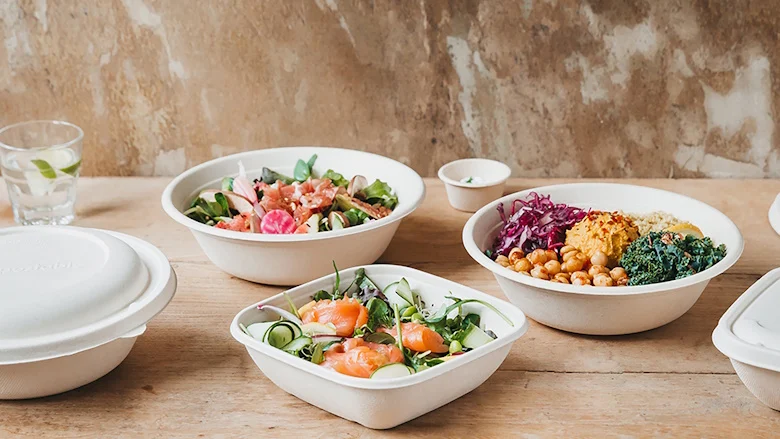
The global foodservice industry is currently navigating one of its most transformative eras, driven by a dual pressure of stringent environmental regulations and a shifting consumer consciousness regarding chemical safety. At the heart of this transition is the urgent need to eliminate "forever chemicals"—per- and polyfluoroalkyl substances (PFAS)—from food contact materials. Responding to this critical market demand, Sabert Corporation Europe has announced the full-scale rollout of its PULPUltra™ range across Europe, the United Kingdom, and Ireland. This move represents a significant technological leap in fiber-based packaging, offering a solution that reconciles the need for high-performance grease resistance with the imperative of ecological safety.
For over a decade, Sabert has maintained a foothold in the European market as a pioneer of bagasse-based solutions. Bagasse, a fibrous byproduct of sugarcane processing, has long been favored for its renewable nature and sturdy structural properties. However, the industry has historically relied on PFAS to provide the necessary oil and grease resistance (OGR) required for hot and moist foods. As health and environmental concerns regarding PFAS bioaccumulation have come to the fore, the industry has scrambled to find alternatives that do not sacrifice functionality. PULPUltra™ is Sabert’s answer to this challenge, utilizing a "next-generation" formulation that contains no intentionally added PFAS while meeting the rigorous demands of modern professional kitchens and high-volume food-to-go operations.
The rollout of PULPUltra™ follows a successful phased introduction in key regional markets. The journey began in Ireland, where the technology was first applied to bespoke packaging solutions for children’s meals—a segment where safety and chemical-free compositions are under the highest level of scrutiny. Subsequently, the range was introduced to the French market through the Gastronorme line, catering to the specific dimensions and durability requirements of the professional catering and hospitality sectors. With these successful proof-of-concept launches complete, the pan-European expansion signals Sabert’s readiness to scale this technology to meet the needs of the entire continent.
Alex Noake, Senior Vice President and Managing Director for Sabert Europe, emphasized that the launch is not merely an incremental update but a fundamental shift in packaging science. According to Noake, the goal was to create a "game-changing" product that satisfies both the legislative standards of the European Union and the practical expectations of foodservice operators who cannot afford to have packaging fail during transport or reheating. The PULPUltra™ line is engineered to provide superior strength and heat resistance, addressing the common complaints associated with early-generation pulp products, such as softening or leaking when exposed to high temperatures.
Technically, the PULPUltra™ range is composed of more than 95% bagasse fibers. The critical innovation lies in the remaining 5%, which consists of a specialized barrier spray coating. This coating is applied to the surface to provide an impermeable layer against oil and grease. Sabert reports that this proprietary application outperforms many existing market alternatives, including traditional laminated products which can often be difficult to recycle due to the multi-material nature of their construction. By keeping the non-fiber content below the 5% threshold, Sabert ensures that the packaging remains highly compatible with existing recycling streams while maintaining the integrity of the food within.
The versatility of PULPUltra™ is a cornerstone of its market appeal. In the modern foodservice landscape, a single piece of packaging must often perform multiple roles. It may need to be stored in a freezer, moved to a refrigerator, and then heated in a variety of appliances. Sabert has designed PULPUltra™ to be freezer-safe, ensuring that frozen goods maintain their structural integrity without the packaging becoming brittle or waterlogged upon thawing. Furthermore, the material is certified safe for use in microwave ovens, conventional ovens, and even MerryChef high-speed ovens—a critical requirement for the "fresh-to-go" and "quick-service restaurant" (QSR) sectors where speed of service is paramount.
Sustainability is the primary driver behind the PULPUltra™ development, and the range has been rigorously tested against European standards. The product is fully compliant with the European Packaging and Packaging Waste Regulation (PPWR), a landmark piece of legislation aimed at reducing packaging waste and ensuring that all packaging on the EU market is recyclable or reusable in an economically viable way by 2030. In the United Kingdom, the range has achieved a "green" rating under the Recycling Assessment Methodology, indicating its high level of recyclability within the UK’s specific infrastructure.
Beyond recyclability, the compostability of the range offers an end-of-life pathway for packaging that is heavily soiled with food residue—a common issue that prevents traditional paper and plastic from being recycled. PULPUltra™ has received the TÜV OK Compost Industrial certification, confirming that it will break down in industrial composting facilities within a specified timeframe. Looking ahead, Sabert has also indicated that home-compostable certification is forthcoming, which would allow consumers to dispose of the packaging in their own garden compost bins, further closing the loop on the circular economy.
The expansion of the PULPUltra™ line comes at a time of significant corporate growth for Sabert. In July 2025, the company made a major strategic move by acquiring Colpac Limited, a prominent UK-based manufacturer of sustainable paperboard packaging. This acquisition has significantly bolstered Sabert’s manufacturing capabilities and its presence in the UK market, which remains one of the largest and most influential foodservice markets in the world. By integrating Colpac’s expertise in paperboard with Sabert’s innovations in molded fiber, the company is positioning itself as a comprehensive provider of sustainable solutions for the food-to-go and industrial markets.
Furthermore, Sabert’s role as a founding member of the Alliance for Fibre-Based Packaging underscores its commitment to industry-wide advocacy for sustainable materials. This alliance works to promote the benefits of fiber-based solutions and helps shape the regulatory landscape to ensure that these materials are recognized for their role in reducing the environmental footprint of the global supply chain. By leading through both innovation and collaboration, Sabert is helping to define the future of how food is packaged and consumed across the globe.
The shift toward PFAS-free, fiber-based packaging is not just a trend but a response to a global health and environmental crisis. PFAS chemicals, often used for their non-stick and water-resistant properties, have been linked to a range of health issues, including hormonal disruption and immune system suppression. Because they do not break down in the environment, they have earned the moniker "forever chemicals," contaminating water supplies and soil worldwide. By providing a high-performance alternative that eliminates these substances, Sabert is addressing a primary concern for retailers, brand owners, and consumers alike.
As the PULPUltra™ range becomes available across the UK, Ireland, and mainland Europe, it sets a new benchmark for what is possible in the realm of sustainable foodservice. The ability to handle hot, greasy foods in a package that is both recyclable and compostable—without the use of harmful chemicals—represents a significant victory for materials science. For foodservice operators, this means they no longer have to choose between performance and the planet. For consumers, it provides the peace of mind that their ready-to-eat meals are housed in packaging that respects both their health and the environment.
In conclusion, the launch of PULPUltra™ is a testament to Sabert Corporation Europe’s long-term vision of a circular economy. By leveraging over a decade of experience in bagasse pulp and combining it with cutting-edge barrier technology, the company has created a product line that meets the complex demands of the 21st-century food industry. As regulatory pressures continue to mount and the demand for sustainable options grows, the widespread availability of PULPUltra™ will likely play a pivotal role in the industry’s transition away from plastic and PFAS, paving the way for a cleaner, safer, and more sustainable future in food packaging.