
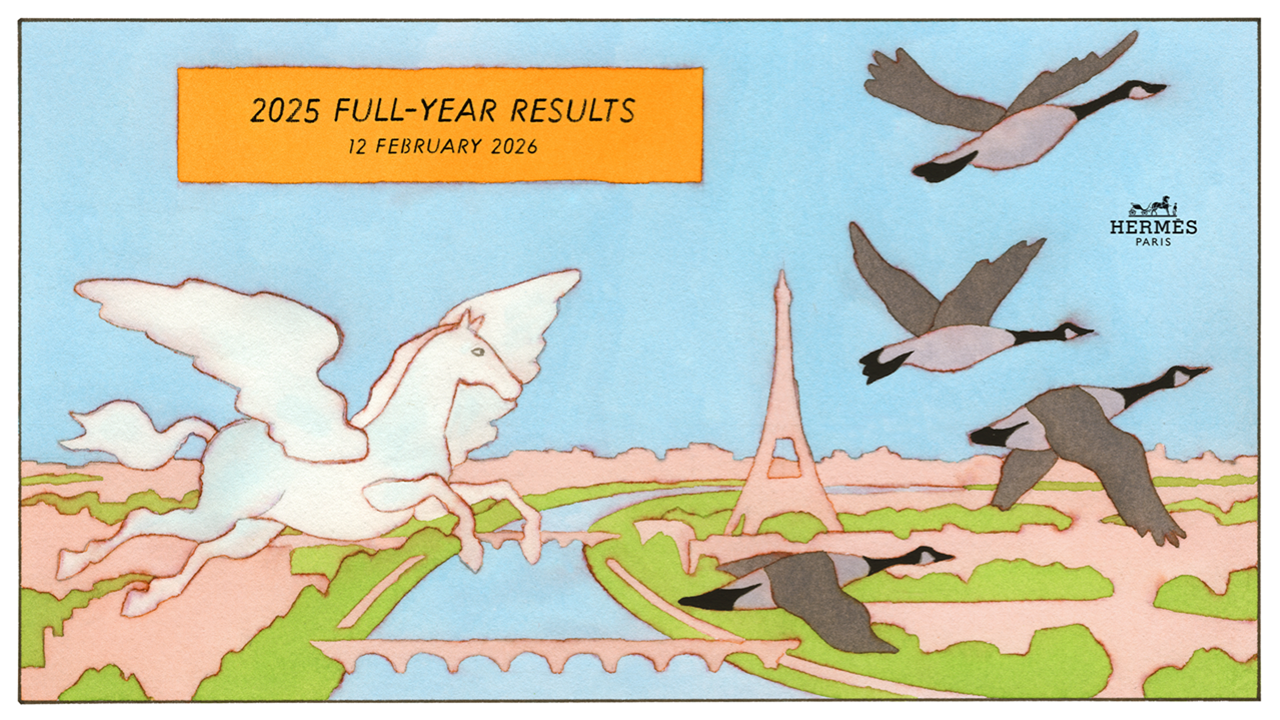
On February 12, 2026, the venerable French luxury house Hermès announced a landmark financial performance for the fiscal year 2025, cementing its status as an unparalleled titan in the high-end market. Despite navigating a complex geopolitical landscape and fluctuating currency valuations, the Maison achieved an extraordinary consolidated revenue of €16 billion. This monumental figure underscores the enduring power and effectiveness of Hermès’ meticulously controlled, artisanal business model, which consistently outpaces the general trajectory of the broader luxury sector.
The full-year results showcased robust, synchronized growth across all key geographic zones and product categories. At constant exchange rates, total revenue climbed by an impressive 9% compared to 2024 (representing a 5.5% rise at current rates). The final quarter of 2025 maintained strong momentum, with sales accelerating to €4.1 billion, marking a 10% increase at constant exchange rates, matching the prior quarter’s pace and setting a confident tone for the 2026 fiscal year.
Axel Dumas, Executive Chairman of Hermès, articulated the core strength driving these results: "The Hermès model, anchored by an exclusive and qualitatively managed distribution network, coupled with profound vertical integration, has once again demonstrated its exceptional efficacy. This unique strategic blueprint has allowed the house to secure substantial revenue growth and deliver superior performance. In this environment of global uncertainty, Hermès approaches 2026 with unwavering confidence, sustained by relentless creativity and our peerless savoir-faire."
Global Resilience and Strategic Expansion
Hermès reported affirmative growth across every operational region in 2025, a testament to its well-diversified global footprint and resilience against localized economic headwinds.
Europe, the brand’s historical heartland, continued its upward trend. France experienced solid growth of 9%, buoyed by devoted domestic clientele and consistent international visitation. The rest of Europe advanced by 11%, supported by strategic retail enhancements, including the February reopening of the renovated Florence boutique and the November re-inauguration of the Knokke store in Belgium. Future expansion is already scheduled, with the highly anticipated unveiling of the New Bond Street flagship in London set for June 16, 2026.
The Americas delivered an exceptional year, recording a 12% revenue increase. Expansion remained a central pillar of the strategy, marked by the inauguration of new points of sale in Scottsdale, Arizona, and Nashville, Tennessee, alongside the significant refurbishment of the Molière boutique in Mexico City.
In Japan, the market demonstrated remarkable vitality, posting a 14% rise, driven largely by the loyalty of local customers and the brand’s stringent distribution oversight. Engagement was further amplified by cultural activations, such as the immersive Mystery at the Grooms event staged in Tokyo in November, deepening connections to the Maison’s heritage and craftsmanship.

Asia (excluding Japan) registered a 5% gain for the year, validating the gradual recovery signaled in the third quarter, particularly within Mainland China. This positive trajectory solidified by year-end, with the fourth quarter accelerating to an 8% increase, benefiting from significant retail upgrades in key hubs like Macao, Seoul, Bangkok, and Changsha.
The ‘Other’ regions, primarily encompassing the Middle East, led the growth chart with a commanding 15% increase, spearheaded by particularly robust commercial activity within the United Arab Emirates.
Leather Goods Remain the Engine of Growth
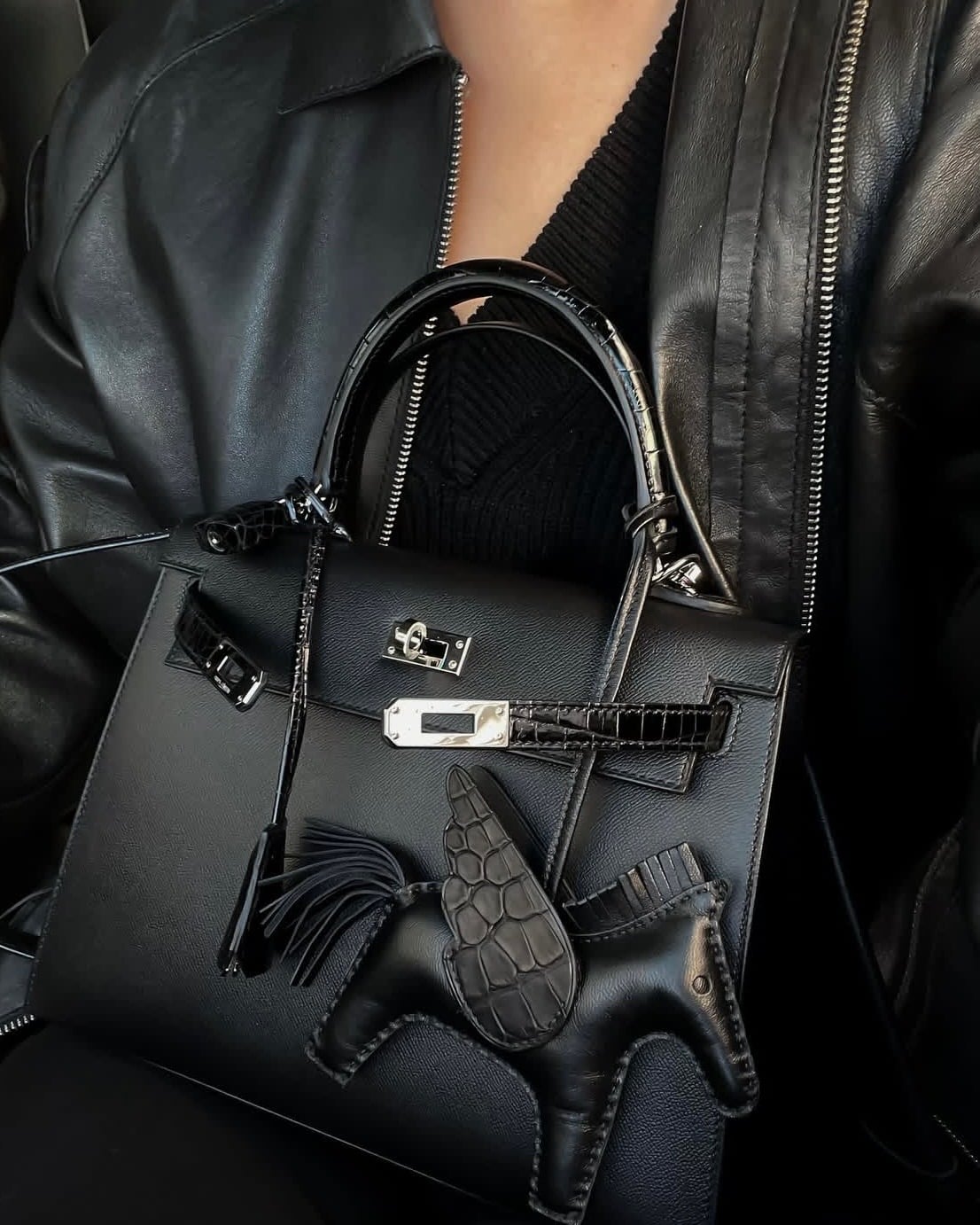
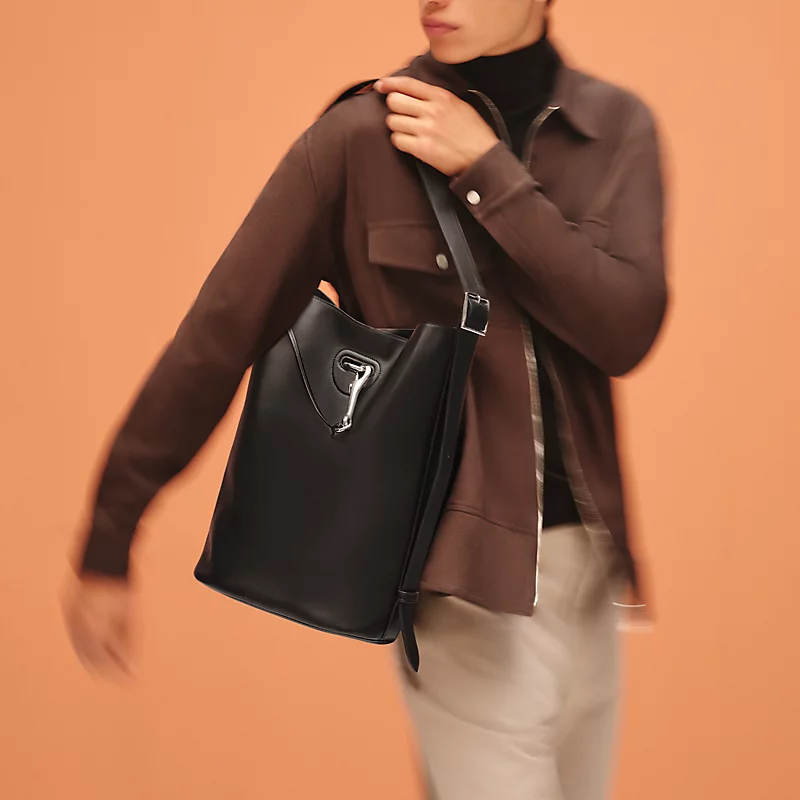
When examining the individual métiers, Hermès posted broadly positive figures across most segments in 2025. The Leather Goods and Saddlery division once again took the lead, achieving a substantial 13% revenue increase. This category remains the primary catalyst for the Maison’s expansion, fueled by sustained, high-level desirability, strategic increases in production capacity, and the successful introduction of compelling new designs, including the highly praised So Médor, Seau Mousqueton, and Haut à Courroies à relier models.
To ensure this heightened demand can be met sustainably, Hermès inaugurated its twenty-fourth leather goods workshop in L’Isle-d’Espagnac (Charente) in September 2025. The commitment to scaling artisanal capacity is long-term: further workshops are slated for Loupes (Gironde) in 2026, Charleville-Mézières (Ardennes) in 2027, Colombelles (Calvados) in 2028, and a newly confirmed site in Les Andelys (Eure) slated for completion by 2030.
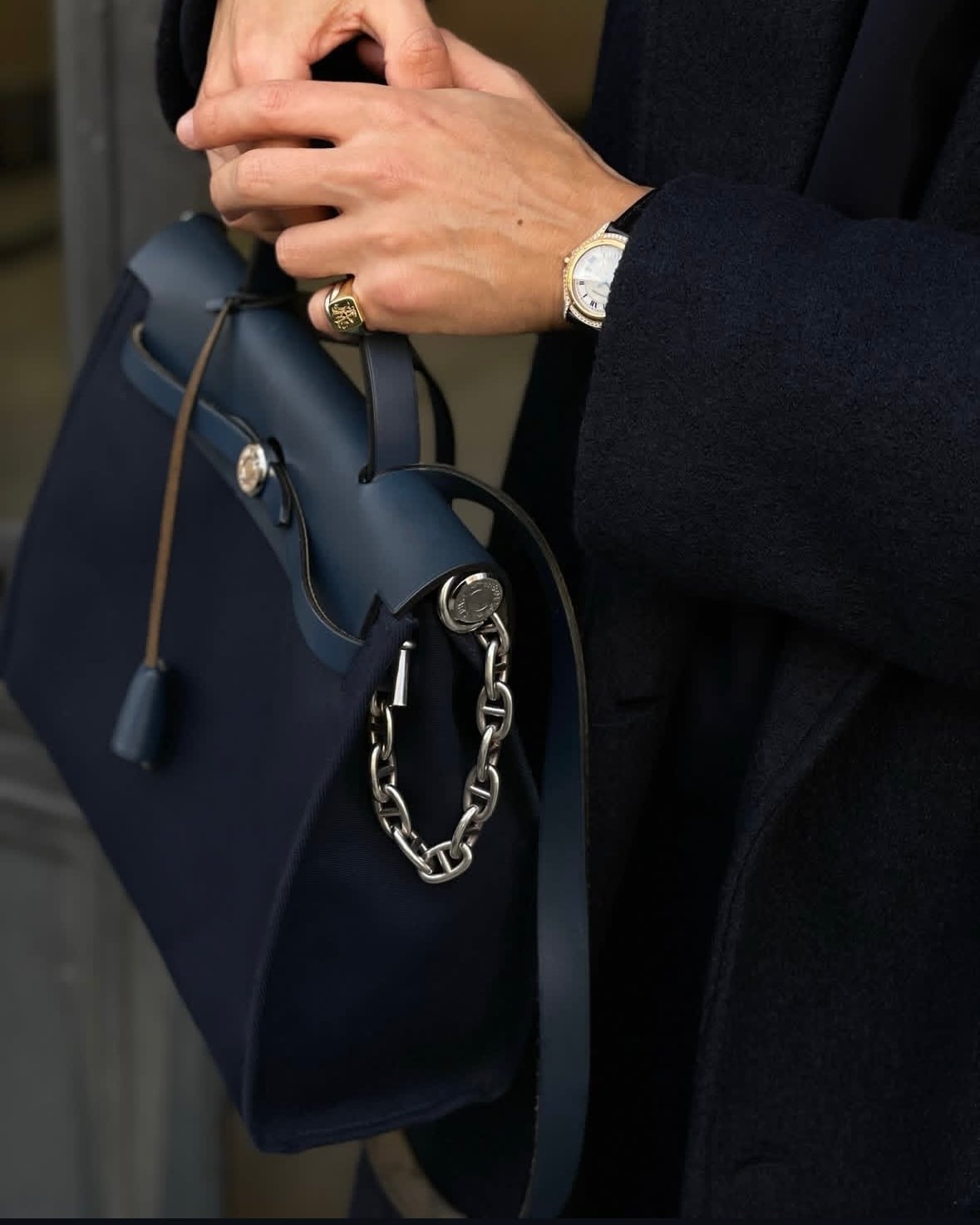
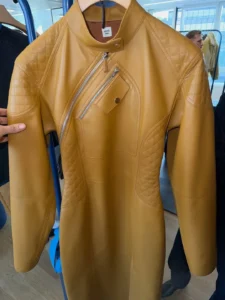
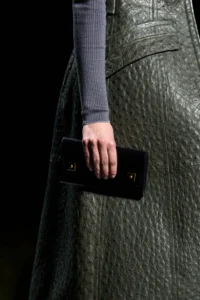
Other categories also performed strongly: Ready-to-Wear and Accessories grew by 6%, supported by the positive reception of the Spring-Summer 2026 lines and the critically acclaimed presentation of Véronique Nichanian’s Fall-Winter 2026 menswear collection. Silk and Textiles rose 5%, benefiting from notable innovation in color palettes and product formats, particularly in the strong fourth quarter. The Other Hermès sectors—encompassing Jewellery and the Home universe—saw an 11% rise, highlighted by significant additions to the Adage jewelry line and the launch of the Les formes de la couleur Haute Bijouterie collection.
Two segments faced more complex year-over-year comparisons. Perfume and Beauty saw an 8% contraction, largely due to the demanding high-base effect created by the blockbuster launch of Barénia in 2024. Watches experienced a slight 2% decline for the year, though the second half returned to positive territory, underpinned by the sustained success of the H08 line and refined interpretations of the classic Le temps suspendu. Investment in this sector continues, with the Noirmont watchmaking facility in Switzerland scheduled for expansion by 2028.

Strategic Insights and Forward Outlook
During the financial presentation, Axel Dumas offered key perspectives on strategic developments and pricing. Regarding the long-awaited entry into haute couture and skincare, Dumas confirmed that recruitment of specialized workshops and seamstresses is underway. He stressed the importance of patience, stating the initiatives must be launched at the "right time," but provided assurance that progress is steady: "It’s on its way."
Addressing inflation and client pricing, Dumas confirmed an average price adjustment of 5% to 6% across product categories implemented at the start of the year. Eric du Halgouët, Executive Vice-President Finance, clarified that these necessary increases cover rising production expenses, including precious materials like gold, and factor in employee remuneration and bonuses.
When questioned on the economic climate in China, Dumas acknowledged global concerns regarding personal wealth and consumer confidence, noting these psychological factors impact luxury appetite more than raw economic growth figures. He reaffirmed that Leather Goods, alongside Women’s Ready-to-Wear and Jewellery, remain crucial, high-value pillars for the Maison.
Dumas also touched upon the evolving luxury landscape, humorously referencing commentary about rising non-French brands like Labubu and noting the expansion of Chinese labels into European markets. He maintained that Hermès does not seek a monopoly; rather, a vibrant, diverse luxury ecosystem can ultimately elevate overall consumer engagement, benefiting the segment’s top players.

Commitment to Artisans and Future Creativity
The commitment to human capital was evident as the group expanded its global workforce by over 1,300 individuals in 2025, with 800 additions in France, bringing the total headcount to 26,494 worldwide. As a gesture of appreciation, Dumas announced that all global employees will receive a €120 wage enhancement and a €3,000 bonus in March. Furthermore, the company proposed a significant dividend of €18.00 per share at the upcoming General Meeting in April 2026.
Addressing concerns that increased leather production might dilute desirability, Dumas countered the common "Ferrari analogy" (demand minus one unit). He pointed to the evolution of the product mix: leather goods accounted for 55% of revenue 13 years ago, versus 45% today. While critics suggest this shift masks underlying pressure on core leather demand, the results suggest diversification is succeeding alongside capacity expansion.

As Hermès moves into 2026, the theme "Venture Beyond" encapsulates its ambition to explore new creative horizons while rigorously maintaining its foundational craftsmanship. The year will involve a significant creative transition as the house anticipates Grace Wales Bonner’s inaugural collection in 2027, necessitating interim creative stewardship from the Hermès design team for the Men’s Spring-Summer 2027 offering in June. With its robust business framework, ongoing investment in its skilled artisans, production infrastructure, and unwavering creative output, Hermès is exceptionally well-positioned to navigate this transitional period and continue defining the apex of luxury for years to come.