
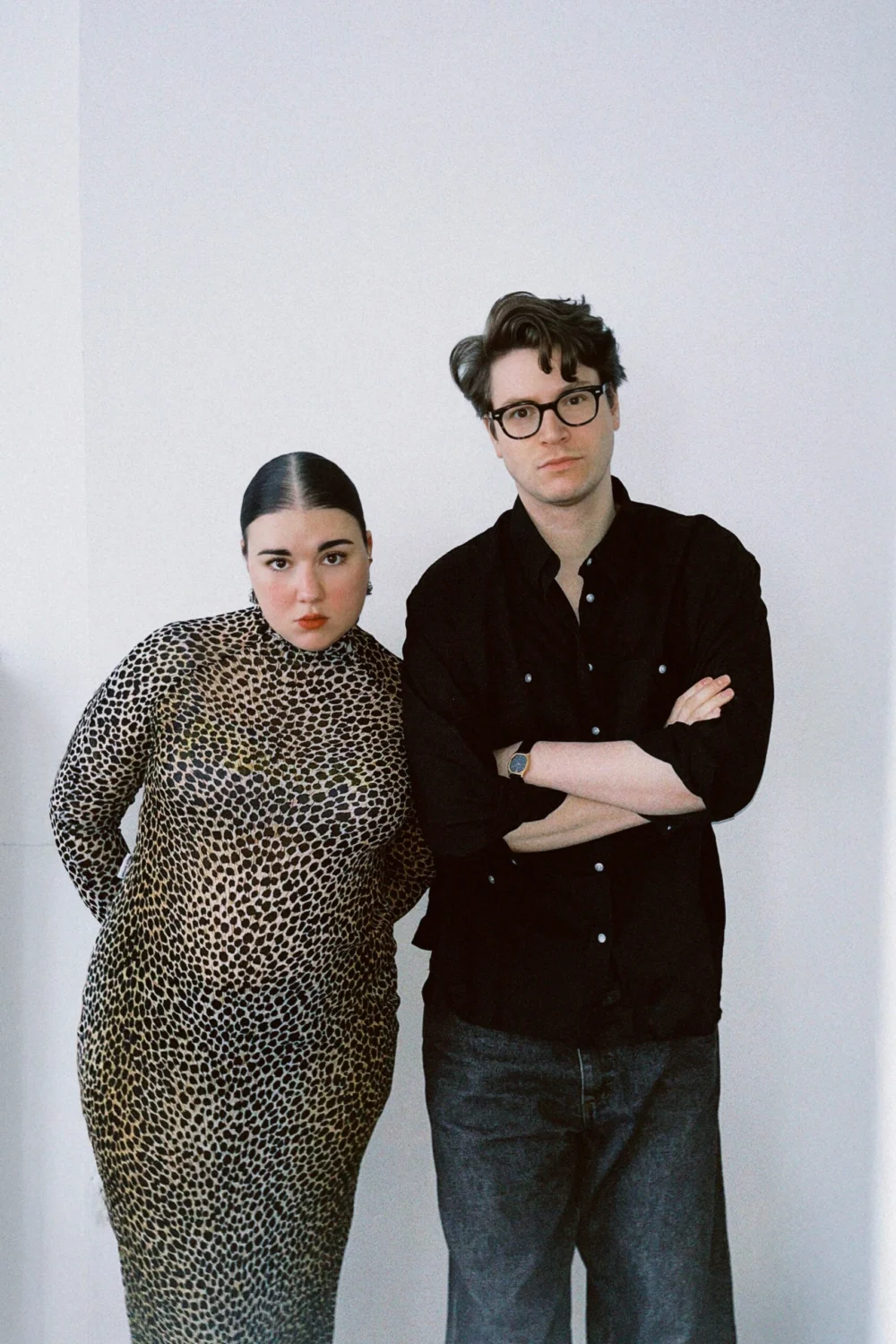
When Ester Manas and Balthazar Delepierre founded their namesake label in 2019, they did so with a radical proposition: that high fashion should not be a gatekeeper of the "ideal" body, but a celebration of the human form in all its variations. Based in Brussels and a graduate of the prestigious La Cambre, Manas quickly became the darling of the industry. The brand was shortlisted for the LVMH Prize, won the ANDAM Grand Prix, and found its way into the world’s most exclusive retailers, from Galeries Lafayette to Ssense. For a moment, it appeared that the fashion industry—a sector historically built on the pillars of exclusivity and narrow aesthetic standards—was finally ready to embrace a more democratic future. However, as Manas returns to the Paris Fashion Week schedule after a year-long hiatus to welcome her first child, she finds an industry that has not only stalled in its progress but has actively begun to retreat.
The current state of the industry suggests that the brief flirtation with size inclusivity was less a structural shift and more a seasonal whim. Over the past several seasons, the presence of mid-size and plus-size models on the world’s most influential runways has plummeted. According to data from the search engine Tagwalk, the Autumn/Winter 2023 season saw a 24% decrease in the use of non-sample-size models compared to the previous year. In some fashion capitals, the representation of bodies above a US size 12 hovered at less than 1% of all looks presented. This regression coincides with the cultural resurgence of "heroin chic" aesthetics and the widespread pharmaceutical trend of weight-loss injections, creating a perfect storm where the industry feels emboldened to return to its exclusionary roots.
For Manas, this shift is more than just a change in casting; it is a betrayal of the promise that fashion could be for everyone. The industry’s treatment of body inclusivity as a "trend"—analogous to the rise of "quiet luxury" or "balletcore"—is fundamentally flawed. Trends are designed to expire, but the human body is not a seasonal accessory. By categorizing the inclusion of larger bodies as a passing fad, the industry treats the majority of the global population as a temporary marketing gimmick. This approach is particularly egregious considering the economic realities: the global plus-size clothing market was valued at approximately $193 billion in 2021 and is projected to reach $285 billion by 2028. For an industry that prides itself on capitalist efficiency, the refusal to serve this demographic is not just a moral failure; it is a baffling economic oversight rooted in deep-seated prejudice.

One of the most persistent myths used to justify this exclusion is the "cost of manufacturing." Designers and executives frequently claim that producing larger sizes is prohibitively expensive due to the extra fabric required. Manas, however, dismantles this argument with the precision of a technician. In the complex landscape of global luxury manufacturing, the cost of raw materials is often one of the smaller line items compared to labor, marketing, logistics, and retail margins. Furthermore, every garment produced results in "cabbage" or fabric waste; a sophisticated pattern-making process can often minimize waste in larger sizes just as effectively as in smaller ones. To reduce the argument for inclusivity to a few extra inches of silk or wool is to ignore the sophistication of modern supply chains. It is a convenient excuse that masks a lack of will to invest in the technical expertise required for inclusive pattern grading.
The industry’s "fallback position," as Manas describes it, is to shift the burden onto women themselves. There is a pervasive, often unspoken sentiment that if a woman cannot fit into a designer’s vision, the fault lies with her lifestyle rather than the designer’s lack of imagination. This moralizing of the body is a form of "moral laziness." Fashion has always been about selling dreams and aspirations, but when those dreams are predicated on the erasure of diverse bodies, they become tools of oppression. The industry’s reach is tectonic; it shapes how society views health, beauty, and worth. When iconic cultural touchstones—like the famous "cerulean" monologue in The Devil Wears Prada—demonstrate how high fashion dictates mass-market reality, we see how the exclusion of larger bodies on the runway trickles down into a broader societal normalization of fatphobia.
The harm is further compounded by the phenomenon of "cosmetic inclusivity" or tokenism. We are currently living in an era where a plus-size model might grace the cover of a major fashion magazine or walk a high-profile runway, yet the clothes she is wearing are custom-made "one-offs" that will never see a retail floor. This creates a cruel illusion of progress. A consumer sees a body like hers represented in a glossy editorial, feels a momentary spark of validation, and then hits a "glass wall" when she attempts to actually purchase the garment. This bait-and-switch tactic allows brands to reap the social capital of being "diverse" without doing the hard work of actually producing and stocking inclusive size ranges. It is diversity as a marketing campaign rather than a business model.
Even when brands do attempt to include different body types, they often settle for what Manas calls the "comfortable middle ground." This usually involves casting models who are a US size 6 or 8—bodies that are slightly larger than the traditional runway sample but still fall well within the bounds of conventional beauty standards. While any diversification is technically progress, using these "acceptable" larger bodies as a shield against criticism allows the industry to pat itself on the back while continuing to ignore the millions of women who fall outside even that expanded narrow window.

Since becoming a mother, Manas’s perspective on these contradictions has only sharpened. She observes an industry that is obsessed with innovation in every area except the human one. Fashion houses spend millions on spectacular, immersive runway shows, cutting-edge digital activations, and sustainable textile research. They recycle colors, silhouettes, and historical references with relentless fervor. Yet, when it comes to the "standardization" of the human body, the industry remains stagnant. The refusal to recognize larger bodies as legitimate, desirable, and worthy of luxury is a structural choice, not an accident of the creative process.
At Ester Manas, the path has been intentionally different. Most emerging luxury brands follow a traditional trajectory: secure significant venture capital or private equity funding, build a brand identity, and eventually move toward profitability. Manas and Delepierre reversed this. They focused on creating a desirable, identifiable aesthetic first—garments that actually sold and resonated with a neglected consumer base—to prove the viability of their mission before seeking expansion. However, they have found that even with proven sales and critical acclaim, inclusive brands often hit a "glass ceiling." Investors and industry veterans still view inclusivity as "niche" or "militant," terms that have historically been used to marginalize talent from underrepresented backgrounds.
The fashion industry is currently facing a crisis of confidence. Between the pressures of sustainability, the shifting landscape of digital retail, and a consumer base that is increasingly skeptical of corporate platitudes, the old guard is struggling to maintain relevance. In this climate, the most valuable assets a brand can have are authenticity and credibility. Brands like Ester Manas, which are built on uncompromising commitments rather than seasonal trends, offer a blueprint for the future. True inclusivity is not a box to be checked; it is a fundamental restructuring of how we define beauty and value. If the industry wants to survive the 21st century, it must stop treating the human body as a liability and start recognizing it as the ultimate canvas for creativity. The era of the "expiration date" on diversity must come to an end; fashion must finally grow up.