

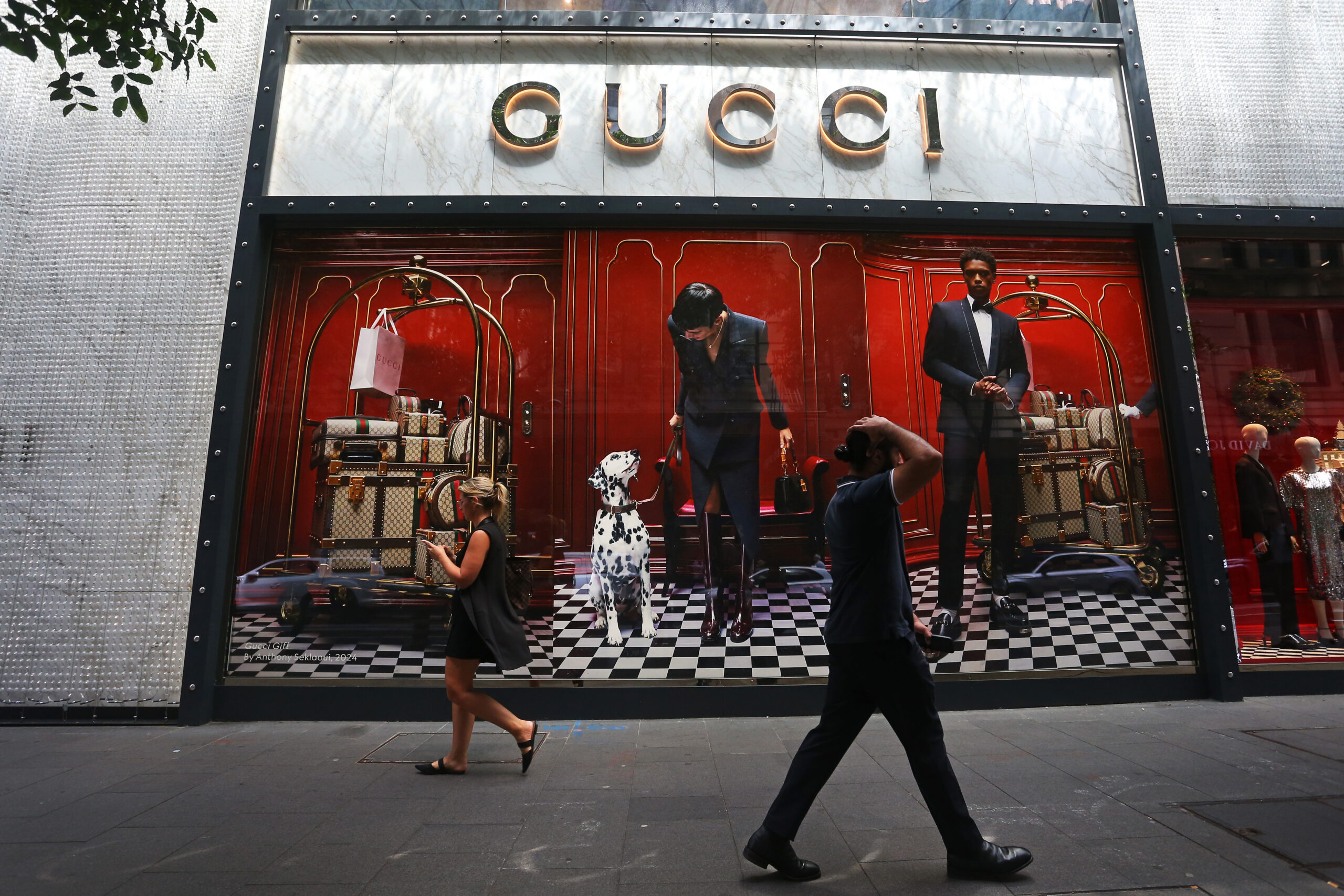
The global luxury landscape is currently navigating a period of profound transformation, and nowhere is this shift more visible than within the halls of the French conglomerate Kering. In a fiscal year defined by aggressive consolidation and a "scorched earth" approach to operational inefficiencies, Kering has reported a net loss for 2025. While the headline figures initially appear jarring for a group that houses some of the world’s most prestigious heritage brands, the underlying narrative is one of a calculated, disciplined retreat designed to facilitate a high-velocity rebound. Under the stewardship of Chief Executive Officer Luca de Meo, the parent company of Gucci, Saint Laurent, and Balenciaga is undergoing a metamorphosis, trading short-term profitability for long-term structural integrity.
The financial results for the fourth quarter, ending December 31, 2025, revealed a 9 percent decline in revenue at reported exchange rates, totaling 3.91 billion euros. On a comparable basis, which adjusts for currency fluctuations and perimeter changes, the decline was a more modest 3 percent. Though the numbers remained in negative territory, they notably outperformed the bleak forecasts set by industry analysts. A consensus of market experts had anticipated a more severe 5 percent organic drop, with reported sales expected to bottom out at 3.83 billion euros. This "beat" against expectations suggests that while the luxury sector is cooling, Kering’s internal stabilizers are beginning to take hold.
The group’s flagship brand, Gucci, which has long served as the primary engine of Kering’s growth, showed signs of a sequential recovery that caught the attention of investors. While Gucci’s organic revenue declined by 10 percent during the quarter, this was a slight improvement over the 11 percent decline predicted by the market. The brand is currently in the midst of a high-stakes creative transition. In a surprising turn of events highlighted in the year-end report, the arrival of a new creative direction—noted for its ability to revive interest through a blend of archival reverence and modern edge—has begun to re-engage the brand’s core demographic. Gucci’s stabilization is paramount for the group, considering it accounted for a staggering 59 percent of Kering’s total operating profit over the course of the year.
Reflecting on the full-year performance, the financial toll of Kering’s restructuring became evident. The group posted a net loss of 29 million euros for 2025, a stark contrast to the 1.02 billion euros in net profit recorded in 2024. This swing into the red was largely attributed to non-recurring items, primarily the heavy costs associated with optimization measures and the radical restructuring of the group’s supply chain and retail footprint. Recurring operating profit also saw a significant contraction, falling 33 percent to 1.63 billion euros. Consequently, the recurring operating margin eroded from 14.5 percent in 2024 to 11.1 percent in 2025.
During a webcast with analysts and members of the press, Luca de Meo was candid about the challenges faced by the group. "Of course, 2025 was not the year we wanted," de Meo admitted. "I think it didn’t reflect the full potential of Kering, and we all know it here. But what matters is our response: swift, disciplined and unwavering." The CEO, who joined Kering with a reputation for turnaround excellence from the automotive sector, characterized the current revenue levels as the "low point of the cycle" and the definitive "starting point of our rebound." Investors are now looking toward April 16, when de Meo is scheduled to present a comprehensive strategic roadmap during a Capital Markets Day in Florence, Italy—a location chosen to underscore the group’s deep roots in Italian craftsmanship.
The fourth quarter offered several glimmers of hope across the broader portfolio. While Saint Laurent’s organic sales remained flat, other houses within the group demonstrated resilience. The "Other Houses" division, which includes the avant-garde powerhouse Balenciaga and the British heritage brand Alexander McQueen, reported a 3 percent increase in organic sales. Bottega Veneta mirrored this success, also posting a 3 percent rise in comparable revenue, signaling that the brand’s focus on "quiet luxury" and artisanal leatherwork continues to resonate with high-net-worth consumers. Furthermore, the Kering Eyewear and Corporate division continued its steady ascent, recording a 2 percent increase in comparable sales, proving that the group’s vertical integration in the eyewear space remains a savvy strategic move.
The 2025 fiscal report also included significant restatements to account for the divestment of Kering Beauté. The division is being sold to the French cosmetics titan L’Oréal in a deal expected to finalize in the first half of 2026. As a result, beauty activities have been reclassified as discontinued operations. This move allows Kering to sharpen its focus on its core fashion and leather goods competencies while offloading the intensive capital requirements of the beauty sector to a market leader.
When placed in the context of the wider luxury market, Kering’s performance reflects a broader industry slowdown. LVMH Moët Hennessy Louis Vuitton, the world’s largest luxury conglomerate, recently reported a 3 percent year-over-year decline in organic sales for its fashion and leather goods division in the fourth quarter. As the market awaits the results from Hermès International, the general sentiment is one of caution. The post-pandemic "revenge spending" era has officially ended, replaced by a more discerning consumer base and a complex macroeconomic environment characterized by fluctuating interest rates and geopolitical uncertainty.
De Meo’s strategy for Kering is built on a foundation of rigorous fiscal discipline. The former Renault executive has already successfully implemented a massive cost-cutting drive that yielded 925 million euros in savings in 2025 alone. These efforts reduced the group’s total operating expenses by 9 percent year-on-year. This efficiency was achieved, in part, through a painful but necessary pruning of the group’s retail network. Kering shuttered 75 stores in 2025 and has already identified another 100 locations for closure in the coming year, with further consolidations under discussion. By reducing the physical footprint, the group aims to increase the exclusivity and productivity of its remaining boutiques.
Beyond operational costs, Kering has also focused on cleaning up its balance sheet. The group aggressively streamlined its portfolio by selling off non-core real estate assets, a move that helped bring net debt down to 8.04 billion euros from 10.5 billion euros the previous year. This improved liquidity provides de Meo with the "dry powder" necessary to reinvest in brand heat and marketing as the group enters its recovery phase.
Despite the cold reality of the financial tables, de Meo remains optimistic about the "vibe" on the ground. He emphasized that the turnaround is not just a mathematical exercise but a cultural one. "I spend time every weekend in our stores, seeing the teams, talking to clients, feeling the product, and I can tell you, there is energy coming back," he shared with the webcast audience. "Our products are reconnecting with our clients. The momentum is real—early, fragile, but real—and I can guarantee you that we will build on it."
As Kering prepares for its Florence summit in April, the fashion world will be watching closely. The transition from a net loss to a sustainable growth model will require a delicate balance of creative brilliance and corporate pragmatism. For now, Kering is a group in transit—stripping away the excess of previous years to reveal a leaner, more agile version of itself. While the 2025 results mark a difficult chapter in the group’s history, they also represent the clearing of the deck, setting the stage for what de Meo promises will be a decisive and disciplined return to the pinnacle of the luxury market.