

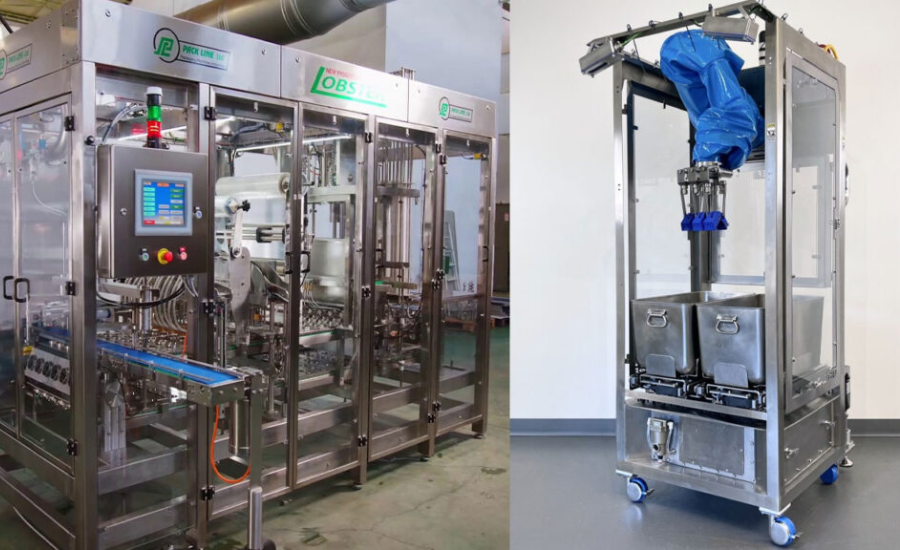
The global food manufacturing landscape is currently navigating a period of unprecedented volatility, characterized by chronic labor shortages, fluctuating ingredient costs, and an explosion in consumer demand for "high-mix" ready-to-eat meals. In response to these systemic pressures, Chef Robotics, a pioneer in AI-enhanced culinary automation, and Packline Solutions Group, a veteran in advanced packaging machinery, have announced a strategic partnership that promises to revolutionize the production floor. This collaboration introduces a comprehensive, end-to-end automated solution designed to bridge the gap between flexible robotic ingredient handling and high-speed packaging, providing a blueprint for the future of the food industry.
For decades, the food processing sector has relied on two primary methods of assembly: manual labor and fixed automation. Manual assembly, often performed in harsh, refrigerated "cold rooms" to maintain food safety, is increasingly unsustainable. Workers in these environments face significant physical strain, leading to high turnover rates and a persistent "labor gap" that prevents manufacturers from operating at full capacity. Conversely, traditional fixed automation—specifically mechanical depositors—was designed for high-volume, low-variety production. These systems are notoriously rigid; switching from one SKU (Stock Keeping Unit) to another often requires hours of mechanical adjustments and deep cleaning, making them entirely unsuitable for the modern "high-mix" market where a single plant may produce dozens of different meal types in a single shift.
The partnership between Chef Robotics and Packline Solutions Group directly addresses this "flexibility vs. efficiency" paradox. By combining Chef’s sophisticated AI "brains" with Packline’s robust packaging "brawn," the duo has created a modular system that can pivot between different recipes and tray formats in less than sixty seconds. This agility is powered by Chef Robotics’ proprietary AI and computer vision systems. Unlike traditional robots that require precise, static positioning, Chef’s robots use real-time visual data to identify tray positions on a moving conveyor. They can dynamically adjust their movements to account for variations in tray placement or fluctuations in conveyor speed, ensuring that ingredients are deposited with surgical precision. This capability effectively eliminates the "spillage" and "mis-fills" that plague both manual lines and older automated systems, significantly reducing food waste and improving the bottom line.

Chef Robotics enters this partnership with a formidable track record. Their robotic systems have already processed more than 83 million servings for enterprise-level food manufacturers. This scale is critical in the food industry, where reliability is the primary metric of success. The "Chef" system is designed to handle the inherent messiness of food—sticky sauces, leafy greens, and irregular proteins—using a variety of specialized end-effectors that mimic human dexterity without the human susceptibility to fatigue or error.
While Chef Robotics manages the complex task of ingredient assembly, Packline Solutions Group provides the essential infrastructure for the beginning and end of the line. Packline’s technology handles the automated de-nesting of trays, the precise conveyance of containers through the assembly zone, and the final sealing process. In the world of food manufacturing, the seal is the final line of defense for food safety and shelf-life extension. Sourcing a packaging partner that understands the nuances of food-grade materials and the mechanical requirements of hermetic sealing is often a major hurdle for manufacturers. By integrating Packline’s machinery with Chef’s AI, the partnership offers a "plug-and-play" solution that removes the complexity of multi-vendor sourcing.
One of the most technically impressive aspects of this collaboration is the development of a wireless integration protocol. This allows the Chef robots and the Packline packaging units to communicate seamlessly across the production floor. This end-to-end communication ensures that if the sealing unit experiences a momentary delay, the assembly robots upstream can instantly adjust their pace to prevent a pile-up. This level of synchronization was previously only available in highly customized, multi-million-dollar installations. Now, it is being made accessible to mid-sized and large-scale manufacturers across the United States, Canada, and the United Kingdom.
The real-world impact of this technology is perhaps best illustrated by the success of Cafe Spice, a prominent manufacturer of global cuisines. Before implementing the integrated Chef-Packline solution, Cafe Spice faced the same challenges as many other high-growth food brands: the need to scale production while managing a shrinking labor pool. By deploying two almost fully automated production lines using this joint technology, Cafe Spice has transformed its operational efficiency. The Packline systems handle the de-nesting and sealing, while the Chef robots deposit complex ingredients into specific tray compartments and inserts.

The results at Cafe Spice have been transformative. The company reported a 60% increase in labor productivity, allowing them to reallocate five to six staff members per line to higher-value roles within the plant, such as quality assurance or specialized kitchen prep. Perhaps more impressively, the total output of these lines increased by two to three times. This shift represents a fundamental change in the philosophy of food manufacturing: moving away from viewing labor as a variable cost to be minimized and toward viewing it as a strategic resource that should be utilized where human judgment is most needed.
Rajat Bhageria, the Founder and CEO of Chef Robotics, emphasizes that the goal of this partnership is not just to replace labor, but to enable resilience. "Food manufacturers need to reduce costs and increase output while staying flexible," Bhageria stated. He noted that in the current configuration, only one quality assurance (QA) person and a single line manager are required to oversee the entire operation. This allows the factory to maintain high-throughput production even during labor shortages or peak demand periods, such as the holiday season or during major retail promotions.
Amir Tamshe, Founder of Packline Solutions Group, echoed this sentiment, highlighting the synergy between AI and traditional engineering. He noted that Chef’s next-generation approach to vision-based robotics was the missing piece of the puzzle for the packaging industry. By combining their respective expertise, the two companies have created a solution that addresses both the "front-end" complexity of meal assembly and the "back-end" requirements of industrial-grade packaging.
The broader implications for the global food supply chain are significant. As consumer preferences continue to shift toward fresh, convenient, and diverse meal options, the pressure on manufacturers to provide variety without sacrificing safety or affordability will only intensify. The "high-mix" challenge is no longer an outlier; it is the new standard. Systems that can handle hundreds of SKUs with minimal downtime are no longer a luxury—they are a competitive necessity.

Furthermore, the adoption of such technology supports sustainability goals. By reducing food waste through more accurate portioning and placement, and by optimizing energy use through more efficient production cycles, manufacturers can lower their environmental footprint. The ability to produce locally and efficiently also reduces the reliance on long-distance logistics, which is a major contributor to carbon emissions in the food sector.
As the Chef Robotics and Packline partnership expands its reach across North America and the UK, it signals a maturation of the "FoodTech" industry. We are moving past the era of experimental prototypes and into an era of proven, scalable, and integrated industrial solutions. For food manufacturers looking to survive and thrive in the mid-2020s, the message is clear: the future of the kitchen is digital, robotic, and highly flexible. The collaboration between Chef and Packline is not just a commercial agreement; it is a vital evolution in how the world’s meals are made, packaged, and delivered.