


December 29, 2025

The evolution of luxury handbags is often traced through the designs that first dared to carry the name of a legendary house. For Louis Vuitton, that foundational piece was the Steamer; for Hermès, it was the Haut à Courroies (HAC). More than a century after their respective introductions, these two architectural siblings—the progenitors of two global empires—are being revisited through contemporary lenses, offering a fascinating study in enduring design philosophy, material innovation, and modern utility. This analysis contrasts the newest interpretations, particularly the Pharrell Williams-led LV Touch Steamer and the classic HAC, exploring how their shared DNA of structured elegance persists today.
Louis Vuitton’s Steamer: A Modern Rebirth for the 21st Century Traveler
Tracing its origins back to 1901, the original Louis Vuitton Steamer bag was conceived as a soft-sided evolution of the brand’s famous trunks, specifically designed to hold a gentleman’s wardrobe while traveling by steamer ship. It represented pragmatic luxury—a concept now powerfully revived in the Spring-Summer 2026 Pre-Collection under Pharrell Williams’ creative direction.
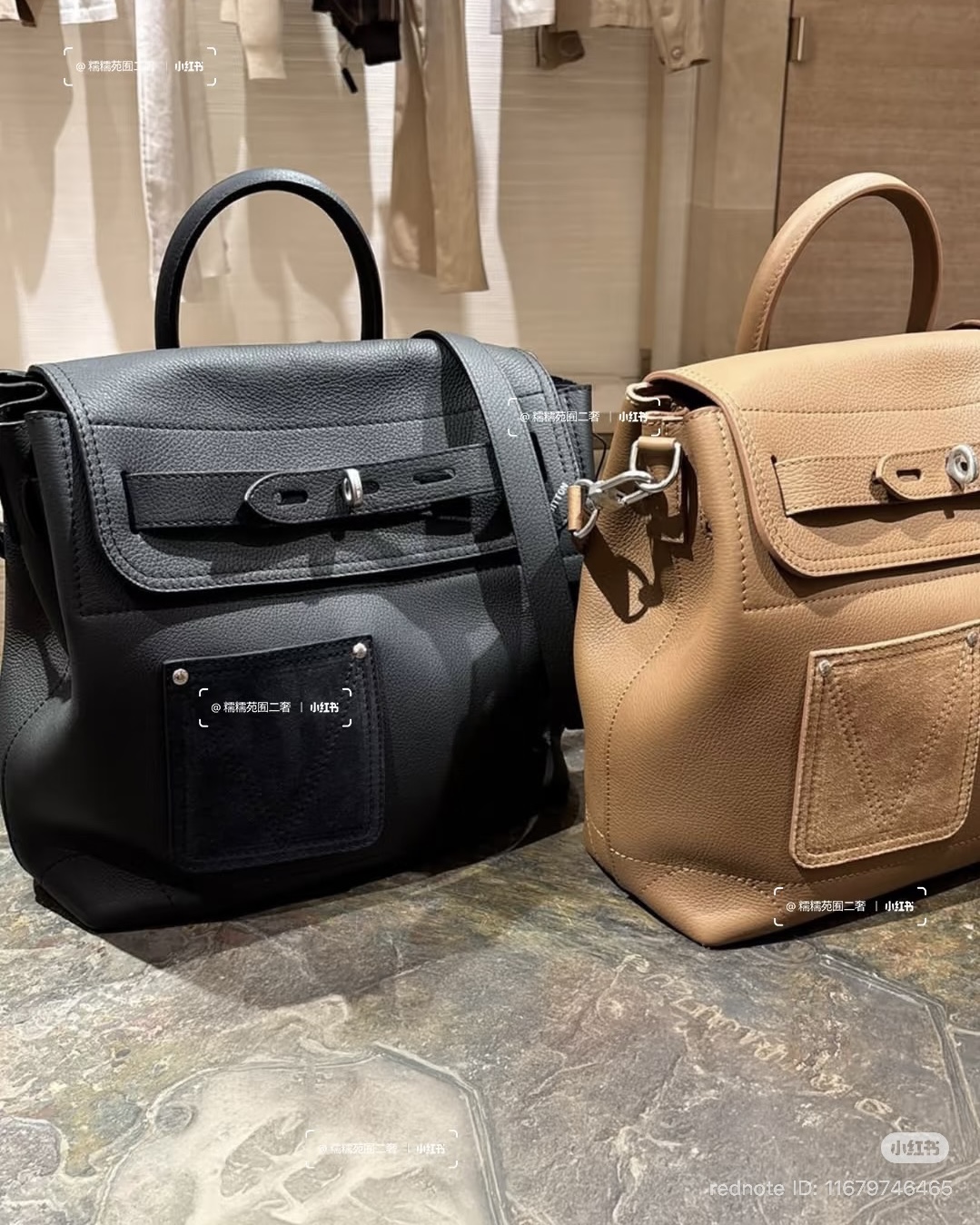
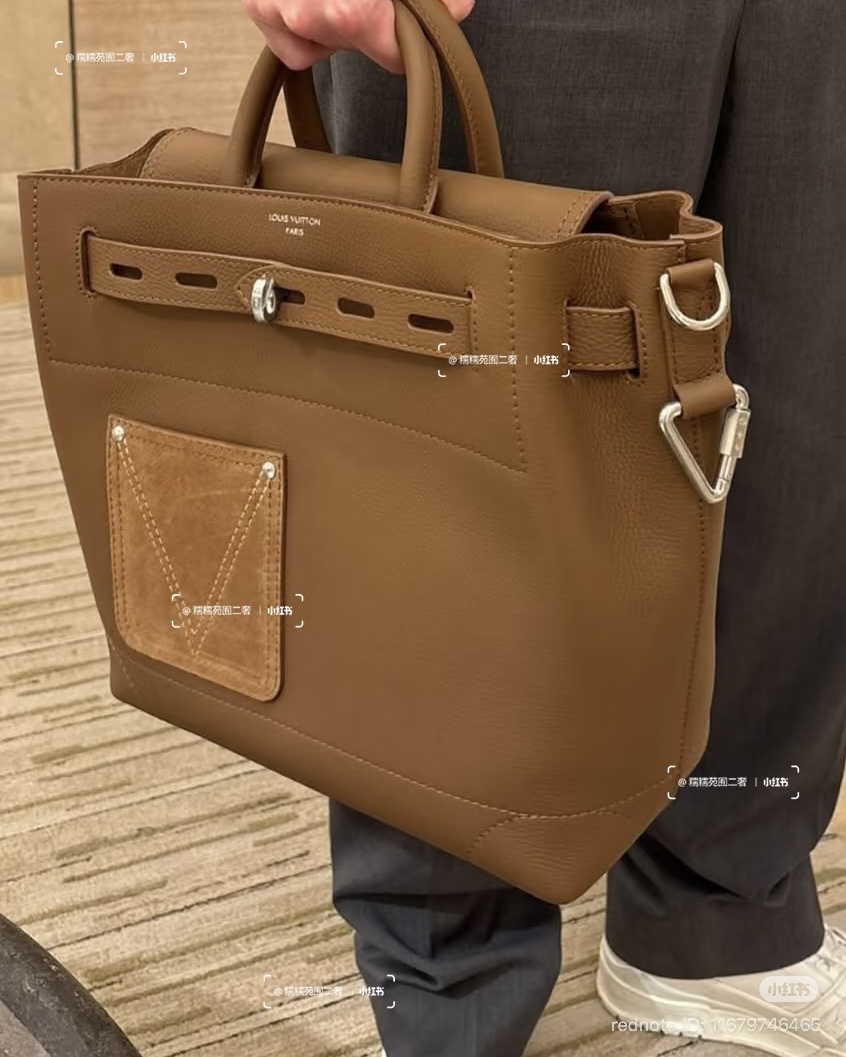
The contemporary LV Touch Steamer 30 sheds the signature Monogram canvas for a refined, logo-free presentation in supple calfskin. This material choice immediately elevates the bag, prioritizing texture and form over overt branding. The silhouette remains upright and structured, echoing its trunk heritage, yet it is softened for modern wear. The design incorporates functional leather straps reminiscent of travel baggage hardware, culminating in a sophisticated, engraved touret-style lock closure. Subtle details, such as the V-stitched suede accent on the front pocket and the meticulous contour stitching, underscore a commitment to high-level leather craftsmanship.
Functionality is a key focus in this iteration. The Steamer 30 is offered as a hand-carried piece with curved top handles, but crucially, it includes a detachable and adjustable crossbody strap (offering a drop range of 15 to 24.8 inches), transforming it for hands-free use. Measuring approximately 12.6 x 13 x 5.5 inches, it maintains a defined trapezoidal shape while accommodating daily essentials within its main compartment, which is thoughtfully segmented with a zippered pocket for organization. Even the backpack version—the Steamer Backpack—retains this upright, structured poise, offering ample space, including room for a 16-inch laptop, and featuring dual adjustable shoulder straps for practical commuting.

The Hermès HAC 40: Uncompromising Equestrian Lineage
The Hermès HAC (Haut à Courroies) predates the Steamer, having been established in 1892. Its initial purpose was utilitarian: to securely transport equestrian gear. This history informs its robust, upright, and undeniably structured form—a design that later became the direct blueprint for the legendary Hermès Birkin.

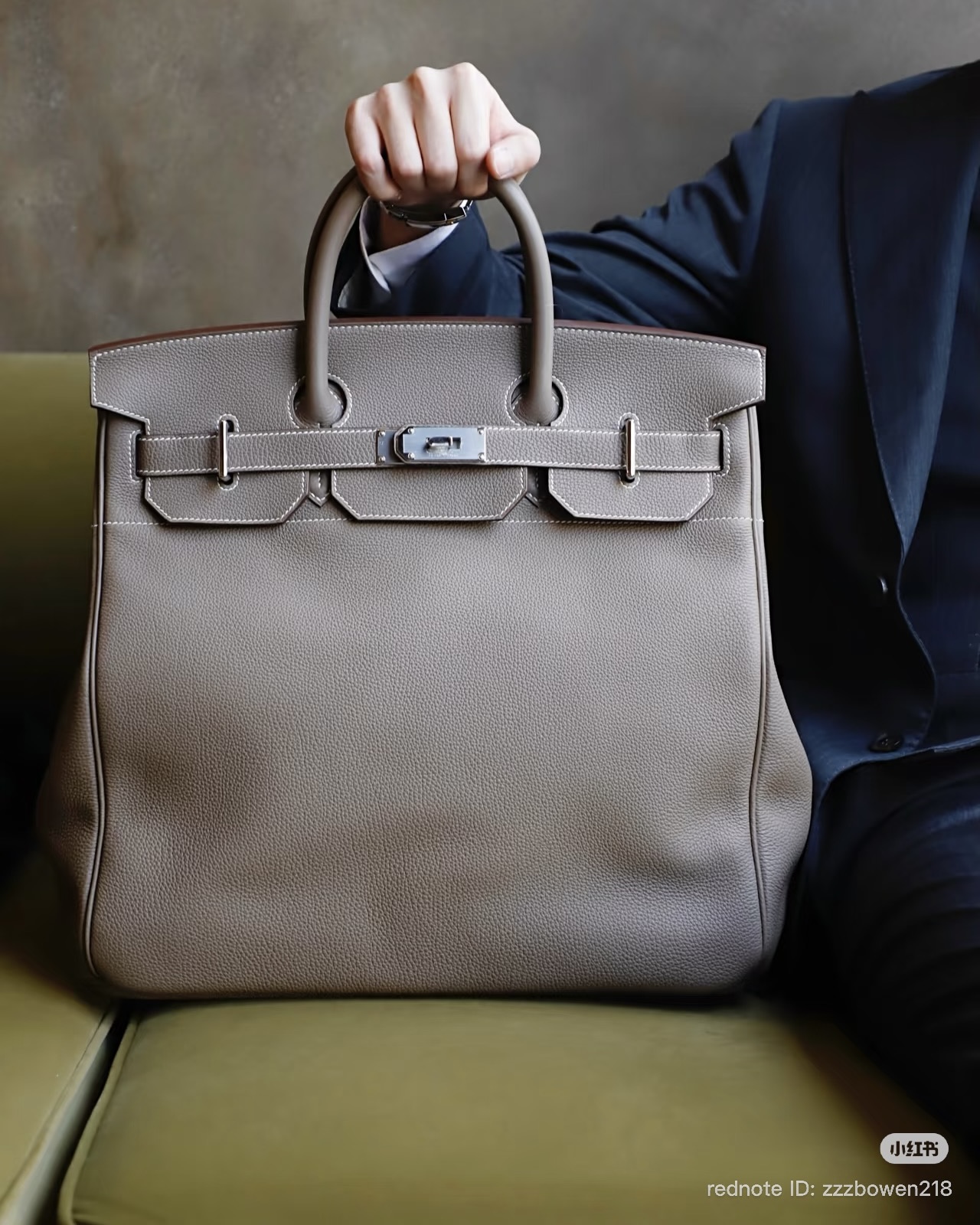
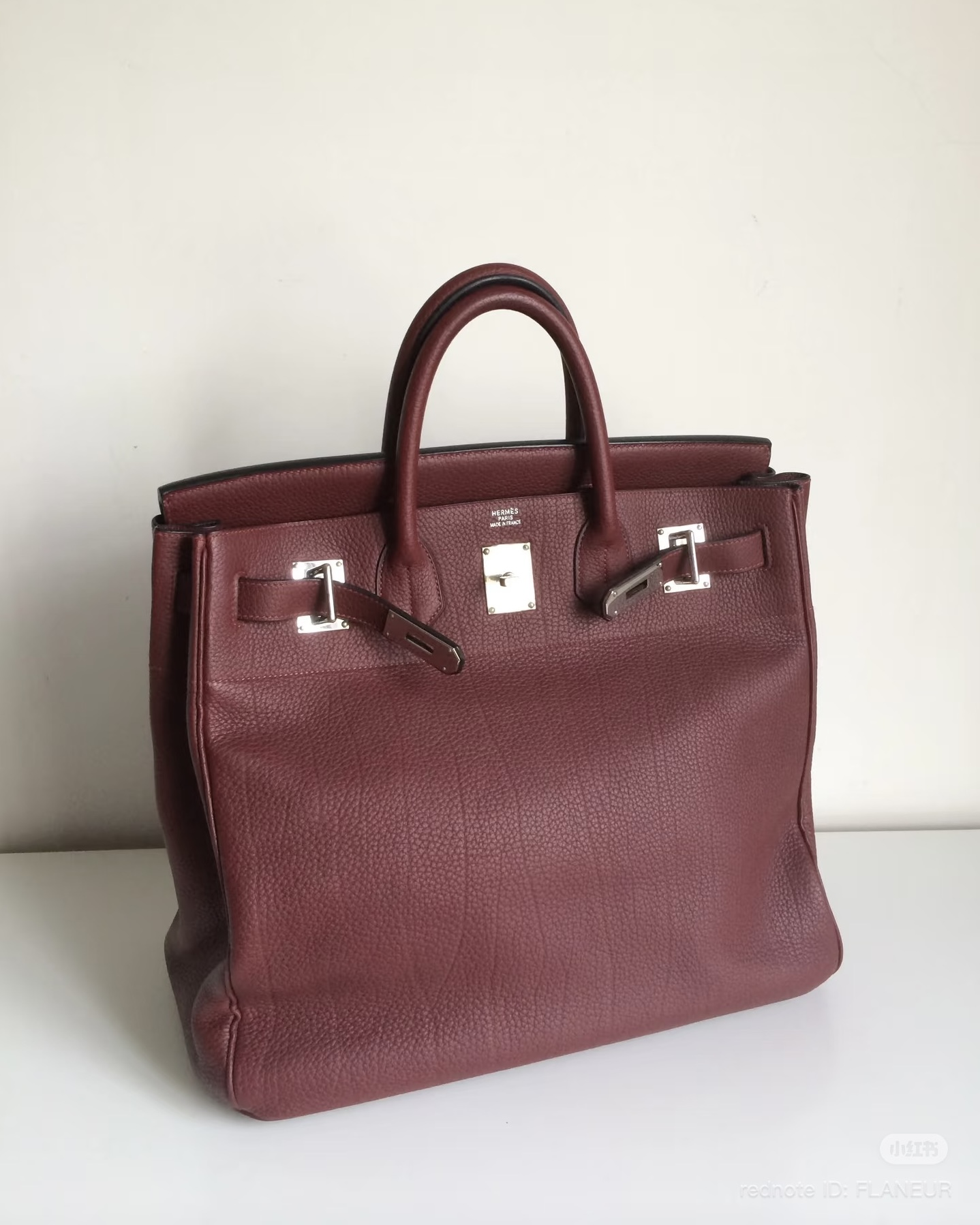
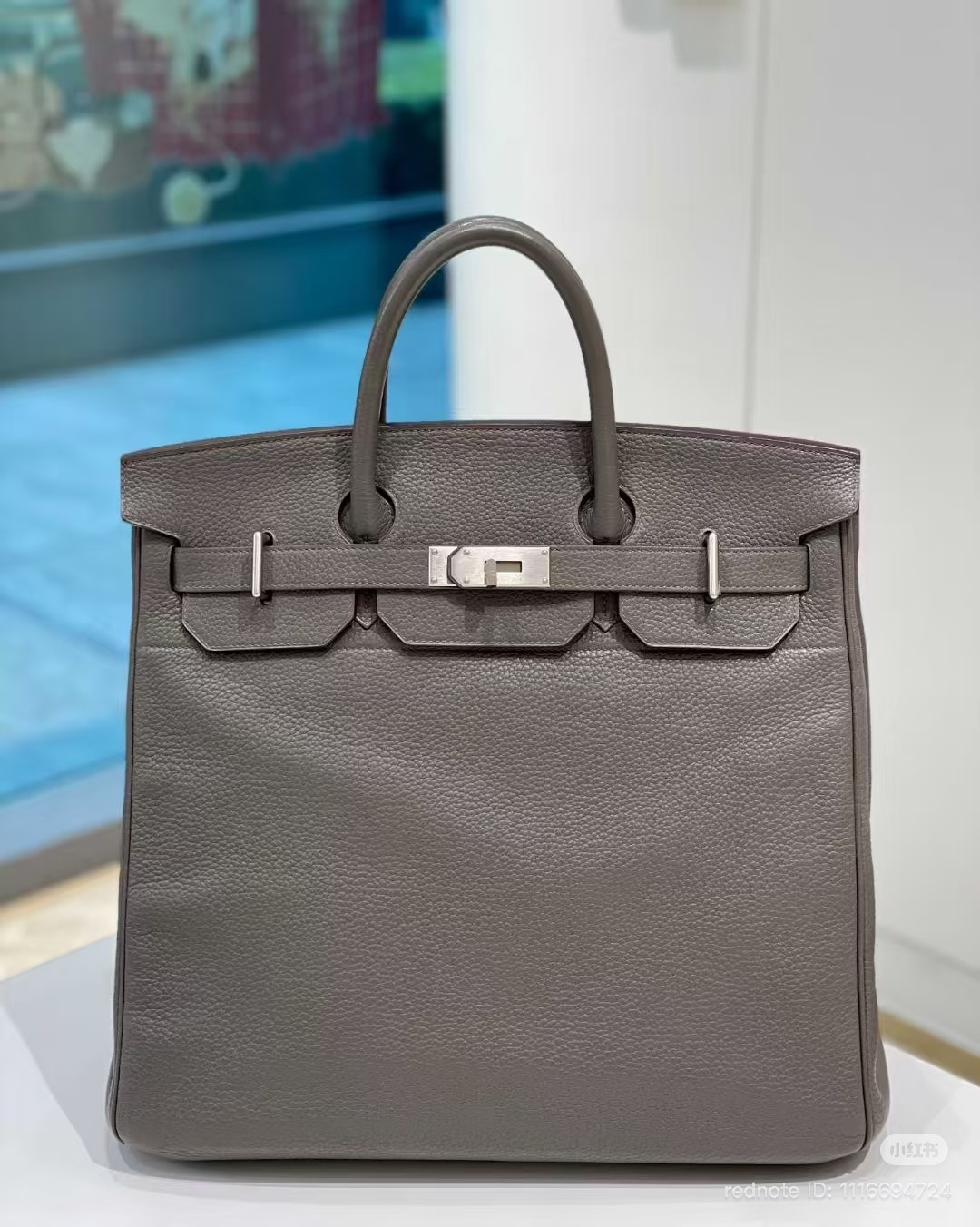
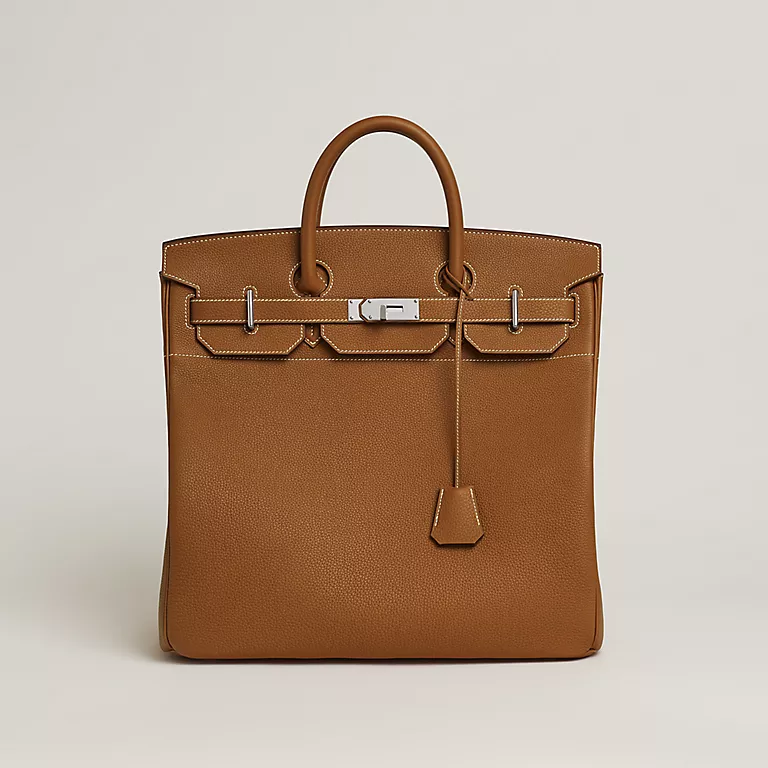
The HAC, often seen in the larger HAC 40 size (approximately 16 x 16 x 9 inches for modern iterations), embodies the pinnacle of Hermès restraint and material excellence. Typically constructed in their finest calfskins, such as Togo, the bag showcases the retourné construction method, where the leather is turned inward, allowing the exterior to appear seamless and providing a soft yet substantial drape over time.
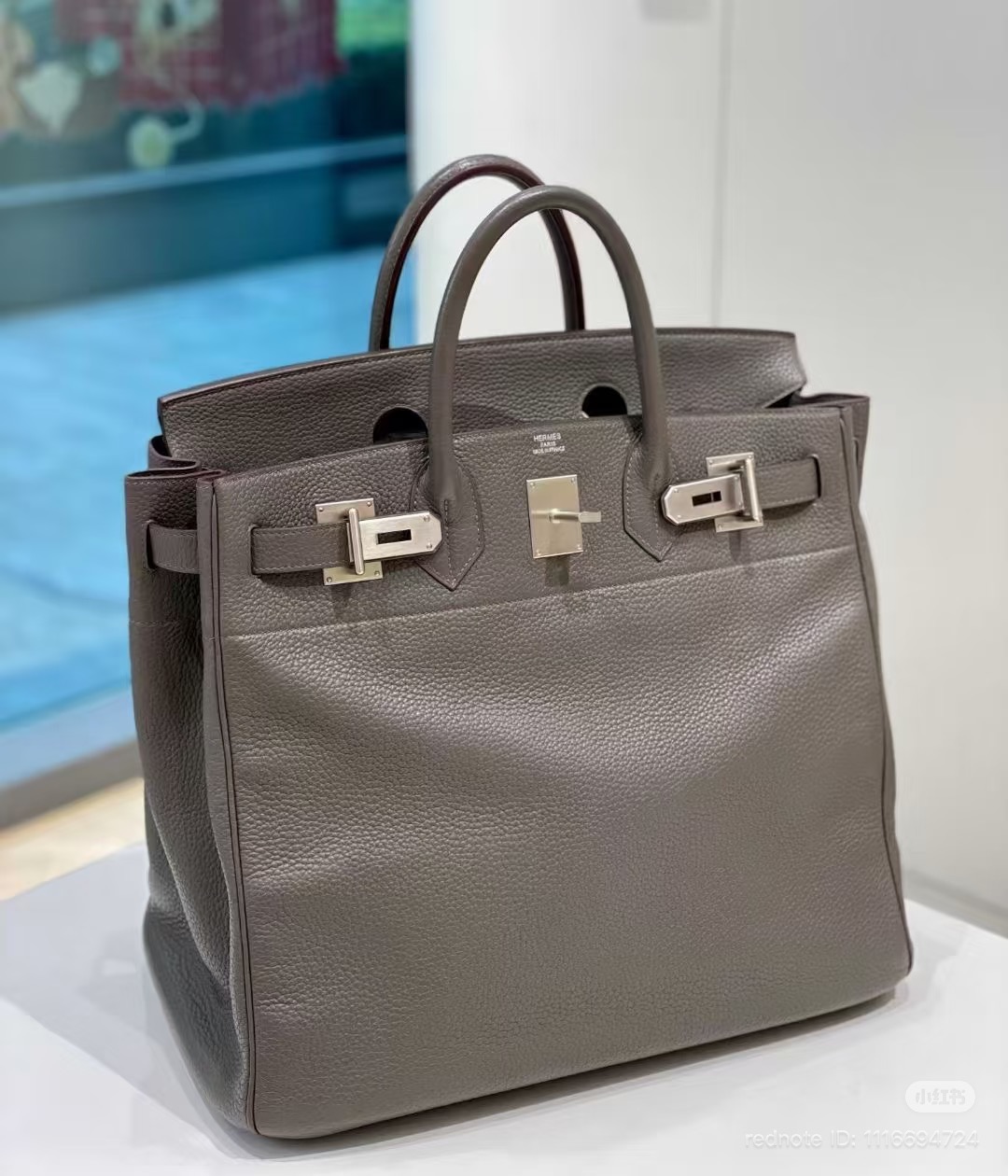
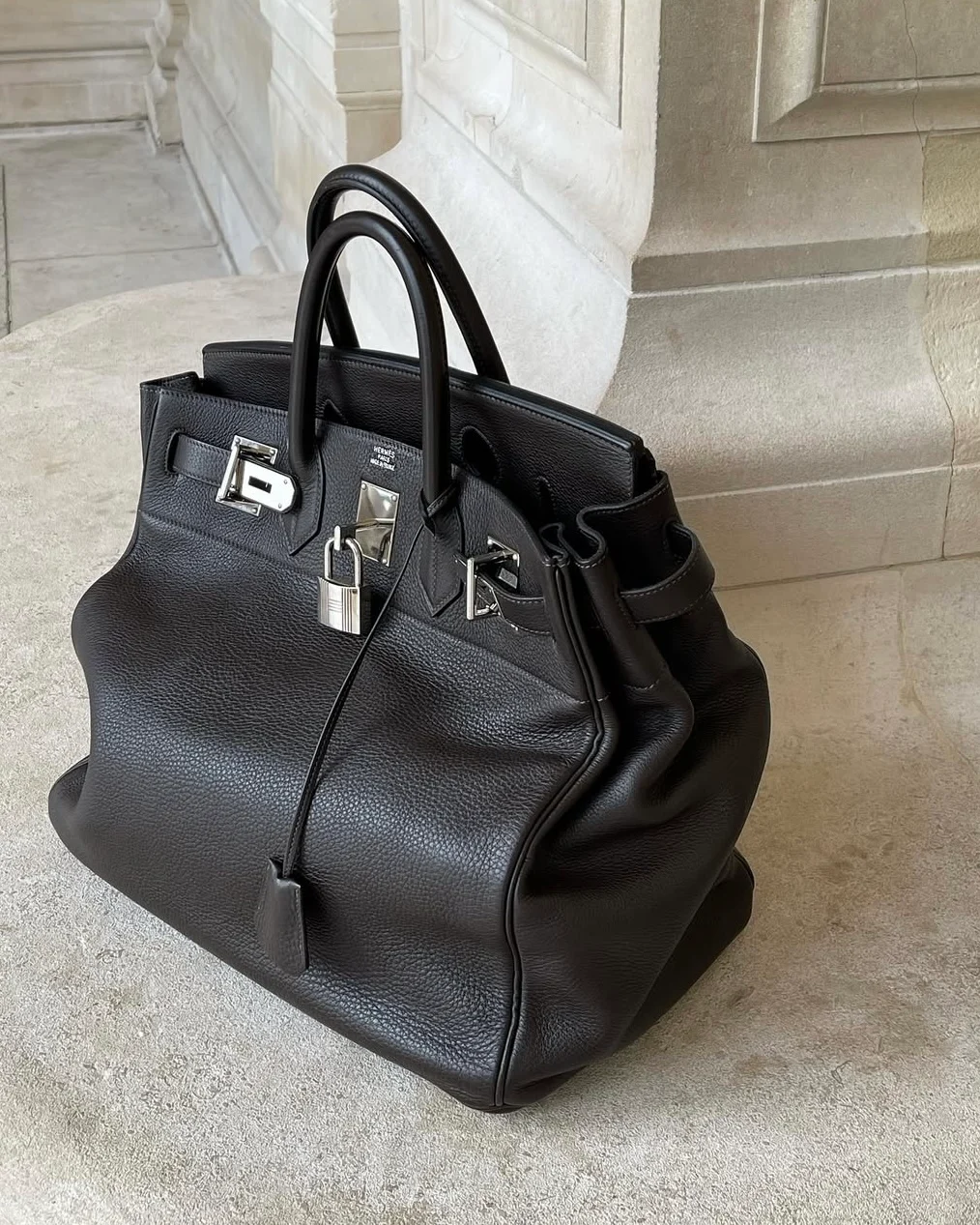
The HAC’s aesthetic is defined by its architectural silhouette, cinched by its iconic sangles (straps) that feed into the signature touret fastening. While many versions include a padlock and clochette for a touch of security, the branding is deliberately subdued—a small, heat-stamped Hermès signature hidden beneath the top flap. This restraint speaks to a clientele who values intrinsic quality over overt recognition. In terms of usability, the HAC 40 is a pure hand-carry piece with twin top handles. Its interior is spartan: a single, capacious main compartment designed for volume, devoid of the organizational pockets found in modern designs like the Steamer. This purity, while beautiful, means the HAC can become quite weighty when filled.
Comparative Analysis: Shared Principles, Divergent Execution
When placing the LV Touch Steamer 30 and the Hermès HAC 40 side-by-side, their common ground lies in their shared design DNA: both are tall, structured, trapezoidal travel bags rooted in function. Both feature prominent top handles and secure closures secured by straps—sangles on the HAC, leather straps on the Steamer. Both modern releases deliberately dial down overt branding to focus on superior leather quality and silhouette.
However, their paths diverge significantly in modern functionality:
- Carrying Versatility: The Steamer 30 is built for the modern dynamic—it includes a versatile, detachable crossbody strap, acknowledging the need for hands-free movement. The HAC remains staunchly traditional, designed only for hand-carry, aligning with a more formal or static approach to luxury.
- Interior Organization: The Steamer 30 offers practical modern organization, including interior slip pockets and a zippered compartment. The HAC 40 offers an expansive, undivided main cavity, reflecting its historical use for bulkier, less delicate items.
- Material Philosophy: While both use high-grade calfskin, the LV Touch Steamer emphasizes a streamlined, contemporary feel (sometimes featuring exotic finishes or minimal hardware accents like the Monogram Flower carabiner), whereas the HAC emphasizes the raw, tactile beauty of the leather itself, often paired with restrained palladium or brushed hardware.
Furthermore, the backpack interpretations underscore these differences. The Louis Vuitton Steamer Backpack is designed as a genuine, multi-strap backpack for utility, while the Hermès HAC à Dos functions more as a structured shoulder or crossbody bag using a single canvas strap, maintaining a cleaner, less technical profile.
The Economics of Heritage: Price Point Divergence
The most immediate contrast for the contemporary collector lies in the investment required. Louis Vuitton’s revival of the Steamer positions it as an accessible entry point into archival luxury. The Steamer 30 is priced at $6,750, and the Steamer Backpack at $6,000. These figures place them firmly in the high-end contemporary market, offering heritage style without the ultra-exclusive pricing tiers of its counterpart.
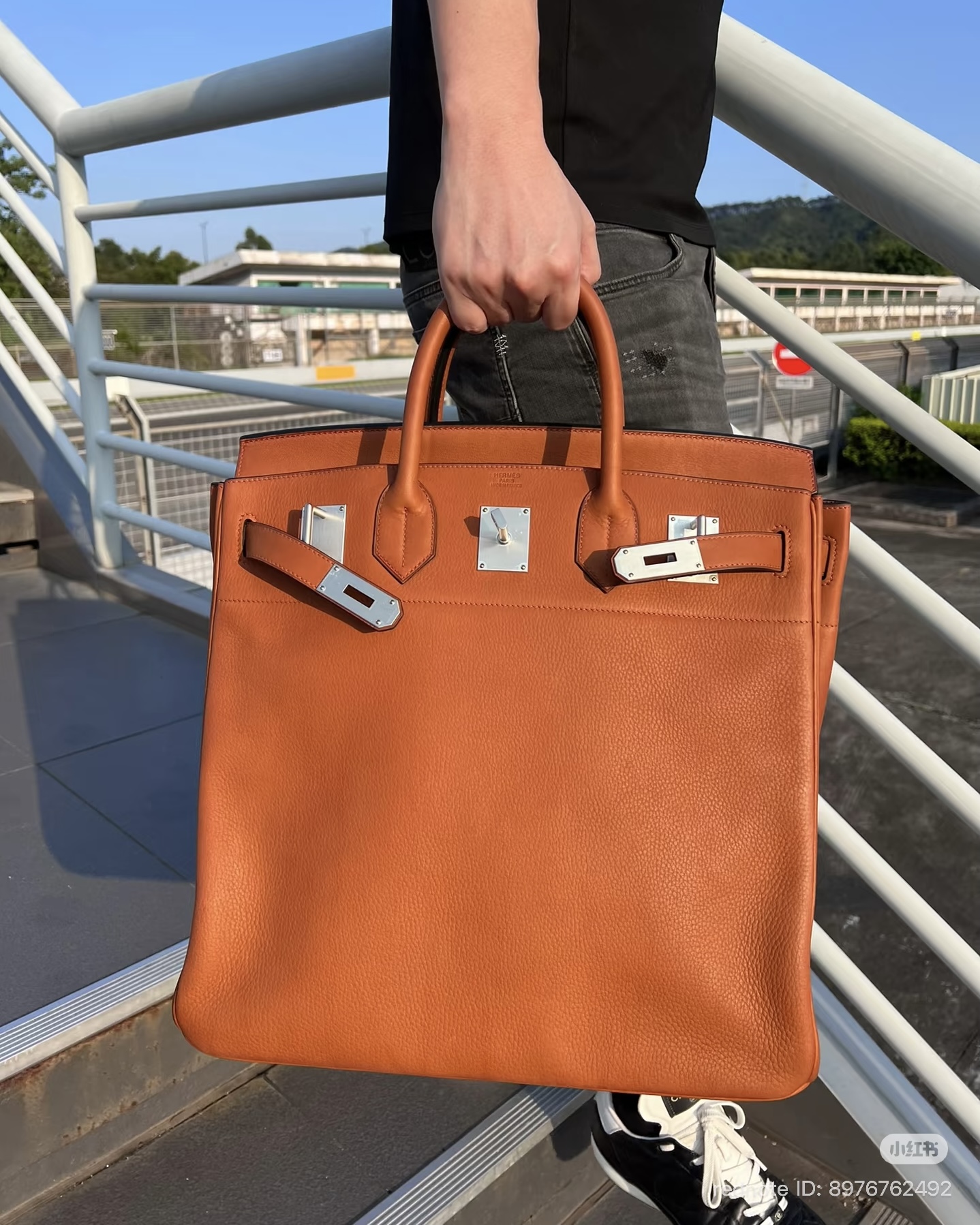
The Hermès HAC, conversely, remains positioned within the pinnacle of high luxury. While exact retail pricing for the HAC 40 is often opaque, comparative analysis suggests a significant premium. The HAC à Dos PM starts around $11,300 in standard leather, easily climbing higher for specific hides. Given that a standard Hermès Birkin 30 in Togo leather currently retails above $13,300, the HAC 40, being a less frequently produced foundational piece, likely commands a comparable or higher price point.

Ultimately, the comparison between the contemporary Steamer and the classic HAC is a choice between two philosophies of enduring design. The Steamer, particularly the LV Touch line, honors history while embracing contemporary practicality, material subtlety, and relative accessibility. The HAC remains an uncompromising testament to equestrian origins, demanding dedication to its minimalist structure and commanding a price that reflects its iconic status as the genesis of the Hermès handbag legacy. The choice hinges on whether a collector seeks versatile, modern utility rooted in history, or unparalleled, understated heritage craftsmanship.