

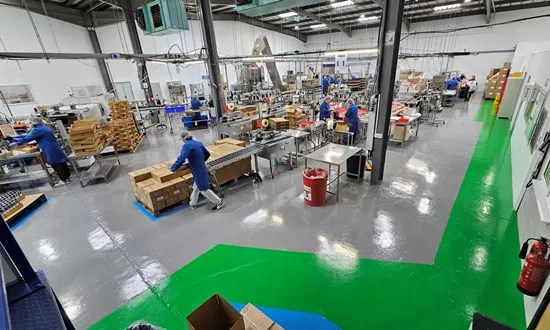
Established in 1980, Expac has undergone a profound transformation since its acquisition in 2016 by Dr. Graham Royle, the visionary founder, chairman, and chief executive of the GRI Group. This strategic integration has propelled Expac, a specialist in co-packing, into a leading-edge contract manufacturer renowned for setting rigorous standards across personal care, household care, and pet care sectors. The synergy created by merging Expac’s packaging and formulation expertise with the GRI Group’s deep specialization in chemical intermediates—serving personal care, household care, pharmaceutical, and industrial markets through sister company Libra Speciality Chemicals—has been a catalyst for explosive, sustained growth.
The period under Dr. Royle’s stewardship has been characterized by aggressive, targeted investment and talent acquisition. Between 2016 and the projected close of 2025, Expac has committed £7.1 million to cutting-edge manufacturing technologies. This technological infusion, coupled with the recruitment of elite industry professionals and continuous upskilling of the existing workforce, has dramatically enhanced operational capabilities. Furthermore, leveraging the extensive customer network cultivated by the broader GRI Group, Expac has proactively expanded its market footprint. This multifaceted strategy has resulted in a five-fold multiplication of turnover, soaring from £5 million to an anticipated £30 million, while the dedicated team has grown substantially from 47 employees to 161 skilled personnel.
Today, Expac is recognized as a multi-award-winning entity, serving a diverse clientele that spans from major blue-chip multinational corporations to niche, single-brand enterprises, both domestically and internationally. The company’s expansive product portfolio encompasses high-quality wet and dry hair care solutions, sophisticated skin care preparations, indulgent bath and body items, and advanced sun protection products. These formulations are expertly filled and finished across a broad spectrum of packaging formats, including bespoke bottles, tottles, tubes, tubs, and sustainable refill packs, demonstrating exceptional adaptability in presentation and delivery. The company’s commitment to excellence was recently underscored by securing the prestigious BCMPA-sponsored Contract Manufacturer & Packer of the Year title at the UK Packaging Awards, adding to its previous accolades in this category.
Looking ahead, the trajectory remains steep. Dr. Royle confirms plans for the forthcoming year to deliver another significant turnover increase, supported by an additional £2.2 million earmarked for capital investments and the onboarding of a further 35 specialized staff members. Expac attributes its success in winning and retaining high-value clients to its superior formulation and manufacturing technologies, underpinned by robust, collaborative client relationships and an unwavering focus on comprehensive customer support. To accommodate this burgeoning demand, the company has strategically expanded its operational footprint across two primary sites, complemented by integrated third-party logistics (3PL) support. Recognizing the imperative for continued scale, Expac is actively scouting for an additional manufacturing facility to sustain its expansion curve.
Mastery in Molecular Formulation and Chemical Synergy
A core differentiator for Expac lies in its nuanced approach to product development, catering to clients with varying degrees of chemical understanding. While large corporate clients often arrive with precise technical briefs or fully developed proprietary formulas—which Expac meticulously validates and optimizes—smaller or emerging brands frequently possess strong performance aspirations but lack the requisite in-house chemical expertise to translate these visions into viable products.
This gap is expertly bridged through the profound technical collaboration within the GRI Group. Dr. Royle highlights the formidable combined capabilities of Expac’s blending technologies and its sister company, Libra Speciality Chemicals, a manufacturer of critical raw materials used in Expac’s finished goods. “The fusion of both reaction and blending technologies across the laboratories of Expac and Libra is exceptionally potent,” explains Royle. “We possess state-of-the-art analytical machinery capable of dissecting every constituent of a formula down to the molecular level. Consequently, if a client presents a formula for replication or as a developmental starting point, Expac can precisely reverse-engineer its exact composition. This capability represents one of Expac’s key technical Unique Selling Propositions.”
Delivering End-to-End Full-Service Partnership
Expac strongly advocates for, and predominantly delivers, a comprehensive, full-service model designed to alleviate the burden of the supply chain from its clients. This service architecture begins at the conceptual and technical stage: formulating initial product samples, rigorous laboratory testing, internal approval protocols, official product registration, and the preparation of essential Product Information Files (PIFs).
“We commence with the technical foundation, manage the entire production lifecycle, and typically handle all sourcing and procurement of chemicals, packaging components, and ancillary materials on behalf of our partners,” Dr. Royle elaborates. This holistic approach extends to providing clients with tangible examples of diverse packaging—bottles, caps, and label configurations—alongside various formula options, color palettes, and fragrance profiles. Critically, Expac furnishes clients with detailed, evidence-based guidance regarding the anticipated performance and efficacy of every proposed product iteration, ensuring alignment between expectation and reality.
Navigating Economic Headwinds: The Cost of Operation
Despite its robust growth, Dr. Royle voices significant concern regarding the cumulative impact of recent governmental fiscal policies on the UK manufacturing sector. Tax hikes implemented over the past year, he contends, have been fundamentally detrimental.
“Increases in statutory labour rates, National Insurance Contributions (NICs) for employers, soaring energy costs, new environmental levies, and escalating business rates have proven exceptionally punitive,” he states. He points to the consistent, aggressive increases in the National Minimum Wage (NMW)—exceeding 10% annually for the last four years. Expac frequently finds itself unable to pass these direct cost increases down the supply chain, as retailers, the ultimate price-setters, strongly resist commensurate price uplifts.
Royle emphasizes the ripple effect of NMW hikes: “The government appears disconnected from the reality that substantial NMW increases necessitate cascading pay adjustments across the entire payroll to maintain critical pay differentials among staff.” Without these adjustments, operational hierarchies break down, potentially resulting in line operators earning more than line leaders, or supervisors earning less than quality control inspectors. “Before you realize it, you have inflated the entire business payroll at rates far exceeding general inflation—a cost that is exceptionally difficult to absorb internally.”
Furthermore, he points out that the increase in the employer’s NIC rate, while seemingly modest on paper, was coupled with a simultaneous reduction in the earnings threshold at which it applies. “This combination effectively doubles the employer’s National Insurance burden across a substantial portion of our payroll, another cost we are forced to absorb,” he notes. Compounding these domestic issues, the UK continues to contend with some of the world’s highest industrial energy costs.
“We must counteract these continuously rising operational expenditures by aggressively growing our turnover,” Royle concludes. “This ensures that the margin generated always outpaces the increasing overheads associated with running a complex manufacturing entity. Simply put, we must sell more every year just to maintain the same level of profit. Many businesses struggle with stagnant turnover, which inevitably leads to operating losses and potential failure.”
Regulatory Compliance and the Push for Sustainability
While acknowledging the financial strain imposed by recent legislative shifts, Expac stands as a staunch advocate for the principles behind Extended Producer Responsibility (EPR) for packaging. The company views stringent environmental stewardship as integral to its mandate.
“A significant portion of our duty, both to protect the environment and our clients, involves rigorously verifying the compliance of our suppliers across all regulations pertaining to the chemicals and materials we incorporate,” Royle explains, noting this verification process is both time-consuming and costly. He expresses frustration with the European regulatory environment, citing instances where bureaucratic overlap creates inefficiencies. “The EU is a complex machine prone to creating overlapping regulations that effectively cover the same ground. Consider palm-based ingredients: the EU has mandated RSPO, NDPE, REACH, and EUDR—regulations that could easily be streamlined into a single, coherent framework instead of creating multiple, expensive compliance versions.”
Strategic Outlook: Growth Through Resilience and Reshoring
Looking beyond the challenges of 2025, Dr. Royle identifies a tough macro-environment across the UK and continental Europe, characterized by cost inflation and the competitive pressure exerted by heavily subsidized, low-cost imports, predominantly from Asia. “Everybody is heavily taxed, and numerous European regulations intended to protect local markets have regrettably had the opposite effect, as seen with the palm-based product example.”
Expac’s overriding strategy is to deliberately navigate these systemic difficulties. By accepting the reality of high domestic taxation, the company aims to secure expanding market share domestically and actively drive the ‘reshoring’ of manufacturing back to the UK. This ambition is grounded in Expac’s superior technical capabilities and its commitment to highly efficient, advanced manufacturing processes.
“The forthcoming years are unlikely to become easier for British manufacturers,” Royle affirms. “Therefore, we must adapt proactively to the confluence of elevated costs, complex regulation, and cheap imports by relentlessly investing in ourselves. Our focus must remain on developing ever-better technologies and exciting, differentiated products. We are committed to maintaining our long-term vision, staying positive, and operating with unwavering proactivity.”