

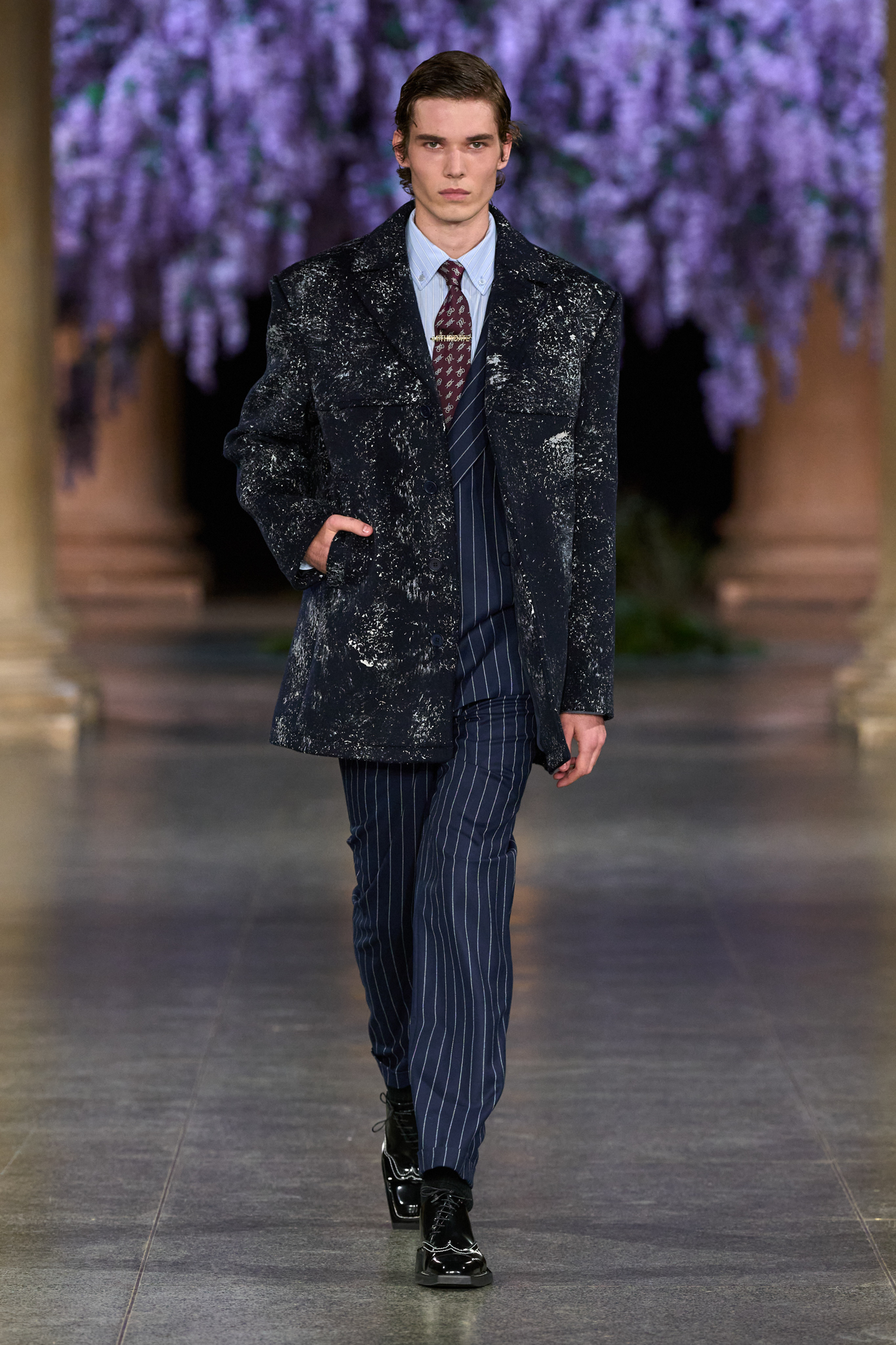
The grand, neoclassical corridors of Tate Britain have long served as a sanctuary for the preservation of British identity, housing centuries of artistic evolution within their stone walls. However, for the unveiling of Mithridate’s Fall 2026 collection, the venue was transformed into a living bridge between two disparate worlds. At the heart of the soaring hallway stood a monumental installation: a giant wisteria tree, its lilac blooms cascading like frozen waterfalls. This was not merely a decorative flourish; it was a profound botanical metaphor for the brand’s own trajectory. The first Chinese wisteria was transported from the bustling ports of Guangzhou to the quiet gardens of London in the early 19th century—specifically 1816—and remarkably, that original specimen continues to flourish in Chiswick to this day. For Daniel Fletcher, now marking his first full year as the creative director of Mithridate, this historical anecdote served as the foundation for a collection that felt both deeply rooted and strikingly itinerant.
Fletcher’s tenure at the Guangzhou-originated label has been defined by a steady, palpable increase in confidence. While his initial offerings for the house were exercises in finding his footing within a new corporate structure, Fall 2026 represents a definitive maturation. There is a newfound synergy between Fletcher’s signature British nostalgia and the high-craft, luxury-leaning sensibilities of Mithridate’s founder, Tina Jiang. The relationship between the two has evolved into a formidable partnership, one that allows Fletcher to explore the nuances of "Englishness" through a lens that remains respectful of the brand’s Chinese heritage. As Fletcher noted during the preview, the wisteria symbolizes his ultimate ambition for the label: to take a seed of Chinese heritage and watch it bloom into a permanent, celebrated fixture of the global fashion landscape.
The collection, titled "Journey Upstream," functioned as a narrative character study of London’s most iconic waterway. The River Thames is more than just a body of water; it is a chronological and social artery that pulses through the heart of the United Kingdom. Fletcher’s creative process involved a conceptual voyage from the glass towers of the East to the verdant banks of the West, distilling the distinct sartorial identities found along the river into a cohesive wardrobe. The journey began in the sleek, clinical environment of Canary Wharf, where the "banker" archetype was reimagined. Here, the power suit was deconstructed and softened, yet retained its authority through razor-sharp tailoring and a palette of industrial greys and deep navies.
As the narrative flowed further inland toward Bloomsbury, the aesthetic shifted toward the intellectual and the academic. This segment of the collection paid homage to the literati of the early 20th century, utilizing textures that suggested hours spent in dusty libraries. Tweeds were prominent, but Fletcher avoided the traps of traditionalism by playing with proportions and unexpected pairings. The "Bloomsbury Set" influence was visible in the way structured outerwear was layered over fluid, artistic separates, suggesting a wearer who values both form and function. This was a sophisticated nod to the thinkers and creators who have historically populated the neighborhoods surrounding the British Museum, translated into garments that felt relevant for a modern, global audience.
The journey then detoured into the opulent streets of Mayfair, where the "reveller" took center stage. This portion of the collection embraced the hedonism of London’s nightlife, introducing more daring silhouettes and evening-ready materials. However, even in its most festive moments, the collection maintained a sense of restraint. Fletcher utilized two-piece minidresses that felt youthful yet polished, bridging the gap between high-fashion experimentation and commercial viability. The transition from day to night was seamless, mirroring the way the city itself transforms as the sun sets over the water.
Finally, the collection arrived in the lush, tranquil surroundings of Richmond, where the recreational fisherman became an unlikely but compelling muse. This was perhaps the most inventive aspect of the show, as Fletcher integrated elements of fly-fishing gear into high-fashion silhouettes. Feathers were used not for mere decoration, but to mimic the intricate lures used by anglers, adding a tactile, organic dimension to the garments. The use of heavy-duty wools and technical fabrics suggested a rugged elegance, perfect for a weekend retreat from the city’s chaos. Duffle coats and pea coats—staples of the British maritime wardrobe—were updated with contemporary cuts and luxury finishes, ensuring they felt more like heirloom pieces than standard outerwear.
The interplay of textures was a recurring highlight throughout the presentation. Fletcher demonstrated a masterful hand in combining disparate materials to create visual depth. Aran and Fair Isle knits, those quintessential symbols of British knitwear heritage, were given a fresh perspective when paired with intricate appliqué and printed skirts. The contrast between the heavy, rhythmic patterns of the sweaters and the delicate, flowing nature of the skirts created a tension that felt modern and romantic. It was a testament to Fletcher’s ability to honor tradition without being suffocated by it.
Eveningwear provided the collection’s emotional crescendo. A standout piece was a silk jacquard dress, meticulously bead-embroidered to echo the wisteria motif that anchored the show’s set design. The embroidery wasn’t just a pattern; it was a narrative thread, literally weaving the history of the Guangzhou-to-London migration into the fabric of the garment. The way the beads caught the light mimicked the dappled sunshine filtering through the leaves of a tree, creating a shimmering, ethereal effect that left the audience breathless. This was Mithridate at its most potent—merging high-end craftsmanship with a story that resonates on a personal and historical level.
The accessory line for Fall 2026 also showed a significant evolution, leaning into a more commercial and refined territory. Structured handbags, designed with clean lines and architectural silhouettes, provided a grounded counterpoint to the more whimsical elements of the clothing. Belts were used to define the waist and add a sense of rigor to the softer knitwear pieces. Perhaps the most intriguing addition was the jewelry, which drew inspiration from the metallic links of watch straps. This "city-facing" offer added a touch of masculine-leaning hardware to the collection, further blurring the lines between the various character studies Fletcher had set out to explore.
As the final looks rounded the giant wisteria tree, it became clear that Daniel Fletcher has successfully navigated the complexities of his role. He has managed to take a brand with deep roots in Guangzhou and give it a voice that is authentically London-centric, without losing the essence of what Tina Jiang built. The "Journey Upstream" was not just a theme for a single season; it felt like a mission statement for the brand’s future. By looking back at the historical exchanges between East and West—be they botanical or commercial—Fletcher is carving out a unique space in the crowded luxury market.
The success of the Fall 2026 collection lies in its balance. It is a collection that offers something for the pragmatist and the dreamer alike. It provides the heavy coats needed for a London winter, the sharp tailoring required for a boardroom in Canary Wharf, and the ethereal gowns destined for a gala in Mayfair. But more than that, it offers a sense of belonging. Just as the wisteria took root in Chiswick two centuries ago and became a beloved part of the English landscape, Mithridate is firmly planting its flag in the heart of British fashion. Under Fletcher’s guidance, the brand is no longer a visitor; it is a resident, blooming with a confidence that suggests its most beautiful seasons are yet to come. The journey upstream may be challenging, but as this collection proves, the view from the top is well worth the effort.