

The global footwear supply chain is experiencing a profound structural transformation, driven by persistent geopolitical uncertainty and the crushing pressure of import tariffs. This upheaval is fundamentally reshaping the relationship between mass-market discounters and their traditional wholesale partners, compelling major retailers to bypass established vendors in favor of direct sourcing from upstream factories. For shoe firms that specialize in high-volume, low-margin private label manufacturing, the forecast signals significant turbulence, demanding a swift pivot toward value-added services or proprietary brand equity to survive the margin squeeze.
The primary catalyst for this shift traces back to the lingering effects of the U.S.-China trade war. Beginning in the mid-2020s, President Donald Trump’s trade policies, characterized by reciprocal tariffs—specifically the Section 301 duties on Chinese imports—plunged the global sourcing landscape into years of volatility. Footwear firms found themselves performing constant supply chain acrobatics, navigating the unpredictable costs associated with duties and the complex logistics of shifting production bases outside of China.
While late summer negotiations eventually stabilized the immediate threat, culminating in China being the last major trading partner to secure a temporary détente, the damage to established costing models was already done. That agreement, which saw President Trump promise not to raise tariffs further through November 2026, offered a crucial, albeit temporary, reprieve. However, the two-year period of intense cost uncertainty fundamentally re-educated mass retailers on the necessity of direct control over their manufacturing inputs.
The Costing Environment and the Vendor Bypass
Traditionally, a retailer seeking a private label line—whether inexpensive sneakers or basic sandals—relied on a vendor or wholesaler to manage the complex upstream sourcing, quality control, and supply chain logistics. These wholesalers, often domestic firms with deep knowledge of U.S. consumer trends, charged a necessary markup for their services.
In the current, tariff-inflated costing environment, however, mass-distribution channels—the realm of high-volume discounters where price point sensitivity is paramount—are finding that the wholesaler’s markup is an unacceptable luxury.
This accelerating trend was clearly articulated in recent management meetings held by Telsey Advisory Group (TAG) with executives from Steven Madden Ltd. Dana Telsey, TAG’s chief investment officer, observed the definitive move: “In the current costing environment given tariff pressures, some mass customers are opting to go straight to the factories.”
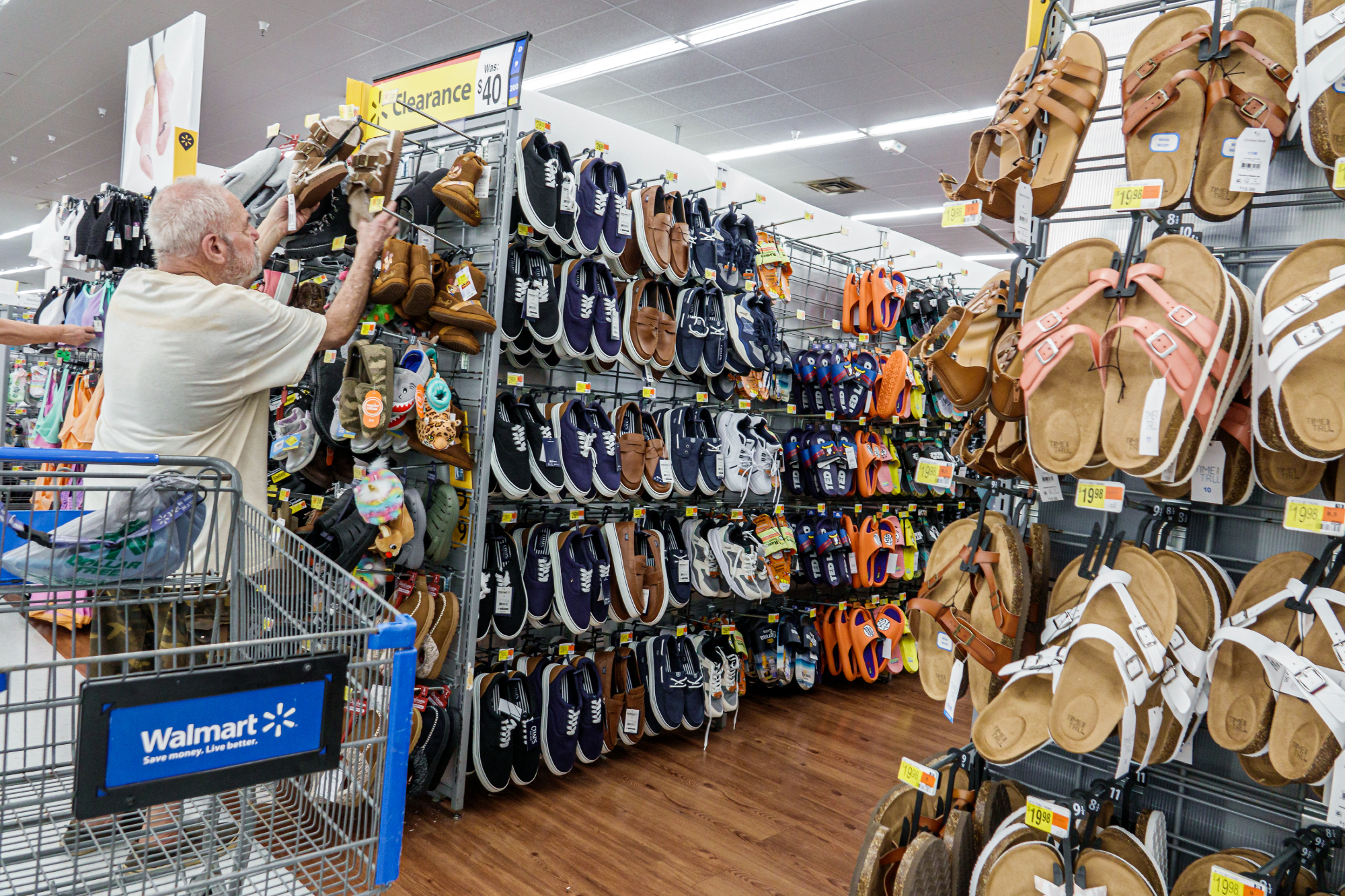
For retailers like Walmart, Target, or other large discounters, who operate on razor-thin margins and possess massive purchasing power, the ability to internalize the sourcing process eliminates the wholesaler’s profit layer entirely. This direct-to-factory approach allows them to claw back critical margin percentage points, ensuring they can maintain aggressive retail price points without absorbing the full impact of lingering import duties and rising global freight costs. This strategy leverages the massive scale of these discounters, many of whom have built sophisticated in-house sourcing and logistics teams capable of managing overseas factory relationships that were once the exclusive domain of specialist vendors.
The $100 Million Question for Wholesalers
The implications of this direct-sourcing revolution are immediate and quantifiable for established private label powerhouses. Steven Madden Ltd., one of the key players in the private label space, is already projecting substantial collateral damage.
According to TAG analysis, the expectation is that Steven Madden’s private label business—which generated a robust $415 million in Fiscal Year 2024—could see a sharp $100 million reduction in revenue over the two-year period spanning through Fiscal Year 2026. This anticipated erosion underscores the severity of the challenge when retailers prioritize extreme cost efficiency above all else.
However, the value proposition offered by wholesalers is not entirely obsolete; it simply shifts up the value chain. While Madden cannot compete with a factory on the sheer cost of manufacturing the lowest-priced footwear, its critical competitive advantage lies in what Telsey termed “fashion intelligence.”
This intelligence is the ability to rapidly synthesize emerging trends from higher-end channels—the runways, social media, and boutique markets—and translate them into scalable, commercial designs for the mass market with speed and accuracy. This injection of timely design insight results in higher sell-through rates and better margins for the retailer, even if the initial unit cost is slightly higher than a purely factory-sourced product.
Telsey pointed out that this cycle is not unprecedented. “Management has seen customers go direct in the past before ultimately returning for the fashion input, and therefore, this business could return again in this cycle,” she noted. Retailers who attempt direct sourcing often find that while they achieve cost savings, their product lines suffer from design atrophy, quality fade, or an inability to react swiftly to changing consumer demands. The complexity of managing design, logistics, compliance, and quality assurance across dozens of independent factories often proves overwhelming, eventually leading them back to established, trend-savvy vendors who specialize in these value-added services.
Strategic Pivot: Trading Volume for Margin
To counteract the structural losses in the private label arena, Steven Madden is doubling down on the strength and resilience of its proprietary namesake brand. The focus has decisively shifted toward higher-margin, more trend-driven categories where the brand’s equity commands a premium.
Analyst commentary suggests the “brand heat is palpable” for the core Steve Madden label. Consumer interest is surging, particularly in less saturated segments of the market. There is a "renewed interest in tall shaft and casual boots," as well as momentum in "dressier styled categories."
This strategic pivot is crucial, as the fashion sneaker market, while important, has begun to plateau. For brands like Steve Madden, competing in the commodity fashion sneaker space—where prices are constantly driven down and competition is fierce—is increasingly unprofitable. Telsey noted the difficulty of battling behemoths: “Boots and dressier styled categories are more advantageous terrain for the brand rather than competing against $80 Sambas and Adidas’ enormous marketing budget.”
By leveraging its core strengths in design and focusing on categories that require higher fashion input and command greater pricing power, Madden aims to offset the lost volume from private label contracts with superior profitability in its branded channels.
Financial Performance Under Pressure
The financial results for the third quarter ended September 30 paint a clear picture of the conflicting forces acting upon the industry. While overall revenue demonstrated resilience, rising 6.9 percent to $667.9 million, the pressure on margins and wholesale operations was severe.
Net income saw a steep decline of 62.9 percent, dropping to $20.5 million, or 29 cents a diluted share. This precipitous drop in profitability, despite revenue growth, directly reflects the intense margin compression resulting from absorbing higher sourcing costs, combined with the ongoing disruption in the high-volume, low-margin wholesale private label division.
Wholesale footwear revenue, the category most exposed to the direct-sourcing trend, fell 10.9 percent overall. When excluding the impact of the acquisition of the Kurt Geiger brand—a $360 million deal completed in May 2025 aimed at diversifying the company’s portfolio into higher-end, European-based designer footwear—the organic decline in wholesale footwear was an even more sobering 16.7 percent.
The current geopolitical and economic climate is thus forcing an immediate and difficult choice upon footwear wholesalers: either invest heavily in technological and logistical efficiencies to reduce their markup to near-zero, or fundamentally transform into specialized design and trend curators whose "fashion intelligence" is deemed indispensable, justifying their continued existence between the factory floor and the mass retail shelf. The $100 million projected private label loss at Steven Madden serves as a stark warning to the entire industry that the era of the traditional footwear middleman is rapidly drawing to a close.