

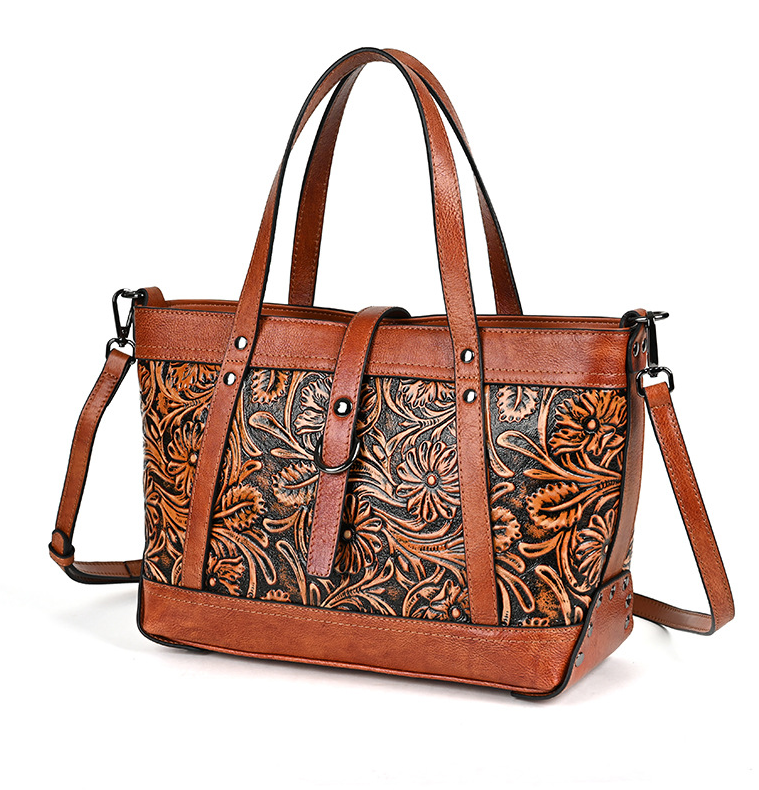
The world of fashion and accessories is currently witnessing a fascinating intersection between ancient craftsmanship and the rigid demands of modern security. On one hand, there is a burgeoning movement toward "slow fashion," characterized by items like the Hand-Carved Vegetable-Tanned Leather Large Tote from CanvasBag.Co, which celebrates heritage and biological materials. On the other hand, the practicalities of 21st-century living have popularized items like the KIMNERPU Clear Backpack, a heavy-duty PVC solution designed for festivals, stadium security, and workplace efficiency. This exploration delves into the intricate details of these two disparate yet equally essential bag styles, examining the materials, the construction techniques, and the cultural shifts that make them both relevant in today’s market.
At the heart of the artisanal movement is vegetable-tanned leather, a material that stands in stark contrast to the mass-produced, chemically treated hides found in fast-fashion outlets. Vegetable tanning is an ancient process that utilizes natural tannins found in tree bark, leaves, and fruits. Unlike chrome tanning, which can be completed in a matter of days using harsh chemicals, vegetable tanning is a labor-intensive process that can take several months. The result is a leather that is not only environmentally friendlier but also possesses a unique structural integrity. It is firm, smells of earth and woods, and most importantly, it develops a "patina" over time. This patina is a darkening and softening of the leather that occurs as it absorbs oils from the user’s hands and is exposed to sunlight, ensuring that a hand-carved tote becomes a living record of its owner’s journey.
The artistry of the Hand-Carved Vegetable-Tanned Leather Large Tote is further elevated by the technique of leather tooling. Hand-carving leather is a meticulous skill that requires a steady hand and an eye for depth and shadow. The artisan begins by "casing" the leather—applying just the right amount of moisture to make the fibers pliable. Using a swivel knife, the craftsman cuts intricate patterns into the surface, which are then hammered and shaped using various stamping tools to create a three-dimensional effect. This level of detail transforms a simple carrying vessel into a piece of wearable art. For a brand like CanvasBag.Co, this represents a commitment to the "Canvas Bag" philosophy—not just in terms of material, but as a blank slate for creative expression and durability.
While the leather tote serves the needs of the aesthetic-driven professional or the lover of heritage goods, a different set of requirements has birthed the rise of the transparent carryall. The KIMNERPU Clear Backpack represents the pinnacle of this functional evolution. In an era where security protocols at concerts, sporting events, and high-security workplaces have become increasingly stringent, the clear backpack has moved from a niche requirement to a household staple. The KIMNERPU model, currently making waves for its heavy-duty construction, is designed to solve the common pitfalls of transparent bags: durability and comfort.
Constructed from thickened, cold-resistant PVC, the KIMNERPU Clear Backpack addresses the primary concern of plastic bags—tearing under pressure. Traditional PVC can become brittle in cold weather or crack when overloaded with heavy textbooks or laptops. However, the heavy-duty reinforced straps and the high-grade transparent material used in this model ensure that the bag can handle the weight of a modern lifestyle. With multiple pockets and a large capacity, it mirrors the organizational capabilities of a traditional bookbag while maintaining the "see-through" transparency required by security personnel. This transparency is not just about compliance; it is about efficiency. Finding keys, a phone, or a wallet becomes instantaneous when the entire contents of the bag are visible at a glance.
Comparing these two items—the hand-carved leather tote and the clear PVC backpack—reveals a broader narrative about consumer choice. The leather tote is an investment in longevity. It is a bag designed to last decades, potentially being passed down through generations. It speaks to a desire for tactile beauty and the prestige of handmade goods. Conversely, the clear backpack, priced at an accessible $17.99, is an investment in convenience and modern necessity. It is a tool for the festival-goer who wants to breeze through the gates of a stadium or the employee who needs to pass through a security checkpoint without the friction of a manual bag search.
The technical specifications of the KIMNERPU backpack are particularly noteworthy for those who prioritize function. It features a reinforced "cross-stitch" at the strap attachments, a common failure point in cheaper clear bags. The inclusion of mesh side pockets for water bottles and a front zippered compartment for smaller items like pens and charging cables makes it a versatile companion for students and travelers alike. As of early 2026, the product has maintained a high rating among thousands of users, suggesting that the market for "security-approved" gear is only growing.
Furthermore, the environmental conversation surrounding these materials is complex. Vegetable-tanned leather is often lauded for its biodegradability and the use of organic tannins, making it a favorite for eco-conscious consumers who avoid plastic. However, the heavy-duty PVC used in bags like the KIMNERPU is prized for its "heavy-duty" nature, which aims to reduce waste by ensuring the bag doesn’t need to be replaced every few months. By creating a transparent bag that doesn’t rip easily, manufacturers are attempting to move away from the "disposable" plastic bag culture that once dominated the clear-bag market.
Stylistically, the two bags occupy different ends of the spectrum but can often be found in the same wardrobe. The Hand-Carved Large Tote is the quintessential "workhorse" for the office or a weekend getaway, pairing perfectly with denim, linen, or professional attire. Its large capacity makes it ideal for carrying a 15-inch laptop, a notebook, and daily essentials, all while maintaining a silhouette of rugged elegance. On the other hand, the clear backpack has developed its own "streetwear" aesthetic. Often customized with colorful pouches or designer accessories placed inside, the transparent bag allows the user to showcase their personality through the items they carry.
The evolution of these products also reflects changes in the global marketplace. Brands like CanvasBag.Co are leveraging digital platforms to bring traditional leatherworking to a global audience, while utility brands like KIMNERPU utilize the logistical power of giants like Amazon to provide affordable, high-utility gear to the masses. The data indicates a strong consumer preference for products that offer "more info" regarding their construction—whether that is the origin of the leather or the thickness of the PVC.
In conclusion, whether one is drawn to the earthy aroma and intricate carvings of a vegetable-tanned leather tote or the sleek, practical transparency of a heavy-duty PVC backpack, the underlying trend is a move toward specialized gear. We no longer live in a world of "one bag fits all." Instead, we curate our accessories based on the environment we are entering. For the art gallery or the executive boardroom, the hand-carved leather tote remains the gold standard of sophistication. For the music festival, the university campus, or the international airport, the clear backpack offers a level of ease and security that leather simply cannot provide. Together, these two styles represent the duality of the modern consumer: a respect for the past and the craftsmanship of the human hand, balanced by a pragmatic embrace of the materials and designs required to navigate the complexities of the modern world. As we look toward the future of accessories, it is clear that the most successful products will be those that, like the tote and the backpack described here, offer a perfect blend of durability, specialized function, and a clear understanding of the user’s daily needs.