

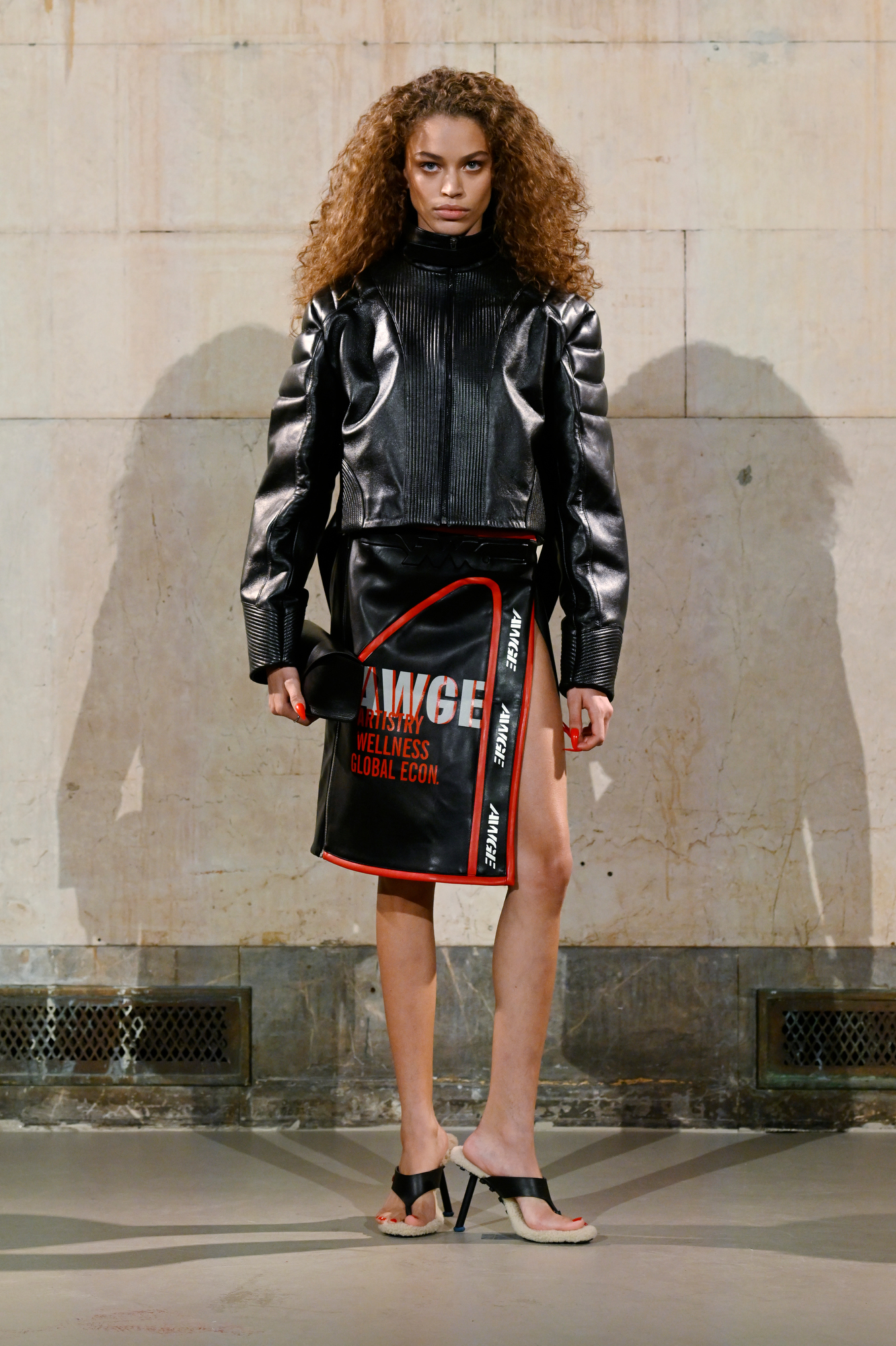
The atmosphere in the days leading up to New York Fashion Week is usually one of calculated anticipation, a choreographed dance of PR releases and scheduled hype. However, the equilibrium of the Fall 2026 season was vibrantly disrupted when A$AP Rocky, the quintessential multihyphenate and Harlem’s most visible fashion export, announced a surprise AWGE show. Having spent the last two seasons presenting his collections under the gilded, historic spotlights of Paris, the move to pivot back to the concrete and grit of Manhattan felt like a seismic shift. This wasn’t just another stop on a global tour; it was an intentional homecoming designed to strip away the artifice of the European runways and replace it with a visceral, grounded perspective that only New York can provide.
The venue, a cavernous former bank space that echoed with the ghosts of old-world commerce, served as the perfect backdrop for a collection that sought to redefine the American dream through a contemporary, urban lens. As the crowd gathered, it became clear that this would not be a traditional, detached runway experience. Rocky, ever the provocateur of the "fourth wall," chose to dismantle the mystery of the backstage. Makeup stations were positioned directly on the runway, and as the show began, guests were treated to a live feed projected across the massive walls, showcasing the frantic, beautiful imperfections of models getting ready. "I wanted the audience to see us getting ready, see the imperfections," Rocky explained after the show. This transparency served as a metaphor for the collection itself: a raw, honest look at the creative process and the lived reality of the people who inspire it.
When the first looks emerged, the narrative of the collection—aptly titled "Bring It Home"—began to unfold with a chaotic yet precise energy. The offering was a sprawling exploration of identity, moving fluidly between sharp, aggressive tailoring and the slouchy, pragmatic staples of street-level workwear. Rocky’s aesthetic has always been defined by a certain "unruly" elegance, and Fall 2026 pushed this to its logical extreme. Plaids were a recurring motif, appearing in a way that initially suggested the prim, preppy schoolgirl aesthetic of the mid-90s—think "Clueless" reimagined for a darker, more subversive era. These traditional patterns were quickly subverted, layered with fur trims that felt both luxurious and predatory, or reimagined in exaggerated proportions that challenged the wearer’s silhouette.
The gender-blurring nature of the collection was not a trend-driven gimmick but a reflection of Rocky’s own personal style evolution. He has long been a proponent of the idea that clothing should be a tool for self-expression rather than a cage for traditional masculine or feminine norms. In the AWGE Fall 2026 universe, sharp, latex-slick tailoring shared the runway with oversized, rugged workwear. The latex pieces, in particular, felt confrontational and futuristic, suggesting a high-fashion armor designed for the urban landscape. Conversely, the workwear felt deeply rooted in the practicalities of New York life, though elevated through fabric choices and unexpected clashes of texture.
The commercial backbone of the collection was reinforced by Rocky’s high-profile creative roles outside of AWGE. As the creative director for both Puma and Ray-Ban, he expertly wove these partnerships into the fabric of the show without allowing them to dilute the collection’s experimental edge. Leather racing coats, bearing the sleek DNA of Puma’s motorsport heritage, were paired with cropped jerseys that felt like a nod to the vintage athletic wear of the 1990s. The eyewear, provided by Ray-Ban, served as a sharp, modern punctuation mark for each look. These pieces represented a clear through-line for the consumer, offering accessible entry points into the AWGE world while maintaining the show’s overall sense of avant-garde rebellion.
One of the most poignant aspects of the show was the presence of Rocky’s partner, the global icon Rihanna. Sitting front and center, radiating pride and dressed in a full AWGE ensemble next to A$AP Nast, her presence underscored the familial and communal themes that Rocky sought to highlight. Rocky admitted that while he has an intuitive grasp of what men want to wear, he often seeks out a female perspective when crafting his womenswear. The influence of a woman like Rihanna—who has redefined modern maternity and feminine power—was palpable in the collection’s confident, unapologetic approach to the female form.
The accessories in the Fall 2026 collection did much of the heavy lifting in terms of narrative. Oversized bags, scaled to an almost comical and intentionally impractical size, signaled that fashion is, first and foremost, an attitude and a statement of presence rather than a mere utility. Some bags carried a more explicit message, adorned with the phrase "We heart our country" accompanied by a broken heart emoji—a subtle yet biting commentary on the current socio-political climate in America. However, it was the inclusion of fur-lined baby pouches and a massive, luxury leather baby carriage that truly captured the audience’s attention.
These "fatherhood" accessories were a direct reflection of Rocky’s current life stage as a father to two young sons. By putting men on the runway in the position of pushing strollers or carrying baby gear, he aimed to normalize and "swag up" the image of the involved urban father. "It’s not really too far-fetched when you think about involved parents or fathers," Rocky noted post-show. "I just wanted to put it under a different scope and show urban people doing it, swagging it up." This reframing of everyday objects as high-fashion statements served to elevate the mundane aspects of parenting into a visible, styled, and celebrated part of the culture.
The pacing of the show was deliberate, designed to feel more like a community gathering or a block party than a corporate fashion event. The "imperfections" Rocky alluded to—the models pausing for a touch-up, the live feed showing the chaos of the lineup—gave the event a sense of sincerity and soul that is often missing from the high-gloss productions of Paris or Milan. It was a celebration of "the process" over "the product," an acknowledgment that the way people move, care for one another, and exist in their communities is just as important as the clothes they wear.
As the final models made their circuit through the former bank, the collective impact of the show was one of profound resonance. Rocky didn’t just return to New York to fulfill a calendar requirement; he returned to re-center the fashion conversation around the very culture that birthed him. The collection was messy in places, yes, but it was a deliberate messiness—a "subtle sabotage" of the status quo. It was a show that felt expansive and teeming with identity, proving that Rocky’s vision for AWGE is not just about selling a lifestyle, but about documenting a lived reality.
By the time the lights dimmed and the applause filled the cavernous space, it was clear that A$AP Rocky had succeeded in "bringing it home." He proved that he could take the lessons learned on the global stage of Paris and apply them to the streets of New York, creating something that felt both sophisticated and street-smart. The Fall 2026 collection was a testament to the power of staying true to one’s roots while constantly pushing the boundaries of what fashion can represent. In the end, it wasn’t just a fashion show; it was a cultural manifesto, a homecoming parade for a creator who remains one of the most vital and authentic voices in the industry today. The AWGE show didn’t just mark a return to New York; it marked a return to the soul of fashion itself.