

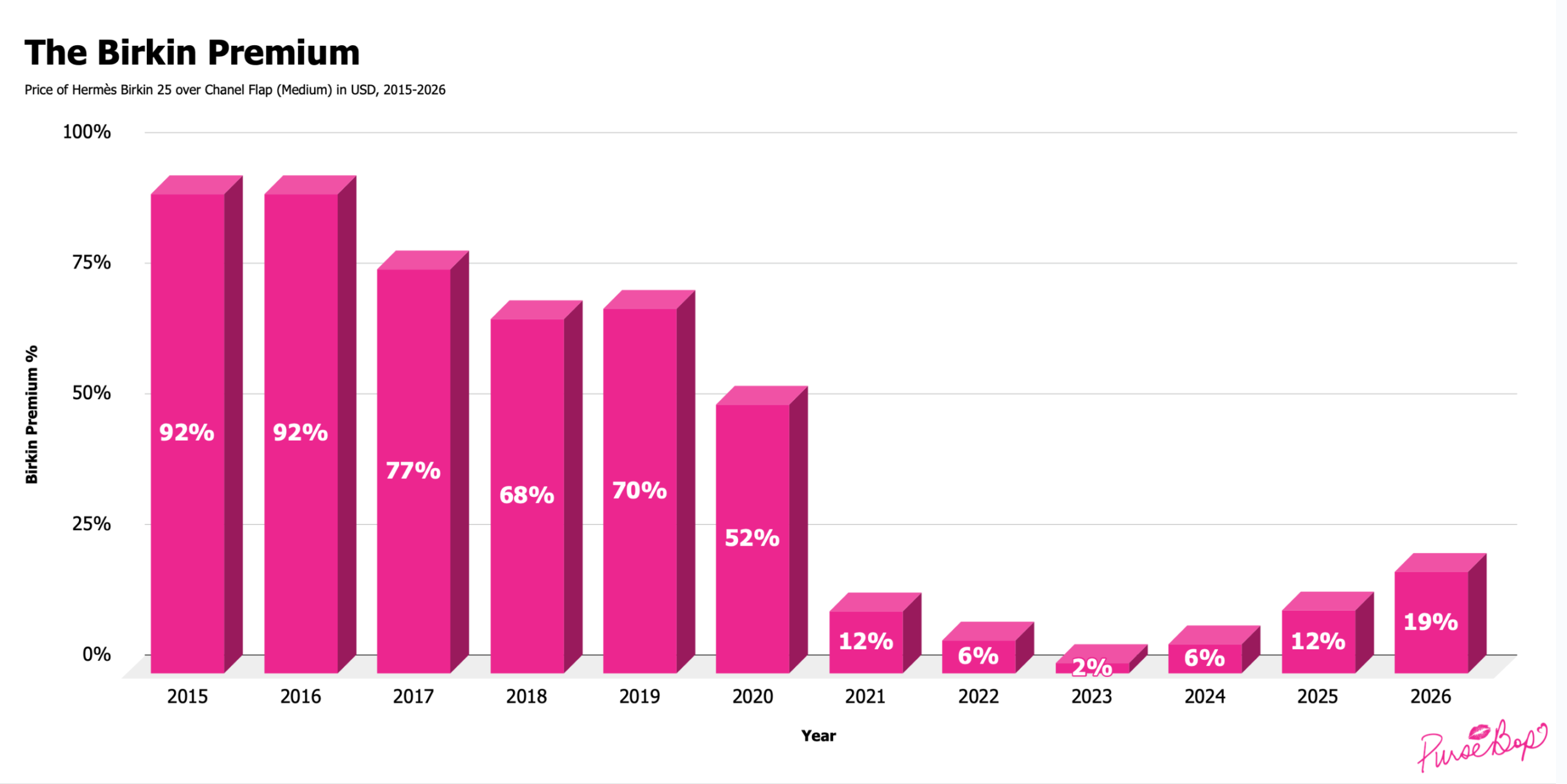
The intricate dance of high-luxury pricing has taken another dramatic turn, with new data from early 2026 indicating a significant resurgence in the valuation gap between two titans of the handbag world: the Hermès Birkin 25 and the Chanel 11.12 Medium Classic Flap. As of January 2026, the calculated "Birkin Premium"—a metric tracking the percentage difference in retail price between these two coveted models—has settled at 19.5%. This figure marks a decisive swing back in favor of the Birkin after a brief, almost unprecedented period where the two bags flirted with price parity.
To fully appreciate the significance of this 19.5% premium, it is essential to understand the methodology. In the context of luxury economics, a premium or discount quantifies the relative cost between two comparable assets. For this analysis, the Birkin Premium isolates the pure monetary difference between the standard retail price of a Birkin 25 and a Medium Classic Flap. Crucially, this metric strips away the subjective elements of brand cachet, desirability, and the infamous acquisition hurdles associated with securing a Birkin directly from an Hermès boutique. It focuses solely on the hard numbers displayed on the price tags.
The trajectory of this premium over the past decade offers a compelling narrative of shifting market dynamics and staggered pricing strategies between the two French houses. The current 19.5% premium signifies that, on average, a buyer must spend nearly one-fifth more at the register for the Birkin 25 compared to the Chanel Flap.
This current valuation represents a stark reversal from the situation just three years prior. In January 2023, the luxury landscape saw an extraordinary compression of this gap, with the Birkin Premium sinking to a mere 2%. At that juncture, the Chanel Flap’s retail price had climbed so aggressively that it was only 2% cheaper than its Hermès counterpart—a convergence that sent ripples of surprise and perhaps disappointment through the dedicated Hermès collector community.
Looking further back, the contrast is even more pronounced. The historical high point for the Birkin’s dominance, according to this metric, occurred around 2016, when the premium peaked at a staggering 91.8%. During that era, the Birkin 25 commanded a retail price nearly double that of the equivalent Chanel Flap, reflecting a period where Hermès’s pricing power seemed nearly unassailable relative to Chanel’s.
The Tug-of-War: Analyzing Price Movements Since 2020
The recent volatility in the Birkin Premium can be directly mapped to the contrasting pace and timing of retail price adjustments implemented by Chanel and Hermès between 2020 and 2026.

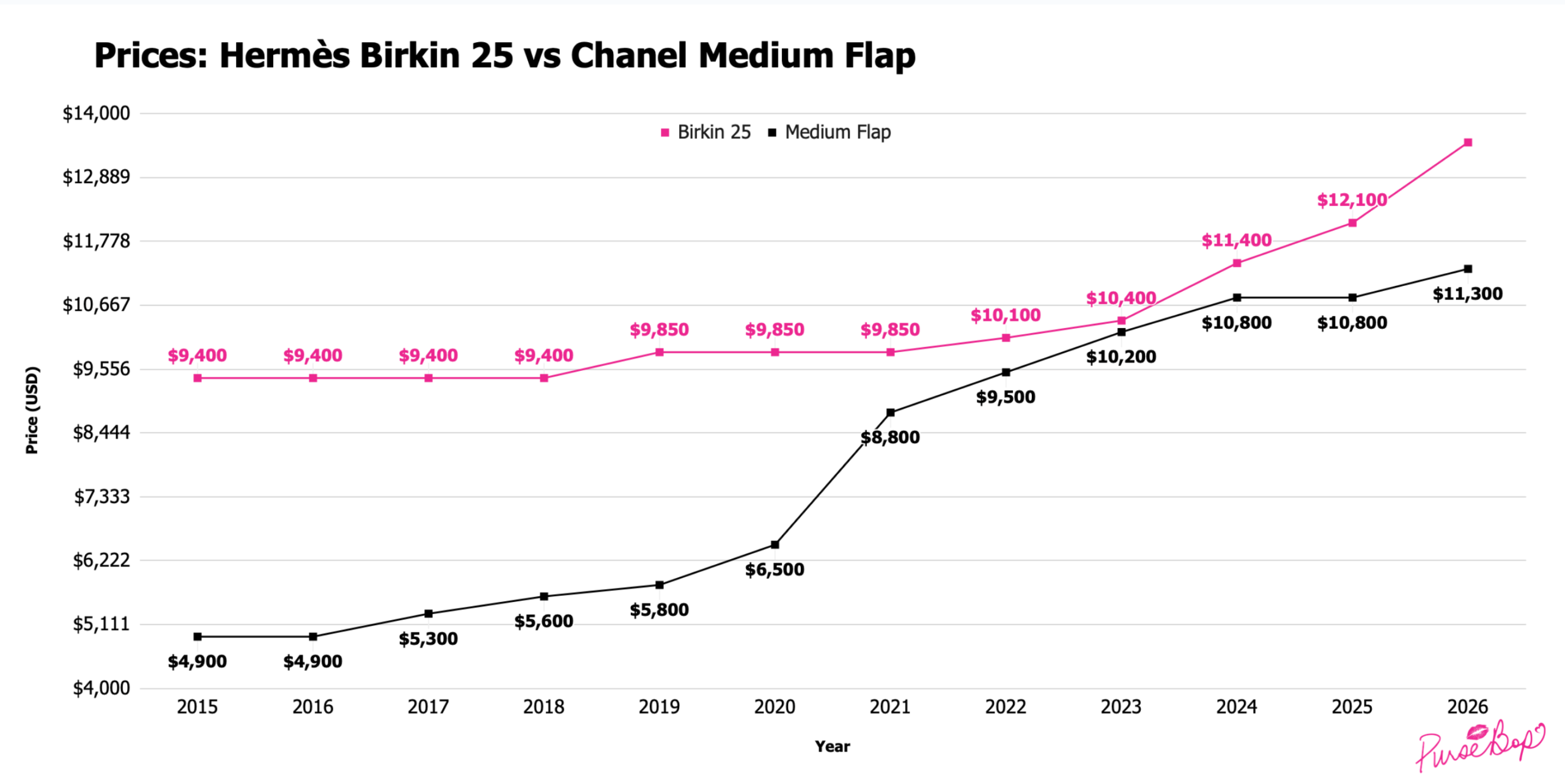
The period between 2020 and 2023 was characterized by Chanel’s assertive campaign of price inflation. During these three years, the Medium Classic Flap experienced an aggressive cumulative increase of $3,700, vaulting its price from an initial $6,500 to cross the five-figure threshold at $10,200. Simultaneously, Hermès maintained a more measured approach, increasing the price of the Birkin 25 by a comparatively modest $550 over the same timeframe. This disparity in aggressive upward movement is what caused the Birkin Premium to plummet to its near-parity low of 2% in 2023.
However, the narrative shifted decisively starting in 2024. Recognizing the erosion of their price differential, Hermès initiated its own significant upward adjustment cycle. Between 2024 and the start of 2026, the Birkin 25 saw its retail price climb by a substantial $3,100. During this same period, Chanel’s price increases moderated, registering only an additional $1,100 increase for the Classic Flap.

This synchronized, yet staggered, aggressive action by Hermès has successfully widened the gap once more, pushing the Birkin Premium back towards the 20% mark, settling at 19.5%.
A decade-long summary reveals the complexity of these pricing strategies. Since 2016, the Birkin 25’s retail price has increased by $4,100, while the Chanel Flap has seen a larger absolute increase of $6,400. Despite the Chanel Flap experiencing greater overall nominal price growth over the ten-year span, the timing of these hikes—specifically Chanel’s sharp pre-2024 surge followed by Hermès’s robust post-2023 response—created the dramatic fluctuation in the Birkin Premium, moving it through the extreme points of 92%, down to 2%, and now resting at 19.5%.
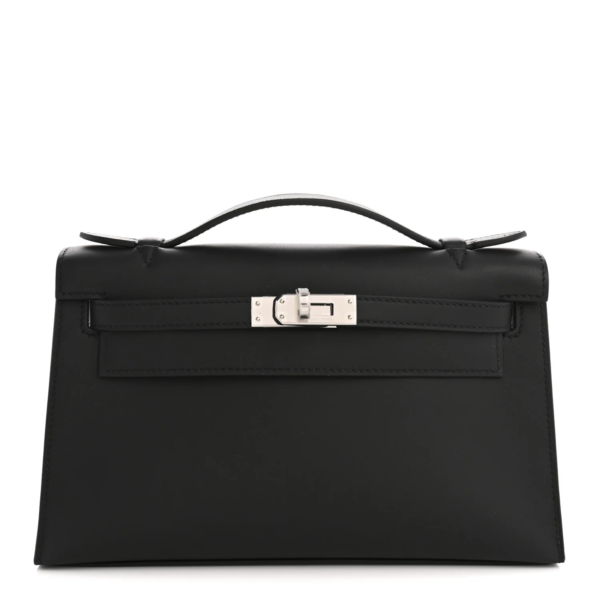
Interpreting the 19.5% Plateau
The current 19.5% Birkin Premium settles the market into a "middle ground." It firmly re-establishes the Birkin as the more expensive item based purely on the official price tag, yet it remains significantly lower than the peak premium observed in 2016.
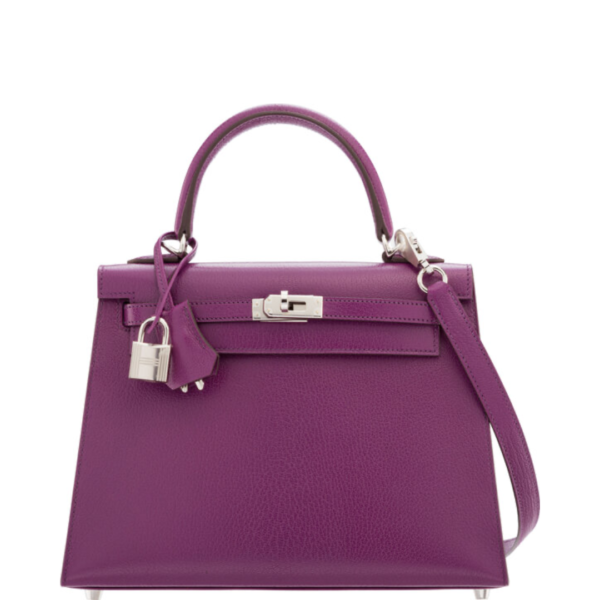
For dedicated Hermès clientele, this figure is often perceived as understated. They argue that the retail price calculation fails to capture the true economic outlay required to acquire a Birkin. This perspective centers on the unspoken prerequisite of cultivating a purchase history—the need to buy significant quantities of non-core merchandise from Hermès, often referred to as "building a relationship" or "spending history," before being offered the opportunity to purchase the most sought-after leather goods. In stark contrast, acquiring a Chanel Classic Flap remains a relatively straightforward transaction for any client walking into a boutique, with significantly less friction or prerequisite spending.
The question now facing the luxury market is whether Hermès will continue to aggressively deploy price increases in an effort to spike the Birkin Premium further toward its historical highs, perhaps seeking to maximize the perceived value and exclusivity of the Birkin line. While the appetite for these iconic bags appears insatiable, there remains an economic ceiling. At some point, sustained, aggressive retail inflation could test the elasticity of consumer demand, potentially leading to buyer resistance or a shift in focus toward alternative high-end collectibles that offer a better perceived return on investment relative to their acquisition cost. The next few years of pricing announcements will serve as a critical indicator of whether the Birkin’s pricing strategy aims for sustainable premium maintenance or a relentless pursuit of historical valuation peaks.