

The Illusion of Short-Term Savings
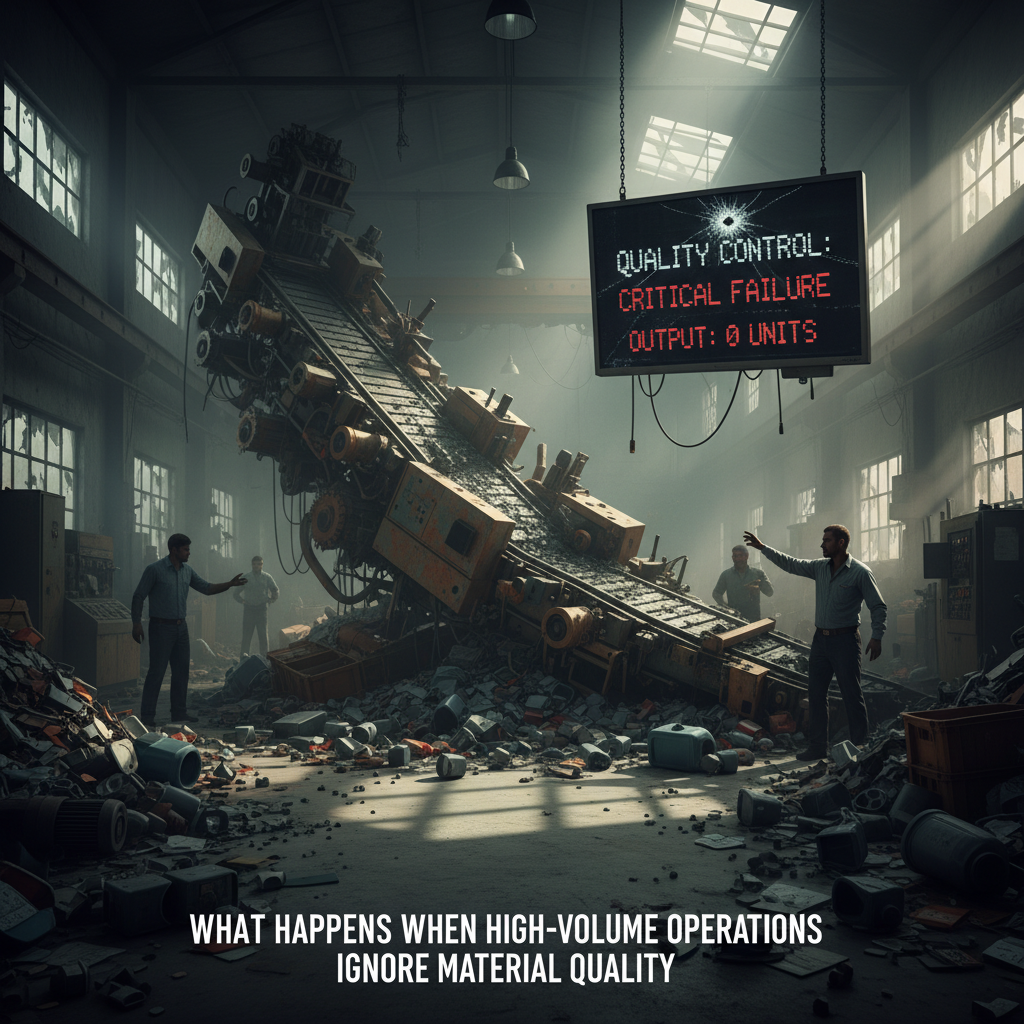
In the competitive landscape of high-volume manufacturing, the pressure to reduce costs is relentless. Decision-makers often look at raw material procurement as the primary lever for budget optimization. However, when material quality is compromised for a lower price point, the perceived savings often evaporate within the first few production cycles. High-volume operations operate on thin margins where even a minor deviation in material consistency can lead to exponential losses across the assembly line.
Increased Machine Downtime and Maintenance
High-speed machinery is engineered to operate within specific tolerances. When sub-par materials are introduced, they often exhibit variations in hardness, density, or chemical composition that the equipment is not calibrated to handle. This results in accelerated wear and tear on critical components, leading to frequent breakdowns. The cost of emergency repairs and the loss of production hours far outweigh the initial savings gained from cheaper materials.
The Domino Effect of Production Bottlenecks
A single batch of poor-quality material can bring an entire facility to a standstill. In high-volume environments, processes are tightly integrated. If a component fails at the beginning of the line due to material defects, every subsequent stage is halted. This bottleneck effect disrupts schedules, delays shipments, and creates a backlog that can take weeks to resolve, severely impacting the operational flow.
Escalating Scrap Rates and Resource Waste
Quality control is the gatekeeper of profitability. When material quality is ignored, the volume of rejected parts—commonly known as scrap—skyrockets. Instead of producing sellable goods, the operation consumes energy, labor, and time to create waste. This inefficiency not only erodes the bottom line but also undermines sustainability goals, as the environmental footprint per unit produced increases significantly.
Compromised Product Safety and Liability
For industries like automotive, aerospace, or medical devices, material integrity is a matter of life and death. Using inferior alloys or plastics can lead to structural failures in the field. The legal ramifications of distributing defective products are immense, including class-action lawsuits, regulatory fines, and the massive logistical nightmare of global product recalls.
Damage to Brand Equity and Market Trust
In the digital age, a brand’s reputation is its most valuable asset. Consistent quality is the foundation of customer loyalty. When a high-volume operation releases products made from inferior materials, the market notices quickly. Negative reviews and social media backlash can permanently tarnish a brand’s image, making it difficult to regain consumer trust even after the quality issues are addressed.
The High Cost of Returns and Warranty Claims
A sale is not truly a sale until the customer is satisfied. High-volume operations that ignore material quality often face an influx of returns and warranty claims. Processing these returns requires additional logistics, customer service intervention, and replacement costs. This reverse logistics cycle is notoriously expensive and can consume the entire profit margin of the original transaction.
Workforce Frustration and Decreased Morale
Production teams take pride in their work. When they are forced to work with substandard materials that constantly cause issues, morale drops. Operators spend more time troubleshooting and clearing jams than actually producing. This environment leads to burnout and high turnover, as skilled workers seek employment in facilities that prioritize excellence and reliable processes.
Incompatibility with Advanced Automation
Modern high-volume facilities rely heavily on robotics and AI-driven systems. These technologies thrive on predictability and standardization. Sub-par materials introduce variables that automated sensors may not recognize, leading to system errors or catastrophic mechanical crashes. To fully leverage automation, material consistency is not an option; it is a prerequisite.
Supply Chain Instability
Ignoring material quality often means sourcing from unreliable or unvetted suppliers who prioritize volume over standards. This creates a fragile supply chain. If a primary supplier delivers a bad batch, the operation has no fallback. Establishing rigorous vendor qualification processes ensures that the materials entering the system meet the necessary benchmarks for high-volume success.
Regulatory Non-Compliance and Fines
Many sectors are governed by strict material standards, such as ISO, ASTM, or industry-specific certifications. Utilizing materials that do not meet these specifications can result in the loss of certification. Without these credentials, high-volume operations may be legally barred from certain markets, leading to a loss of revenue and potential government sanctions.
Inaccurate Financial Forecasting
When material quality is inconsistent, production yields become unpredictable. This makes it nearly impossible for financial departments to accurately forecast revenue and expenditures. The volatility introduced by unreliable materials creates hidden costs that distort the company’s financial health, making long-term strategic planning a guessing game.
Loss of Competitive Advantage
In a global market, quality is a key differentiator. Competitors who invest in superior materials can offer longer warranties, better performance, and higher reliability. Over time, the operation that ignores quality will lose its market share to those who understand that premium materials are an investment in market dominance rather than a line-item expense.
The Total Cost of Ownership (TCO) Perspective
Savvy operations managers look at the Total Cost of Ownership rather than the initial purchase price. TCO includes the cost of the material, the cost of processing it, the cost of potential failures, and the cost of disposal. When viewed through this lens, high-quality materials almost always prove to be the more economical choice for high-volume production environments.
Conclusion: Prioritizing Quality for Scalable Growth
Scaling a high-volume operation requires a foundation of excellence. Ignoring material quality is a short-sighted strategy that invites operational chaos and financial instability. To ensure long-term viability, companies must implement robust quality assurance protocols, invest in premium raw materials, and foster a culture where quality is never sacrificed for the sake of speed. Only then can an operation achieve true efficiency and sustainable growth.