

A unified front of industry associations representing various packaging materials is voicing significant concerns regarding the structure and application of proposed Extended Producer Responsibility (EPR) fees, with a particular focus on what they perceive as disproportionately burdensome charges being levied against fibre-based packaging solutions. This growing apprehension stems from a fundamental disagreement over whether the proposed fee framework accurately mirrors the genuine environmental footprint and recyclability success rates of different packaging formats, threatening to derail crucial investments in sustainable alternatives.
The core of the dispute lies in the principle of proportionality. Industry stakeholders are unequivocally asserting that the financial obligations imposed on producers under the EPR scheme must serve as a precise reflection of a material’s actual environmental performance throughout its lifecycle—from sourcing to end-of-life management. If the fees are miscalibrated, the consequences could cascade through the entire packaging supply chain, undermining the very environmental goals the EPR legislation is designed to achieve.
The alliance, comprising several key industry bodies, released a strongly worded statement emphasizing this critical dependency. "It is absolutely essential that the EPR fee framework accurately reflects the real-world environmental performance and end-of-life outcomes of different materials," the statement declared. This is not merely a matter of administrative fairness; it is an economic imperative for the transition to a circular economy.
The coalition argues that if the financial penalties or contributions embedded within the EPR structure fail to align with proven material impacts—specifically, the high recovery and recycling rates demonstrated by fibre-based packaging—the predictable outcome will be a chilling effect on innovation. Specifically, producers might be discouraged from investing in fibre-based packaging solutions, which are often championed for their lower carbon intensity and established recycling infrastructure, in favour of less sustainable, yet artificially cheaper, alternatives resulting from skewed fee calculations. This unintended consequence would directly retard progress toward national and international sustainability targets.
The concerns are amplified by the complexity inherent in calculating these new fees. The EPR system, designed to shift the financial responsibility for end-of-life management from municipalities to producers, relies on detailed data concerning material composition, collection rates, recycling infrastructure capacity, and the actual market value (or lack thereof) for recovered materials. When these complex variables are translated into the illustrative fees presented to the industry, significant discrepancies have emerged, particularly for paper and board.
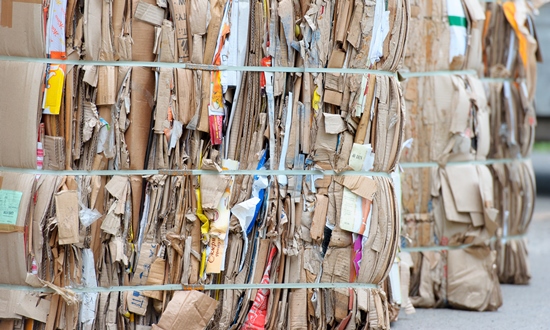
Fibre-based packaging—including cardboard, paperboard cartons, and moulded pulp—boasts a long history of successful collection and processing within established recycling streams across the UK and Europe. Industry data consistently points to high capture rates for these materials, suggesting they should benefit from lower EPR modulation factors compared to materials facing significant contamination or infrastructural bottlenecks. The current proposed fee structure, however, appears to treat these high-performing materials similarly, or even less favourably, than more challenging streams.
The alliance has confirmed it is actively engaged in intensive dialogue with government bodies and the designated scheme administrators responsible for implementing the EPR regulations. This engagement is multi-faceted, aiming to achieve total transparency regarding the methodology behind the fee calculations.
"The Alliance is engaging closely with Government and delivery partners to better understand the data, assumptions and calculations underpinning the illustrative fees," the statement continued. This process involves a forensic examination of the input variables—the specific contamination rates assumed, the recycling yields projected, and the perceived market stability of recovered fibre—that ultimately determine the final cost passed on to producers.
Crucially, the industry groups are not simply lodging complaints; they are actively contributing their own robust evidence base. They are "sharing the evidence and data we have on the performance of fibre-based packaging." This data package likely includes verified figures on collection infrastructure coverage, the purity of collected fibre streams, successful end-market utilization rates, and lifecycle assessment (LCA) data that highlight the lower embodied carbon of fibre solutions compared to plastics or multi-material composites.
The objective of this rigorous exchange is to steer the final implementation toward a system that is demonstrably fair and effective. The industry’s desired outcome is an EPR scheme that is "evidence-based, proportionate and delivers genuine environmental benefits."
The fear articulated by the fibre packaging sector mirrors broader industry anxiety felt across different material categories. It is understood that associations representing plastics, glass, and metals also harbor specific grievances about how their respective material profiles are being assessed under the new EPR regime. For instance, plastic recyclers might argue that the fees fail to adequately incentivize investment in advanced chemical recycling technologies, while glass producers might contest assumptions about furnace emissions during cullet reprocessing. This collective dissatisfaction underscores a systemic challenge in designing a perfectly equitable modulation system that satisfies the diverse technical realities of every packaging material.
However, the focus on fibre-based packaging highlights a specific danger: penalizing success. If packaging that is already widely recycled is burdened with high fees, producers will naturally gravitate towards materials that might appear cheaper under the new system, even if those alternatives represent a net negative for national decarbonization efforts or waste management efficiency. This creates a perverse incentive, prioritizing fee minimization over genuine circularity.
Industry sources suggest that if the government and delivery partners remain rigid in their initial calculations, the packaging sector faces a difficult choice: absorb substantial, arguably unwarranted, cost increases, or potentially accelerate the shift away from established, lower-impact fibre solutions towards newer, perhaps less proven, materials that happen to benefit from more favourable (though potentially flawed) EPR weighting.
The call for "continued dialogue" suggests a constructive path forward, but one contingent upon the willingness of regulators to adjust their models based on verifiable industry performance data. The next few months will be critical as the illustrative fees transition into final, legally binding financial obligations. The packaging industry is firmly committed to paying its fair share for the environmental costs of packaging waste, but it demands that this contribution be accurately calibrated to its stewardship role and proven recyclability achievements. Failure to align the fees with reality risks creating an EPR system that inadvertently locks in higher carbon footprints and slows the UK’s ambitious journey toward a truly circular economy. The integrity of the EPR framework hinges on its ability to reward, rather than penalize, materials that are already leading the charge toward sustainable packaging solutions.