

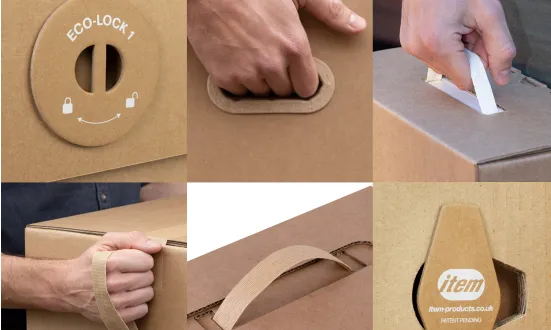
ITEM Products, a recognized leader in innovative packaging solutions, has officially launched its highly anticipated "Eco-Range," a comprehensive suite of packaging components engineered to drastically reduce reliance on traditional plastics while maintaining superior performance and aesthetic appeal. This strategic market introduction directly addresses the burgeoning global demand from brands seeking viable, scalable alternatives to plastic packaging without incurring prohibitive costs or sacrificing the integrity of their product presentation. The Eco-Range represents a significant leap forward in sustainable packaging technology, positioning ITEM Products at the forefront of the industry’s necessary transition toward a circular economy.
The fundamental strength of the Eco-Range lies in its meticulously sourced and engineered material composition. Every single element within this new line is constructed exclusively from either Forest Stewardship Council (FSC) certified paper or 100% post-consumer recycled fiber. This commitment to certified, renewable, and reclaimed materials ensures that the environmental footprint associated with the raw material extraction and initial manufacturing process is minimized substantially. Furthermore, the design philosophy behind the Eco-Range places paramount importance on end-of-life management. Crucially, all components are designed to be fully integrated into existing municipal recycling infrastructure. Customers can confidently dispose of these items directly into their standard paper waste streams, ensuring high rates of successful material recovery and subsequent reuse, thereby closing the loop on packaging consumption.
Ciaran Glover, Director at ITEM Products, articulated the driving philosophy behind this ambitious development during the launch announcement. "Our engagement with brand owners across various sectors revealed a consistent, intense pressure point," Glover stated. "These companies are tasked with rapidly decarbonizing their packaging footprints and eliminating virgin plastics, yet they cannot afford to compromise on the critical factors that define successful consumer packaging: functionality, visual design, and ultimately, cost-efficiency. The Eco-Range was not merely an incremental improvement; it was a direct, targeted response engineered to solve this multifaceted challenge."
Glover emphasized the technical achievements embedded within the new offering. "We have successfully created paper-based components that genuinely perform like their plastic counterparts. This is not about substituting one material for another in a like-for-like manner; it’s about achieving equivalent levels of durability, protection, and precision in fit and finish. Moreover, these solutions are designed for seamless integration into the established, high-speed packaging lines our clients currently employ, minimizing the need for costly retooling or operational overhauls." This emphasis on ‘drop-in’ compatibility addresses a major hurdle often encountered when transitioning to novel sustainable materials—the friction associated with supply chain modification.
The development process for the Eco-Range was characterized by intensive collaboration and iterative testing. ITEM Products moved beyond simply creating a catalog of stock items, instead opting for a partnership-centric approach with key clients. This strategy involves co-developing bespoke, application-specific paper-based components tailored precisely to unique product geometries, protection requirements, and brand aesthetics. This bespoke development pipeline is already yielding substantial results, with ITEM confirming that several entirely new packaging formats are currently in advanced stages of design and testing. These forthcoming additions are slated to significantly broaden the scope of the Eco-Range, enabling its application across a wider spectrum of product categories currently dominated by non-recyclable or difficult-to-recycle plastic inserts, trays, and protective components.
Industry analysts suggest that the introduction of a high-performance, cost-competitive, and fully recyclable paper alternative arrives at a critical juncture. Regulatory landscapes worldwide, particularly within the European Union and North America, are rapidly tightening restrictions on single-use plastics and imposing Extended Producer Responsibility (EPR) schemes that penalize packaging that cannot be easily recycled. Brands that proactively adopt solutions like the Eco-Range gain an immediate competitive advantage, enhancing their Environmental, Social, and Governance (ESG) credentials while future-proofing their supply chains against impending legislative changes.
The technical challenge ITEM Products has overcome is significant. Traditional plastic components—such as blister packs, clamshells, or internal fitments—offer barrier properties, structural rigidity, and molding precision that are difficult to replicate using only fiber-based materials, especially when moisture or high humidity is a concern. By leveraging advanced fiber engineering, specialized surface treatments (which remain compatible with paper recycling streams), and proprietary structural design techniques, ITEM has managed to bridge this performance gap. For example, in sectors like cosmetics or small electronics, where precise cushioning and presentation are vital, the Eco-Range’s paper inserts are reportedly offering shock absorption metrics comparable to polyethylene foam or thermoformed PET.
Furthermore, the economic viability of the Eco-Range is a key selling point. While initial investment in R&D is high, the scalability of the FSC-certified and recycled fiber supply chain, combined with the reduced long-term liabilities associated with plastic waste disposal, positions the Eco-Range as a sound financial decision over the medium to long term. Glover noted that by utilizing existing paper processing infrastructure, the marginal cost increase over traditional plastic for high-volume runs is surprisingly narrow, often offset entirely by the brand value uplift associated with genuine sustainability credentials.
The current focus for ITEM Products involves expanding the toolkit available to their design teams. Future iterations of the Eco-Range are expected to introduce specialized paper barriers capable of handling slightly more demanding barrier requirements, potentially opening doors into food service applications or consumer goods requiring enhanced shelf life stability without resorting to conventional plastic laminates. This continuous innovation loop, driven by direct customer feedback and rigorous material science, underscores ITEM’s commitment not just to launching a product line, but to fundamentally transforming the packaging ecosystem.
In essence, the launch of the Eco-Range is more than a product announcement; it signifies a mature, scalable solution to one of the most pressing sustainability challenges facing consumer goods companies today. By delivering high-performance, cost-effective, and universally recyclable paper components, ITEM Products is empowering brands to move decisively away from petrochemical dependence and embrace a future where packaging protects products without polluting the planet. The industry is now watching closely to see how quickly these co-developed, bespoke solutions move from the development pipeline into mainstream global retail environments.