

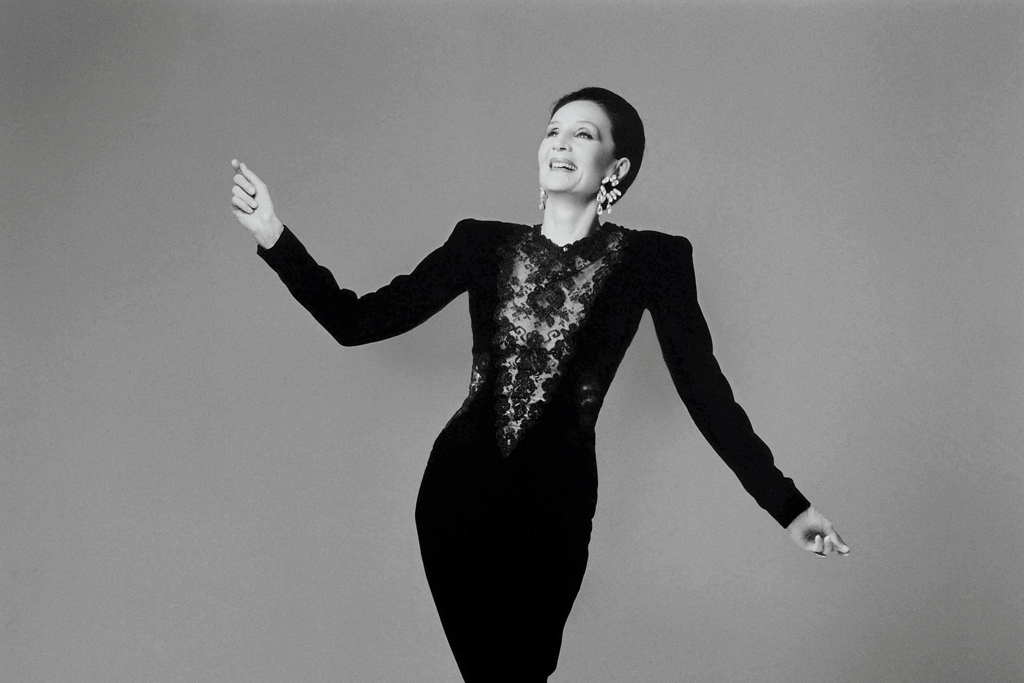
The world of high fashion and aristocratic Parisian society is mourning the loss of Countess Jacqueline de Ribes, a singular figure whose life was a century-spanning testament to grace, creative ambition, and unwavering philanthropic dedication. The socialite, designer, and muse—once famously christened “The Last Queen of Paris” by legendary couturier Valentino Garavani—passed away peacefully in Switzerland on Tuesday at the age of 96.
Her death marks the definitive close of an opulent, highly curated era of European elegance. Françoise Dumas, a long-time friend and event organizer who collaborated with the Countess on numerous societal and cultural projects, including the annual fundraising gala for the Société des Amis des Musées d’Orsay, confirmed the news and articulated the sense of profound loss. “The last grande dame of Paris is gone,” Dumas told reporters. “She carried the art of living and savoir-vivre to new heights. With her, a bit of that Proustian Paris is disappearing too.”
The Epitome of French Aristocracy
Born Jacqueline Bonnin de la Bonninière de Beaumont, the Countess embodied the intricate social tapestry of 20th-century French aristocracy. She was born into a distinguished, ancient family and married into one of France’s most powerful banking dynasties, wedding Vicomte Édouard de Ribes, who later inherited the title of Count. This union placed her at the very epicenter of power, culture, and wealth in post-war Paris.
De Ribes cultivated an aura of untouchable chic, defined not just by the exclusivity of the couture she wore but by her innate ability to transform clothing into personal statements. She never merely followed trends; she dictated them through her sophisticated self-styling and architectural approach to fashion. This unique eye and magnetic presence quickly drew international attention, cementing her status as a global icon of taste.
She was one of the celebrated women, known collectively as the “Swans,” who fascinated writer Truman Capote—a circle that included Babe Paley, Gloria Guinness, and Slim Keith. These women were the arbiters of taste, and de Ribes stood out for her European rigor and dramatic flair. Her image was immortalized by the great photographers of the era, notably Richard Avedon, who captured the severe beauty and theatrical spirit she brought to every public appearance.
Muse, Curator, and Designer
De Ribes’s influence was perhaps most profoundly celebrated in 2015 when the Metropolitan Museum of Art’s Costume Institute dedicated an entire exhibition to her life and style: “Jacqueline de Ribes: The Art of Style.” Curated by Harold Koda, the exhibition was less about a designer’s body of work and more about the art of personal curation—a study in how a client elevates clothing into an art form.

The exhibition showcased some 60 ensembles, demonstrating her extraordinary ability to mix haute couture masters with her own adaptations and self-designed pieces. Her wardrobe was a living museum, featuring seminal works from Cristóbal Balenciaga, Madame Grès, Pierre Balmain, Bill Blass, Jean Paul Gaultier, Marc Bohan for Dior, and, crucially, her close friend Yves Saint Laurent.
De Ribes was famous for her inventive alterations, taking a sleeve from one gown, the trim from another, or even commissioning a dress purely to incorporate a piece of antique fabric she had acquired. This creative dissatisfaction with simply wearing clothes eventually led her to step behind the drawing board.
In 1983, after decades of designing garments for herself and her inner circle, de Ribes officially launched her own fashion house. The decision was unusual for a woman of her standing; she did not need the financial income, but she craved the intellectual and creative rigor of design. Her debut line, focusing on sophisticated, luxurious ready-to-wear, particularly elegant after-five attire, was strategically launched in the American market.
“Every designer offers a personality and a style,” she explained at the time. “Mine is simplicity and sophistication and I think Americans will appreciate that. They’ve always been very nice to me.”
Her launch was preceded by a private preview for Yves Saint Laurent, a gesture that underscored their shared aesthetic philosophy. “I wanted to show the secret to him,” she noted, “We share the same intellectual rigor about aesthetics.” Her career as a designer, while relatively brief, proved her capacity to transition from muse to creator, earning respect for her disciplined approach to construction and cut.
The Style DNA: Drama and Discipline
Jacqueline de Ribes’s signature style was characterized by theatrical elegance tempered by strict discipline. She favored sharp, architectural silhouettes—often featuring dramatic shoulders and structured tailoring—combined with a fearless approach to color and texture. She was adept at the grand gesture, wearing capes and elaborate hats, yet her foundation was always classic and impeccable. She treated her wardrobe not as fleeting fashion, but as a carefully constructed, timeless narrative.
Her influence extended beyond garments; she was also a prolific producer in the arts, lending her vision to theater and film. This multidisciplinary approach ensured her creative footprint was deeply impressed across Parisian cultural life.

Dedication to Culture and Humanitarianism
Beyond the shimmer of society and the flash of couture, the Countess maintained a fervent commitment to philanthropy. She was the Honorary President of the Friends of the Musée d’Orsay, dedicating decades to supporting the institution and helping to secure crucial funds for the preservation and exhibition of French art. Her tireless work on the annual fundraising gala, often the pinnacle of the Parisian social calendar, directly benefited this cultural pillar.
Her humanitarian efforts were wide-ranging, demonstrating a commitment to global causes, including long-term support for UNICEF and the French League Against Cancer. For de Ribes, privilege was inextricably linked to responsibility, and she used her considerable influence to champion causes close to her heart.
In a final gesture solidifying her legacy in the fashion world, de Ribes donated the entirety of her legendary wardrobe—a collection representing over half a century of haute couture history and personal design—to the Palais Galliera, the fashion museum of the City of Paris. This donation ensures that future generations will be able to study her singular contribution to style and the art of dressing.
“She was so proud to see her name on the façade of the Met,” Dumas remarked, hoping that a similarly grand tribute will eventually take place in Paris.
Jacqueline de Ribes is survived by her daughter, Elisabeth, and her son, Jean, as well as her granddaughter, Alix. While funeral details have not yet been made public, the legacy of her impeccable taste, creative spirit, and dedication to cultural preservation will continue to define the standard of French chic for years to come. The era of the true grande dame may have vanished, but the art she created through her life and style endures.