

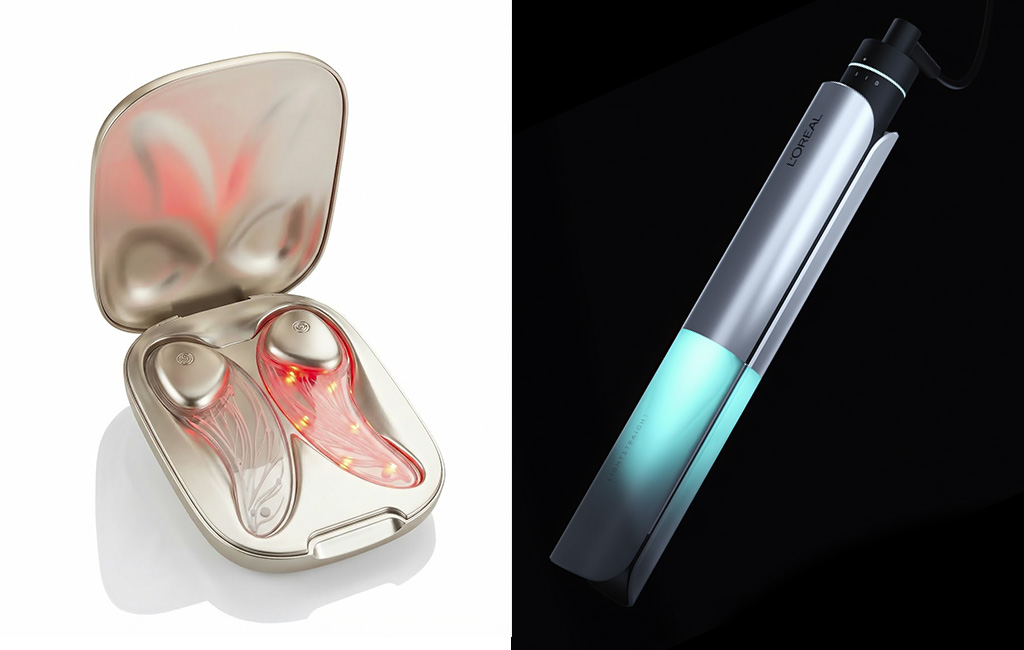
L’Oréal Groupe, the global titan of the beauty industry, is solidifying its position at the nexus of technology and cosmetic science, most recently by championing near-infrared (NIR) light as the next frontier for both hair and skin treatment. Unveiled at the Consumer Electronics Show (CES) in Las Vegas, the company presented a formidable roadmap for 2027, featuring two revolutionary devices: the Light Straight + Multi-styler flat iron and a series of sophisticated LED Eye Masks designed to combat the visible hallmarks of aging. These launches underscore L’Oréal’s ongoing commitment to its "Augmented Beauty" strategy, prioritizing performance, personalization, and—crucially—damage mitigation through advanced physics.
The Science of Near-Infrared: A Strategic Pivot
The decision to focus heavily on near-infrared technology is a strategic response to the beauty industry’s twin demands for high efficacy and minimal invasiveness. NIR light, which operates at wavelengths just beyond the visible spectrum, possesses unique advantages over traditional thermal styling or visible light therapy. In haircare, NIR allows heat to penetrate the hair fiber more efficiently, drying and styling the strand from the inside out. This rapid, targeted internal heating means that lower external plate temperatures are required to achieve the desired effect, drastically reducing the risk of cuticle damage, dehydration, and color fade typically associated with conventional flat irons.
For skincare, NIR is known for its deep tissue penetration, extending beyond the epidermis into the dermis and even subcutaneous layers. When paired with red light (a visible spectrum therapy), NIR enhances cellular metabolism, boosts mitochondrial function, and stimulates fibroblasts to produce collagen and elastin. This combination provides a powerful non-invasive treatment for concerns such as fine lines, wrinkles, and inflammation, positioning L’Oréal’s forthcoming devices as clinic-grade tools adapted for home use.
The Light Straight: Redefining Thermal Styling
The Light Straight + Multi-styler represents L’Oréal’s second major foray into near-infrared-powered haircare, following the acclaimed launch of the AirLight Pro hair dryer at CES 2024. The AirLight Pro, which uses NIR and powerful airflow to dry hair quickly and efficiently, has successfully rolled out to professional salons and major retailers like Amazon and Ulta Beauty, establishing the credibility of the underlying technology.
Guive Balooch, Global Vice President of Augmented Beauty and Open Innovation at L’Oréal, highlighted the staggering performance gains achieved by adapting the technology for straightening. The Light Straight promises to be three times faster than traditional flat irons, deliver hair that is twice as smooth, and, most critically, operate at temperatures up to 100 degrees Fahrenheit lower than market standards.
The mechanics behind the Light Straight are sophisticated yet user-focused. The device utilizes advanced glass plates that are meticulously regulated to never surpass 320 degrees Fahrenheit. These plates work synergistically with the embedded near-infrared elements, ensuring rapid styling without subjecting the hair to excessive surface heat. Furthermore, the Multi-styler designation confirms the device’s versatility; unlike rigid straightening tools, the Light Straight is designed to be maneuvered easily to create waves, curls, and volume, offering a comprehensive styling solution while prioritizing hair health.
Significantly, while the AirLight Pro was developed in collaboration with external hardware start-up Zuvi, the Light Straight + Multi-styler was developed entirely in-house by L’Oréal’s robust R&D teams. This shift signals L’Oréal’s internalization of sophisticated hardware expertise, moving beyond simple product development to become a true engineering powerhouse in the beauty technology sector.
Targeted Dermal Renewal: The Flexible LED Eye Masks
In the skincare arena, L’Oréal is preparing its inaugural entry into the rapidly expanding consumer LED mask category with its targeted LED Eye Masks, developed through a partnership with iSmart Developments. These masks combine the proven anti-aging benefits of red light therapy with the deeper cellular stimulation provided by near-infrared light.
The prototype design is centered around efficiency and flexibility. Each pair of silicone-based eye masks contains a total of 32 specialized LED chips—16 per mask—calibrated to deliver optimal doses of light treatment during timed, 10-minute sessions. The use of highly flexible, thin silicone material is a core innovation, enabling a level of contouring and adherence previously unseen in rigid light therapy devices.
Balooch emphasized that this flexible material is the key to expanding the mask’s utility beyond the ocular area. “Because the material is so thin and so flexible, we can make masks that are targeted to different parts of the face—like the chin, the neck,” he noted. This adaptability opens the door for a comprehensive suite of future products. L’Oréal is already developing a full-face iteration featuring a remarkable 208 LED chips, designed to sit directly on the skin “like a sheet mask would,” providing an intense, yet comfortable, full-dermal rejuvenation treatment.
The timing of this launch places L’Oréal directly into a competitive, yet highly lucrative, segment. The popularity of at-home LED and microcurrent devices has surged, led by major players such as Therabody (with its high-end TheraFace Mask Glo, famously promoted by Kendall Jenner), Shark Beauty, and Solawave. L’Oréal aims to carve out a distinct space by offering clinic-level technology in a flexible, user-friendly format. Regarding market positioning, Balooch indicated that the eye masks would be priced within the “middle-range of premium products,” suggesting accessibility that undercuts some of the highest-priced professional devices while maintaining a quality margin above entry-level wands.
L’Oréal’s Augmented Beauty Ecosystem: A Continuous Roadmap
These 2027 innovations are not isolated products; they are integrated components of L’Oréal’s long-term strategy to fuse advanced science with personalized consumer experiences. The Augmented Beauty division, spearheaded by Balooch, views technology not just as a tool for application, but as a mechanism for diagnosis and optimized treatment.
This approach was perfectly exemplified by L’Oréal’s 2023 CES presentation of the Cell Bioprint device. Developed in partnership with Korean start-up NanoEnTek, the device offers unprecedented personalization by analyzing a microscopic sample of the user’s skin cells. The process involves placing a strip of facial tape on the cheek, which is then inserted into a buffer solution and finally into the Cell Bioprint cartridge. This sophisticated analysis determines the individual’s current cellular condition and predicts future skin needs, allowing L’Oréal to formulate and recommend highly specific product regimens.
The Cell Bioprint device is slated for market entry this year, starting at Lancôme beauty counters across Europe and Asia. This launch confirms L’Oréal’s commitment to rapidly commercializing its tech prototypes, moving from concept to consumer personalization within a year or two. The integration of high-level diagnostics (Cell Bioprint) with high-performance treatment tools (NIR stylers and LED masks) creates a closed-loop ecosystem where product recommendations are based on biological data, and the application tools are engineered for maximum safety and efficacy.
The 2027 timeline for the Light Straight and the LED Masks reflects the significant regulatory hurdles and extensive testing required to bring medical-grade light therapy and complex thermal management systems to mass market. However, the wait signals L’Oréal’s confidence in the longevity and foundational importance of near-infrared technology, establishing it not as a fleeting trend, but as the structural foundation for the next generation of smart beauty devices. By investing heavily in internal engineering capabilities and maintaining a dynamic pipeline of external technology partnerships, L’Oréal is ensuring it remains the undisputed leader in defining what the future of beauty will look like—a future illuminated by light.