

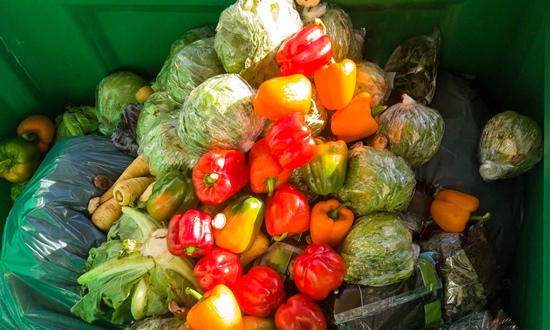
The impending national mandate for weekly, separate food waste collections across English households, set to take effect next month, is encountering significant logistical and temporal challenges, with recent investigations revealing that approximately one in four local authorities will fail to meet the mandated March 31st deadline. This widespread non-compliance stems from what the Local Authority Recycling Advisory Committee (Larac) has long characterized as an "extremely tight" implementation schedule, compressed by delays in finalizing requirements, securing necessary funding allocations, and completing complex procurement and mobilization processes.
Larac, a key consultative body for local government waste management, has consistently voiced concerns that the ambitious timeline established by the Department for Environment, Food & Rural Affairs (Defra) made achieving the deadline "simply unachievable" for a substantial portion of the sector.
Gareth Rollings, Chair of Larac, provided a pragmatic outlook on the situation, suggesting that the majority of councils that have not yet secured formal transitional arrangements with Defra are now realistically aiming to commence their new food waste collection services before the close of the calendar year. Rollings acknowledged that for many authorities, this revised timeline is achievable, given that preliminary procurement and the ordering of specialized equipment are already well underway. However, he cautioned that even these revised schedules remain vulnerable to external factors, specifically citing the persistent uncertainty surrounding supply chain reliability for new collection vehicles and containers, alongside the ongoing need for absolute clarity regarding final funding mechanisms and evolving regulatory stipulations.
The BBC’s extensive analysis underpinning these concerns pinpointed that a significant bloc of 79 local councils will demonstrably not have their mandatory food waste collection services operational by the April 1st commencement date. Of these lagging authorities, the data suggests that at least 57 plan to roll out their new schemes sometime within the current year, while a further 31 have successfully negotiated and secured formal agreements with Defra for a deferred start date, allowing them more time to establish operational readiness.
This national push for mandatory separation aligns with broader policy shifts aimed at increasing recycling rates and diverting biodegradable waste from landfills, a central pillar of the government’s environmental strategy. The context of this rollout is further complicated by parallel developments in recycling infrastructure. For instance, the Simpler Recycling initiative, which advocates for a move towards a "four-bin" system (as sometimes dubbed by the media), necessitates the strict separation of paper and card from other streams of dry recyclables and residual waste, adding another layer of complexity to household collection logistics.
Larac highlighted the sheer scale of the operational transformation required. Implementing nationwide food waste collections is not merely about adding another bin day; it necessitates a comprehensive overhaul of municipal services. This includes the procurement of specialized, often long-lead-time, collection vehicles, the acquisition of thousands of new internal kitchen caddies and external kerbside containers, significant modifications to existing depot facilities to accommodate new processing streams, extensive recruitment and training for frontline staff, the execution of large-scale public communication and behavior change campaigns, and the negotiation of crucial long-term ‘offtake’ contracts with processors who will handle the collected organic material.
Rollings reiterated the legal imperative: any authority failing to initiate food waste collections by the March 31st deadline is still legally obligated to implement the service "as soon as operationally feasible." The focus, he stressed, must now pivot from punitive deadline enforcement to ensuring effective implementation. "The key issue now is ensuring that the policy ambition remains aligned with operational realities," Rollings stated, emphasizing the necessity of launching services in a manner that guarantees long-term financial viability and demonstrable environmental benefit, rather than rushing into schemes that might prove unsustainable.
Council leaders interviewed by the BBC provided direct feedback on the root causes of the delays, frequently citing the government’s initial financial settlement for the new service as inadequate to cover the true capital and operational costs. Furthermore, many authorities reported intense market competition and high demand for the specialist vehicles and processing infrastructure required, leading to extended lead times that effectively pushed the regulatory deadline out of reach regardless of local planning efficiency.
In response to earlier industry feedback concerning the initial funding assessment, Defra has taken steps to bolster local authority resources. The department has recently allocated an enhanced sum of £317 million specifically earmarked for local authorities to establish and run their food waste collection services. This revised allocation represents an increase over the initial commitment of £295 million, demonstrating a degree of responsiveness to council lobbying regarding the true economic burden of the new mandate.
Despite the increased funding, the infrastructure gap and the timeline pressures remain the dominant barriers. While the policy goal—a 100% diversion of food waste from residual waste streams—is clear, the path to achieving this uniformity across England’s diverse local authority landscapes is proving significantly more complex than initially projected, suggesting that the true national rollout will extend well into 2025. The focus for the coming months will be on securing those crucial supply contracts and ensuring that the transition, though delayed, results in resilient, well-supported, and effective services for residents.