

February 26, 2026—In a moment that felt destined for the fashion annals, Maria Grazia Chiuri cemented her highly anticipated homecoming to Fendi during Milan Fashion Week on February 25th, unveiling the Fendi Fall 2026 ready-to-wear collection. This presentation was more than just a new season offering; it was a deeply personal and resonant full-circle moment, marking her return to the esteemed house where she honed her craft during its transformative golden age, spanning from 1988 to 1999, under the guidance of Silvia Venturini Fendi. It was during this seminal period that Chiuri contributed significantly to the creation of legendary handbag silhouettes, including the eternally recognizable Baguette and the enduring Peekaboo.
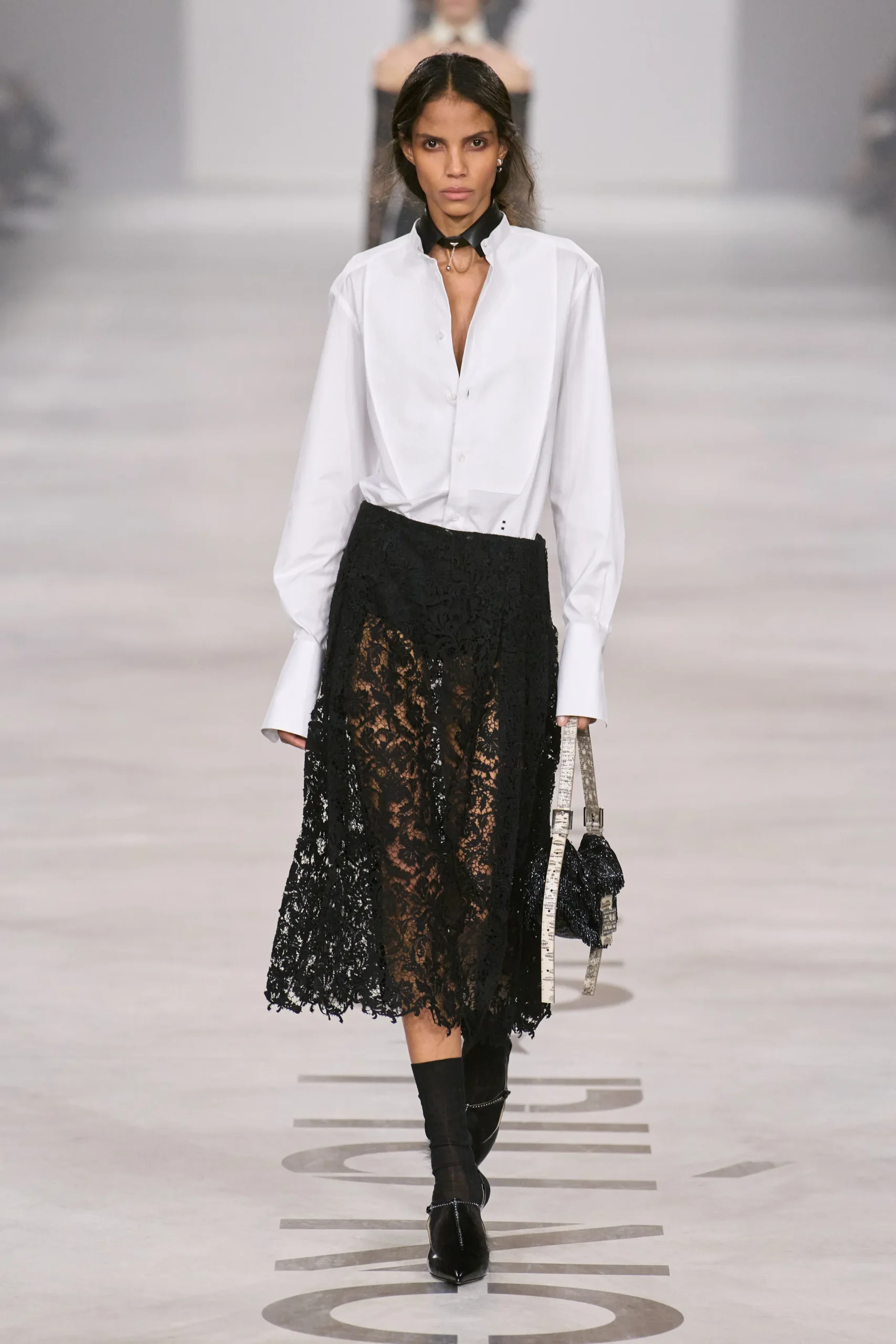
The collection itself provided a sophisticated tapestry woven from Fendi’s core DNA, yet imbued with Chiuri’s signature romanticism and structural elegance—a sensibility she has since refined during her tenure at Valentino and Dior. The overall mood was one of refined, moody opulence. The runway was dominated by a palette of deep blacks and somber, saturated tones, creating a dramatic backdrop against which the clothing played with contrasts. Tailoring was sharp and highly wearable, featuring structured silhouettes that were masterfully juxtaposed with ethereal elements like delicate lace and rich, tactile fabrics. This interplay of strength and softness immediately recalled the aesthetic benchmarks she set elsewhere, now recontextualized within the Roman house.
While the ready-to-wear showcased Chiuri’s mastery of silhouette and texture, the accessories—particularly the handbags—were positioned front and center, signaling a renewed emphasis on Fendi’s crowning glory. This focus stood in stark contrast to her final showing at Dior Resort 2026, where accessories were conspicuously minimized. For Fall 2026, the most significant protagonist was undoubtedly the Fendi Baguette, the quintessential 90s icon that has proven its timeless appeal by never truly departing the cultural conversation.
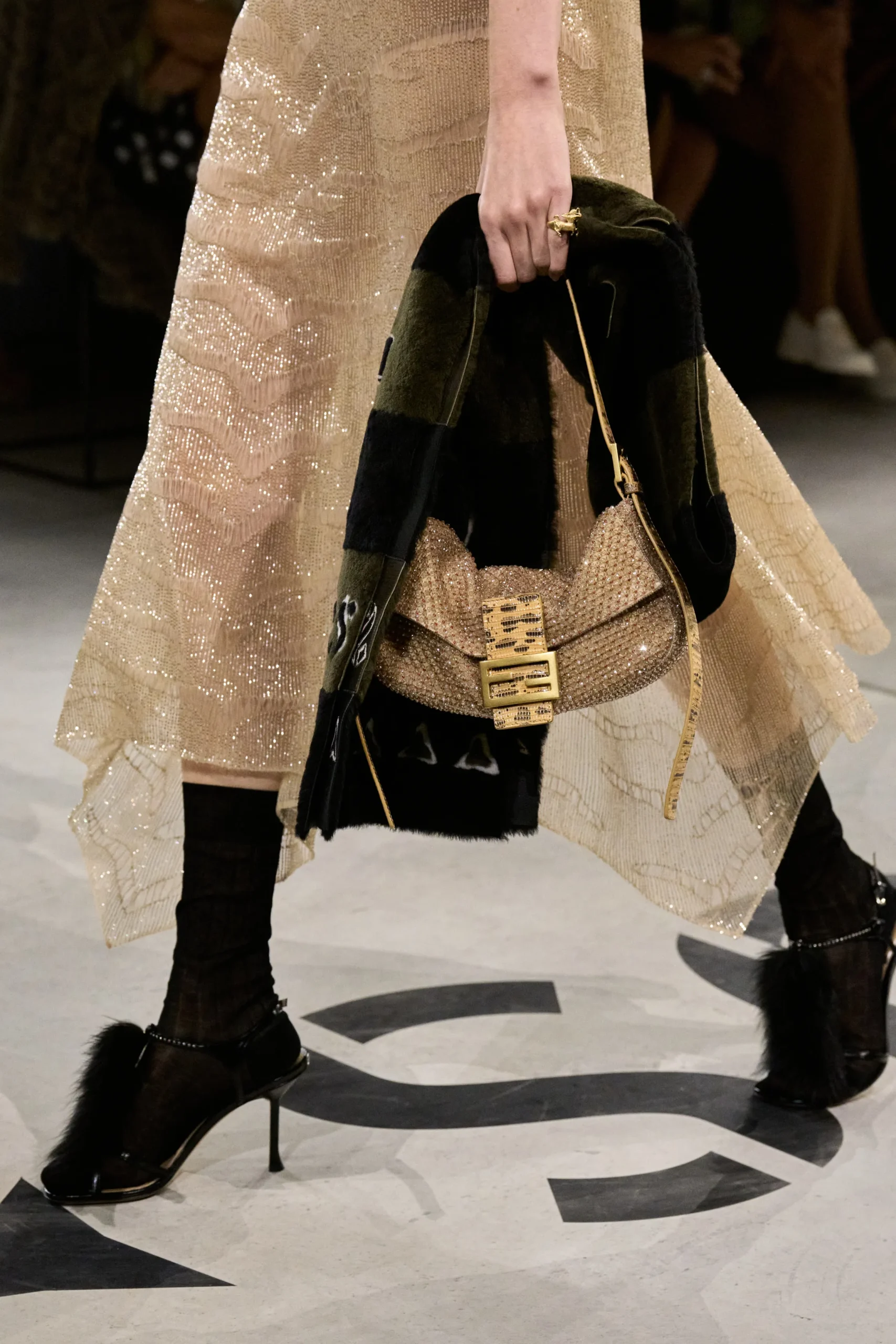
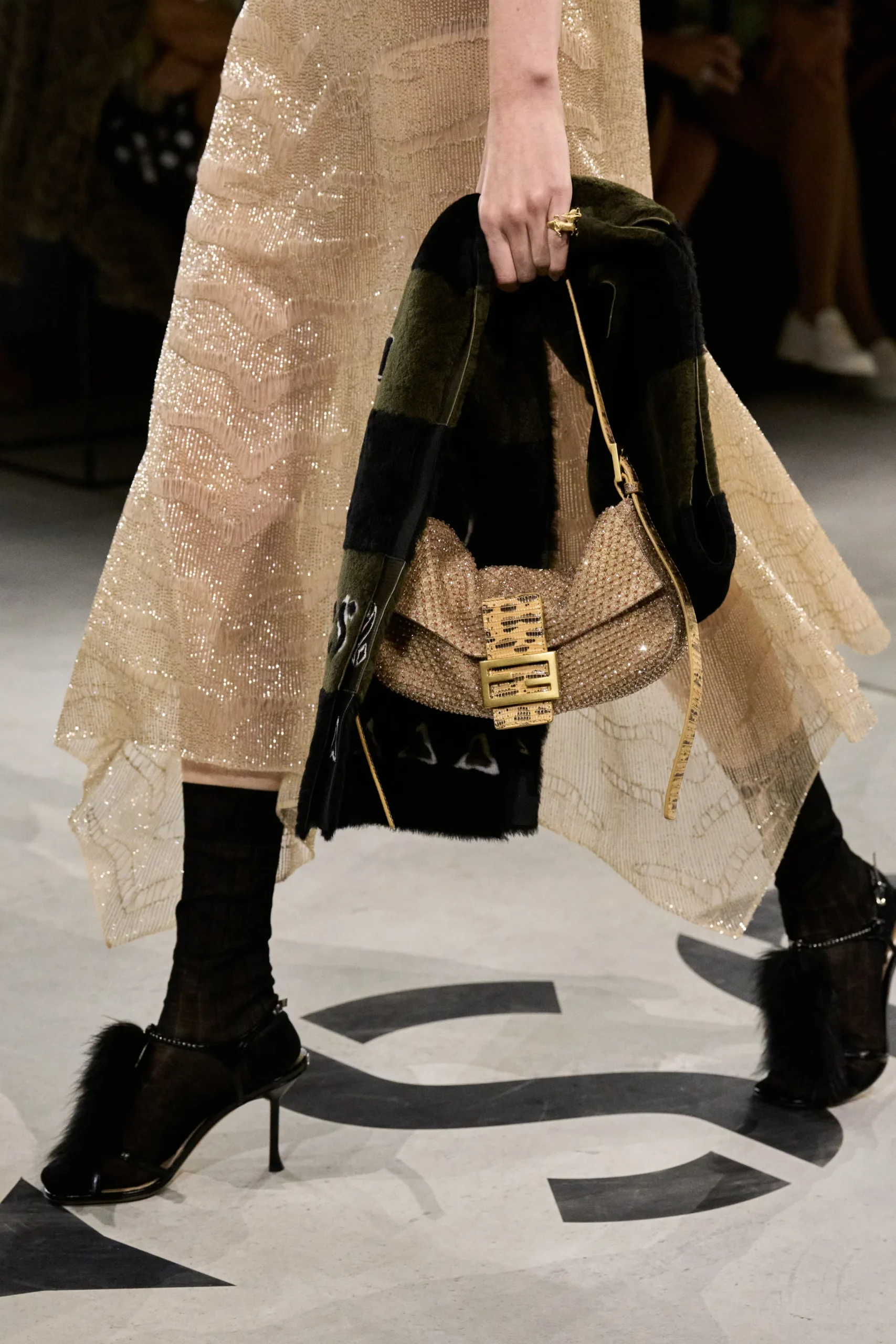
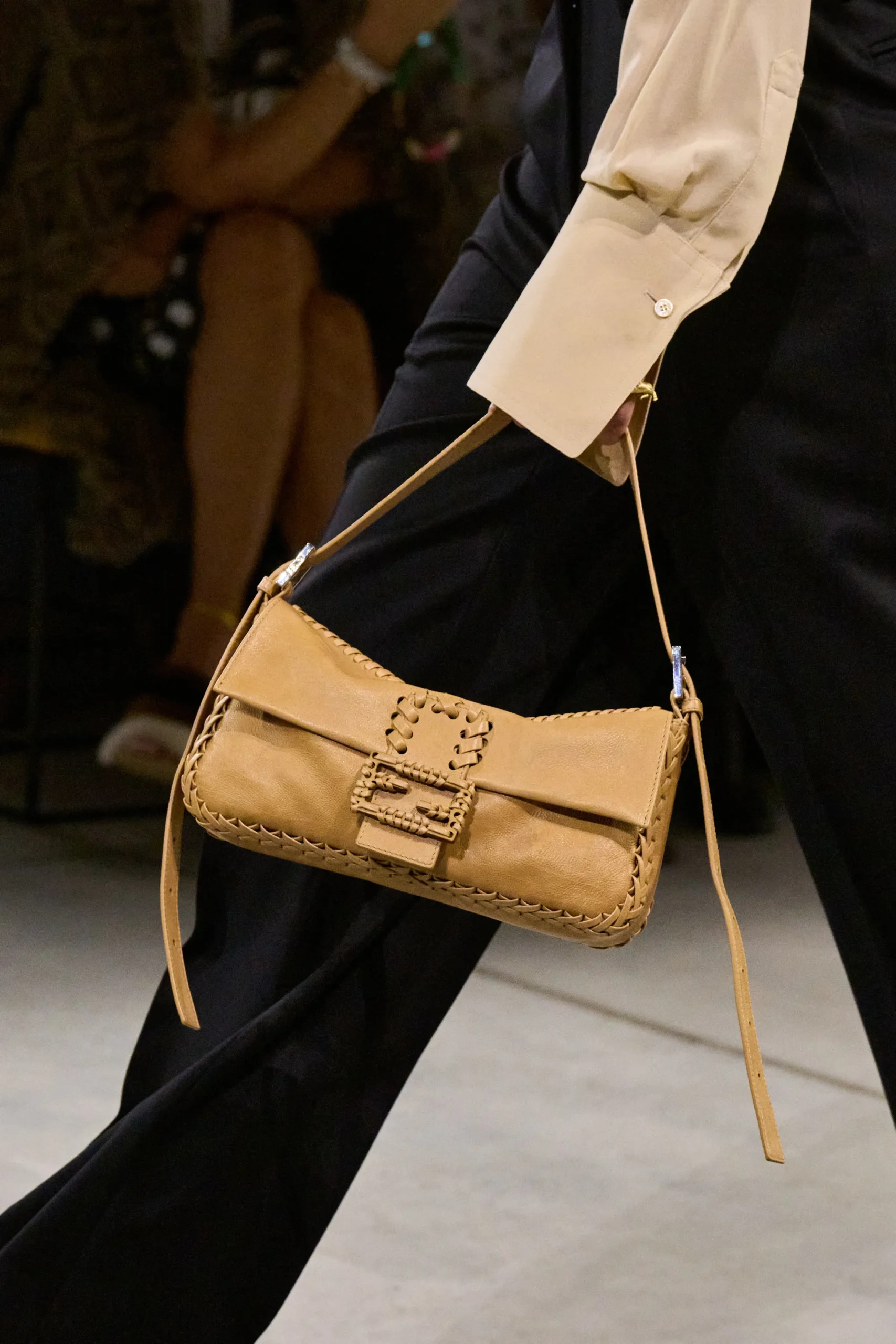
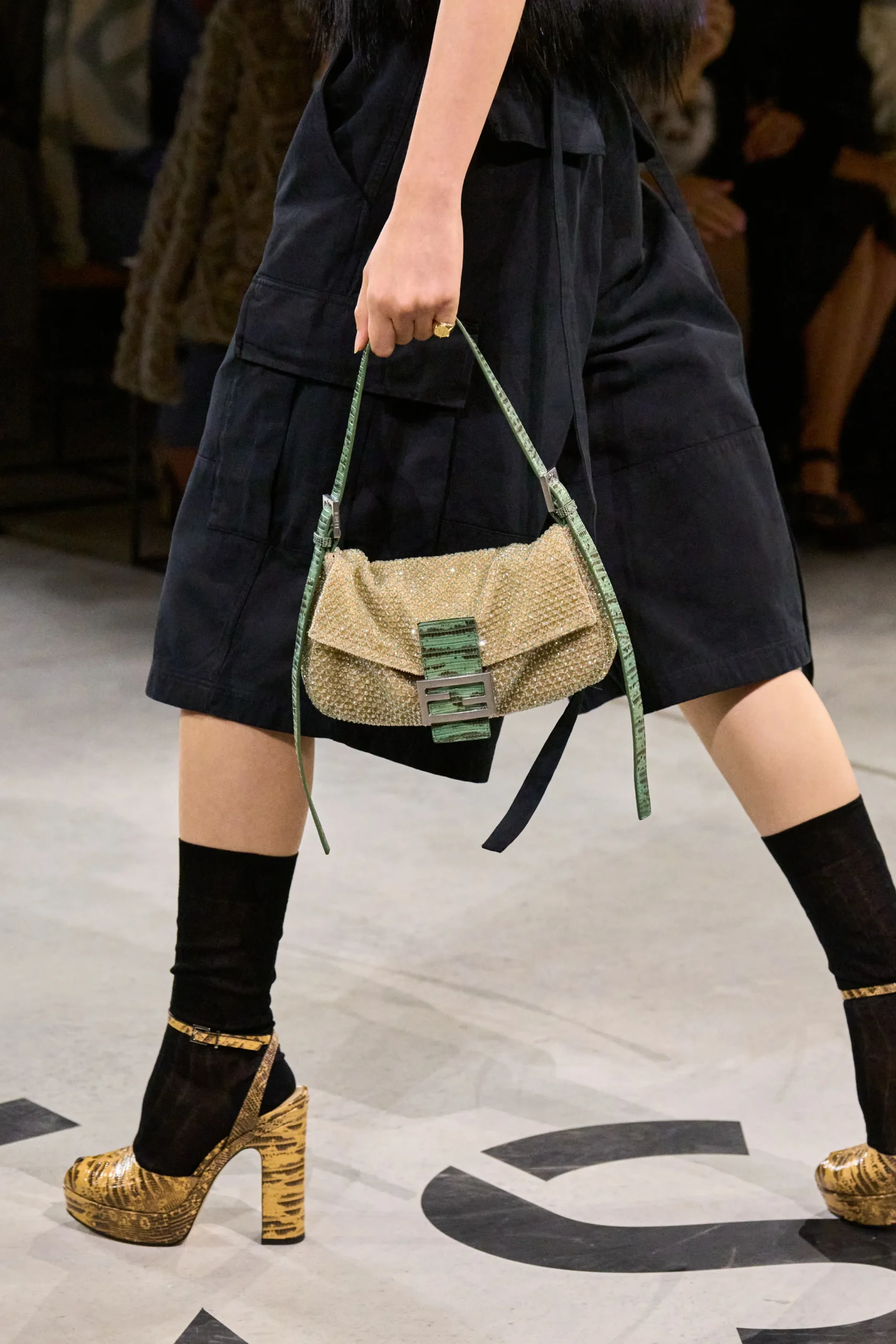
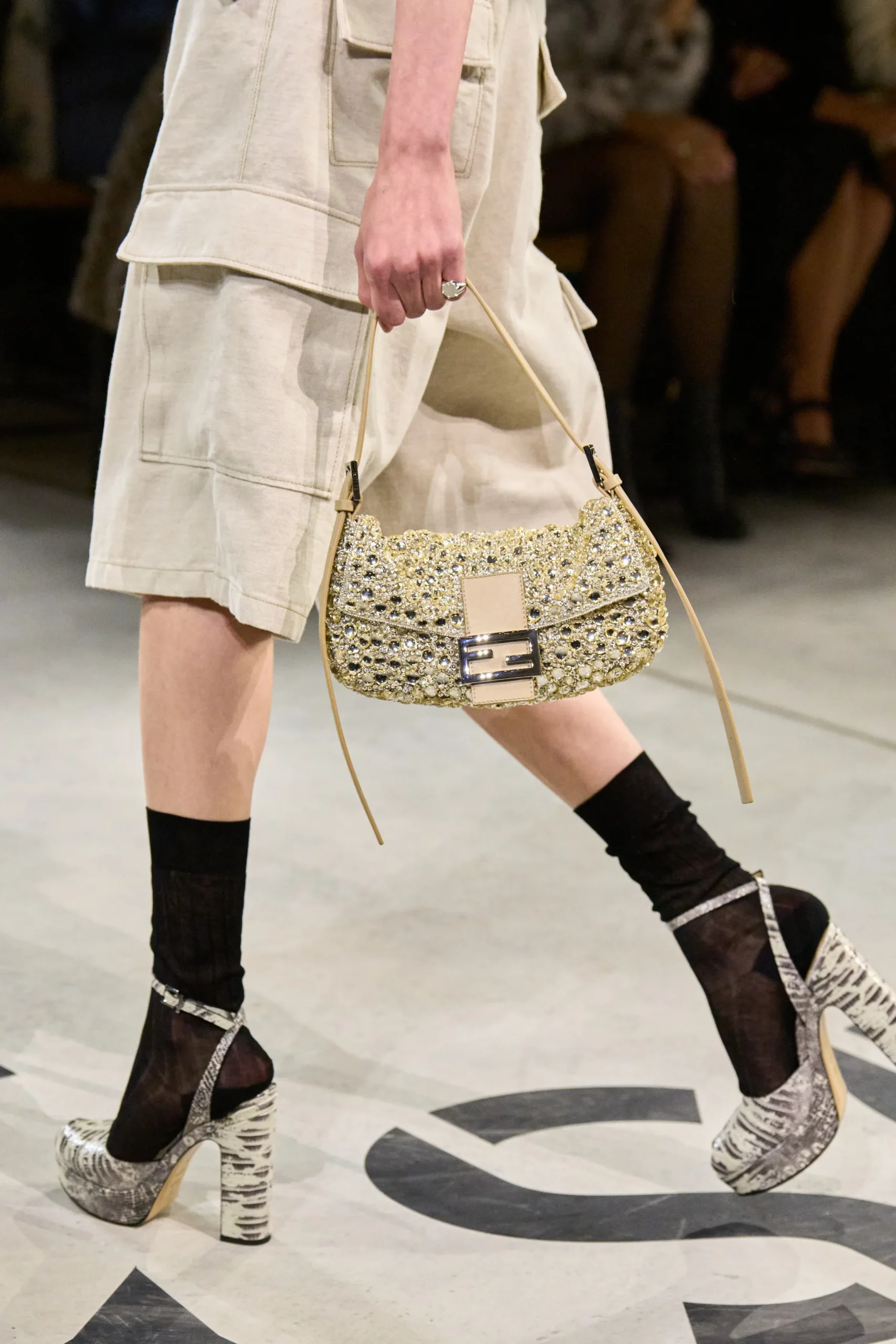
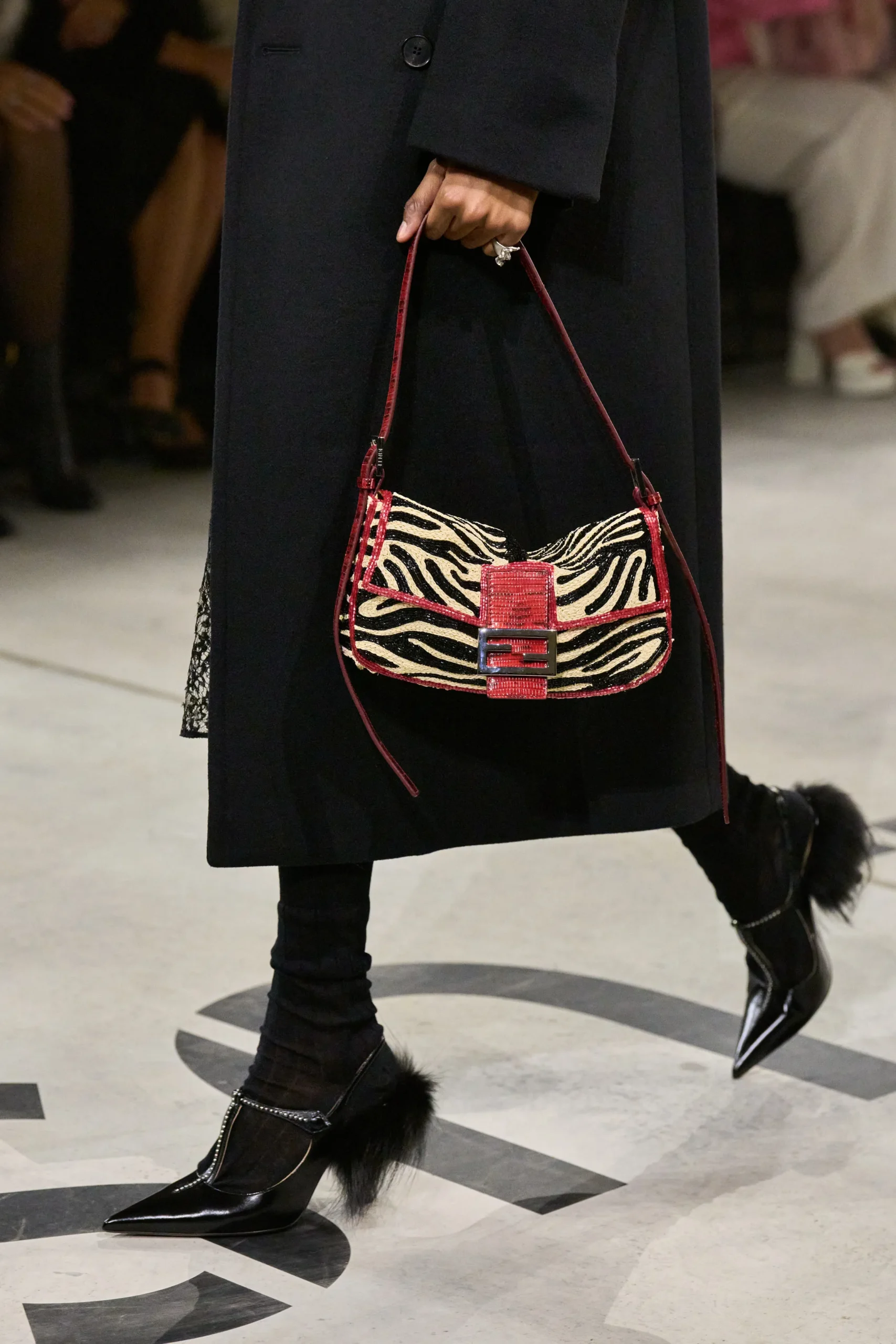
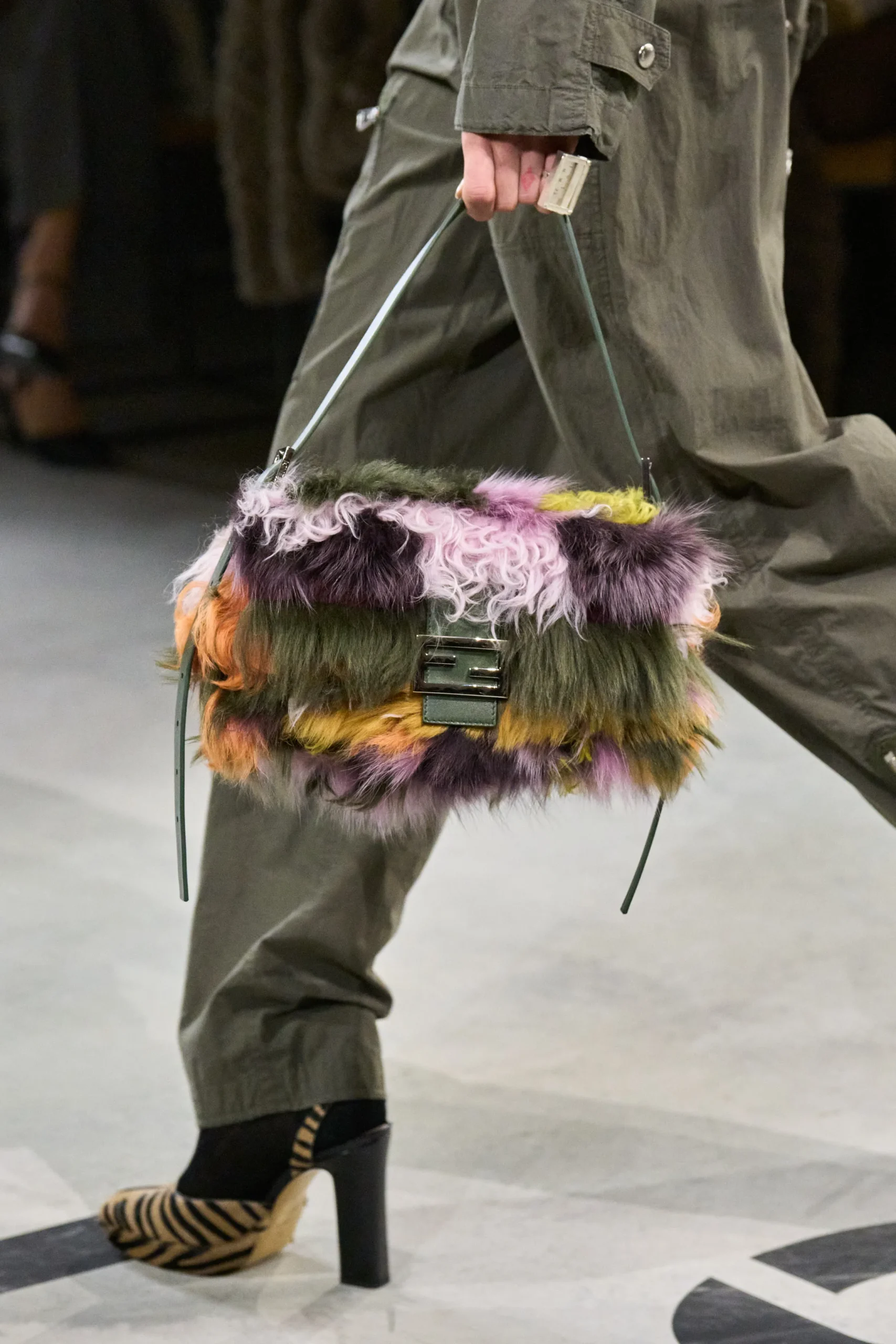
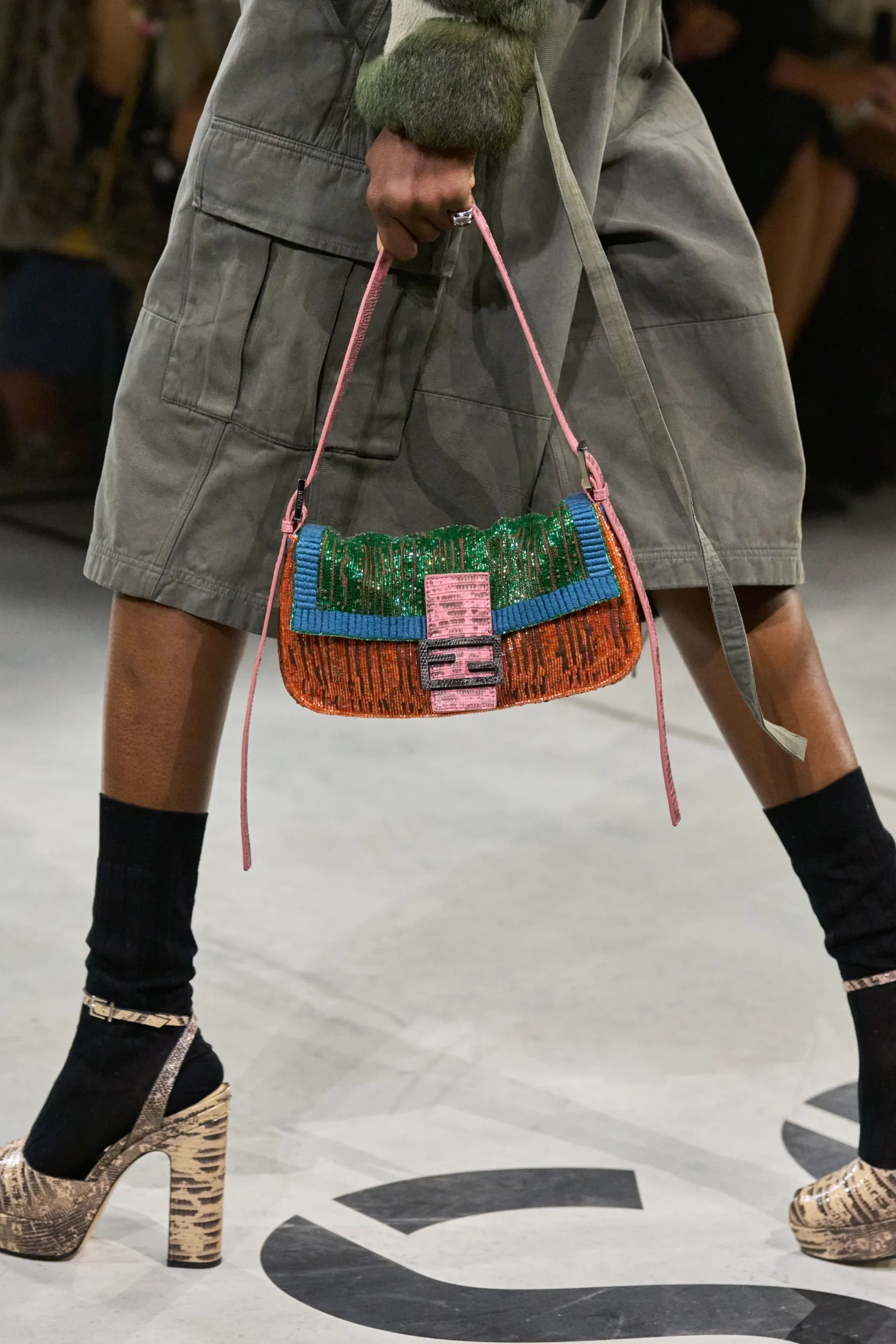
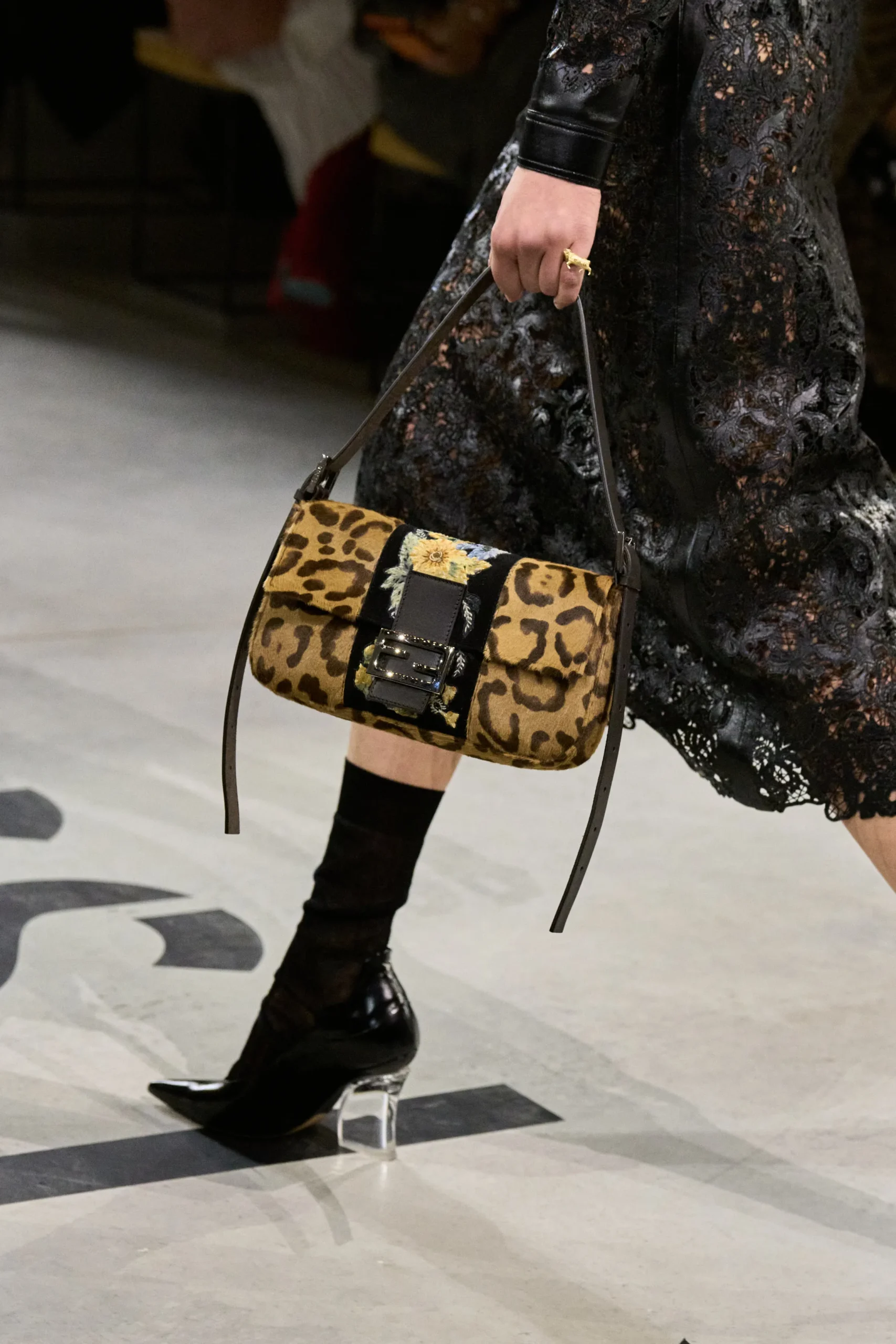
The Baguette was not merely present; it was celebrated in an astonishing array of interpretations, demonstrating the design’s supreme adaptability. Detailing ranged from rigorous, precise whipstitch leatherwork to lavish, eye-catching adornments. We saw iterations boasting intricate beadwork and shimmering crystal embellishments, while luxurious shearling added autumnal depth. The collection also heavily featured playful yet sophisticated animal prints. Leopard motifs were elevated with floral embroidery seamlessly inlaid into the pattern, and the zebra print received a glamorous update, accented with sequins and unexpected flashes of vibrant red bead trim along the edges.
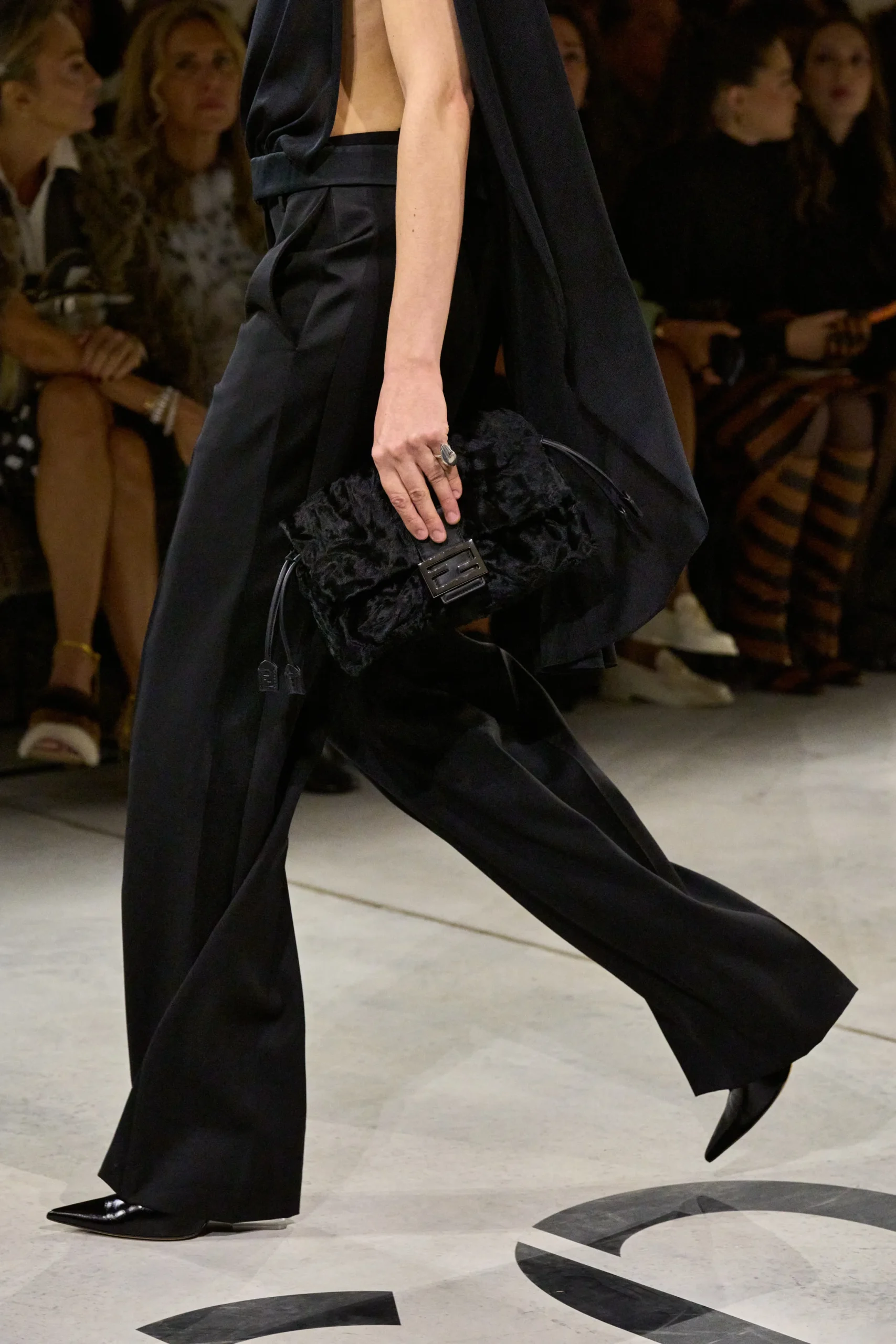
Adding another layer of nostalgia, Chiuri revisited another archival favorite: the Mamma Baguette. This larger sibling of the original was notably reintroduced, appearing on the runway in a plush, black fur fabrication, styled with a commanding presence, often carried snugly as a clutch.
Beyond the reawakened Baguettes, Fendi introduced variations on the tote structure, some clearly nodding to modern needs while retaining the brand’s heritage. One prominent design echoed the structured canvas appeal of certain highly popular tote bags from other houses, featuring a rigid construction perfect for daily essentials. These totes walked the runway in various executions: the classic, instantly recognizable Zucca print; bold zebra patterns; and even charming polka dots, all punctuated by prominent ‘FENDI’ lettering branding.
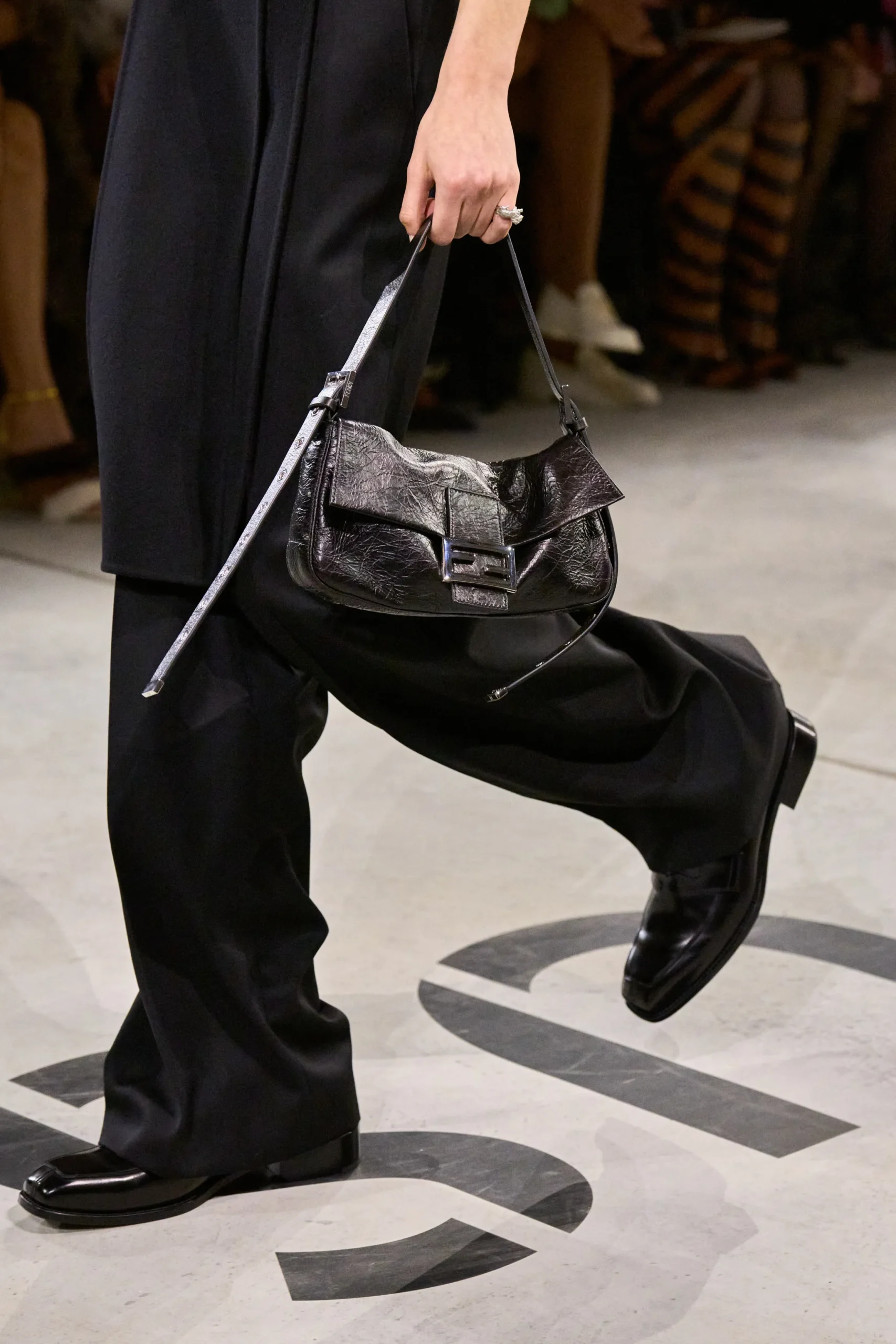
Another tote silhouette offered a softer, more pliable structure, bearing resemblance to the ubiquitous ‘carry-all’ style. This version appeared in multiple textures, including the striking leopard/floral mix seen on the Baguettes, a cozy black shearling, and a utilitarian khaki green canvas adorned with a stencil-style logo application. A version in crackled leather was styled with an air of nonchalance, clutched folded under the arm, revealing dual short, curved top handles secured by the signature FF hardware.
The enduringly popular Peekaboo also received Chiuri’s considered touch, specifically the Peekaboo Soft model. These appeared exclusively in black, showcasing a depth of leather manipulation. One featured a tactile crackled-effect leather with silver-tone initials subtly heat-stamped on the interior panel—a private luxury detail. Another version played with texture, revealing a surprising and delightful polka-dot lining, while a third iteration presented an almost artisanal feel with a delicate leather lace-effect overlay.
Furthermore, the collection introduced an updated, more structured iteration of the Peekaboo, presented in rich, grained leather. This version adopted an oversized, almost briefcase-like proportion, suggesting a strong, confident accessory fit for the modern executive. Distinctly, this new form featured two symmetrical top handles rather than the single handle characteristic of its predecessor. Across all Peekaboos shown, the styling favored a closed presentation, emphasizing the integrity of the twist-lock closure and the adjustable side gussets.
A softer, hobo-style bag also made an appearance, drawing comparisons to the curved lines of the Fendigraphy line, though styled with a more relaxed, slouchy demeanor that eschewed overt hardware in favor of fluidity. Carried either by hand via its short strap or slung over the shoulder with a slim adjustable strap, these hobos were presented in both refined grained black leather and the aforementioned crackled-effect leather, often featuring leather tassels accenting the zip pulls.
While the iconic Zucca pattern did not overwhelm the collection, it was strategically deployed to anchor the heritage pieces. A notable example was one of the canvas totes featuring the timeless motif, styled hand-held but equipped with adjustable leather straps for versatility. This specific tote also incorporated a drawstring detail, which was cinched for a unique, gathered effect on the runway.
Maria Grazia Chiuri’s debut Fall 2026 collection for Fendi is a masterclass in respecting legacy while injecting contemporary relevance. By focusing heavily on the most recognizable pillars of the house—the Baguette, the Peekaboo, and the enduring quality of its leather goods—she has issued a clear statement of intent: the archives are open, and the icons are ready for their next chapter, often reimagined with luxurious texture and meticulous craftsmanship that speaks directly to the current zeitgeist.
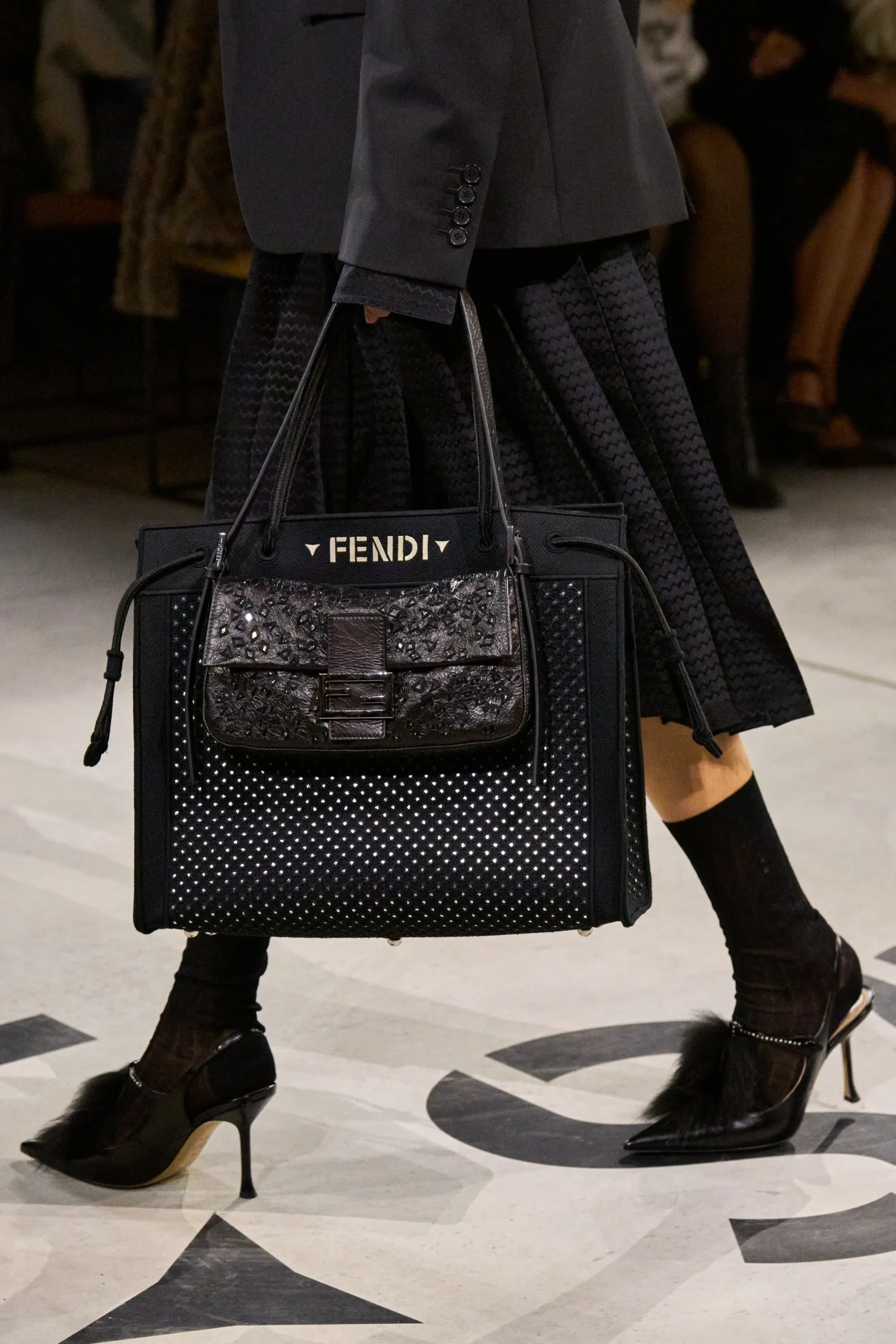
This collection signals a robust commitment to Fendi’s storied accessory history, ensuring that collectors and new enthusiasts alike will find irresistible pieces ready to anchor their wardrobes for the coming season. The range of offerings, from the highly decorative Baguettes to the boardroom-ready Peekaboo updates and the versatile totes, suggests a strategic move to dominate multiple segments of the luxury handbag market simultaneously.
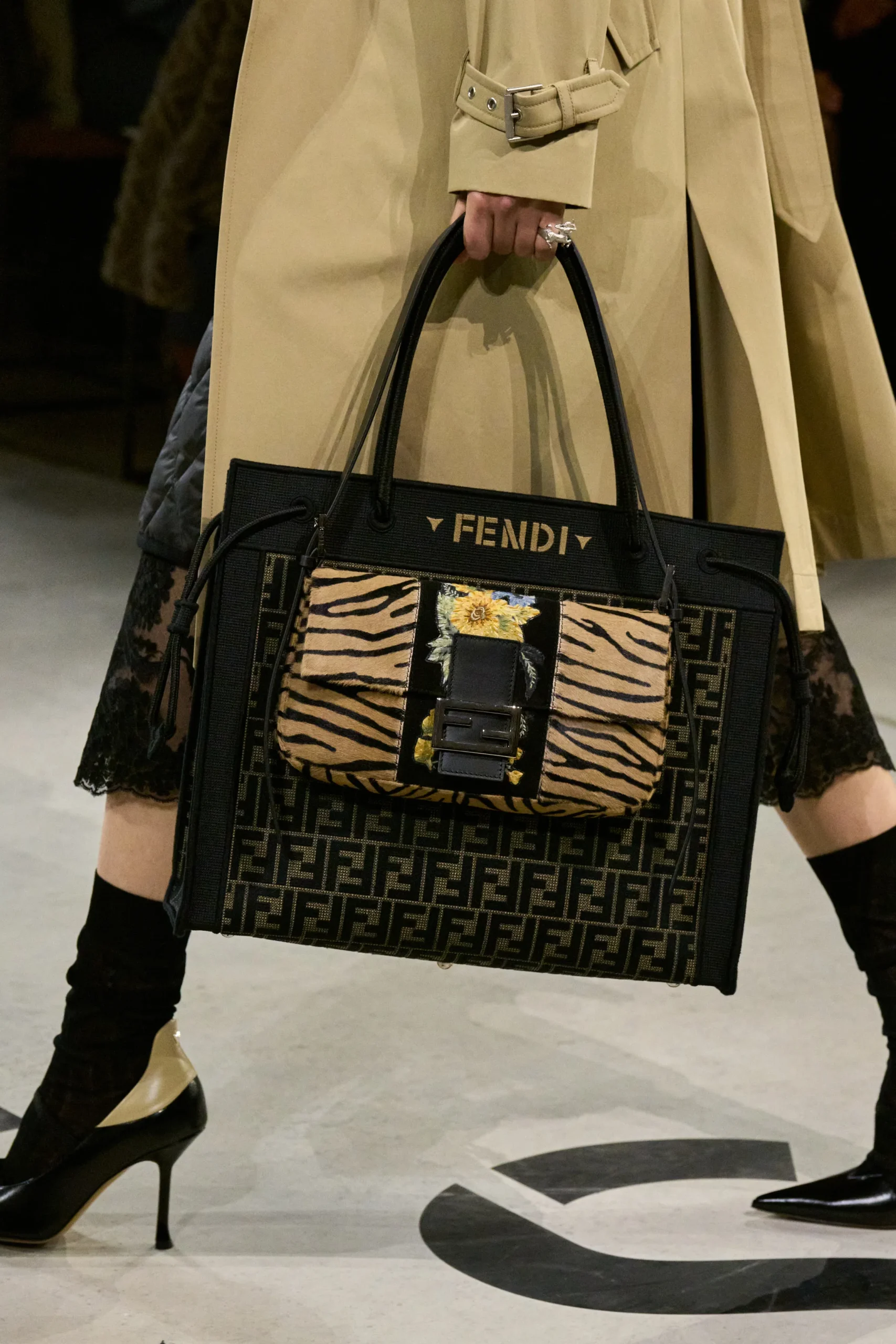
The question now for the fashion cognoscenti is whether this profound return to Fendi’s bag-making glory will translate into immediate must-have status for every revived silhouette, or if the audience is satiated by the current rotation of heritage revivals. Either way, Chiuri’s first collection back in Rome has undeniably set a high bar for the future of the house.