

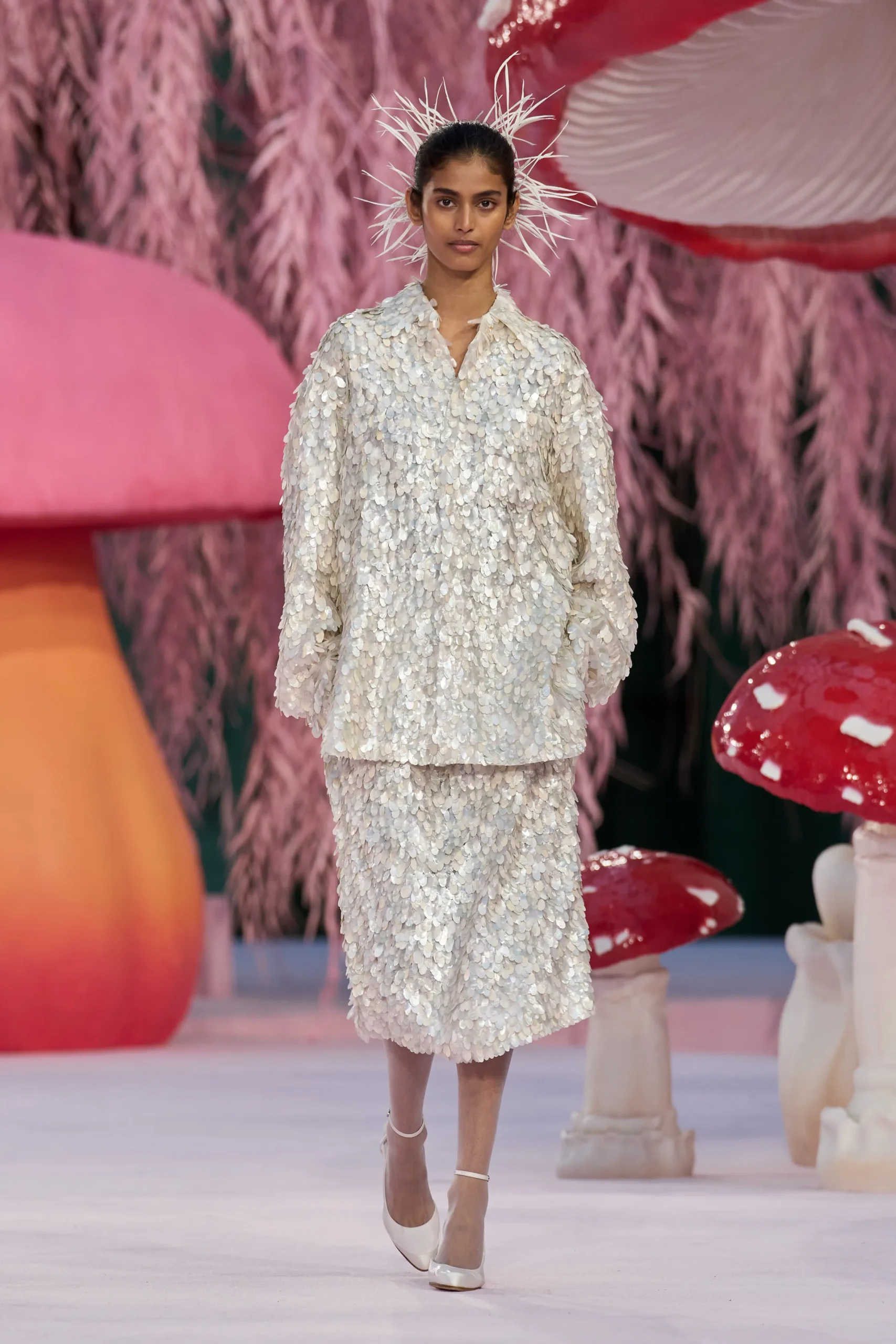
Parisian Haute Couture for Spring 2026 delivered a masterclass in whimsical artistry, culminating in Matthieu Blazy’s highly anticipated presentation for Chanel on January 27, 2026. The atmosphere was immediately set by an invitation that hinted at the fantastical—a delicate mushroom pendant—a promise fulfilled when the Grand Palais was utterly transformed into an enchanting, fungal landscape. Surreal, oversized toadstools dotted the runway, creating an otherworldly forest floor against which Blazy unveiled his vision, one deeply rooted in themes of lightness, transparency, and the untamed spirit of nature.
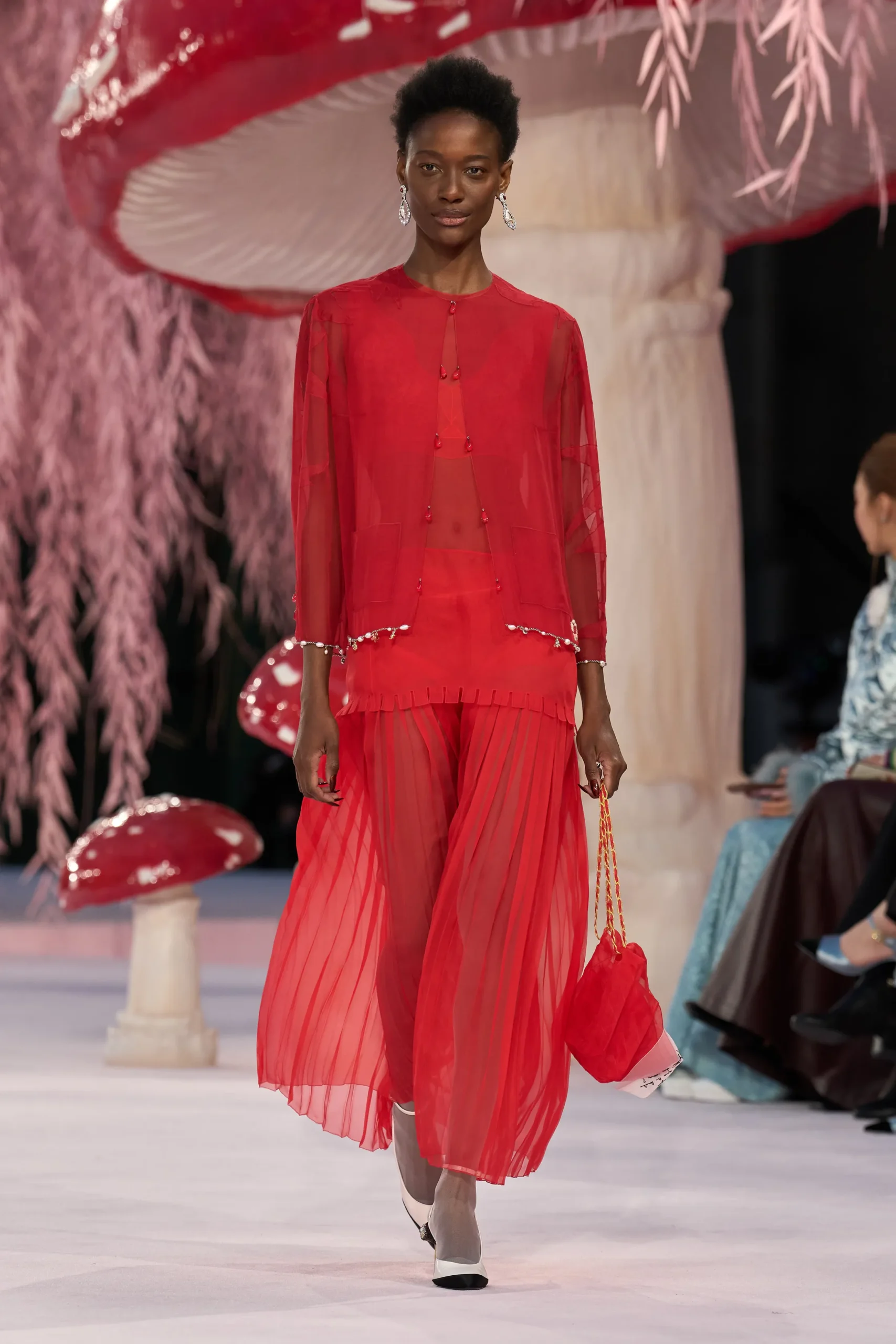
The collection itself mirrored the whimsical stage design. Silhouettes swelled and contracted with breathtaking fluidity, employing undulating pleats and layers of diaphanous fabrics that seemed to defy gravity. Transparency was a crucial narrative thread, allowing the underlying structure of garments—the very architecture of couture—to become visible. This lightness was further elevated by the collection’s primary motif: birds. Chanel articulated this concept not through literal ornithological depictions, but through movement and texture, stating: “First, transparency and muslin. The CHANEL suit as a second skin, revealing the inner life of the wearer. Then come the birds. Of all colours, shapes and horizons. With them, a simple, joyful idea: freedom.”
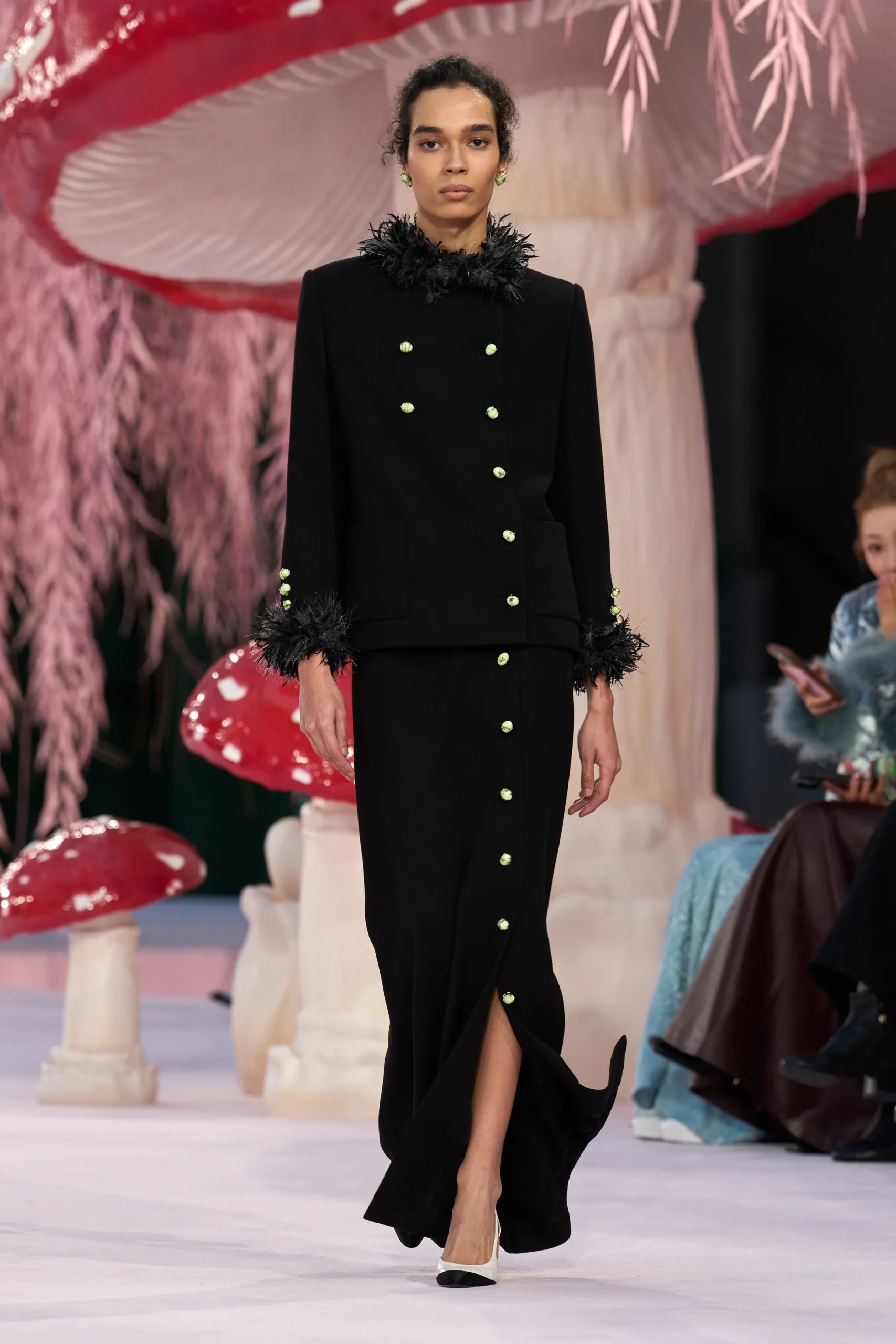
This dedication to freedom was materialized through meticulous craftsmanship. Feathers, delicate beadwork, complex embroidery, and appliqué were integrated so seamlessly that they appeared to breathe with the wearer. These elements transcended mere embellishment; they became integral components, harmonizing with the body’s natural motion to produce garments that felt simultaneously sculptural and vibrantly alive.
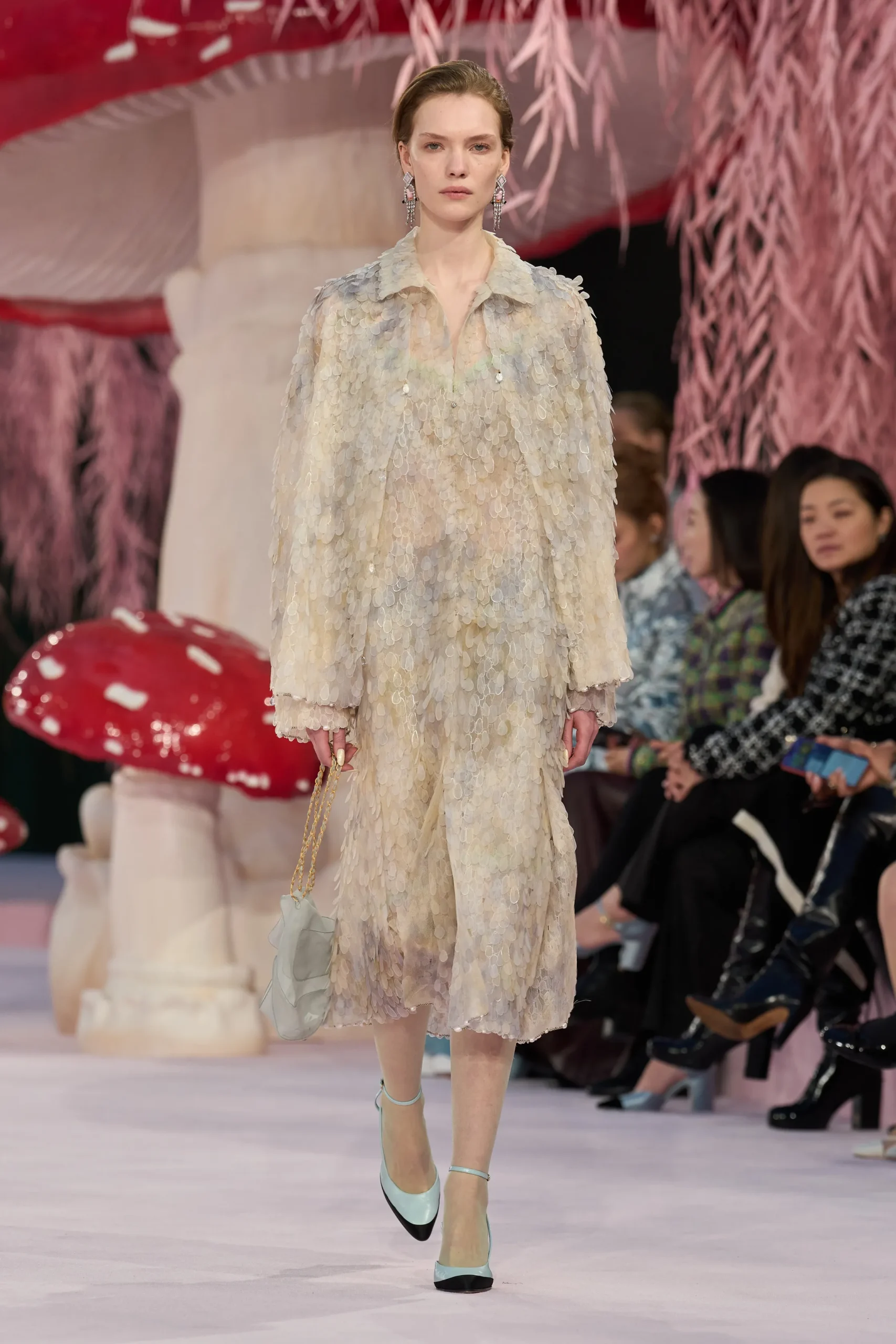
Amidst this rich tapestry of gowns and tailored masterpieces, the accessories played a deliberately understated, yet profoundly significant, role. In a move that mirrored Jonathan Anderson’s recent thoughtful integration of accessories at Dior Couture, Blazy presented a highly curated selection of handbags, featuring only seven distinct pieces across the initial segment of the show. This restraint amplified the impact of the single, repeated style, positioning the accessories as thoughtful extensions of the collection’s core philosophy rather than loud statements.
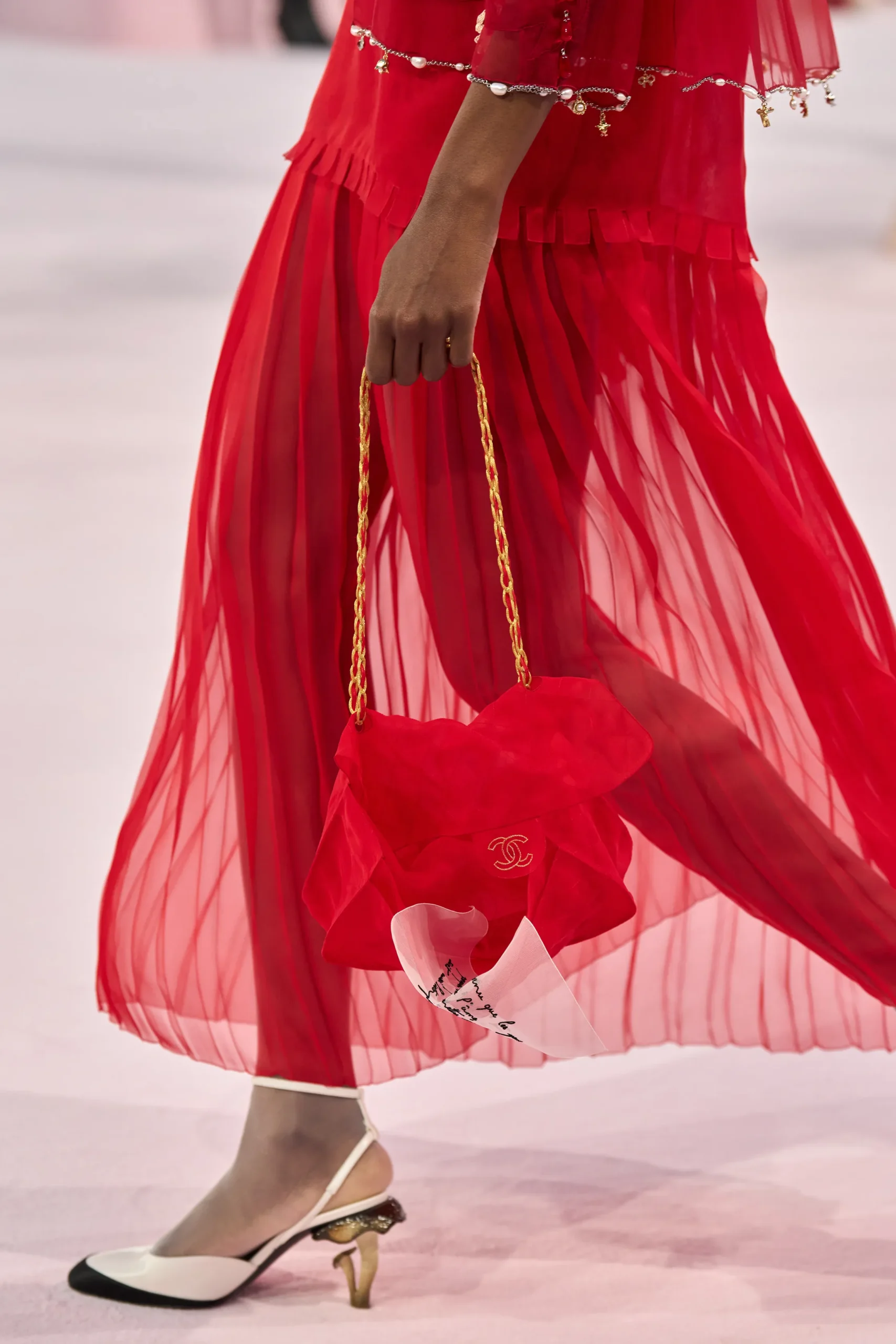
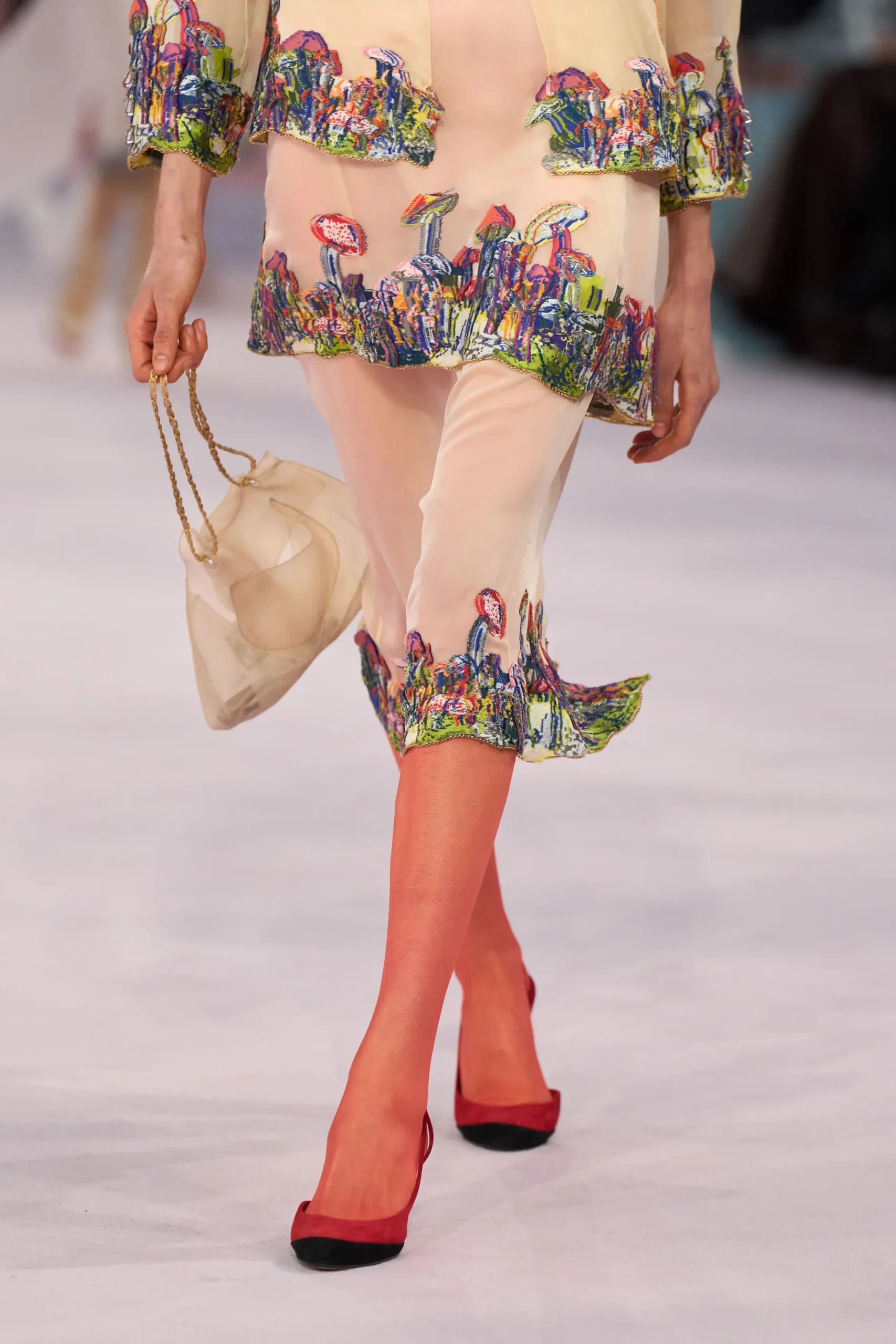
The focal point of this accessory narrative was a radical reinterpretation of the Chanel icon: the 11.12 Classic Flap bag. Blazy stripped this legendary silhouette down to its essence, rendering it in an ethereal, almost spectral fabric, strongly suggested to be silk organza. The resulting construction was strikingly sheer, embodying the transparent quality woven throughout the clothing. Completely devoid of metal hardware—the traditional chains and clasps—the bag achieved an unprecedented lightness, appearing almost vaporous and wholly poetic. It raised the immediate question: was this a functional piece for the modern Chanel patron, or a purely conceptual artifact designed solely to inhabit the rarefied air of Haute Couture?
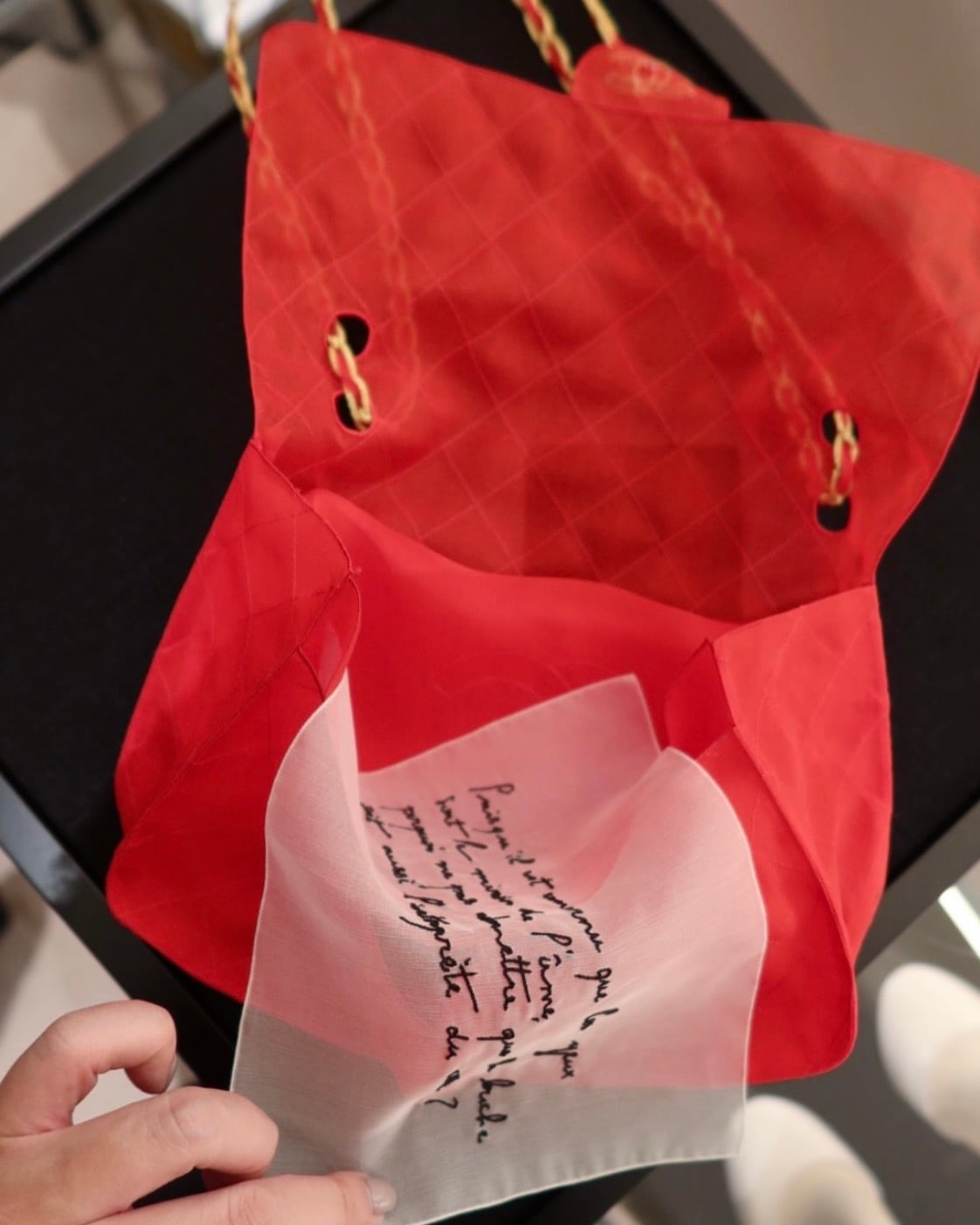
Despite its ghost-like exterior, the bag remained undeniably Chanel. Blazy utilized precision stitching to ghost the quilted pattern onto the sheer surface, ensuring the structural integrity and immediate recognition of the Classic Flap remained intact. The soft draping of the organza cleverly mimicked the bag’s signature double-flap construction, even incorporating a delicately stitched interlocking CC logo within the translucent layers. Even the utilitarian rear pocket, famously known for its "Mona Lisa smile," appeared to be present, albeit subtly suggested beneath the layers of fine fabric.
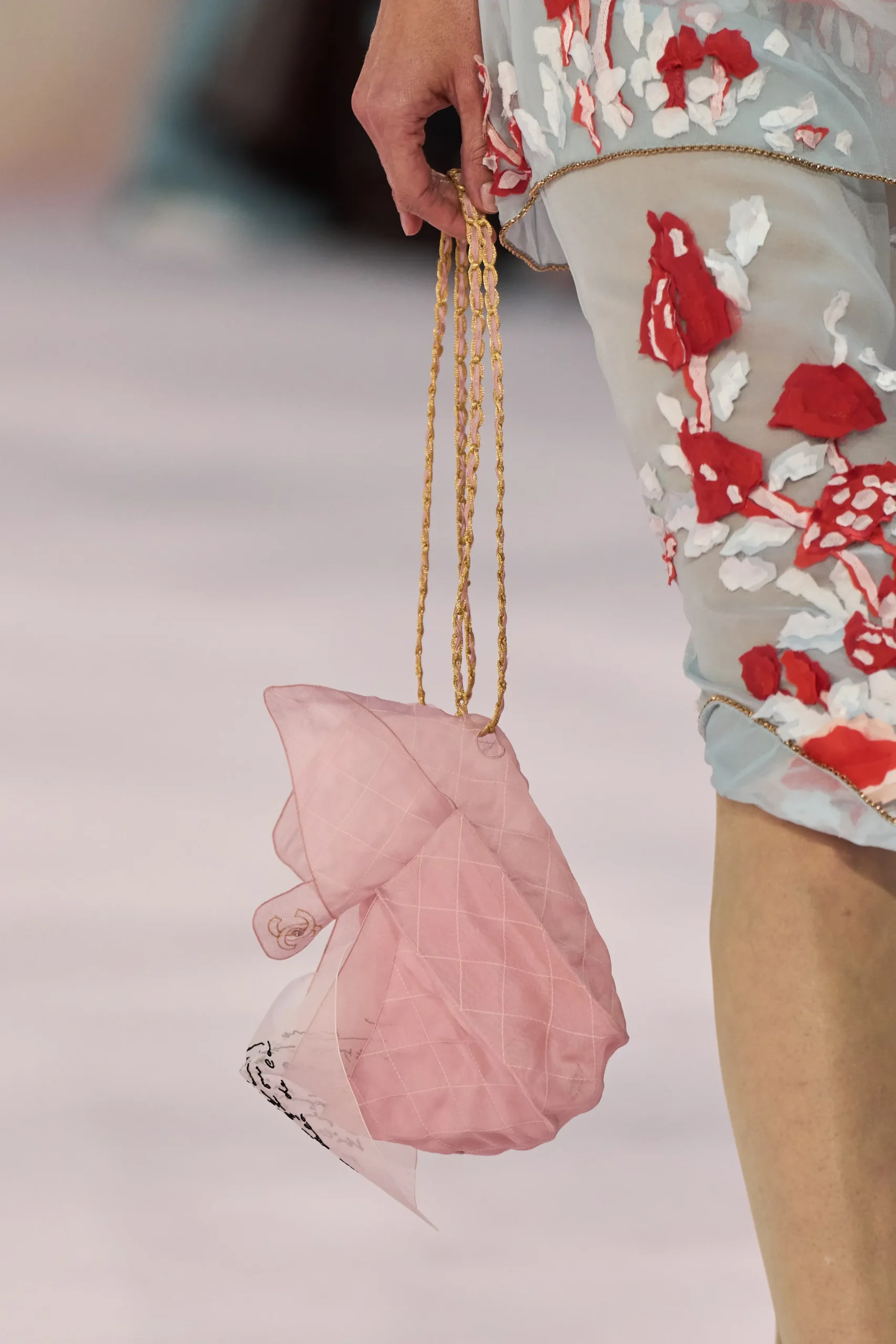
The hardware replacement was an act of thoughtful deconstruction. In place of the signature heavy chain strap, the bag featured reinforced, stitched eyelets from which a slender, braided strap—woven with fine metallic gold thread—emerged. This thread offered the only whisper of traditional metallic luxury, serving as a delicate echo of the metal that was otherwise omitted.
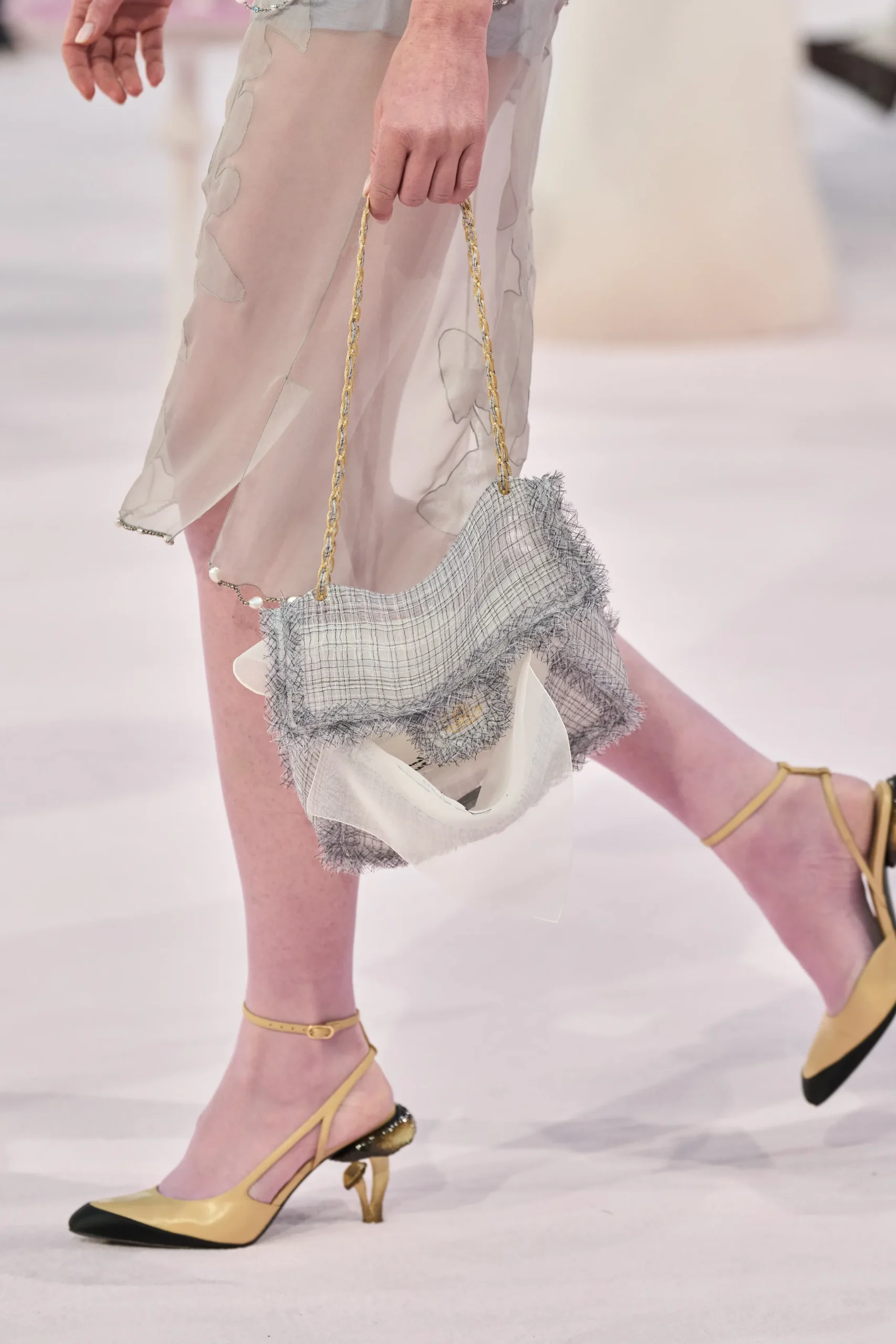
The color story for these sheer bags was as restrained and refined as the garments they accompanied. They appeared in a palette composed of muted, sophisticated tones: nude pink, classic red, pale blush, soft sky blue, essential black, and a creamy light beige. Yet, one iteration stood out as a direct nod to Chanel’s ready-to-wear heritage: a version featuring a subtle check pattern, finished with exquisitely frayed edges reminiscent of the iconic tweed jackets. This provided a textural bridge between the otherworldly fantasy of the couture presentation and the tangible codes of the house.
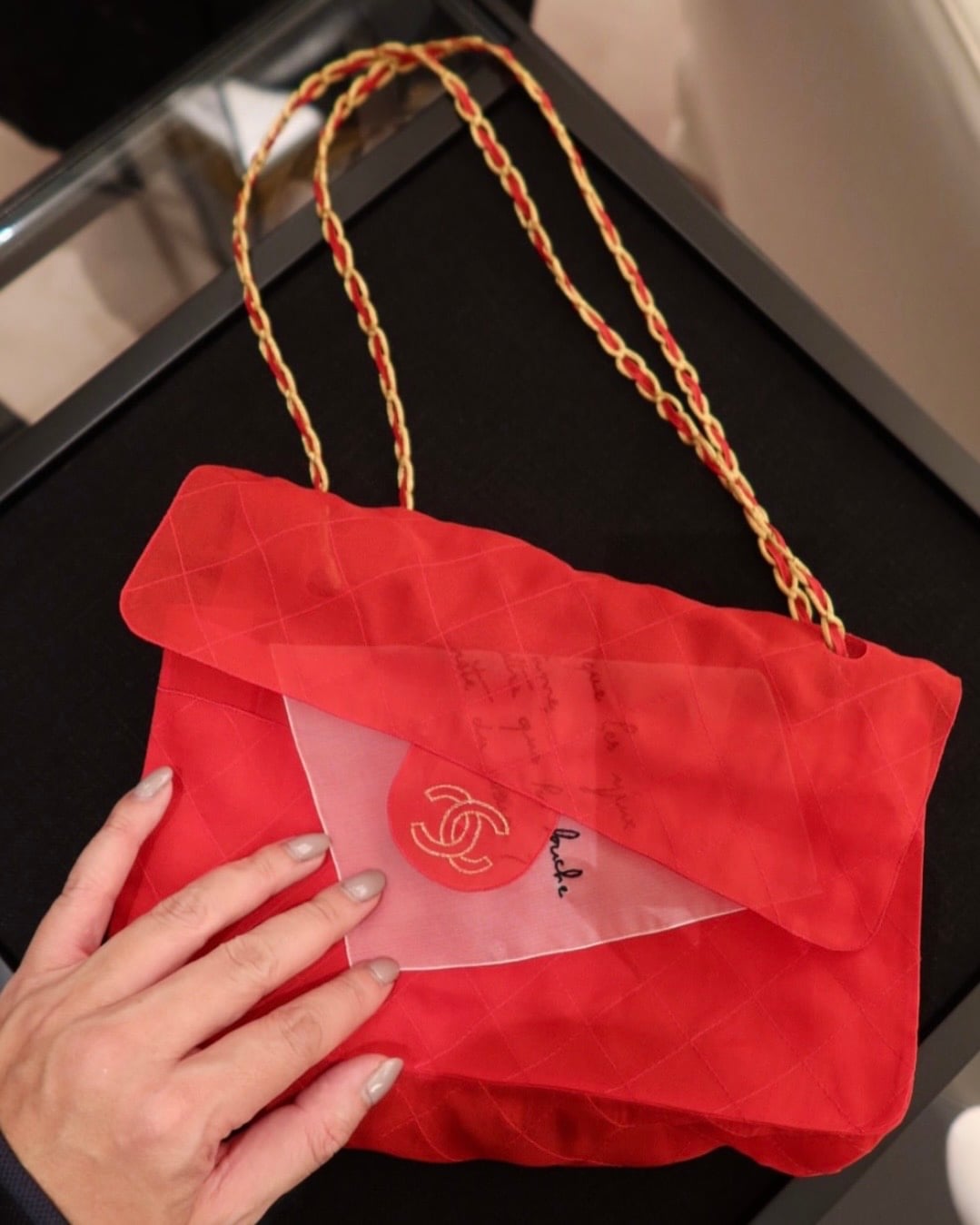
Styling further deepened the bag’s narrative potential. Several models carried these translucent vessels with what appeared to be silk scarves or carefully folded, handwritten notes spilling gently from their openings. This evocative staging invited immediate speculation. Could these embroidered fragments tucked within the sheer casings be poetic allusions to the historical romance between Gabrielle Chanel and her great love, Boy Capel, whose correspondence remains legendary? The contents, or the suggestion thereof, transform the bag from a mere container into a vessel of memory, secrets, and personal correspondence.
Ultimately, Matthieu Blazy’s Spring 2026 Haute Couture collection was a triumph of ethereal beauty and sophisticated restraint. While the gowns commanded attention with their voluminous forms and avian inspiration, the sheer Chanel Couture bags provided a crucial, quiet counterpoint. Whether destined for practical use or existing purely as an artistic statement, these transparent interpretations of an enduring icon perfectly encapsulated the collection’s core themes: lightness, the poetry of transparency, and the enduring spirit of freedom that defines the House of Chanel. They captured the imagination, leaving the fashion world to ponder the beautiful ambiguity of luxury that is nearly, but not quite, there.