

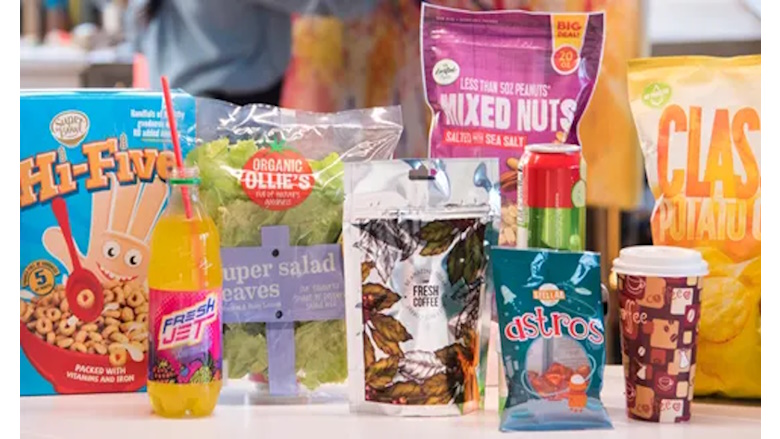
The global food packaging industry is currently standing at a critical regulatory crossroads, driven by the impending enforcement of the German Ink Ordinance (GIO). With the implementation date set for January 1, 2027, the countdown has officially begun for manufacturers, printers, and brand owners to align their production processes with some of the most stringent safety standards ever enacted in the printing sector. Sun Chemical, a global leader in the production of printing inks, coatings, and pigments, has positioned itself as a primary architect of this transition, unveiling a comprehensive portfolio of GIO-compliant solutions designed to ensure that the transition is not merely a hurdle, but an opportunity for innovation in consumer safety.
The German Ink Ordinance, formally known as the 21st Ordinance amending the Consumer Goods Ordinance, represents a seismic shift in how food contact materials (FCM) are regulated. While the European Union has long maintained overarching frameworks for food safety—most notably the Framework Regulation (EC) No 1935/2004—the lack of a specific, harmonized EU-wide measure for printing inks has left a legislative vacuum. Germany, a central hub for European manufacturing and logistics, has moved to fill this gap. By establishing a "positive list" of substances permitted for use in the manufacture of printing inks, the GIO aims to eliminate the ambiguity that has previously plagued the supply chain. This list includes specific monomers, additives, colorants, and solvents that have undergone rigorous toxicological assessment to ensure they do not pose a risk to human health when they migrate from packaging into food products.
For Sun Chemical, the move toward GIO compliance is a natural extension of its long-standing commitment to "low-migration" technology. Migration in food packaging occurs through several mechanisms: penetration (where ink components travel through the substrate), set-off (where ink from the printed side of a sheet transfers to the unprinted food-contact side when stacked or coiled), and gas-phase transfer (where volatile compounds evaporate and re-condense on the food). The GIO targets these risks by strictly limiting the chemistry allowed in the formulation process. Sun Chemical’s proactive approach involves not just swapping out ingredients, but re-engineering entire ink systems to ensure that performance—such as color vibrancy, adhesion, and press speed—remains uncompromised while meeting the new legal thresholds.
The significance of the GIO extends far beyond the borders of Germany. As Sun Chemical has noted, the ordinance, much like the pre-existing Swiss Ordinance (SR 817.023.21), is rapidly becoming a de facto global standard. In an interconnected global economy, brand owners rarely produce packaging for a single isolated market. A multinational food company selling products in Berlin, Paris, and New York prefers a unified supply chain that meets the highest common denominator of safety. Consequently, the GIO is set to dictate the formulation strategies of ink manufacturers worldwide. Sun Chemical’s global footprint allows it to leverage these German standards to provide "future-ready" packaging solutions for brands that operate across multiple jurisdictions, ensuring that a product packaged today will still be compliant when the 2027 deadline arrives.
Sun Chemical’s GIO-compliant portfolio is impressively broad, covering the full spectrum of modern printing technologies. This includes traditional methods such as offset, gravure, and flexographic printing, as well as highly specialized energy-curable formulations. In the realm of flexographic and gravure printing, which are staples for flexible packaging and labels, the company offers both water-based and solvent-based systems. These inks are formulated to provide high-speed printability and excellent bond strength for lamination, all while adhering to the restricted substance list of the GIO. The challenge in these formulations lies in the solvents and resins; Sun Chemical’s R&D teams have successfully identified and integrated alternative components that provide the necessary viscosity and drying profiles without the migration risks associated with traditional chemicals.
Furthermore, the company has made significant strides in the development of UV (Ultraviolet) and EB (Electron Beam) curable inks. Energy-curable inks are favored for their instant drying and high-gloss finishes, but they have historically faced scrutiny regarding photoinitiators—chemicals that can migrate if not fully reacted during the curing process. Sun Chemical’s GIO-compliant energy-curable range utilizes advanced polymeric photoinitiators and highly functionalized monomers that are effectively "locked" into the dried ink film, drastically reducing the potential for migration. This technological leap ensures that high-end, decorative food packaging can achieve visual excellence without sacrificing the safety of the consumer.
The transition to GIO compliance also intersects with the broader industry movement toward a circular economy. As the packaging world shifts toward mono-material structures and increased use of recycled content to meet sustainability goals, the role of ink becomes even more vital. Inks must not only be safe for the first use but must not contaminate the recycling stream. Sun Chemical’s GIO-compliant inks are designed with this lifecycle in mind, supporting the recyclability of various substrates and ensuring that the "positive list" substances do not create "legacy issues" in recycled plastics or paper fibers. By aligning safety with sustainability, Sun Chemical is helping brand owners navigate two of the most complex challenges in modern manufacturing simultaneously.
For converters and printers, the 2027 deadline necessitates a thorough audit of their current inventories and processes. The implementation of GIO-compliant inks often requires a collaborative approach between the ink supplier and the printer to optimize press settings and ensure that the functional barrier of the packaging is sufficient. Sun Chemical provides extensive technical support to facilitate this transition, offering guidance on migration testing and regulatory documentation. This "partnership" model is essential because compliance is not just about the ink in the bucket; it is about the final printed article and how it interacts with the specific food product it contains.
The legal landscape is also evolving in terms of transparency. Under the GIO, there is an increased emphasis on the "Declaration of Compliance" (DoC). This document serves as a certificate of health for the packaging, tracing the safety of every component from the raw material supplier to the final retailer. Sun Chemical’s robust regulatory affairs department ensures that every product in their GIO-compliant portfolio is backed by the necessary data to support these declarations. This transparency is vital for brand owners who face increasing pressure from both regulators and consumers to prove the integrity of their packaging.
As we move closer to January 1, 2027, the urgency for adoption will only increase. Sun Chemical’s early announcement of its GIO-compliant portfolio serves as a call to action for the industry. Waiting until the final months of 2026 to switch formulations could lead to supply chain bottlenecks and testing delays. By engaging with compliant technologies now, companies can conduct the necessary shelf-life studies and migration assays well in advance, ensuring a seamless transition that protects their brand reputation.
In conclusion, the German Ink Ordinance represents a turning point in the pursuit of consumer safety within the food industry. While the technical requirements are rigorous, the availability of a comprehensive, GIO-compliant portfolio from Sun Chemical provides a clear roadmap for the global supply chain. By mastering the science of low-migration chemistry across all printing modalities—from water-based flexo to UV-curable offset—Sun Chemical is not only helping its customers meet a legal requirement but is also setting a new benchmark for what it means to produce safe, high-performance, and sustainable food packaging in the 21st century. The path to 2027 is paved with innovation, and for those who embrace these changes early, the reward is a more resilient and trusted presence in the global marketplace.