

In a transformative move for the global beverage industry, Avantium N.V., a pioneer in the emerging field of renewable and circular polymer chemistry, has formalized a strategic capacity reservation agreement with Packamama, a trailblazing innovator in sustainable wine packaging based in the United Kingdom and Australia. This landmark collaboration signifies a pivotal shift in how the wine industry approaches environmental responsibility, moving beyond traditional glass to embrace high-performance, plant-based materials. Under the terms of this agreement, Packamama has secured future production volumes of Avantium’s proprietary PEF (polyethylene furanoate), a 100% plant-based and fully recyclable polymer marketed under the brand name releaf®. This material will be produced via Avantium’s revolutionary YXY® Technology, which converts plant-based sugars into FDCA (furandicarboxylic acid), the primary building block for PEF.
The partnership represents a convergence of two industry disruptors. Avantium brings its deep expertise in molecular chemistry and material science, while Packamama provides a radical rethinking of the wine bottle’s physical form and carbon footprint. Together, they aim to address one of the most significant environmental challenges in the wine sector: the carbon-intensive nature of traditional glass packaging and its associated logistics. For centuries, the round glass bottle has been the standard, yet its weight and fragility have created a massive carbon overhead. By integrating releaf® into Packamama’s innovative bottle designs, the two companies are setting a new benchmark for low-carbon, premium packaging.
The core of this innovation lies in the material properties of PEF. Unlike conventional plastics derived from fossil fuels, releaf® is synthesized from renewable botanical sources, ensuring that the carbon used in its production is part of a contemporary biological cycle rather than a geological one. However, the benefits of PEF extend far beyond its bio-based origins. In the context of wine preservation, PEF offers functional advantages that surpass even high-quality PET (polyethylene terephthalate). PEF is characterized by its superior barrier properties; it is significantly more effective at blocking oxygen ingress and retaining carbon dioxide than standard plastics. For the wine industry, where oxidation is the primary enemy of quality and shelf life, these barrier properties are essential. PEF allows winemakers to maintain the organoleptic integrity of their products—preserving the delicate aromas, flavors, and colors—while utilizing a lightweight, shatterproof container.
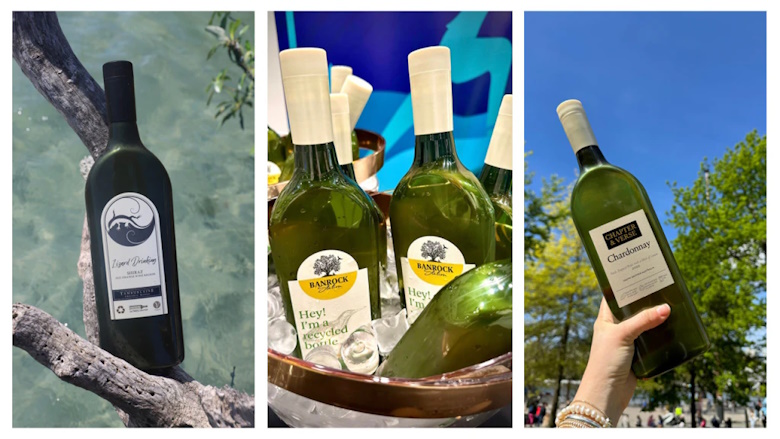
Packamama has already made international headlines with its distinctive "flat-pack" bottle design. By departing from the traditional cylindrical shape, Packamama’s bottles allow for significantly more efficient packing. Their flat, cross-sectional design enables bottles to be packed tightly together, eliminating the "dead space" inherent in round bottle cases. This spatial optimization means that up to 91% more wine can be transported on a single pallet compared to traditional glass bottles. When combined with the fact that these bottles are significantly lighter than glass, the resulting reduction in transport-related carbon emissions is profound. Currently, Packamama utilizes 100% recycled PET (rPET) for its production, but the transition to Avantium’s releaf® adds a new layer of sustainability by introducing a virgin-quality, plant-based material that fits perfectly into existing circular economies.
The global wine industry is currently facing immense pressure to decarbonize. Studies have shown that the production and transport of glass bottles can account for up to 40% to 50% of a winery’s total carbon footprint. While glass is infinitely recyclable, the energy required to melt and reform it is substantial, and the weight of glass adds a heavy penalty to every mile of distribution. Packamama’s approach, bolstered by Avantium’s PEF technology, offers a viable alternative for the "eco-conscious" era. The transition to PEF-based bottles could potentially revolutionize the export market, particularly for high-volume wine-producing regions like Australia and South America, where products must travel thousands of miles to reach European or North American consumers.
The significance of this partnership is further validated by substantial governmental backing. Packamama was recently awarded a grant of AU$1 million from the Australian government under the Business Research and Innovation Initiative (BRII). This grant, which Avantium supported throughout the application process, is specifically dedicated to the decarbonization of Australian wine packaging. Australia, being one of the world’s largest wine exporters, has a vested interest in finding sustainable ways to ship its products across the globe. The BRII grant underscores the strategic importance of this technology in achieving national and international net-zero targets. It also highlights the role of public-private partnerships in de-risking the transition to novel, green technologies.
Santiago Navarro, the CEO and Founder of Packamama, has been a vocal advocate for systemic change in the wine industry. He noted that the search for a material that combines high performance with a plant-based origin has been a long-term goal for the company. Navarro emphasized that releaf® provides the "missing link" for their packaging solutions, offering a unique combination of environmental responsibility and the premium feel required for the wine market. By utilizing a material that is not only recyclable but also born from plants, Packamama can offer a narrative that resonates deeply with modern consumers who are increasingly scrutinizing the environmental credentials of the brands they support.
From Avantium’s perspective, the collaboration with Packamama is a vital step toward the commercialization and scaling of PEF. Bineke Posthumus, the Commercial Director at Avantium, pointed out that Packamama’s innovative design philosophy makes them an ideal partner for showcasing the potential of releaf®. Avantium is currently in the process of scaling up its production capabilities, including the construction of the world’s first commercial-scale FDCA plant in Delfzijl, the Netherlands. Capacity reservation agreements like the one signed with Packamama are crucial for ensuring the commercial viability of these large-scale industrial projects. They provide the market certainty needed to transition from pilot-phase innovation to global industrial standards.
The technical superiority of PEF also plays into the "circular economy" model. PEF can be recycled using existing infrastructure, and it does not contaminate the PET recycling stream when present in small amounts. However, the long-term goal is to establish dedicated PEF recycling loops, where plant-based bottles are collected and processed back into high-quality packaging material, creating a truly closed-loop system. This aligns with the European Union’s Packaging and Packaging Waste Regulation (PPWR) and other global mandates that are pushing for higher percentages of bio-based and recycled content in consumer goods.
Furthermore, the consumer experience of wine in PEF bottles is designed to be uncompromising. The material’s clarity and strength allow for a premium aesthetic that mimics the transparency of glass without the risk of breakage. This makes it particularly attractive for outdoor events, airline catering, and e-commerce, where the "shatterproof" quality of the bottle provides a significant logistics advantage. As wine consumption habits evolve—with a greater emphasis on convenience, sustainability, and online purchasing—the flat-pack PEF bottle is positioned as the packaging of the future.
In conclusion, the partnership between Avantium and Packamama is more than a simple supply agreement; it is a blueprint for the future of sustainable manufacturing. By combining cutting-edge Dutch chemical engineering with British-Australian design innovation, the two companies are tackling the carbon crisis head-on. As the wine industry continues to grapple with the effects of climate change on viticulture, the adoption of materials like releaf® and designs like the flat-pack bottle offers a path forward that preserves both the quality of the wine and the health of the planet. The AU$1 million BRII grant serves as a powerful catalyst, ensuring that this technology moves from the laboratory to the vineyard and, ultimately, to the tables of consumers worldwide. This collaboration proves that with the right materials and the right vision, the most traditional industries can lead the way in the global transition to a circular, bio-based economy.