

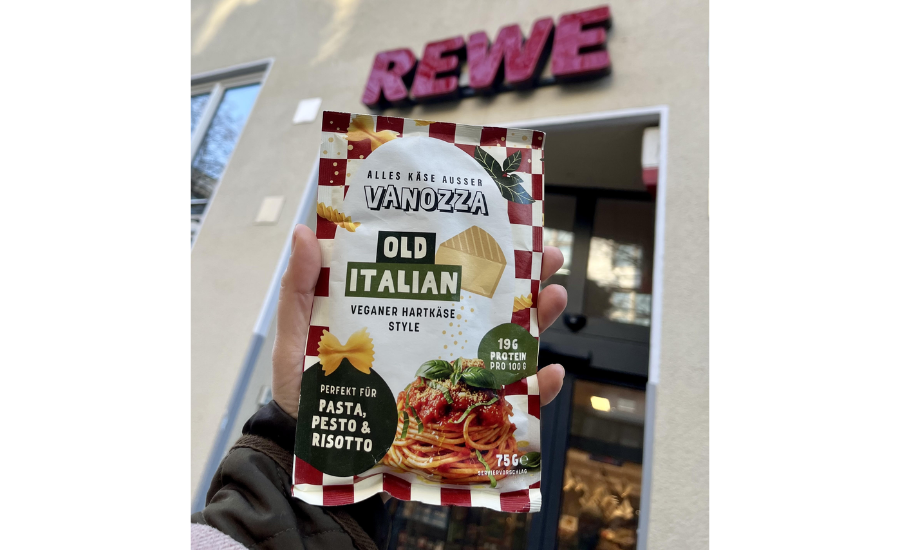
The global food landscape is currently witnessing a dual transformation: a rapid shift toward plant-based diets and a simultaneous, urgent demand for sustainable packaging that eliminates the ecological footprint of plastic waste. At the intersection of these two movements, Hamburg-based material science innovator one.five has announced a landmark partnership with the vegan cheese manufacturer VANOZZA. This collaboration marks a significant milestone in the FMCG (Fast-Moving Consumer Goods) sector, as VANOZZA’s premium plant-based hard cheese alternative, "Old Italian," transitions into high-barrier, paper-stream recyclable packaging. This move, facilitated by one.five’s proprietary Bluemorph technology, represents a critical step forward in proving that high-performance food preservation does not have to come at the cost of the environment.
For years, the dairy and meat alternative industries have faced a paradoxical challenge. While their products are designed to be more sustainable than animal-based counterparts, the packaging required to keep these products fresh has traditionally relied on multi-layer plastic laminates or paper-plastic composites. These "complex" materials are notorious for being non-recyclable because the individual layers of polyethylene (PE), aluminum, and paper are bonded so tightly that standard recycling facilities cannot separate them. Consequently, most of these pouches end up in incinerators or landfills. VANOZZA, a brand built on the philosophy of authentic taste and ethical production, found its "Old Italian" product trapped in this very dilemma—until the integration of Bluemorph.
One.five, a company that utilizes advanced artificial intelligence and machine learning to accelerate the discovery of sustainable materials, developed Bluemorph to solve the "barrier problem." In the world of packaging, a "barrier" refers to a material’s ability to block external elements like oxygen, moisture, and grease from entering the package, while keeping aromas and freshness locked inside. Traditionally, paper has been a poor barrier; it is porous and absorbs oils. However, one.five’s AI-driven R&D process allowed them to identify and apply specific biological coatings that transform ordinary paper into a high-performance substrate. The result is a material that consists of over 90 percent paper content, meeting the stringent requirements for paper-stream recycling in Germany and across Europe.
The transition for VANOZZA is not merely a change in material; it is a total overhaul of the product’s lifecycle impact. The "Old Italian" cheese alternative was previously housed in non-recyclable stand-up pouches. By switching to Bluemorph, VANOZZA now offers a product that can be discarded in a standard blue recycling bin, where it will be processed and turned back into paper pulp. This aligns perfectly with the goals of the circular economy, where materials are kept in use for as long as possible. Furthermore, the environmental benefits are quantifiable. One.five reports that the use of Bluemorph can lead to a CO2 reduction of up to 45 percent compared to conventional plastic laminates. This reduction stems from the use of renewable biological materials and the lower energy requirements of the paper recycling process compared to plastic production.
Nico Hansen, the CEO and founder of VANOZZA, emphasizes that this move was driven by consumer expectations. Today’s vegan consumer is highly informed and often makes purchasing decisions based on a brand’s holistic sustainability profile. For Hansen, it was no longer enough for the cheese to be plant-based; the "skin" it lives in had to reflect the same values. "Our goal was clear: to bring plant-based cheese with authentic taste and reliable quality into everyday life," Hansen noted. By choosing a recyclable paper solution that protects the product’s delicate flavor profile and structural integrity, VANOZZA is making its commitment to the planet visible on the retail shelf.
The technical specifications of Bluemorph are particularly impressive when compared to the industry standard. For fresh food applications, maintaining shelf life is the primary hurdle. VANOZZA’s "Old Italian" requires a stable microclimate within the package to prevent the cheese from drying out or becoming contaminated by external moisture. Bluemorph provides an exceptional grease barrier, which is essential for plant-based cheeses that often have a high oil content. It also features a high aroma barrier, ensuring that the pungent, savory scent of the "Old Italian" is preserved until the moment the consumer opens the pack. In various applications, this material can ensure a shelf life of several weeks for fresh items, while for dry or conventional goods, it can maintain product integrity for 12 to 24 months—matching the performance of petroleum-based plastics.
One of the most significant barriers to the adoption of sustainable packaging is the "machine compatibility" factor. Most food manufacturers have invested millions in high-speed Form-Fill-Seal (FFS) machinery designed for plastic films. Many sustainable alternatives fail because they are too brittle, too thick, or lack the heat-sealing properties required for these machines. One.five engineered Bluemorph specifically to be a "drop-in" solution. It is compatible with standard FFS machines, meaning manufacturers do not need to replace their existing infrastructure to go green. This ease of integration is a major catalyst for the rapid adoption of the material in the retail sector.
The debut of this packaging in REWE Nord stores signifies a shift in the German food retail (LEH) landscape. As one of the largest supermarket chains in Europe, REWE has set ambitious sustainability targets, and the inclusion of VANOZZA’s new packaging is a testament to the material’s retail readiness. Martin Weber, co-founder and managing director of one.five, pointed out that the presence of Bluemorph on REWE shelves is proof of concept. "The fact that Bluemorph is now being used as packaging material for VANOZZA’s vegan cheese… shows that our high-barrier paper meets the practical requirements of retailers and manufacturers," Weber stated.
This partnership is unfolding against a backdrop of tightening regulations. The European Union’s planned Packaging and Packaging Waste Regulation (PPWR) is set to impose strict mandates on recyclability and the reduction of plastic waste. By 2030, all packaging in the EU must be recyclable in an economically viable way. Companies that fail to adapt now face potential fines, higher producer responsibility fees, and loss of shelf space. One.five is positioning itself as a strategic partner for brands navigating this regulatory minefield. The company is already in advanced trials with manufacturers in other sectors, including confectionery, dietary supplements, cosmetics, and even household products like dishwasher tabs.
The use of AI in one.five’s development process cannot be overstated. Traditional material science often relies on "trial and error," which can take years to yield a viable product. One.five’s AI platform analyzes thousands of molecular combinations to predict which bio-based coatings will provide the best barrier properties for specific food types. This allows them to "design" paper packaging that is tailored to the product it holds. For a hard cheese alternative like "Old Italian," the AI helped fine-tune a coating that handles high fat content without losing structural integrity.
As the plant-based market continues to grow—forecasted to reach tens of billions of dollars globally by the end of the decade—the pressure on packaging will only intensify. The VANOZZA and one.five collaboration serves as a blueprint for the future of the industry. It demonstrates that the transition to a plastic-free future is not a distant dream but a current reality. By combining the culinary innovation of VANOZZA with the technological prowess of one.five, the two companies are proving that sustainability and high-quality food preservation are not mutually exclusive.
In conclusion, the launch of the "Old Italian" in Bluemorph packaging is more than just a product update; it is a signal to the entire food industry. It proves that paper, when enhanced by cutting-edge science and AI, can compete with and eventually replace the plastics that have dominated the market for over half a century. As consumers in REWE Nord reach for VANOZZA’s vegan cheese, they are participating in a larger movement toward a circular economy—one where the packaging is as thoughtfully crafted as the food itself. This synergy between nature-based ingredients and bio-based packaging is the new gold standard for the modern, conscious consumer.