

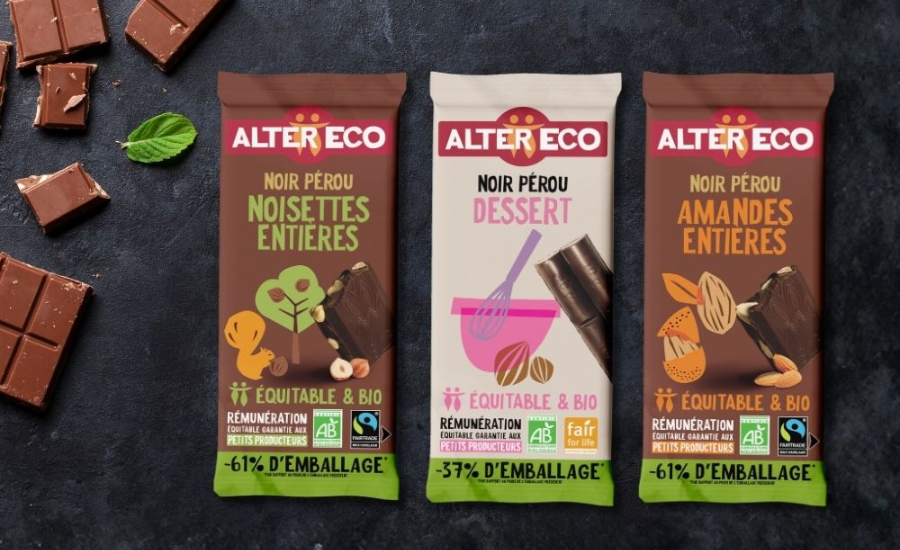
The intersection of luxury confectionery and environmental stewardship has reached a significant milestone as Alter Eco, the pioneering French producer of organic snacks, joins forces with global packaging titan Amcor to unveil a breakthrough in sustainable design. This collaboration has culminated in the development of a sophisticated, paper-based packaging solution for Alter Eco’s flagship 200-gram chocolate bar range, effectively replacing traditional multi-material structures with a streamlined, recyclable alternative that does not compromise on product integrity or aesthetic appeal.
Alter Eco has long been recognized as a standard-bearer for ethical consumerism. Their business model is built upon the foundation of fair and transparent supply chains, sourcing organic cacao from small-scale farmers organized into cooperatives. This commitment to social and environmental responsibility is woven into the very fabric of their product, ensuring that every bite of chocolate supports regenerative agriculture and fair wages. However, the company recognized a lingering contradiction in their value chain: while the chocolate inside was a beacon of sustainability, the packaging—consisting of a conventional cardboard outer sleeve and an inner aluminum foil wrap—presented challenges in terms of weight and end-of-life recyclability.
In the pursuit of a more holistic approach to sustainability, Alter Eco embarked on a mission to overhaul its packaging for three key variants of its 200-gram chocolate bars tailored for the French market. The primary objective was twofold: to significantly reduce the overall weight of the packaging and to transition to a mono-material format that could be easily processed through existing paper recycling streams. To achieve this, they turned to Amcor, a company that has positioned itself at the forefront of "responsible packaging" through its extensive research and development into fiber-based technologies.
The resulting innovation utilizes Amcor’s proprietary AmFiber™ Performance Paper. This material represents a paradigm shift in flexible packaging, offering a high-barrier solution that mimics the protective qualities of plastic or foil while remaining predominantly paper-based. For a product as sensitive as chocolate, the technical requirements are immense. Chocolate is susceptible to moisture, which can cause sugar bloom, and it is rich in fats, which can seep through porous materials and lead to rancidity or unsightly staining. Furthermore, chocolate easily absorbs external odors, meaning any packaging must provide a robust olfactory barrier to preserve the delicate notes of the organic cacao.
AmFiber™ Performance Paper addresses these challenges through advanced coating technologies that provide a high-level barrier against water vapor and grease. This ensures that the chocolate remains fresh and the "organoleptic" qualities—the sensory experience of taste, smell, and texture—are preserved from the factory to the consumer’s pantry. The transition was not merely a swap of materials but a complete re-engineering of the packaging architecture. By eliminating the need for the traditional aluminum foil inner wrap and the bulky cardboard outer sleeve, the new design achieves a staggering 61% reduction in packaging weight. In the world of logistics and carbon footprinting, such a reduction is transformative, leading to lower fuel consumption during transport and less waste volume in the municipal system.
The aesthetic component of the redesign was equally critical. Alter Eco occupies a premium niche in the organic market, and its customers expect a tactile experience that reflects the high quality of the ingredients. The new packaging features a natural kraft appearance with a sophisticated matte finish, signaling "authenticity" and "eco-friendliness" at first glance. This visual language aligns perfectly with the brand’s identity as a purveyor of "real" food grown by real people.
One of the most significant technical hurdles encountered during the development phase involved the specific SKU containing whole almonds. Unlike smooth chocolate bars, those with inclusions like nuts create an uneven, textured surface. Traditional thin papers often "ghost" or show stress marks when wrapped around such irregular shapes, which can detract from the premium shelf presence. However, the AmFiber™ solution proved resilient enough to maintain a smooth, high-quality appearance even when housing the almond-textured bars, demonstrating the material’s versatility and mechanical strength.
The success of this project was not achieved in a vacuum. It required a tri-party collaboration between Alter Eco, Amcor, and HALBA, a Swiss chocolate specialist and expert co-packer. HALBA’s technical expertise in the filling and sealing process was essential to ensuring that the new paper-based material could run efficiently on existing production lines. This is often a major barrier to sustainable packaging adoption; if a new material requires a total overhaul of expensive machinery, many brands hesitate. By proving that AmFiber™ can be integrated into high-speed production environments with the right technical adjustments, the partners have provided a blueprint for the wider industry.
From a regulatory and environmental standpoint, the new packaging is designed with the future in mind. The fiber used in the production of the paper is FSC-certified (Forest Stewardship Council), ensuring that it originates from forests managed with strict adherence to biodiversity and community rights. Furthermore, the packaging aligns with the rigorous recyclability guidelines set forth by CEPI (Confederation of European Paper Industries) and the 4evergreen alliance. In France, where the infrastructure for paper recycling is well-established, consumers can simply dispose of the chocolate wrapper in their standard paper recycling bins, facilitating a truly circular economy.
Anne Descarsin, the R&D Packaging Manager for Alter Eco, emphasized that this project was born out of a refusal to compromise. She noted that designing a thinner, lighter package that still offers top-tier protection for the chocolate’s delicate properties was a profound technical challenge. For Alter Eco, this move represents more than just a reduction in grams; it is a major step forward in their journey to minimize their environmental footprint while maintaining the luxury status of their organic offerings.
Janice Narainsamy, a Senior Product Development Engineer at Amcor, highlighted the psychological impact of paper-based packaging on the consumer. In the current retail landscape, paper is often viewed by shoppers as the most "honest" and sustainable material. When this perception is backed by genuine barrier performance and certified sourcing, it creates a powerful value proposition. Narainsamy pointed out that the Alter Eco transition serves as a real-world validation of AmFiber™’s capabilities in demanding food applications, proving that the industry no longer has to choose between high-performance protection and environmental responsibility.
As the global community moves toward stricter regulations on single-use plastics and non-recyclable laminates, the move by Alter Eco and Amcor is likely to trigger a ripple effect across the confectionery sector. The 61% weight reduction is a particularly compelling metric for other brands looking to meet Science Based Targets (SBTi) for carbon reduction. By stripping away unnecessary layers and focusing on functional, recyclable fibers, this partnership has demonstrated that the future of packaging lies in simplicity and science.
In summary, the collaboration between Alter Eco and Amcor is a testament to the power of purposeful innovation. By rethinking the traditional chocolate bar wrapper, they have created a solution that respects the earth, honors the craftsmanship of the cacao farmers, and satisfies the high expectations of the modern, eco-conscious consumer. It is a bold statement that the most indulgent products can—and should—come in the most responsible packaging. This initiative sets a new benchmark for the industry, proving that with the right partners and technology, the transition to a circular economy is not just a goal for the future, but a reality for today.