

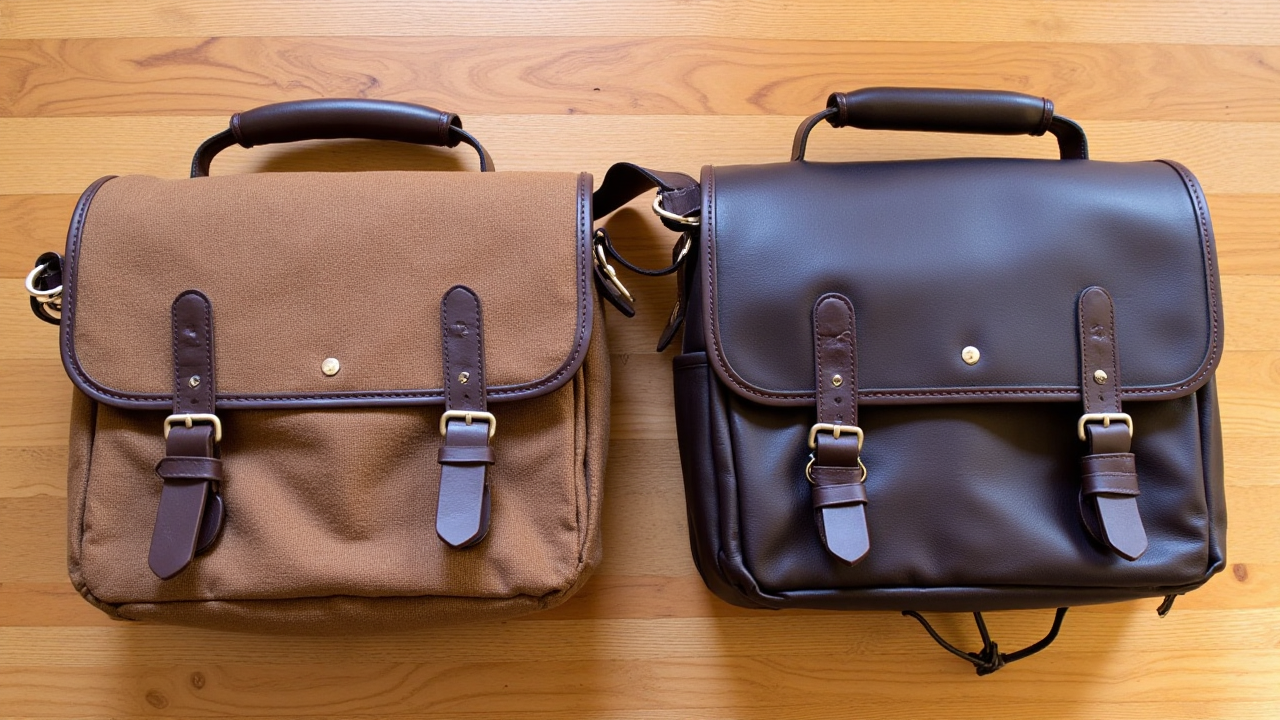
The messenger bag, an essential piece of modern equipment descended from 19th-century utility carriers and postal satchels, serves as the ultimate bridge between function and fashion for the contemporary professional, student, and urban commuter. However, when selecting this crucial piece of everyday carry (EDC), consumers inevitably face the foundational material debate: the rugged, utilitarian appeal of canvas versus the substantial, classic elegance of leather. This choice dictates not only the bag’s immediate style but also its longevity, maintenance requirements, and suitability for specific environments. Understanding the core differences between these two titans of textile and hide is essential to investing in a bag that genuinely complements your lifestyle and professional demands.
The Battle for Endurance: Longevity and Material Science
The true measure of any messenger bag lies in its ability to withstand the rigors of daily life, traffic, and unpredictable weather. While both canvas and leather offer exceptional durability, they achieve this resilience through vastly different mechanisms, leading to distinct aging processes.
Canvas: The Workhorse of Textiles
Canvas is not merely a heavy cotton fabric; it is a high-density, plain-woven structure renowned for its inherent resistance to tearing and abrasion. Modern canvas messenger bags often utilize specific grades, such as duck cloth or sailcloth, engineered for maximum tensile strength.
The longevity of a canvas bag is often significantly enhanced by waxing. Waxed canvas, pioneered for maritime use, provides a substantial barrier against moisture without sacrificing breathability. This treatment allows the bag to develop subtle creases and lighter stress marks over time, creating a "broken-in" aesthetic that speaks to adventure and utility. Because canvas is inherently flexible and lightweight, it handles being overstuffed or carelessly tossed into a trunk without risking structural damage like creasing or cracking that plagues untreated leather. Its resilience makes it the clear choice for anyone whose daily routine involves rough handling, frequent exposure to the elements, or constant movement, such as cycling or hiking.
Leather: The Heirloom Standard
Leather, particularly high-quality full-grain leather, is unmatched in its potential lifespan. When properly cared for, a leather bag can easily last several decades, often becoming an heirloom passed down through generations. This durability stems from the complex structure of the animal hide, which provides natural thickness and tensile strength.
The defining characteristic of leather’s aging process is the development of a patina—a rich sheen and darkening of the material caused by natural oils, sunlight exposure, and handling. This patina elevates the bag’s character, making it uniquely personal. However, this superior longevity comes with specific demands. Leather is highly susceptible to drying out, which leads to stiffness and cracking, requiring regular conditioning with specialized creams or oils. Furthermore, while leather offers substantial protection against light rain, prolonged saturation can damage the material, causing staining, warping, or loss of structure. Thus, a leather bag requires a commitment to proactive care and a more cautious approach to rugged outdoor use.
Ergonomics and The Weight of Quality
A frequently overlooked, yet critical, factor in the messenger bag decision is weight and overall carrying comfort, especially for users who transport heavy items like professional laptops, power bricks, and books.
The Lightweight Advantage of Canvas
Canvas bags are inherently lighter, offering immediate relief to the shoulders and back. Even when constructed with heavy-duty fabrics and reinforced stitching, a quality canvas bag rarely feels burdensome when empty. This flexibility allows the bag to contour to the wearer’s body, making it significantly more comfortable for extended periods of walking, commuting on crowded public transport, or cycling. For students and urban professionals who value agility and minimal physical imposition, the lightweight nature of canvas provides a practical advantage that often tips the scales in its favor.
The Substantial Feel of Leather
Leather bags, particularly those made from thicker cuts of hide, carry substantial weight even before contents are added. This weight contributes to the perception of quality and robustness, providing a structural rigidity that helps the bag maintain its shape. While this structure is beneficial for protecting delicate electronics, the cumulative weight can become taxing over a long workday. Furthermore, leather is less breathable than canvas, meaning that in warmer climates, a leather bag resting against the hip or back may contribute to localized heat retention, potentially reducing comfort during peak summer months.
Aesthetic Signaling: Style, Context, and Professionalism
The material of a messenger bag sends an immediate and potent signal about the wearer’s style, priorities, and professional environment.
Canvas: The Versatile Chameleon
Canvas possesses a versatile aesthetic that ranges from vintage military surplus to sleek, modern minimalist. It effortlessly complements casual, rugged, or artistic attire. Earthy tones—khaki, olive green, brown, and charcoal—are classic canvas colors that align perfectly with denim, casual chinos, and outdoor wear.
Canvas excels in environments where formality is relaxed. It signals approachability, utility, and an appreciation for low-key, sustainable style. It is the ideal choice for creatives, freelancers, students, and anyone operating in a tech-focused or highly casual workspace. The aesthetic flexibility of canvas is also enhanced by its compatibility with mixed materials; many high-end canvas bags utilize leather trim or brass hardware, achieving a sophisticated blend of ruggedness and refinement.
Leather: The Formal Statement
Leather messenger bags inherently project authority, sophistication, and tradition. They are the quintessential choice for formal business settings, corporate offices, and client-facing roles. A dark brown or black full-grain leather bag acts as a powerful accessory, completing a professional ensemble and signaling investment in quality and detail.
While leather offers a timeless look, its aesthetic can be less versatile than canvas. A highly polished leather bag might feel out of place in a rugged outdoor setting or a highly informal, casual environment. Furthermore, the selection of the leather type and finish is crucial: a distressed, vegetable-tanned leather offers a more artistic, slightly vintage appeal, whereas a smooth, semi-aniline finished leather is strictly corporate. Choosing leather is often a commitment to a specific professional persona.
Maintenance, Weatherproofing, and Value Proposition
The long-term cost of ownership must account for both the initial purchase price and the ongoing commitment required to keep the bag in prime condition.
Practicality and Price Accessibility
Canvas is the clear winner in terms of low-maintenance practicality. Most canvas bags are spot-cleaned with soap and water, and some models can even be safely machine-washed, making them ideal for messy commutes or travel. If the canvas is waxed, maintenance simply involves reapplying wax every year or two to restore water resistance.
Economically, canvas bags offer superior value. A high-quality, durable canvas messenger bag often falls in the $50 to $150 range. This affordability makes canvas an excellent choice for users who prioritize performance and style without requiring a significant initial financial outlay.
Leather, conversely, demands a higher initial investment, typically starting above $150 for genuine leather and rising significantly for premium full-grain options. This cost is compounded by the need for specific leather conditioners, cleaners, and the time required for regular maintenance. While the lifetime value of a leather bag can be excellent due to its longevity, the upfront cost and maintenance burden are substantial.
Environmental and Ethical Considerations
In recent years, the material debate has also incorporated ethical and environmental factors. Canvas, particularly when made from organic cotton or recycled fibers, offers a strong sustainability profile. The manufacturing process generally has a lower environmental footprint than leather tanning, which often involves heavy chemicals. While high-quality, vegetable-tanned leather offers a more sustainable choice within the leather category, canvas generally presents a more eco-conscious option for consumers prioritizing sustainability.
Defining Your Optimal User Profile
The decision ultimately hinges on aligning the material’s attributes with your specific needs and daily routine.
Choose Canvas If You:
- Are a daily urban commuter, student, or cyclist who prioritizes light weight and flexibility.
- Need a bag that can handle frequent rough use, exposure to rain, and minimal maintenance.
- Prefer a rugged, vintage, or casual aesthetic that pairs easily with everyday clothing.
- Require a high-performance bag on a moderate budget.
Choose Leather If You:
- Work in a highly formal professional environment (corporate, legal, finance) where image and tradition are key.
- Seek an heirloom piece that will develop a unique patina and last for decades.
- Are willing to commit time and resources to regular cleaning and conditioning.
- Prioritize a substantial, structured feel and superior protection for contents.
Our Top Recommendation: The All-Purpose Canvas Solution
For the vast majority of modern consumers seeking a blend of durability, accessible style, and practical function, canvas emerges as the clear frontrunner. It offers exceptional performance without the high financial barrier or rigorous maintenance schedule associated with quality leather.
If you are leaning toward this blend of rugged charm and practicality, the Brown Canvas Messenger Bag epitomizes the ideal balance. Constructed from heavy-duty canvas, reinforced with quality stitching, and featuring the classic, universally appealing brown hue, it is perfectly suited for daily use, travel, and casual business meetings. It provides the durability of a workhorse bag with an aesthetic that never goes out of style, cementing canvas as the definitive choice for the modern, all-purpose daily carry.