

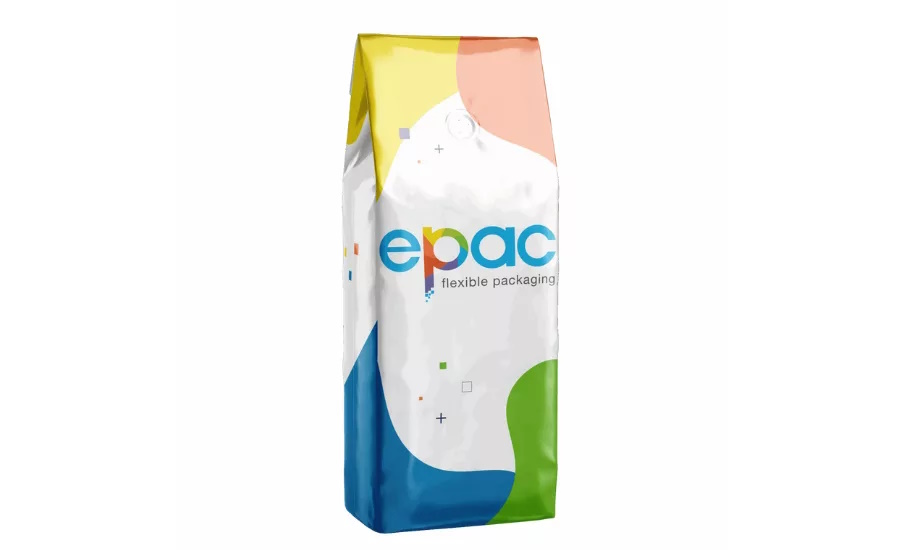
The global packaging industry is currently witnessing a tectonic shift as traditional analog processes give way to the agility and precision of digital technology. At the forefront of this evolution is a renewed and expanded partnership between two industry titans: HP Indigo and ePac Flexible Packaging. The two companies recently announced a landmark commercial agreement valued at approximately $50 million over the next three years. This multifaceted deal, which encompasses state-of-the-art hardware, specialized consumables, and comprehensive technical services, signals a bold commitment to redefining how flexible packaging is produced, consumed, and managed on a global scale.
This agreement is not merely a transaction; it is the latest chapter in a decade-long narrative of collaboration that has fundamentally altered the supply chain for small and medium-sized businesses (SMBs) and global brands alike. Since its inception, ePac has functioned as a primary proof-of-concept for HP’s digital printing capabilities, demonstrating that a digital-first business model is not only viable but highly scalable. By committing another $50 million to this vision, both companies are doubling down on a future where "on-demand" is the industry standard rather than the exception.
A Decade of Disruption: The HP and ePac Legacy
To understand the weight of this $50 million deal, one must look back at the origins of the HP-ePac relationship. Ten years ago, the flexible packaging market was dominated by long-run rotogravure and flexographic printing. These methods, while efficient for millions of identical units, required expensive plates, long lead times, and massive minimum order quantities (MOQs). This traditional model effectively locked out smaller entrepreneurs and forced larger brands to hold enormous amounts of inventory, much of which ended up in landfills due to rebranding or product expiration.
ePac entered the market with a disruptive proposition: utilize HP Indigo’s Liquid Electrophotographic (LEP) technology to offer high-quality, digital flexible packaging with no MOQs and lightning-fast turnaround times. This "born-digital" strategy allowed ePac to grow from a single location to a global network. Today, ePac operates more than 50 HP Indigo presses across the world. The new agreement will see the integration of 10 additional HP Indigo 200K digital presses, ensuring that nearly one-third of ePac’s global fleet consists of the latest, most advanced printing technology available.
The Power of the HP Indigo 200K: A Technological Leap
The centerpiece of this new investment is the HP Indigo 200K digital press. Built upon HP’s fifth-generation platform, the 200K is designed specifically for the high-velocity demands of the flexible packaging sector. In an industry where speed-to-market is the ultimate competitive advantage, the 200K delivers a staggering 30% increase in print speed and a 45% boost in total throughput compared to previous generations.
However, the "digital advantage" goes beyond just raw speed. The HP Indigo 200K is a sophisticated piece of industrial machinery integrated with Artificial Intelligence (AI). The press features AI-enabled quality diagnostics and real-time defect detection systems. In a traditional printing environment, a defect might not be noticed until thousands of meters of film have been wasted. With the 200K, the system monitors every linear inch of production, allowing for immediate corrections. This level of operational predictability minimizes waste and ensures that every pouch or roll-fed label meets the exact color specifications and quality standards of the brand owner.
For ePac, the 200K represents the ability to bridge the gap between small-batch artisanal runs and high-volume commercial production. It allows them to maintain the flexibility of digital printing while approaching the productivity levels of traditional analog presses, effectively removing the "speed penalty" that once associated with digital workflows.
Redefining the Customer Experience and Sustainable Growth
Parag Patel, President of Shared Services at ePac, has been vocal about the strategic importance of this investment. He emphasizes that the deal is about more than just adding capacity; it is about "redefining the standard for high-speed, sustainable packaging."
One of the most significant pain points in the packaging industry is the environmental impact of overproduction. By enabling true on-demand manufacturing, HP and ePac allow brands to order exactly what they need, when they need it. This reduces the carbon footprint associated with warehousing and the physical waste of obsolete packaging. Furthermore, digital printing eliminates the need for aluminum plates and the harsh chemicals required to clean them, offering a cleaner production cycle.
Innovation at ePac is also manifesting in specialized product offerings. For instance, the company recently introduced its "Easy Open Barrier Films," a premium innovation designed specifically for the coffee industry. These films provide the high-barrier protection necessary to keep coffee beans fresh while incorporating a user-friendly "easy open" feature that enhances the consumer unboxing experience. Such innovations are made possible by the precision of digital printing and finishing, which allows for complex layered structures and integrated features that would be cost-prohibitive on analog equipment for smaller product lines.
Strategic Expansion: From Phoenix to the Global Market
The deployment of these 10 new HP Indigo 200K presses will be strategic, focusing on ePac’s core operations in North America and Europe. A key component of this growth strategy is the upcoming expansion in Phoenix, Arizona. By establishing a high-capacity hub in Phoenix, ePac is positioning itself to better serve the Western United States, a region teeming with food and beverage startups and wellness brands that demand high-quality packaging.
In tandem with the hardware expansion, ePac is launching a new e-commerce platform. This digital storefront is intended to make the procurement of custom packaging as seamless as any other online transaction. By integrating the front-end ordering system directly with the back-end HP Indigo digital workflow, ePac is creating a frictionless "file-to-pouch" pipeline. This level of vertical integration is what Patel refers to when he says competitors "simply cannot match" ePac’s digital-first innovation.
The Macro Impact on the Supply Chain
The $50 million agreement between HP and ePac serves as a barometer for the health and direction of the broader packaging market. We are currently living in an era of SKU proliferation. Brands are no longer launching a single flagship product; they are launching dozens of variations, seasonal flavors, and limited-edition collaborations. Traditional printing is ill-equipped to handle this level of fragmentation.
HP’s statement on the deal highlights how their collaboration has helped converters reduce lead times from weeks to mere days. In a post-pandemic world where supply chain volatility is the new normal, the ability to pivot production quickly is a survival necessity. If a brand sees a sudden spike in demand or needs to change a nutritional label due to a regulatory update, the HP-ePac digital ecosystem allows them to make those changes in real-time without the sunk costs of physical plates or wasted inventory.
Conclusion: A Future Built on Digital Certainty
As the three-year agreement unfolds, the presence of the HP Indigo 200K across ePac’s global network will likely set a new benchmark for the industry. The combination of HP’s technological prowess and ePac’s localized, service-oriented business model creates a formidable force in the flexible packaging world.
The $50 million investment is a clear signal that the "digital revolution" in packaging is no longer in its infancy—it has reached maturity. With AI-driven quality control, sustainable production methods, and a relentless focus on the customer experience, HP and ePac are doing more than just printing bags; they are building a more responsive, less wasteful, and highly creative future for global commerce. Whether it is a local coffee roaster in Phoenix using Easy Open Barrier Films or a multinational corporation looking to test a new product in the European market, the HP-ePac partnership ensures that the future of packaging is digital, fast, and infinitely flexible.