

The global beverage industry is currently navigating a period of profound structural transformation, driven by a confluence of stringent environmental regulations, shifting consumer preferences, and a desperate need for supply chain efficiency. While the traditional glass bottle has served as the gold standard for wine and spirits for centuries, the modern era demands a more sophisticated approach to containment. Leading this charge is Australia, a nation that boasts 65 distinct wine regions and a culture of agricultural resilience. However, the innovations emerging from the Australian continent are merely the vanguard of a global movement toward circularity, carbon reduction, and material science breakthroughs that are redefining how beer, wine, and spirits are delivered to the consumer.

The narrative of packaging innovation is no longer just about aesthetics or brand shelf-presence; it is now a battle of life-cycle assessments (LCA) and carbon footprints. In the wine sector specifically, the packaging and transport of glass bottles can account for up to 40% to 50% of a product’s total carbon emissions. This reality has spurred a race to develop alternatives that maintain the organoleptic integrity of the liquid while shedding the weight and waste associated with traditional formats. Australia has become a primary laboratory for these experiments, recently showcasing two diametrically opposed but equally valid paths toward a sustainable future.
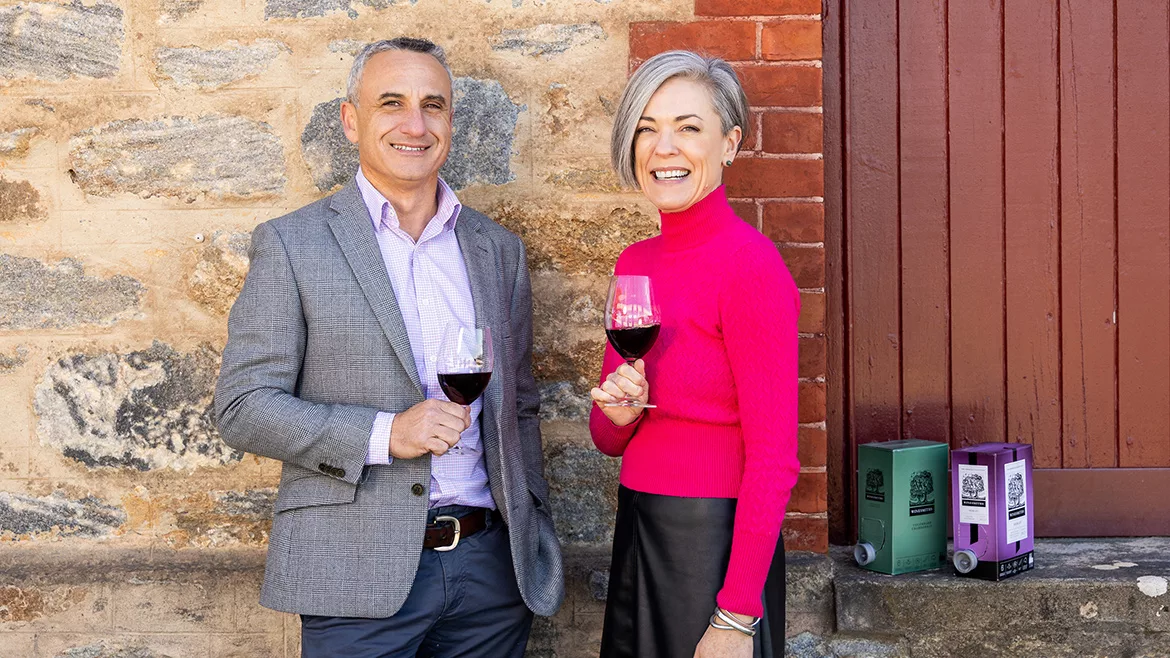
One of the most significant breakthroughs in the "alternative format" category involves the reimagining of the bag-in-box (BIB) system. Historically, BIB packaging was criticized for its lack of recyclability, as the internal bladders were often composed of complex multi-layer laminates that were impossible for standard municipal facilities to process. Addressing this technical hurdle, SIG, a global leader in aseptic packaging, collaborated with Australia’s Hill-Smith Family Estates to launch the nation’s first "recycle-ready" bag-in-box solution. This development was recently honored with both the Packaging & Design Award and the Sustainability Award at the 2025 Wine Industry Impact Awards. The significance of this achievement cannot be overstated; by creating a mono-material or compatible-layer structure that can enter the circular economy without degrading the waste stream, SIG and Hill-Smith have effectively modernized a format that is inherently more carbon-efficient than glass due to its high volume-to-packaging ratio.
The 2025 Wine Industry Impact Awards, hosted by the Wine Industry Suppliers Association (WISA), served as a backdrop for this milestone. As WISA celebrates a quarter-century of fostering technical excellence, the recognition of the SIG/Hill-Smith partnership signals a shift in the industry’s hierarchy of values. No longer is the "premium" nature of a wine solely tied to the weight of its glass bottle; instead, true luxury is increasingly being defined by the intelligence and environmental stewardship of its vessel.
Parallel to the evolution of the bag-in-box is the rise of the circular polymer bottle. Packamama, a company that has become synonymous with the "flat" wine bottle revolution, recently secured AU$1 million (approximately £500,000) under the Australian Government’s Business Research and Innovation Initiative (BRII). This funding is specifically earmarked for the development of next-generation, circular polymer bottles. Unlike traditional round glass bottles, Packamama’s flat design allows for significantly denser packing during transit—essentially "shipping less air." This logistical optimization, combined with the use of 100% recycled PET (rPET), enables a reduction in greenhouse gas emissions by more than half compared to traditional glass.

The BRII grant follows a successful feasibility study that proved the technical viability of these polymers. The challenge with plastic in the wine industry has always been oxygen ingress; wine is a living product that reacts poorly to oxidation. Packamama’s research focuses on advanced barrier technologies that protect the wine’s quality over time, ensuring that the transition to lightweight materials does not come at the cost of the consumer’s tasting experience. This move is particularly vital for the competitiveness of Australian wine exports, as rising fuel costs and international carbon taxes make heavy glass an increasingly expensive liability.
While the vessel itself is undergoing a metamorphosis, the secondary components of packaging—specifically labels—are also being redesigned to facilitate a circular economy. The glass bottle, despite its weight, remains a highly recyclable material, provided it can be processed efficiently. A major bottleneck in glass recycling and reuse is the adhesive and label material used by brands. Traditional labels often leave behind residue or fail to detach during the industrial washing process, contaminating the cullet or preventing the bottle from being refilled.

Fedrigoni Self-Adhesives has addressed this friction point with its new wash-off label solution. Utilizing their premium FW8000 wash-off adhesive paired with Sorolla H+O WS facestock, Fedrigoni has created a product that meets the rigorous demands of the "ice bucket test." In the world of premium wine and craft beer, a label must remain pristine even after hours submerged in freezing water. Fedrigoni’s technology ensures this durability during consumption but allows the label to detach cleanly and effortlessly when exposed to the alkaline solutions used in industrial bottle-washing plants. This innovation is a critical enabler for the "refillable" model, which is gaining traction in Europe and parts of Oceania as the ultimate form of packaging sustainability.
However, innovation is not restricted to the physical chemistry of materials; it also encompasses the logistics and orchestration of the packaging process. In North America, SupplyOne has emerged as a pivotal player in helping wineries navigate the complex transition from production to the consumer’s doorstep. As the direct-to-consumer (DTC) wine club model continues to explode in popularity, the "unboxing experience" has become a primary touchpoint for brand loyalty. SupplyOne’s suite of solutions emphasizes the use of custom-engineered corrugated materials and molded pulp inserts. These materials are not only curbside recyclable—meeting the demands of the eco-conscious modern consumer—but are also designed to withstand the rigors of the small-parcel shipping environment.

The role of distributors like SupplyOne highlights a broader trend: the integration of automation and branding. For a winery to remain competitive, it must balance the need for protective packaging that prevents breakage with the need for a "retail-ready" aesthetic that pops in a digital or physical marketplace. This requires a holistic view of the packaging lifecycle, from the bottling line to the final delivery.
Looking forward, the innovations seen in Australia and through global players like Fedrigoni and SIG are setting the stage for a 2025-2030 roadmap where "zero-waste" packaging becomes the industry standard rather than a niche offering. The beer industry, which transitioned heavily toward aluminum cans over the last decade, provides a blueprint for the spirits and wine sectors. Aluminum’s high recycling rate and low transport weight have made it a favorite for craft brewers, and we are now seeing "canned wine" and "canned cocktails" move from the periphery into the mainstream, further challenging the hegemony of the glass bottle.

The data is clear: the beverage industry is at a crossroads. The convergence of SIG’s recycle-ready BIB, Packamama’s carbon-cutting polymers, Fedrigoni’s circular-friendly labels, and SupplyOne’s logistical expertise represents a multi-pronged attack on the environmental inefficiencies of the past. As Australia continues to lead through government-backed research and industry collaboration, the rest of the world is watching closely. The "bottle" of the future may not be a bottle at all, but a sophisticated, multi-layered, and fully circular delivery system that honors the heritage of the liquid inside while protecting the planet on the outside. This technological renaissance is not merely an option for the beer, wine, and spirits sectors—it is a prerequisite for their survival in a climate-conscious global market.