

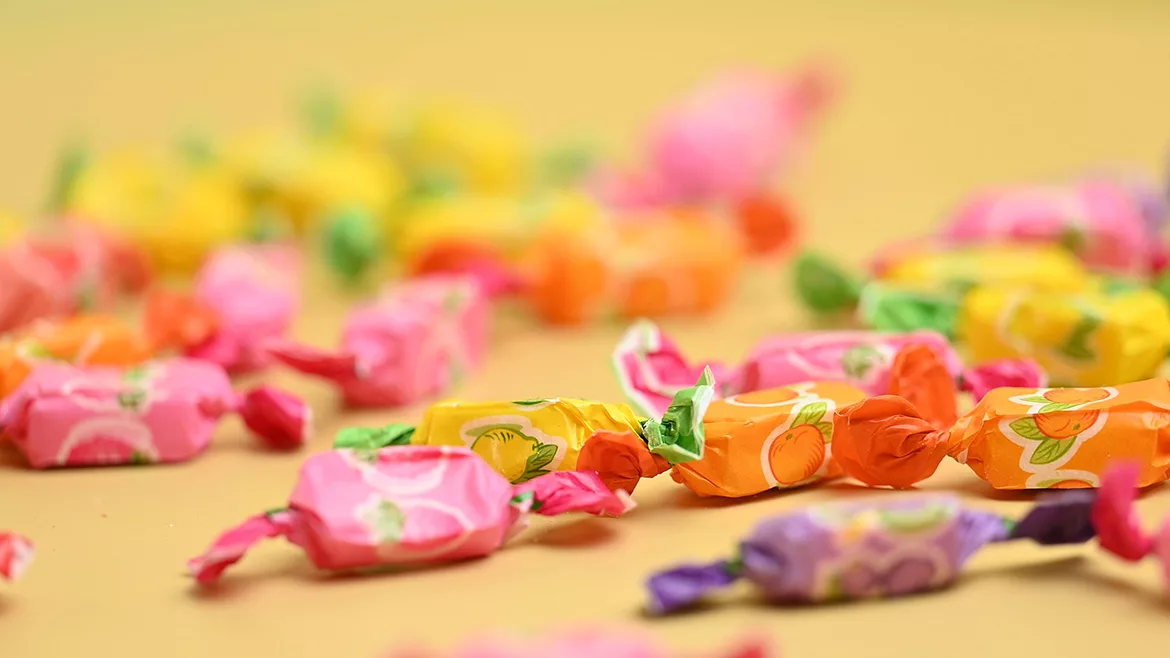
The confectionery industry has long been defined by its vibrant, high-gloss plastic wrappers and multi-layered foil laminates, materials chosen specifically for their ability to preserve freshness and provide a barrier against moisture and oxygen. However, as the global push for environmental stewardship intensifies, the "unwrapping" experience is undergoing a fundamental transformation. Today, the candy and confectionery market is at the forefront of a packaging revolution, aggressively pivoting toward paper-based solutions to meet stringent regulatory requirements and satisfy the growing consumer appetite for sustainable alternatives. This transition is not merely a change in material; it is a complex technological evolution involving artificial intelligence, advanced material science, and global supply chain realignments.
The impetus for this shift is multifaceted. On one hand, legislative pressures, particularly in Europe, are forcing manufacturers to rethink their waste footprints. On the other, the "plastic-free" movement has become a significant driver of brand loyalty. Paper, a renewable resource with high recycling rates in most developed economies, has emerged as the leading contender to replace traditional flexible plastics. In this deep dive, we examine how industry leaders and innovative startups are collaborating to overcome the technical hurdles of paper packaging while ensuring that your favorite sweets remain as fresh and flavorful as ever.
The Regulatory Catalyst: Jung and the AI-Driven Path to Compliance
In the European market, the clock is ticking for packaging manufacturers. The upcoming EU Packaging and Packaging Waste Regulation (PPWR) is set to redefine the industry, mandating that all packaging be recyclable by 2030 and significantly reducing the use of virgin plastics. For companies like Jung, a prominent German specialist in promotional confectionery and packaging services, the challenge was to find a solution that met these high standards without sacrificing the aesthetic appeal or shelf-life of their products.

To navigate this transition, Jung partnered with one.five, a Hamburg-based startup that is disrupting the packaging sector through the use of advanced artificial intelligence. One.five utilizes AI-driven discovery platforms to identify and develop functional coatings and material compositions that allow paper to mimic the barrier properties of plastic. In collaboration with UPM Specialty Papers, this partnership has focused on creating a paper-based infrastructure that can handle the specific needs of sticky or oily confections.
By leveraging AI, one.five can rapidly simulate how different bio-based coatings will interact with paper fibers, accelerating the R&D process from years to months. This allows Jung to offer its clients promotional sweets—ranging from gummy bears to chocolates—in packaging that is fully compatible with existing paper recycling streams. This proactive approach not only prepares Jung for the PPWR guidelines but also positions them as a pioneer in the "circular economy," where packaging never becomes waste but instead returns to the production cycle.
Scaling Sustainability: pladis Global and the North American Market
While Europe often leads in packaging regulation, the momentum is shifting globally. One of the most significant indicators of this trend is the recent move by pladis Global, one of the world’s largest and fastest-growing confectionery manufacturers. As the parent company to iconic brands such as GODIVA, McVitie’s, Flipz, and Demet’s Turtles, pladis has a massive global footprint. Its decision to transition its U.S. confectionery packaging to paper-based alternatives marks a watershed moment for the North American market.
Pladis has partnered with Coveris, a European powerhouse in sustainable packaging, to develop a new generation of "Block-Bottom Bags." These bags are engineered to comply with the Circular Economy for Flexible Packaging (CEFLEX) guidelines, an industry-wide initiative dedicated to making flexible packaging a circular resource. The collaboration addresses one of the primary criticisms of sustainable packaging: that it often lacks the durability required for the rigorous shipping and handling processes of the U.S. retail landscape.

The new paper-based bags developed by Coveris for pladis provide a robust structure that stands upright on shelves—a critical requirement for premium confectionery brands—while offering the necessary protection against light and air. By moving away from multi-layer plastic films, which are notoriously difficult to recycle because they require the separation of different plastic resins, pladis is simplifying the waste stream. This move signals to the rest of the industry that sustainable paper packaging is no longer a niche project for boutique brands but a viable, scalable solution for global giants.
Breaking the Barrier: Boom Boom Gum and Metallized Paper Technology
Perhaps the most difficult confectionery products to wrap in paper are those that require extreme moisture barriers, such as chewing gum. For decades, the industry relied on aluminum foil or metallized plastic films to prevent gum from drying out or absorbing humidity. However, Volka Food International, a leading confectionery producer in Pakistan, is proving that paper can rise to the occasion even in challenging climates.
In a landmark partnership with Metatex, a high-end packaging converter, Volka Food International has introduced a revolutionary packaging for its "Boom Boom" chewing gum range. The secret to this transition lies in the use of Koehler Paper’s NexCoat Smart M, a specialized metallized barrier paper. Koehler, a German-based leader in specialty papers, designed this material to offer the high-gloss look and superior barrier properties of traditional metallized films while remaining entirely recyclable.
The NexCoat Smart M technology represents a significant leap forward in "functional paper." It uses a thin, vacuum-deposited metal layer combined with a water-based coating that provides a barrier against water vapor, grease, and mineral oil. Because the paper content is so high and the coating so thin, it can be processed in standard paper recycling facilities. For the Pakistani market, where waste management infrastructure is evolving, providing a product that can be easily integrated into paper recycling is a major environmental win. It also demonstrates that the transition to paper is a global phenomenon, spanning from the boardrooms of Europe to the bustling markets of South Asia.

The Science of the "Paperization" Trend
What makes these transitions possible is a field of study often referred to as "paperization." Historically, paper was seen as a poor choice for food because it is porous. To make it work for candy, engineers have had to develop "functional barriers." These are often aqueous (water-based) coatings that are applied to the paper to seal it. Unlike the plastic laminates of the past, these modern coatings are designed to break down during the pulping process in a paper mill, allowing the high-quality wood fibers to be recovered and reused.
Furthermore, the industry is seeing a rise in "translucent" barrier papers that allow consumers to see the product inside—a feature previously exclusive to plastic. By refining the mechanical treatment of the pulp, manufacturers can create paper that is naturally grease-resistant and semi-transparent without the need for heavy chemical additives.
Challenges and the Road Ahead
Despite the optimism, the road to 100% paper-based confectionery packaging is not without obstacles. Cost remains a primary concern; high-performance barrier papers are currently more expensive to produce than standard polyethylene or polypropylene films. There is also the issue of "machineability." Packaging lines that have been optimized for decades to run plastic films often require significant adjustments or new investments to handle paper, which has different tensile strength and heat-sealing properties.
However, the investment is being justified by the long-term benefits. As more companies adopt these technologies, economies of scale will naturally bring prices down. Moreover, the brand value of "green" packaging is skyrocketing. Consumers, particularly Gen Z and Millennials, have shown a willingness to pay a premium for products that align with their environmental values.

Conclusion: A Sweet Future for Fiber
The shift toward paper-based packaging in the candy and confectionery industry is more than a fleeting trend; it is a structural realignment of how we consume and dispose of goods. From the AI-optimized solutions of one.five and Jung to the massive retail shifts led by pladis and Coveris, and the technical breakthroughs of Koehler and Volka Food, the industry is proving that sustainability and performance are not mutually exclusive.
As we look toward the 2030 targets set by global regulators, the sight of paper wrappers in the candy aisle will become the new standard. By embracing fiber over film, the confectionery world is ensuring that the joy of a sweet treat doesn’t leave a bitter taste for the planet. The revolution is well underway, and it is wrapped in paper.