

The global pharmaceutical landscape is currently undergoing a seismic shift, driven by a dual mandate to enhance drug stability and minimize environmental impact. At the heart of this transformation is the blister packaging sector, a market that was valued at approximately $28.7 billion in 2023. According to industry analysts at Grand View Research, this sector is on a trajectory to reach a staggering $46.7 billion by 2030, representing a robust compound annual growth rate (CAGR) of 7.2%. This growth is not merely a byproduct of increased pharmaceutical consumption but is fundamentally fueled by a wave of technical innovations aimed at solving the industry’s most pressing challenges: sustainability, patient adherence, and the protection of increasingly sensitive drug molecules. As the industry pivots away from traditional multi-material structures toward mono-material and fiber-based alternatives, companies like TOPPAN, IWK, and ACG are leading the charge with specialized technologies that redefine what a blister pack can achieve.
The push for sustainability has moved from a corporate social responsibility goal to a regulatory necessity. For decades, the standard blister pack—typically a combination of PVC (polyvinyl chloride) and aluminum foil—presented a recycling nightmare. The difficulty of separating these fused layers meant that the vast majority of pharmaceutical waste ended up in landfills or incinerators. Today, the focus has shifted toward "design for recycling," where mono-material structures (using only one type of plastic, such as polypropylene) or aluminum-free designs are becoming the gold standard. This transition is essential for meeting the stringent requirements of the circular economy, particularly in European and North American markets where plastic waste legislation is tightening.

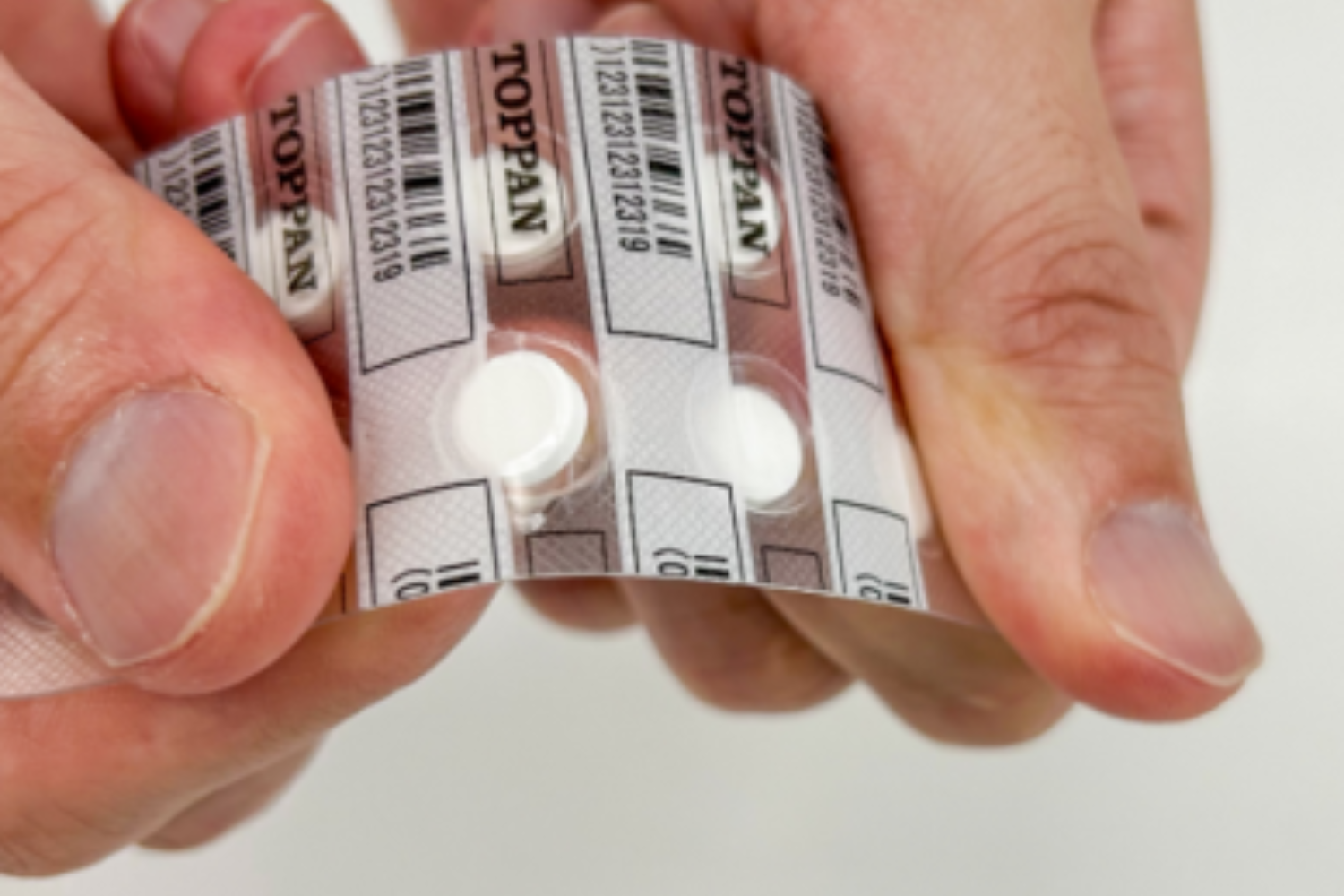
One of the most significant recent developments in the quest for optimized material science comes from TOPPAN Holdings Inc. On November 28, the company finalized a strategic acquisition of Asahi Kasei Corporation’s patented technology regarding brittle lidding material for push-through blister packs. This acquisition is a critical move for TOPPAN as it seeks to refine the user experience and the functional efficiency of pharmaceutical packaging. In a push-through blister, the lidding material must strike a delicate balance: it must be strong enough to protect the tablet or capsule from external contaminants and physical damage, yet brittle enough to allow a patient—often an elderly individual with limited hand strength—to easily rupture the foil or film to access the medication. By integrating Asahi Kasei’s brittle material technology, TOPPAN is positioning itself to offer high-performance, user-friendly solutions that do not compromise the barrier properties essential for shelf-life stability. This move highlights a broader trend in the industry where mechanical properties are being engineered at the molecular level to facilitate better patient outcomes.
While TOPPAN focuses on refining the plastic and foil interface, other innovators are looking to remove plastic from the equation entirely. IWK Packaging Systems, Inc., a leader in high-end cartoning and tube-filling machinery, has recently introduced a groundbreaking solution to the North American market: the CABLIblue 870 Blister System. This machine represents a paradigm shift in secondary and primary packaging by enabling the production of blister packs made 100% from cardboard. Unlike traditional blisters that rely on a plastic "bubble" to hold the pill, the IWK system utilizes a base card and a molded fiber or cardboard blister structure. This innovation addresses the growing consumer and regulatory demand for plastic-free packaging. By using renewable, wood-based fibers, pharmaceutical companies can significantly reduce their carbon footprint. The CABLIblue system is modular and designed for high-speed horizontal cartoning, ensuring that the transition to sustainable materials does not result in a bottleneck on the production line. This technology is particularly appealing for over-the-counter (OTC) medications and nutraceuticals, where branding and eco-friendly credentials are major differentiators on retail shelves.
However, sustainability cannot come at the expense of drug efficacy. The rise of biologics and highly potent active pharmaceutical ingredients (APIs) has led to a surge in drugs that are extremely sensitive to moisture and atmospheric conditions. For these molecules, standard packaging is often insufficient. ACG, a global leader in integrated solid-dosage solutions, has addressed this "stability gap" with the launch of DryPod™. This technology is a next-generation, desiccant-based, cold-form laminate. Traditionally, if a drug was moisture-sensitive, manufacturers might have to include a separate desiccant sachet inside a bottle or use bulky specialized containers. DryPod™ integrates the desiccant directly into the blister film structure.

This cold-form laminate acts as a proactive barrier, absorbing any residual moisture within the blister cavity or any vapor that might permeate through the seal over time. By embedding the protective desiccant into the packaging material itself, ACG allows pharmaceutical companies to maintain the compact, convenient format of a blister pack even for the most volatile drug formulations. This is a major advancement for "cold-form" packaging, which uses aluminum-based laminates to provide an absolute barrier against light, oxygen, and moisture. By adding an active moisture-management component, ACG is effectively extending the shelf life and ensuring the potency of life-saving medications in diverse climatic zones, from humid tropical regions to arid environments.
The innovation in blister packaging also extends to the manufacturing process itself. The shift toward personalized medicine and small-batch production is forcing manufacturers to move away from rigid, high-volume lines toward more flexible, modular systems. Digital printing on blister lidding is becoming more common, allowing for late-stage customization and the inclusion of unique identifiers like QR codes or serial numbers. These features are vital for anti-counterfeiting efforts and for improving patient adherence. A "smart" blister pack can now be linked to a smartphone app, reminding the patient to take their dose and providing the manufacturer with data on when the pack was opened. While the core of the innovation remains in the materials—like those from TOPPAN, IWK, and ACG—the integration of digital elements is the next frontier.
Furthermore, the industry is seeing a move toward aluminum-free laminates that still offer high-barrier protection. While aluminum is an excellent barrier, its production is energy-intensive, and it can interfere with certain medical imaging or detection systems. Companies are exploring high-barrier polymers and transparent oxide coatings as alternatives. These "clear" high-barrier blisters allow patients to see the medication, which can reduce errors in dosage, while still providing the protection previously only available through opaque aluminum foils.

The economic implications of these innovations are profound. As the CAGR of 7.2% suggests, the market is expanding rapidly, but the winners will be those who can balance cost-efficiency with high performance. The initial investment in machines like the IWK CABLIblue or specialized laminates like ACG’s DryPod™ may be higher than traditional setups, but the long-term value lies in reduced waste, lower environmental taxes, and, most importantly, the prevention of drug degradation. In the pharmaceutical world, a single compromised batch can cost a company millions of dollars; advanced blister packaging is essentially a high-tech insurance policy.
Looking toward 2030, we can expect the "blister" to become much more than a simple container. It is evolving into a sophisticated delivery system that protects, informs, and respects the environment. The acquisition of specialized patents, the engineering of fiber-based alternatives, and the development of active desiccant laminates are all pieces of a larger puzzle. As the global population ages and the demand for home-based healthcare grows, the blister pack will remain the most reliable format for ensuring that patients receive their medication in the exact condition the manufacturer intended. The innovations currently being spearheaded by TOPPAN, IWK, and ACG are not just incremental improvements; they are the foundation of a safer, more sustainable pharmaceutical future. By 2030, the $46.7 billion market will likely be dominated by these "smart" and "green" technologies, making the traditional PVC blister a relic of the past.