

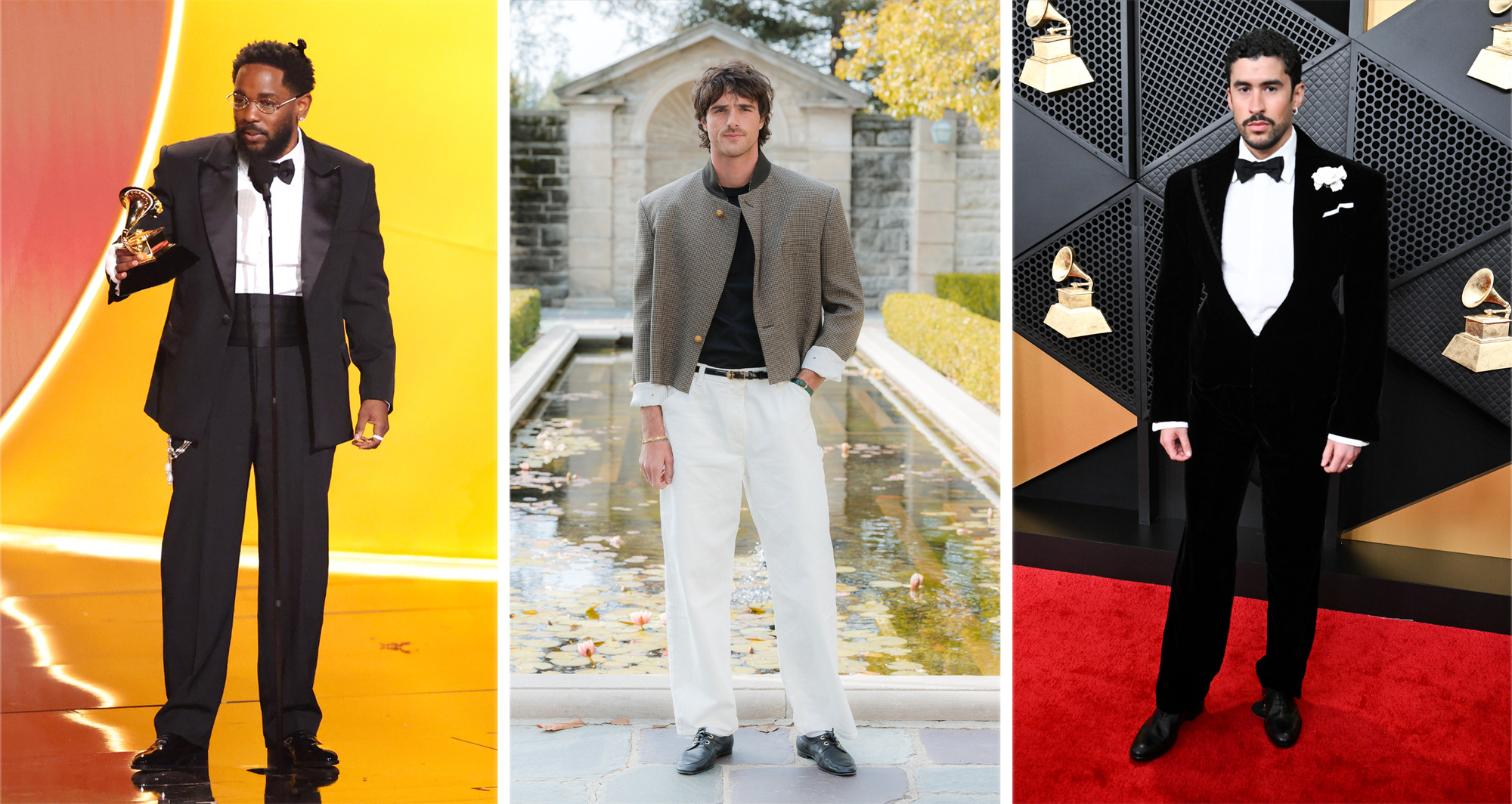
In the highly competitive arena of high fashion, where celebrity endorsements often dictate cultural relevance and commercial success, a sophisticated new strategy is emerging from two of France’s most storied couture houses. Chanel and Schiaparelli, neither of which produces a dedicated menswear line, have aggressively begun dressing the world’s most prominent male celebrities—including Bad Bunny, Jacob Elordi, and Kendrick Lamar—for high-profile red carpet events. This seemingly paradoxical move is, in fact, a calculated power play designed not only to capture the fragmented attention of the modern media landscape but, crucially, to reinforce desirability and drive sales among their core demographic: the female luxury consumer.
This shift represents a fundamental pivot in how high fashion generates Media Impact Value (MIV), a proprietary metric used by analysts like Launchmetrics to gauge the monetary value of media placements and brand visibility. Historically, the women’s red carpet has been oversaturated, resulting in diminishing returns on traditional gown placements. The menswear space, however, remains comparatively fertile ground.
According to Alison Bringé, chief marketing officer at Launchmetrics, the phenomenon taps into an underserved market dynamic. "Male celebrities command huge cultural attention, yet far less of that conversation is focused on what they’re wearing," she notes. Dressing these top-tier men offers brands an unprecedented opportunity "to experiment, push boundaries and create looks that don’t just dress talent, but turn that existing attention into conversation." By embracing riskier, more expressive styling on men, brands can achieve standout status in a sector that is still far less crowded than womenswear.
The quantitative evidence supporting this strategy is compelling. While Bottega Veneta-clad Jacob Elordi secured a top-five ranking at a recent Golden Globes for MIV driven by red-carpet looks, the broader conversation surrounding male stars proved even more potent. Launchmetrics data surveying the Globes and Critics’ Choice awards revealed that actor Timothée Chalamet, regardless of the brand he wore, generated general conversations that drove twice the MIV achieved by major female stars like Ariana Grande. The data confirms an undeniable truth: the guys have become the ultimate cultural lightning rods.
The Commercial Calculus of Cross-Gender Dressing
For houses like Schiaparelli, renowned for its surrealist, art-focused haute couture under Daniel Roseberry, dressing a male celebrity offers an explosive canvas. When a star wears a heavily embroidered jacket or a piece featuring bold, signature hardware—often adapted directly from the runway women’s collections—it generates shock, headlines, and immediate recognition. This noise, while focused on a male figure, translates directly into brand awareness for the women’s ready-to-wear and accessory lines.

Youssef Marquis, whose Paris communications consultancy specializes in high-level celebrity relations, confirms that awareness is the primary goal. "It’s guaranteed discourse online, and of course, additional visibility for pieces that are often derived or identical to women’s pieces, so with a commercial purpose," he explained.
This adaptation strategy is key. The luxury garments seen on male stars are frequently oversized versions, subtle modifications, or even direct pulls from the women’s collections, particularly those pieces that lend themselves to an androgynous or tailored aesthetic. If a dramatic, tailored Chanel jacket or a sculpted Schiaparelli blazer garners acclaim on a male figure, it immediately legitimizes the "oversize fit" trend for female shoppers, or inspires men to explore larger sizes in what are technically women’s lines. As Marquis argues: "If it drives you to the store, to buy it for you as a woman who likes the oversize fit on a man or for a man who might get the idea to wear a bigger size women’s jacket, the mission is accomplished."
Embracing Fluidity and Modernity
Beyond simple metrics, this strategy aligns luxury brands with the powerful cultural currents of modernity and gender fluidity, which deeply resonate with younger, high-spending audiences.
Today’s young Hollywood elite and music stars are actively "pushing the envelope and playing with dressing like female celebrities traditionally would," Marquis points out. This sartorial freedom—evidenced by the sheer chiffon, structured jackets, and pearl accents embraced by figures like Bad Bunny and Jacob Elordi—sends a message of inclusivity and progressive values. In a world increasingly demanding accessibility and transparency, showing fluidity in who wears the clothes directly enhances the projected ethical and cultural values of the brand.
Chanel, specifically, has positioned this approach not as a new trend, but as a return to its foundational DNA. The house noted in response to queries that "inspiration drawn from men’s wardrobes has always been part of Chanel’s DNA," referencing founder Gabrielle "Coco" Chanel’s revolutionary adoption of traditionally masculine silhouettes and fabrics, like tweed and jersey, for women’s wear.
Chanel: From Karl’s Musings to A$AP’s Ambassadorship
Chanel’s history is dotted with male figures who blurred these lines. Longtime designer Karl Lagerfeld frequently dressed his male inner circle in Chanel pieces. This tradition was further solidified in 2019 when Pharrell Williams collaborated with the brand on a capsule collection explicitly designed to be unisex. At the time, Williams noted: "I’ve been wearing Chanel’s women’s clothes for years now, but being able to make this capsule unisex gives more people access."

The modern culmination of this philosophy is the appointment of A$AP Rocky as a major house ambassador. Rocky, known for his boundary-pushing personal style, has become a visible bridge between the house’s historic feminine elegance and contemporary streetwear influence. His appearances, such as sitting front row in head-to-toe Chanel couture flanked by icons like Nicole Kidman and Dua Lipa, are powerful visual statements that normalize the cross-pollination of gendered fashion labels.
Bosse Myhr, director of buying for menswear, womenswear, and childrenswear at Selfridges, acknowledges this growing appetite. Rocky’s presence is seen as "a great moment that captured this evolution." While Myhr cautions that customer replication of celebrity looks remains "subtle and indirect," the influence is palpable: "we’re seeing customers gravitate toward more elevated, fashion-forward pieces."
Dissolving the Retail Divide
The celebrity-driven red carpet strategy reflects, and simultaneously accelerates, shifts already occurring at the retail level. Myhr confirms that the menswear floor at Selfridges is regularly shopped by women. While it is difficult to quantify whether these purchases are for themselves or for partners, the clear "cross-gender appeal" is undeniable, particularly for brands rooted in menswear that have embraced broader stylistic language, such as Stone Island, Thom Browne, and Loewe.
For luxury couture houses, the strategic deployment of male superstars is more than just a momentary publicity stunt; it is an economic strategy rooted in cultural disruption. By leveraging the high visibility and boundary-breaking potential of male celebrity fashion, Chanel and Schiaparelli are generating unprecedented media value, validating gender fluidity as a core brand value, and ultimately ensuring that their women’s collections—the commercial engine of the house—remain at the epicenter of the global fashion conversation. In the new luxury ecosystem, the most effective way to market to women may just be through the bold style choices of the world’s most talked-about men.