

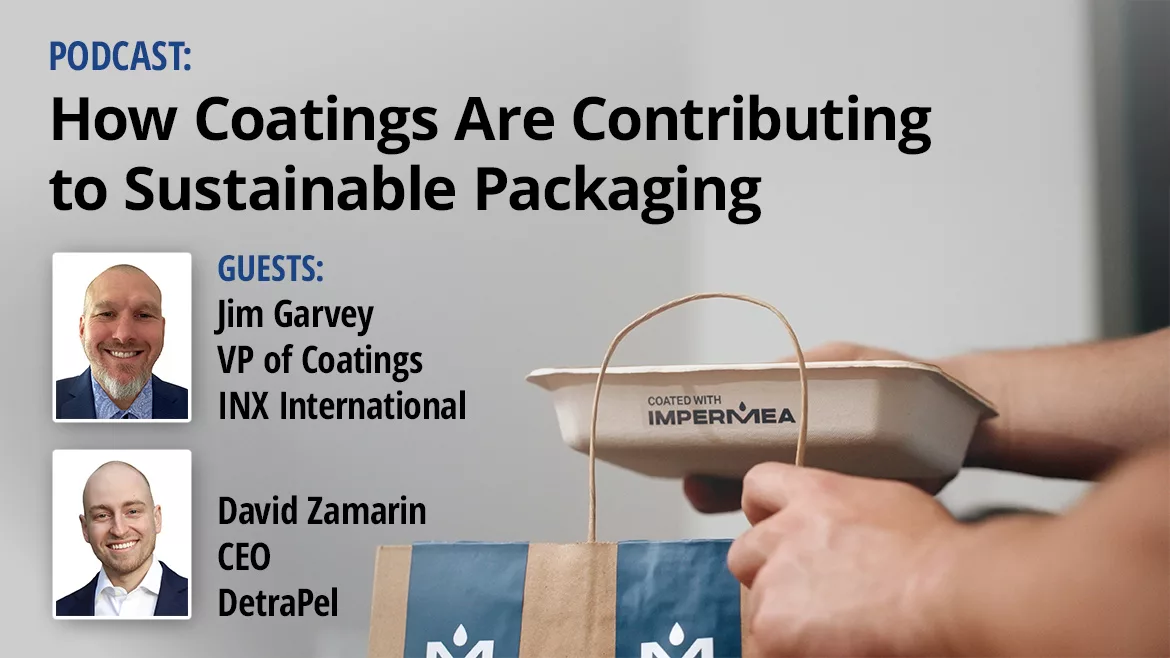
The global packaging industry is currently navigating a period of unprecedented transformation, driven by a volatile mix of stringent environmental regulations, shifting consumer preferences, and a desperate need for operational efficiency. At the heart of this evolution lies a component often invisible to the naked eye: functional coatings. While the substrate—whether paper, plastic, or metal—usually gets the credit for a package’s form, it is the coating that provides the essential performance characteristics required to protect products and ensure safety. Historically, these coatings have been a double-edged sword, providing necessary barriers while simultaneously complicating the recycling and composting streams. However, as highlighted in a recent industry dialogue featuring Jim Garvey, Vice President of Coatings at INX International, and David Zamarin, CEO of DetraPel, the narrative is shifting toward a future where coatings are the primary enablers of sustainability rather than its obstacle.
The Strategic Alignment of Industry Leaders
To understand the current trajectory of packaging technology, one must look at the strategic partnerships forming within the sector. In 2023, INX International, a global leader in ink and coating technologies, made a significant investment in DetraPel, the parent company of Impermea Materials. This move was more than just a financial transaction; it was a marriage of scale and agility. INX brings decades of manufacturing expertise and a massive global footprint, while Impermea Materials provides cutting-edge, PFAS-free, and water-based barrier technologies.
This collaboration addresses a critical gap in the market. As brands scramble to move away from traditional plastics and "forever chemicals," they require drop-in solutions that do not necessitate a complete overhaul of their existing production lines. By integrating Impermea’s innovative formulations into INX’s vast distribution and technical support network, the industry is seeing an acceleration in the adoption of coatings that prioritize the circular economy.
Breaking the PFAS and Polyethylene Dependence
For decades, the packaging industry relied on two main stalwarts for barrier protection: Per- and polyfluoroalkyl substances (PFAS) and polyethylene (PE) laminations. PFAS was the go-to solution for grease and oil resistance, particularly in the foodservice industry. However, the environmental and health risks associated with these "forever chemicals" have led to a wave of bans across the United States and Europe. Similarly, PE-coated paperboard—common in coffee cups and frozen food boxes—presents a significant recycling challenge. Because the plastic film is tightly bonded to the paper fiber, most standard recycling facilities cannot efficiently separate the two, leading to millions of tons of waste ending up in landfills.
The latest generation of barrier coatings, as discussed by Garvey and Zamarin, offers a way out of this dilemma. These new aqueous-based coatings provide the same level of resistance to water, grease, and oxygen without the use of harmful additives. By replacing a thick plastic film with a microscopic layer of functional coating, manufacturers can create "mono-material" packaging. This simplifies the recycling process, as the coating is designed to break down during the repulping process, allowing the high-quality paper fibers to be recovered and reused.

The Innovation of Heat-Sealable Barriers
One of the most significant technical hurdles in sustainable packaging has been the separation of functions. In traditional flexible packaging, one layer might provide a moisture barrier, while a completely different adhesive layer is required to seal the package shut. This multi-layered approach is the primary reason why snack bags and various pouches are notoriously difficult to recycle.
Jim Garvey points out that the development of heat-sealable coatings is a game-changer for the industry. Historically, achieving a high-performance barrier against grease or air meant sacrificing the ability to heat-seal the material. If a coating was robust enough to protect the food, it was usually too chemically inert to melt and bond under heat.
The newest formulations from Impermea Materials have solved this paradox. By engineering coatings that are both protective and heat-sealable, converters can eliminate the need for secondary adhesives and glues. This "all-in-one" functionality not only reduces the complexity of the package but also slashes the weight of the final product. When a package requires fewer components to function, it becomes inherently more sustainable, as it consumes fewer raw materials and generates less waste at the end of its life cycle.
Lightweighting and Energy Efficiency: The Holistic View
While much of the public discourse around sustainable packaging focuses on what happens after a consumer throws a box in the bin, David Zamarin emphasizes that the true environmental impact begins much earlier in the supply chain. Sustainability must be viewed holistically, encompassing the carbon footprint of manufacturing and transportation.
The use of advanced coatings facilitates "lightweighting"—the process of reducing the amount of material used in packaging without sacrificing structural integrity. Because these modern coatings are so effective, brands can often switch to a lighter-weight paperboard or a thinner substrate. When millions of units are shipped globally, even a fractional reduction in the weight of a single package leads to massive savings in fuel consumption and greenhouse gas emissions.
Furthermore, the "cure settings" of these coatings play a vital role in industrial energy consumption. Traditional coatings often require high-intensity heat or long drying times to set properly. The latest water-based technologies are designed to cure at lower temperatures and higher speeds. For a large-scale converter, this translates to a significant reduction in the electricity or natural gas required to run their ovens. By lowering the energy threshold for production, these coatings help manufacturers meet their corporate ESG (Environmental, Social, and Governance) targets while simultaneously reducing operational costs.
Navigating the Regulatory Landscape
The push toward these advanced coatings is not merely a choice for brands; it is increasingly a legal necessity. The European Union’s Packaging and Packaging Waste Regulation (PPWR) and various state-level Extended Producer Responsibility (EPR) laws in the U.S. are putting the onus on manufacturers to ensure their packaging is "circular by design."
In many jurisdictions, packaging that is difficult to recycle is now subject to higher taxes and fees. By adopting mono-material designs enabled by functional coatings, companies can avoid these financial penalties. Moreover, the move toward compostable coatings provides a solution for "high-contamination" packaging, such as pizza boxes or take-out containers, where food residue makes traditional recycling impossible. If the coating is certified compostable, the entire package can be diverted to industrial composting facilities, turning waste into a nutrient-rich soil amendment.
The Future: Beyond Recyclability
As the industry moves forward, the focus is expanding from simple recyclability to true functional performance in a circular system. The partnership between INX and Impermea Materials represents a shift toward "intelligent" materials that respond to the specific needs of the product they contain. Whether it is a moisture barrier for dry pet food or a grease barrier for a fast-food wrapper, the goal is to provide a tailored solution that uses the absolute minimum amount of chemistry required.
The dialogue between Garvey and Zamarin underscores a critical truth: the "perfect" package does not exist in a vacuum. It is the result of a delicate balance between material science, engineering, and environmental stewardship. As coatings continue to evolve, they will play an even larger role in helping the world transition away from a "take-make-waste" model toward a truly circular economy.
In conclusion, the evolution of functional coatings is a testament to the power of specialized chemistry in solving global problems. By eliminating PFAS, replacing PE linings, enabling heat-sealability, and reducing energy consumption, companies like INX and Impermea Materials are ensuring that the future of packaging is not just functional, but fundamentally sustainable. The invisible layer on the surface of our everyday goods is, in fact, the very thing that will allow the packaging industry to thrive in a more environmentally conscious world.