

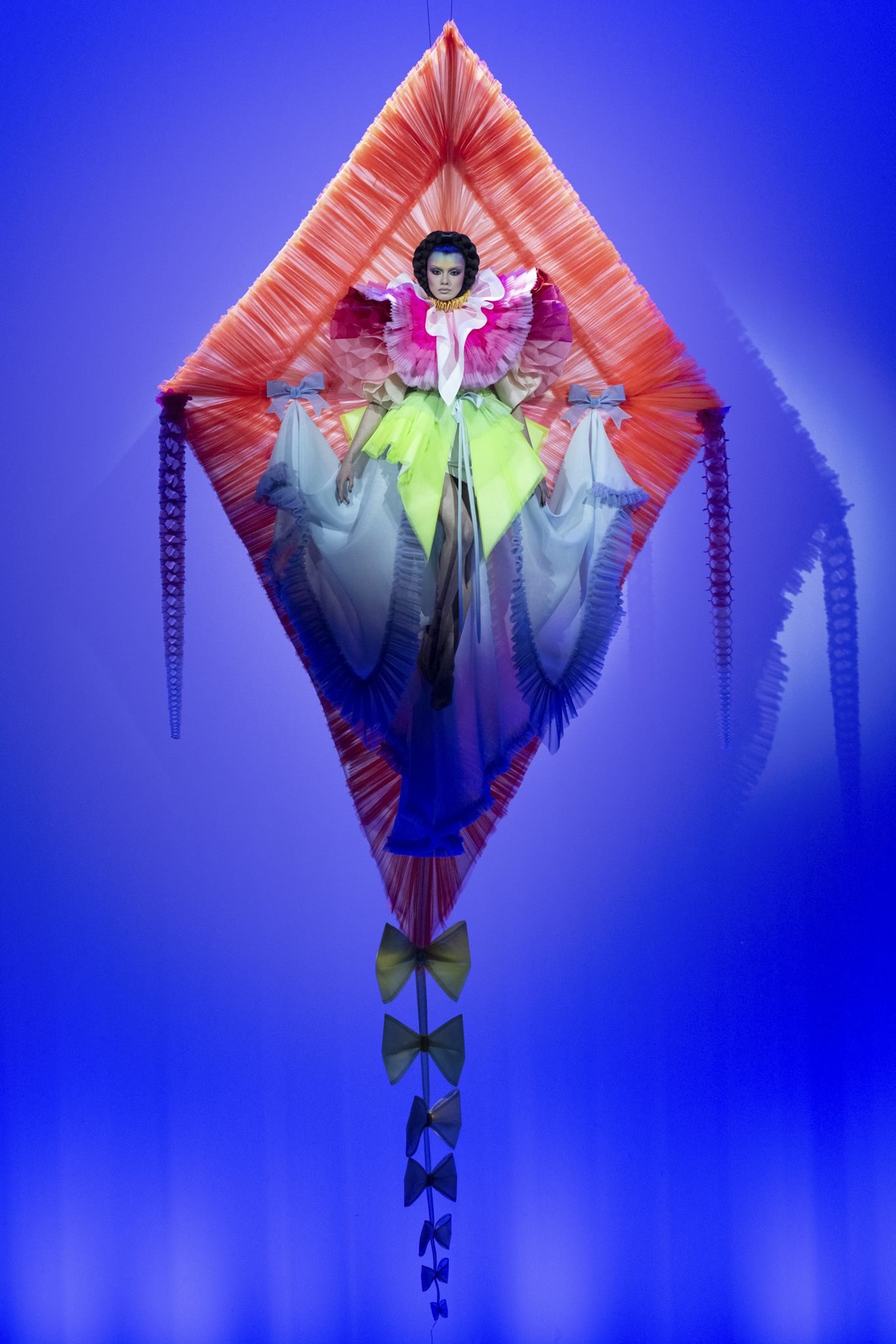
The biannual pilgrimage to the haute couture shows in Paris often serves as a necessary confrontation with the sublime, where clothing transcends utility to become pure, conceptual art. Yet, few design houses manage to infuse this high-minded artistry with the profound, childlike sense of wonder quite like Viktor Horsting and Rolf Snoeren. For their Spring 2026 couture offering, the Dutch duo delivered a collection that was less a parade of garments and more a metaphysical meditation on transformation, duality, and the enduring human dream of flight, perfectly encapsulated in the deceptively simple form of a kite.
Couture, at its core, is the art of magical transmutation. Horsting and Snoeren understand this alchemy implicitly. Their recent work, including the delightful dressing of the classic fairy-tale figure Cinderella in miniature doll format, has often explored the moment a humble object or character is suddenly imbued with extraordinary power and glamour. This seasonal performance extended that narrative, transforming the runway into a laboratory for conceptual liberation, seeking to answer the fundamental question: How can fashion lift the spirit when the world feels heavily grounded?
The atmosphere surrounding the Spring 2026 unveiling was steeped in anticipation, characteristic of any Viktor & Rolf presentation. Spectators, accustomed to their audacious use of volume, reversed tailoring, and conceptual theater—from chandelier dresses to wearable art installations—arrived expecting the unexpected. What they received was a performance steeped in deeply felt optimism, acknowledging the fraught geopolitical landscape without succumbing to cynicism. As Horsting confessed before the show, the timing felt imperative: “Given the news cycle and general state of the world, it felt right to try and do something that’s uplifting.”
The Geometry of Joy: Conceptualizing the Kite
The central motif, the kite, was an object of profound conceptual weight, carrying associations of lightheartedness, cheer, and, most importantly, freedom. It represented a sophisticated engineering challenge the designers had toyed with for years. “It’s an idea that we’ve been playing really for years, but never really found a way to execute it, neither technically nor conceptually,” said Horsting. The breakthrough came not just in the fabrication, but in finding the emotional resonance that allowed the structural concept to truly take flight.
A kite, after all, requires tension and wind; it is inherently fragile yet possesses the strength to defy gravity. This duality became the backbone of the collection. It was a metaphor for controlled chaos, symbolizing the delicate balance required to maintain hope and creativity in turbulent times. The designers, famously preferring the meticulous craft of their atelier to the spotlight—as Snoeren admitted, “We don’t like to be on stage, but there’s nothing like building something”—used the collection itself as their eloquent, soaring statement.
The performance began with the foundational figure, a model stationed upon a white plinth. She wore a severe, belted white minidress featuring a high, architectural collar, her hair sleekly contained, reminiscent of a vintage leather aviator helmet. This figure was the anchor, the terrestrial base from which the entire collection’s narrative of ascent and transformation would launch. She was the pilot, grounded but ready for the journey.
The Duality of Dress: Grounded Sculpture vs. Airborne Freedom
What followed was a meticulous study in duality, a conceptual deconstruction of restrictive form leading to liberating wearability. The initial impression of the collection was overwhelmingly monochromatic and highly sculptural. The garments were heavy, abstract, and at times, aggressively off-kilter, cut from luxurious black materials designed to absorb light and maximize dramatic volume: heavy duchesse satin, rich silk cloqué fabric, and dense velvet. These black exteriors were deliberately challenging, embodying the weight and strictures of the physical world.
Yet, each of these imposing silhouettes carried within it a secret—a colorful element, a hint of the lightness concealed beneath the surface. The genius of the Spring 2026 collection lay in the transformation itself, which was not merely visual but structural and performative. The models presented the black, sculptural outer layers, which were then physically removed, turning the dramatic, conceptual creation into a "grounded, sculptural," and ultimately, "a wearable proposition," as Horsting described the inner layers.
This mechanism of deconstruction elevated the collection from mere fashion presentation to a deeply symbolic act. The black, severe architecture—which sometimes appeared like wings folded too tightly or sails momentarily becalmed—was shed to reveal inner garments that were surprisingly approachable, often defined by fluid movement, delicate detailing, and bursts of joyful color.
Engineered Freedom: Unpacking the Layers
The technical execution required extraordinary engineering typical of couture’s highest echelon. Consider the materials: duchesse satin provided the necessary stiffness and sheen for the voluminous, often exaggerated shoulders and hip constructions of the outer shells. The cloqué, a heavily woven, blistered fabric, added texture and an unsettling, organic quality to the restrictive shapes. These heavy materials contrasted sharply with the inner reveals.
One particularly striking example involved a blousy gown with generous poet sleeves. In its initial, restricted state, it was partially held captive by a large, brilliantly yellow, honeycomb-patterned garter that cinched and lifted its hem dramatically on one side, disrupting the natural flow of the fabric. Once the external structure was removed, this yellow element remained—a flash of pure, unadulterated color—but the garment was allowed to fall into a relaxed, feminine silhouette, the garter transforming from a mechanism of constraint into a cheerful, unexpected detail.
Another look presented a ruffle-necked sack dress initially obscured beneath a voluminous, floor-length sheath of pastel chiffon, featuring a severely pleated hemline that gave the ensemble a rigid, almost historical stiffness. The removal of the chiffon shell released the simple, elegant dress beneath, transforming the figure from a veiled, static presence into one of dynamic simplicity.
Perhaps the most potent illustration of the collection’s theme was the transformation of a disquieting hooded figure—an image often associated with medieval severity or anonymity—into a gown of classical, reassuring beauty. The inner dress featured a delicate row of pearl or satin-covered buttons running down the spine, a detail traditionally associated with refined elegance and bridal wear. This specific transformation spoke volumes about the collection’s overall message: that even the most ominous or restrictive forms can conceal an inherent, reassuring normalcy and beauty.
The Art of Small Change
Viktor & Rolf’s Spring 2026 collection was a manifesto for incremental change. It argued that transformation need not be a single, thunderous event, but a series of deliberate, small acts of liberation. The process of shedding the restrictive black outer shell—a metaphor for societal pressure, global anxiety, or self-imposed limitation—revealed a person ready to move freely, adorned in vibrant color and unburdened volume.
This concept of layered transformation brought the collection full circle back to the designers’ earlier work with the Cinderella motif. The fairy tale is predicated on a moment of sudden, dramatic change from ashes to ballgown. Viktor & Rolf, however, suggested a more complex, perhaps more enduring modern narrative: the freedom isn’t magically bestowed; it is revealed by removing the layers of defense and restriction we accumulate. The final message was one of powerful optimism. Layer enough of these small, courageous acts of change, and you might indeed find yourself transformed into a colorful creature, architecturally free, ready to soar.
By blending conceptual sculpture with technical mastery and infusing the entire enterprise with a much-needed sense of lightness, Viktor Horsting and Rolf Snoeren didn’t just design couture; they engineered a path to emotional escape, proving once again that true freedom is the most desirable silhouette of all. The collection served as a powerful reminder that even amidst the weight of the world, the dream of flight—and the creation of beauty—remains not only possible but necessary.