
The Paris Stock Exchange witnessed a dramatic recalibration of the luxury landscape this week as shares in Kering, the French conglomerate behind some of the world’s most storied fashion houses, plummeted by as much as 10.2 percent. This sharp decline followed a first-quarter earnings report that offered a sobering glimpse into the challenges facing the group, particularly its flagship brand, Gucci. The market reaction underscores a growing anxiety among investors regarding the speed and efficacy of the turnaround efforts at the heart of the Kering empire. As the luxury sector grapples with a shift in consumer behavior and a cooling global economy, Kering finds itself at a pivotal juncture, attempting to navigate a transition that management warns will be more gradual than many had hoped.
At the center of the storm is Gucci, the brand that has historically served as the primary engine of Kering’s growth and profitability. The first-quarter results revealed a significant contraction for the Italian label, with revenues falling 14.3 percent to 1.35 billion euros. On an organic basis, which strips out the effects of currency fluctuations and acquisitions, the decline stood at 8 percent. This downturn is particularly concerning given Gucci’s outsized importance to the group’s bottom line, typically accounting for half of its total revenue and an even larger share of its operating profit. The weakness at Gucci dragged down the entire group’s performance, with Kering reporting a total revenue decrease of 6.2 percent, amounting to 3.57 billion euros.
The struggles at Gucci are not occurring in a vacuum. The luxury industry at large is facing a "perfect storm" of macroeconomic and geopolitical headwinds. The ongoing conflict in the Middle East has dampened consumer sentiment in a key growth region, while persistent inflation and volatile interest rates in Western markets have squeezed the "aspirational" consumer—the middle-class shopper who once fueled the explosive growth of entry-level luxury goods. Furthermore, the Chinese market, which for a decade acted as a reliable growth engine for European fashion houses, is undergoing a structural shift. A cooling real estate market and rising youth unemployment in China have led to a more cautious spending environment, particularly for brands that rely heavily on conspicuous consumption and logo-centric designs.
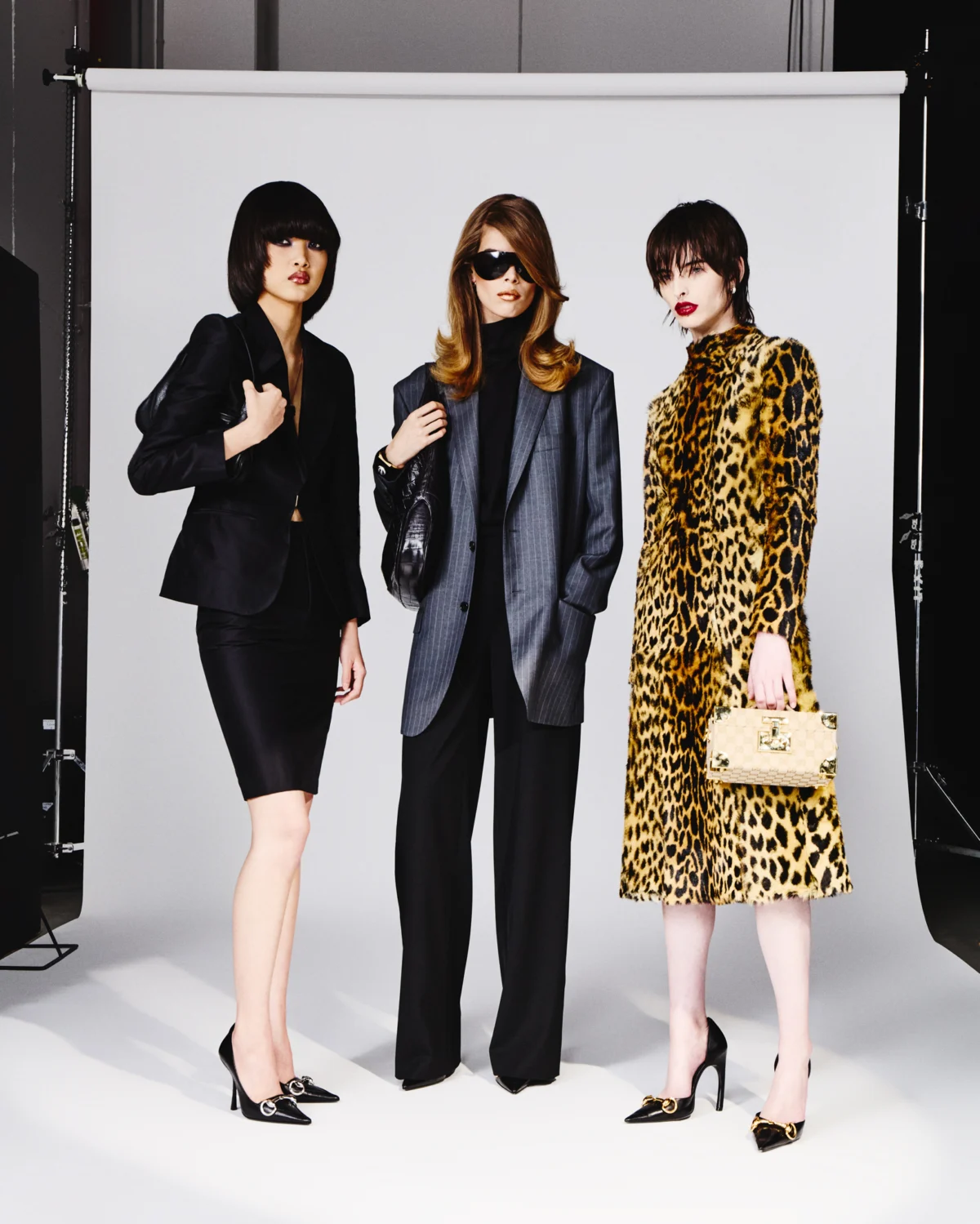
Kering’s current predicament is also a reflection of an internal transition period. Under the creative direction of Sabato De Sarno, who replaced Alessandro Michele, Gucci is attempting to move away from the maximalist, eccentric aesthetic that defined the brand for nearly a decade. De Sarno’s "Gucci Ancora" vision leans toward a more minimalist, sophisticated, and timeless style—a move designed to align the brand with the "quiet luxury" trend currently dominating the high-end market. However, such a radical pivot takes time to resonate with consumers and manifest in sales figures. The first-quarter results suggest that the transition is still in its early, painful stages, with the brand’s new collections yet to fully offset the decline in older, logo-heavy inventory.
Despite the prevailing gloom, there were a few pockets of resilience within the Kering portfolio. The group’s jewelry and eyewear divisions emerged as rare standouts, maintaining flat or slightly positive momentum in an otherwise difficult environment. Brands like Boucheron and Pomellato continue to benefit from the relative stability of the hard luxury sector, where high-net-worth individuals remain willing to invest in precious metals and gemstones as a store of value. Similarly, Kering Eyewear continues to be a strategic success story, capturing a larger share of the lucrative optical and sunglass market through its integrated business model.
However, the core fashion houses—Saint Laurent, Balenciaga, and Bottega Veneta—have not been immune to the sector-wide slowdown. While these brands have arguably maintained stronger brand heat than Gucci in recent seasons, their organic growth remained flat during the first quarter. This stagnation highlights the difficulty of achieving growth when the world’s wealthiest consumers are becoming increasingly selective and the broader market is characterized by a "K-shaped" recovery.
The divergence in performance across the luxury sector was further highlighted by the movements of Kering’s peers. Hermès International, often considered the gold standard of luxury resilience due to its ultra-exclusive positioning and waiting-list-driven model, saw its shares drop nearly 9 percent after reporting sales that, while still strong, came in below the exceptionally high expectations of analysts. Meanwhile, LVMH, the world’s largest luxury group, managed to eke out a 1 percent organic growth rate in the first quarter, allowing its shares to remain relatively stable. The contrast between Kering’s double-digit decline and LVMH’s marginal growth illustrates a widening gap between those groups with a diversified portfolio of "mega-brands" and those heavily reliant on a single label undergoing a reinvention.
All eyes in the financial community are now turning toward Florence, where Kering is scheduled to hold a highly anticipated Capital Markets Day. This event is expected to provide much-needed clarity on the group’s long-term strategy, which some analysts have dubbed "ReconKering." The strategic roadmap will be unveiled by the group’s leadership, including CEO François-Henri Pinault and the newly appointed leadership at Gucci, including CEO Jean-François Palus. Investors are looking for concrete evidence that the group can restore Gucci’s luster while diversifying its revenue streams and maintaining cost discipline across its other maisons.
Citi analyst Thomas Chauvet characterized the first-quarter numbers as "secondary" to the upcoming strategic presentation. The market is less concerned with the immediate revenue miss and more focused on the 2025 and 2026 outlook. The hope is that by the second half of 2025, the new creative direction at Gucci will have gained full traction, and the broader macroeconomic environment will have stabilized. Chauvet noted that Kering’s stock had previously been supported by expectations of a successful turnaround under the group’s refreshed leadership and a continued focus on financial leverage and operational efficiency.
The path forward for Kering involves a delicate balancing act. On one hand, the group must invest heavily in brand-building and marketing to ensure that Sabato De Sarno’s vision for Gucci captures the imagination of the global elite. On the other hand, it must manage its margins in an era of rising costs and slowing demand. The recent acquisition of a significant stake in Valentino and the full integration of the high-end fragrance house Creed suggest that Kering is looking to bolster its "ultra-luxury" credentials, moving away from the more volatile aspirational segments.
Furthermore, the leadership changes at the brand level—most notably the appointment of Jean-François Palus as Gucci CEO—signal a shift toward a more operationally focused management style. Palus, a long-time lieutenant of François-Henri Pinault, is tasked with professionalizing Gucci’s supply chain, retail operations, and digital presence to match the brand’s creative ambitions. This "back-to-basics" approach is seen as essential for stabilizing the brand before it can return to meaningful growth.
As the morning trading session in Paris concluded, the 10.2 percent drop in Kering’s share price served as a stark reminder of the high stakes involved in the luxury turnaround game. For years, the sector enjoyed a period of seemingly limitless expansion, driven by the rise of the global middle class and the digitalization of luxury retail. Today, the landscape is far more fragmented and unforgiving. Success is no longer guaranteed by heritage alone; it requires a precise alignment of creative vision, operational excellence, and an acute understanding of a rapidly evolving consumer psyche.
While the "ReconKering" journey is likely to be long and fraught with volatility, the group’s management remains publicly committed to its long-term vision. The upcoming meetings in Florence will be the ultimate test of investor confidence. If the leadership can articulate a convincing path back to double-digit margins and sustainable growth for Gucci, the current share price dip may eventually be viewed as a painful but necessary correction. If, however, the "gradual" turnaround shows signs of stalling, Kering may face further pressure to undergo even more radical structural changes. For now, the luxury world watches and waits, as one of its most prominent titans attempts to navigate through the fog of a global economic transition.