

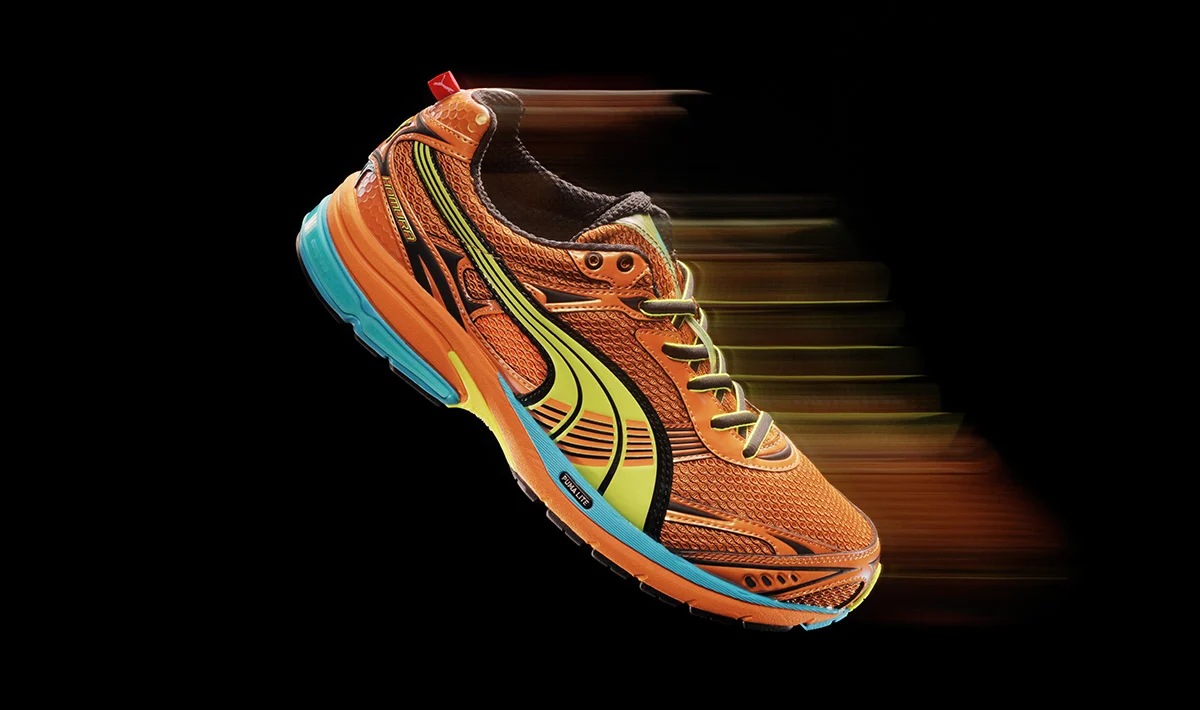
The cyclical nature of the global footwear industry has once again reached into the vault of the early millennium, as Puma officially announces the return of a forgotten gem from its performance archives. The German sportswear giant is set to reissue the Homura, a road running silhouette that originally defined the brand’s "experimental chapter" during the height of the Y2K era. This move is more than just a nostalgic nod to the past; it represents a calculated maneuver within Puma’s broader turnaround strategy, aimed at capturing the intersection of high-performance heritage and the surging consumer appetite for technical, retro-aesthetic sneakers.

The revived Puma Homura is a masterclass in early 2000s design language, characterized by aggressive geometry and a "more is more" approach to color blocking. Unveiled this Tuesday, the updated iteration maintains the DNA of the original while sharpening its visual impact for a modern audience. The sneaker is anchored by a vibrant orange upper, a choice that immediately demands attention. This fiery base is contrasted by sharp, black contours that snake across the silhouette, providing structural depth and a sense of kinetic energy even when the shoe is stationary. To round out the high-contrast palette, Puma’s designers have integrated hits of turquoise and yellow across the overlays and branding elements, creating a look that is both chaotic and meticulously curated—a hallmark of the "Japan Racers" project from which it was born.
To understand the significance of the Homura, one must look back at the "Puma Complete" franchise. In the early 2000s, this series served as the brand’s premier performance tier, focusing on providing athletes with vivid, high-visibility gear that didn’t compromise on technical specs. The Homura was developed specifically as a training model, engineered with targeted midsole cushioning designed to absorb the repetitive impact of road running. It was released alongside its sibling, the lightweight Fuga, under the "Japan Racers" initiative. This project was a collaboration that sought to blend the minimalist, speed-focused philosophy of Japanese racing flats with the bold, maximalist aesthetics favored by global street culture at the time.

A defining feature of the Homura is the Japanese kanji character stamped prominently on the tongue and the footbed. The character translates to "flame" or "blaze," a direct reference to the shoe’s name and its design inspiration. In Japanese culture, the flame represents not just heat, but the "ignition point" of energy and transformation. For Puma, this symbol serves as a metaphor for the era’s bold approach to performance footwear—a time when the brand was willing to take significant risks in silhouette and color to differentiate itself from competitors.
The timing of the Homura’s re-emergence is no coincidence. It arrives at a pivotal moment for the company, which is currently navigating a complex period of restructuring and brand repositioning. Puma’s Chief Executive Officer, Arthur Hoeld, who ascended to the top role in July 2025, has been vocal about the brand’s "solid start" to the 2026 fiscal year despite a volatile global market. During a conference call with analysts in April, Hoeld emphasized that the company has made significant strides in its operating model. The reissue of archival models like the Homura fits perfectly into this strategy: leveraging existing intellectual property to drive sales in the lifestyle sector while the brand continues to innovate in the pure performance category.

Hoeld’s tenure has been marked by a focus on building a "foundation for future growth," a necessity given the recent financial headwinds. In the first quarter of 2026, Puma reported a slight decline in currency-adjusted sales, dipping 1 percent to 1.86 billion euros. This dip was largely attributed to a decrease in wholesale demand, particularly within the EMEA (Europe, Middle East, and Africa) region. Additionally, the footwear division—Puma’s largest and most vital category—saw a 2.3 percent decline in Q1. Hoeld pointed toward "continued challenges" in lifestyle models as the primary driver for this slump. In this context, the Homura serves as a strategic bridge. It is a performance-inspired shoe that fits the current "tech-runner" trend, potentially revitalizing the lifestyle segment that has recently struggled.
However, it isn’t all uphill for the Big Cat brand. While lifestyle footwear has faced hurdles, Hoeld expressed immense encouragement regarding the brand’s specialized performance sectors. The "Nitro" running franchise, which utilizes Puma’s proprietary nitrogen-infused foam technology, has seen solid development and adoption among serious runners. Furthermore, Puma’s aggressive expansion into the world of Hyrox—a global fitness racing series—has yielded rapid growth in related apparel and footwear products. By reintroducing the Homura, Puma is attempting to halo the success of its modern running tech with the "cool factor" of its historical designs.

The sneaker market in 2026 is dominated by a craving for "authentic" nostalgia. Gen Z and Millennial consumers have moved away from the sleek, minimalist designs of the 2010s in favor of the chunky, multi-layered, and overtly technical look of the late 90s and early 2000s. Brands like Asics and New Balance have found immense success by mining their archives for similar silhouettes. The Homura allows Puma to enter this conversation with a legitimate contender that boasts a unique cultural pedigree. The "Japan Racers" backstory provides a layer of storytelling that resonates with sneaker enthusiasts who value the "if you know, you know" aspect of collecting.
Beyond the aesthetics, the Homura reissue highlights the evolution of footwear construction. While the original was a cutting-edge trainer for its time, the 2026 version benefits from modern manufacturing techniques that allow for cleaner linework and more durable synthetic overlays. The targeted cushioning that was the selling point in the early 2000s has been updated to meet contemporary comfort standards, ensuring that while the shoe looks like a vintage racer, it wears like a modern lifestyle sneaker.

The "experimental chapter" that Puma refers to when discussing the Homura was a period of intense creativity for the brand. It was a time when the lines between fashion and sport were beginning to blur in ways we now take for granted. By bringing back the "flame," Puma is not just selling a shoe; it is reclaiming its status as a brand that isn’t afraid to be loud. As Hoeld noted during the earnings call, the brand remains confident in its trajectory despite "macroeconomic and geopolitical uncertainties." The ability to pivot between high-tech innovations like Nitro foam and heritage-rich reissues like the Homura is central to that confidence.
For those looking to capture a piece of this "experimental" history, the wait will not be long. The Puma Homura is scheduled for a global release on May 16. It will be available through Puma’s official webstore, its international flagship locations, and a curated selection of high-end sneaker boutiques and retailers. As Puma continues its turnaround journey, the Homura stands as a vibrant reminder of where the brand has been—and a bright, orange indicator of where it intends to go. It is a celebration of the ignition point, a tribute to the "Japan Racers," and a bold statement in a footwear landscape that is increasingly looking backward to find the path forward.