
In a definitive move to future-proof its European supply chain and spearhead the transition toward a circular economy, Mars, Incorporated has unveiled a massive £161 million (approximately $205 million) investment aimed at the comprehensive modernization of its pet nutrition facility in Melton Mowbray, England. This capital injection represents one of the most significant private investments in the British food manufacturing sector in recent years, signaling a profound vote of confidence in the United Kingdom’s industrial capabilities and the growing consumer demand for sustainable pet care solutions. The family-owned global giant, which stewards iconic brands such as Pedigree, Whiskas, and Sheba, is not merely upgrading machinery; it is reimagining the technological and environmental footprint of pet food production for the 21st century.
At the heart of this multi-million-pound overhaul is a dual-pronged approach to operational efficiency and environmental stewardship. The Melton Mowbray site, a long-standing cornerstone of the Leicestershire economy, will see the integration of cutting-edge manufacturing technologies designed to drastically reduce the facility’s ecological impact. One of the primary technological highlights is the implementation of smart optical sorting systems. Utilizing high-speed sensors and advanced imaging algorithms, these systems can identify and remove imperfections or contaminants during the production process with unprecedented precision. By automating quality control at such a granular level, Mars expects to slash production waste by more than 50%. This reduction is a critical component of the company’s broader "Sustainable in a Generation" plan, which seeks to decouple business growth from environmental impact.
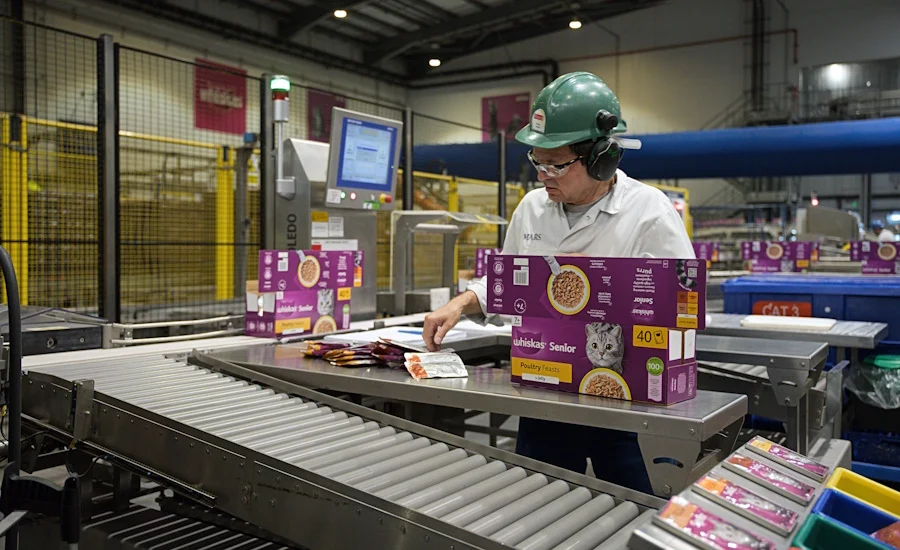
However, the most transformative aspect of the investment lies in the packaging hall. The facility is set to install state-of-the-art pouch production lines specifically engineered to handle mono-polypropylene (mono-PP) packaging. For decades, the pet food industry has relied on multi-layer flexible pouches—typically a complex sandwich of plastic and aluminum—to maintain the freshness and shelf-life of wet food. While effective at preservation, these multi-material laminates are notoriously difficult to recycle, as separating the fused layers is economically and technically challenging for most municipal recycling facilities. By transitioning to mono-PP, Mars is moving toward a single-material structure that is fully recyclable where the infrastructure exists. This shift is a technical milestone, as mono-materials must be engineered to provide the same thermal resistance and oxygen barrier properties as their multi-layer predecessors to ensure food safety and quality.
The decision to localize this high-tech production in the UK is a strategic maneuver within Mars’s wider European network. Nick Foster, the General Manager for Mars Pet Nutrition Northern Europe, characterized the investment as a "direct statement of confidence" in the British market. As the pet care sector continues to experience a "humanization" trend—where owners increasingly treat pets as family members and demand the same quality and sustainability standards for pet food as they do for their own—the ability to produce eco-friendly packaging at scale becomes a competitive necessity. The Melton Mowbray upgrade ensures that Mars can meet these evolving consumer expectations while navigating tightening environmental regulations across Europe, such as the UK’s Plastic Packaging Tax and the European Union’s Packaging and Packaging Waste Regulation (PPWR).
Beyond the technical and environmental metrics, the investment serves as a major catalyst for regional economic development and workforce evolution. Mars has confirmed that the modernization project will generate more than 30 high-skilled technical and engineering roles within the first twelve months of operation. These are not traditional manufacturing jobs; they are roles designed for the "Industry 4.0" era, requiring expertise in automation, digital systems, and advanced robotics. Furthermore, the company is significantly expanding its footprint in vocational education. The Melton Mowbray apprentice program, already a respected local institution, will see its permanent positions grow from 26 to 33 by the year 2027.
This focus on human capital is a hallmark of the Mars corporate philosophy. Across its various UK business units, the company currently supports more than 140 apprentices. These individuals are not just learning the ropes of food production; they are being immersed in a specialized curriculum that covers artificial intelligence, data analytics, and the management of digital ecosystems. By upskilling its "Associates" (the term Mars uses for its employees) in these future-facing disciplines, the company is creating a resilient workforce capable of navigating the complexities of modern manufacturing. The success of this approach is evidenced by the company’s staggering 97% permanent placement rate for apprentices who complete their training—a figure that far exceeds industry averages and highlights the efficacy of Mars’s internal career pathways.
The broader implications for the UK economy are significant. The investment aligns seamlessly with the British government’s stated ambitions for regional growth and the revitalization of the nation’s manufacturing heartlands. By choosing to invest in Melton Mowbray—a town famous for its culinary heritage—Mars is reinforcing the area’s status as a hub of food innovation. This move provides a much-needed boost to the local supply chain, from raw material providers to logistics partners, creating a multiplier effect that benefits the entire East Midlands region.
From a market perspective, the pet nutrition industry is currently navigating a period of rapid transformation. The global pet food market is projected to continue its steady growth, driven by an increasing pet population and a shift toward premium, health-focused, and ethically sourced products. Sustainability has moved from being a "nice-to-have" feature to a core driver of brand loyalty. Research indicates that modern pet owners are increasingly willing to switch brands if they perceive a product’s packaging to be environmentally harmful. By investing £161 million in recyclable pouch technology, Mars is positioning its core brands—Whiskas, Pedigree, and Sheba—to capture this conscientious consumer segment.
The move to mono-PP is also a response to the logistical challenges of the modern supply chain. Single-material packaging is often lighter and can be more efficient to transport, potentially reducing the carbon footprint associated with shipping. Moreover, as global brands face increasing pressure to adopt "circular" business models, the ability to recover and reuse packaging material becomes paramount. The Melton Mowbray facility will serve as a lighthouse for this transition, demonstrating how legacy manufacturing sites can be retrofitted with the technology required to participate in a circular economy.
In the context of Mars’s global operations, the UK remains a "cornerstone," as noted by Nick Foster. The Melton Mowbray site is one of several key facilities that feed the European market, and its modernization ensures that the UK remains at the forefront of the company’s technological advancement. This investment is not an isolated event but part of a broader, long-term strategy to ensure that Mars remains a leader in the pet care industry for generations to come. It reflects a holistic view of business success—one that balances financial performance with social responsibility and environmental health.
As the project progresses, the eyes of the packaging and food manufacturing industries will undoubtedly be on Melton Mowbray. The success of the smart optical sorting systems and the large-scale rollout of mono-PP pouches will provide a blueprint for other manufacturers grappling with similar sustainability challenges. For the people of Leicestershire, the investment promises a future of high-tech employment and economic stability. For pet owners, it promises a product that is not only nutritionally sound for their animals but also kinder to the planet. In total, the £161 million investment is more than just a factory upgrade; it is a bold declaration of intent, merging the traditions of British manufacturing with the innovations of the future.