
The global food packaging landscape is undergoing a seismic shift as sustainability mandates and consumer preferences converge to demand alternatives to traditional plastic. In a landmark move that signals a new era for the dairy and plant-based sectors, Tetra Pak has officially unveiled the Tetra Reva™, a pioneering paper-based packaging solution designed specifically for spoonable products. This launch represents a significant strategic pivot for the company, moving beyond its traditional stronghold in liquid beverage cartons and into the high-growth category of thick, textured foods such as yogurts, puddings, and soft cheeses. By introducing a "world-first" format that balances environmental responsibility with high-performance functionality, Tetra Pak is positioning itself to redefine the shelf aesthetics and consumer experience of the modern grocery aisle.
The introduction of Tetra Reva™ is not merely a product launch; it is a calculated entry into a category historically dominated by plastic pots and foil lids. For decades, the spoonable food market—encompassing everything from Greek yogurt to ricotta and dairy-free desserts—has relied on injection-molded or thermoformed plastic containers. While effective, these formats often present challenges in terms of recyclability, carbon footprint, and shelf differentiation. Tetra Pak’s new solution addresses these pain points by utilizing a predominantly paper-based structure that aligns with the global push toward a circular economy. The package is designed to accommodate a vast spectrum of textures, including protein-dense yogurts, desserts infused with fruit particulates, and spreadable soft cheeses like mascarpone and cottage cheese.
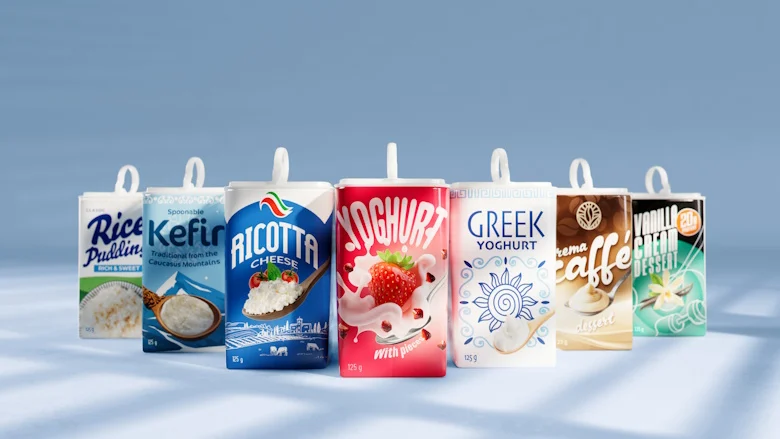
One of the most striking features of the Tetra Reva™ is its departure from the conventional round cup. The package utilizes a sophisticated square silhouette, a design choice that offers multifaceted benefits for both manufacturers and consumers. From a retail perspective, the square shape optimizes shelf space, allowing for a more efficient "facings" arrangement that maximizes product density. Furthermore, the flat surfaces of a square carton provide a significantly larger "canvas" for branding and storytelling. In an increasingly crowded market where plant-based alternatives and premium dairy brands compete for a split second of consumer attention, the ability to utilize high-quality, 360-degree graphics on a paper substrate offers a distinct competitive advantage.
Beyond aesthetics, the engineering of the Tetra Reva™ focuses heavily on the tactile and functional interaction between the consumer and the package. Central to this is the innovative pull-ring opening mechanism. Traditional foil lids on plastic yogurt cups are often criticized for being difficult to grip, prone to tearing, or splashing contents upon opening. Tetra Pak has reimagined this ritual by integrating a sturdy pull-ring that allows the user to peel back the lid in one smooth, continuous motion. This intuitive design not only improves accessibility for users with limited dexterity but also adds a premium, "satisfying" element to the unboxing experience. The full-top opening ensures that the product is fully accessible, allowing consumers to eat directly from the carton with a spoon without struggling to reach the corners—a common frustration with deep, narrow plastic pots.
The versatility of the Tetra Reva™ extends to the production floor, offering food processors a high degree of flexibility. The filling system is engineered to support both chilled and high-acid ambient production. This is a critical technical detail, as it allows brands to choose the distribution model that best fits their supply chain and sustainability goals. For instance, high-acid ambient production can significantly reduce energy consumption by eliminating the need for a continuous cold chain, thereby lowering the overall carbon footprint of the product’s journey from the factory to the consumer’s home. This flexibility makes the Tetra Reva™ an attractive option for a wide range of applications, from premium refrigerated organic yogurts to shelf-stable puddings and plant-based snacks.
The launch of Tetra Reva™ is underpinned by extensive consumer research, including a comprehensive study conducted in Italy in early 2025. The data revealed that consumers responded with overwhelming positivity to the package’s visual appeal and perceived robustness. In an era where "greenwashing" is a major concern, the tangible feel of a paper-based carton provides a physical cue of sustainability that resonates with eco-conscious shoppers. The research highlighted that the package’s practicality—specifically its stability and ease of use on the go—made it a preferred choice for modern, fast-paced lifestyles. Whether used as a desk-side snack or a quick breakfast during a commute, the compact lid and sturdy frame of the Tetra Reva™ cater to the "snackification" trend that continues to dominate the food industry.
This innovation is a cornerstone of Tetra Pak’s broader corporate strategy and its ambitious environmental roadmap. The company has committed to investing approximately €100 million annually through 2030 to accelerate the development of paper-based packaging solutions. This massive capital injection is focused on simplifying material structures, reducing the use of plastic films and aluminum layers, and increasing the renewable content of every package produced. By transitioning spoonable foods into paper-based formats, Tetra Pak is tackling one of the most visible sources of plastic waste in the food industry. The goal is to create a package that is fully renewable, fully recyclable, and carbon-neutral, thereby future-proofing the business against tightening environmental regulations across Europe and North America.
The move into the spoonable category also reflects a deep understanding of shifting dietary habits. The rise of plant-based diets has led to an explosion of almond, oat, and soy-based yogurts and desserts. These products often carry a "premium" or "health-conscious" price tag, and their packaging needs to reflect those values. Tetra Reva™ provides plant-based brands with a format that feels naturally aligned with their "earth-friendly" identity. Similarly, in the traditional dairy sector, there is a growing demand for high-protein, "clean label" products. The robust nature of the Tetra Reva™ carton protects the integrity of these sensitive recipes, ensuring that textures remain consistent and flavors stay fresh without the need for excessive preservatives.
From a logistics and supply chain perspective, the transition to square, paper-based cartons offers hidden efficiencies. Paper-based materials are often lighter than their plastic counterparts, and the ability to ship packaging material in rolls or flat-packed formats before filling can lead to significant reductions in inbound transportation emissions. Once filled, the square shape allows for better pallet utilization compared to round pots, which inherently create "dead space" during transport. These incremental gains in efficiency contribute to a lower total cost of ownership for manufacturers and a smaller environmental impact for the planet.
As Tetra Pak rolls out the Tetra Reva™ globally, the industry will be watching closely to see how quickly major dairy cooperatives and multinational food brands adopt the format. The transition requires an investment in new filling lines, but the long-term benefits of brand differentiation and regulatory compliance are compelling. The package represents a bold statement: that the future of food packaging is not just about what is inside, but how the exterior reflects the values of the modern world. By combining the convenience of a traditional pot with the sustainability of a carton, Tetra Pak has created a hybrid solution that addresses the most pressing challenges of the 21st-century food system.
In conclusion, the Tetra Reva™ is more than just a new box; it is a sophisticated response to a complex market. It satisfies the consumer’s desire for convenience and a premium experience, the manufacturer’s need for operational flexibility and branding space, and the global necessity for a reduction in plastic waste. As Tetra Pak continues its €100 million annual investment toward 2030, the Tetra Reva™ stands as a flagship of what is possible when engineering excellence meets environmental stewardship. It sets a new benchmark for the spoonable food category, proving that even the most established packaging norms can be reimagined for a more sustainable and user-centric future.