

In the modern discourse of environmentalism, the fashion industry has become a primary target for criticism, and for good reason. With global fiber production exceeding 110 million tonnes annually—a figure that has doubled since the turn of the millennium—the sheer volume of clothing entering the biosphere is unprecedented. In response, the industry has leaned heavily into a vocabulary of "circularity," "closed-loop systems," and "next-generation recycling." However, according to Brian London, president of the Secondary Materials and Recycled Textiles (SMART) Association, this focus on futuristic technology is often a distraction from a system that has been functioning effectively for decades: the global textile reuse market. London argues that the narrative surrounding textile waste is fundamentally flawed, driven more by misunderstanding and "circularity buzzwords" than by the economic and logistical realities of the trade.
At the heart of the debate is a disagreement over what constitutes "waste." For many environmental advocates and casual observers, a bale of used clothing shipped to a developing nation is viewed as a burden—a form of "waste colonization" where the Global North offloads its trash onto the Global South. London, however, insists that the definition of waste is not a philosophical or moral one, but an economic one. In the world of secondary materials, value is determined by the end consumer. If a garment can be sold, worn, and valued in a secondary market, it is not waste; it is a commodity. This market-driven process serves as a brutal but efficient form of quality control. Sorting operations, often referred to as "rag houses," are highly competitive businesses that operate on razor-thin margins. These facilities must accurately calibrate their shipments to the demands of their buyers. A sorter who consistently mislabels low-quality items as high-grade wearable goods will quickly find themselves without customers and out of business. Therefore, the market itself enforces a level of quality assurance that ensures "rewearable" items find a second life.
This market reality stands in stark contrast to the industry’s current obsession with fiber-to-fiber recycling. While the idea of turning an old polyester shirt back into a new polyester shirt is aesthetically pleasing and fits the "closed-loop" ideal, the technology to do this at a meaningful scale does not yet exist. Mechanical recycling often degrades fiber length, resulting in lower-quality textiles that must be blended with virgin materials, while chemical recycling remains energy-intensive and prohibitively expensive for most applications. London warns against "fetishizing" these nascent technologies at the expense of reuse. From both an ecological and social perspective, reuse is the superior option. It requires no chemical processing, minimal energy (largely for transport), and provides affordable, high-quality clothing to populations that might otherwise be forced to buy cheap, poorly made new garments. The hierarchy of sustainability is clear: reduce first, then reuse, and only when an item is truly at the end of its physical life should recycling be considered.
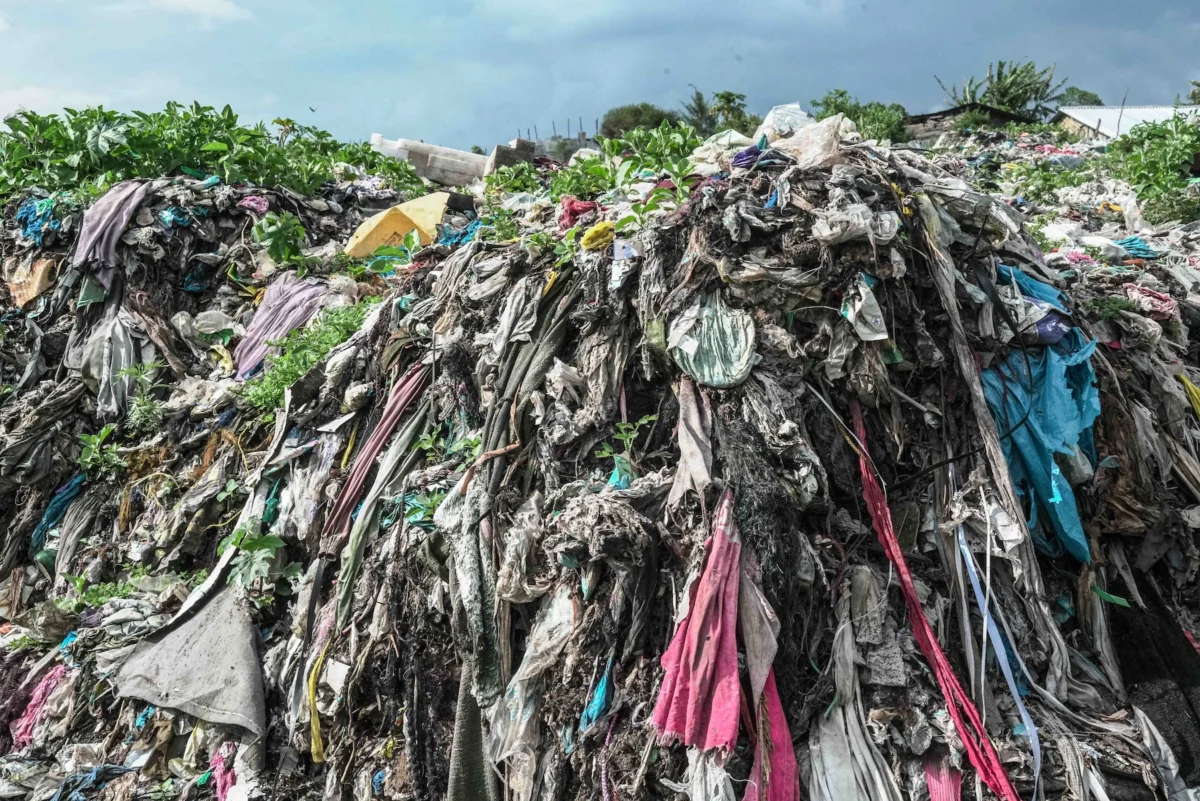
Despite the efficiency of the reuse system, critics frequently point to the visible piles of discarded clothing in places like the Kantamanto Market in Ghana or the Atacama Desert in Chile. These images have become powerful symbols of a "broken" system. London acknowledges these concerns but reframes the question of responsibility. Under the current economic model, a textile exporter’s responsibility typically ends once a market-viable item is delivered to a buyer. Expecting an exporter in the United States to manage the eventual disposal of a garment three or four steps down the line in a foreign country is, at present, economically unfeasible. However, London suggests a path forward through the strategic use of Extended Producer Responsibility (EPR) legislation.
Currently, EPR programs in Western markets—such as those being developed in California or the European Union—tend to focus on funding domestic collection and sorting infrastructure. London argues that this is a misallocation of resources. If the goal is truly to mitigate the environmental impact of textiles, EPR funds should be redirected toward the countries that receive the clothing. By investing in waste management infrastructure, modern landfills, and recycling facilities in nations like Kenya, El Salvador, or Ghana, the industry could close the gap between the economic benefits of reuse and the environmental challenges of final disposal. This shift would transform the conversation from one of "blame" to one of "capacity building."
Furthermore, the focus on disposal often obscures the true root of the problem: overproduction. The fashion industry’s reliance on synthetic fibers, particularly polyester, has created a mountain of material that is inherently difficult to manage. Polyester is essentially plastic, and its ubiquity in fast fashion means that even the most efficient reuse system will eventually encounter materials that cannot be easily repurposed or recycled. London points out that the industry’s fixation on the "end-of-life" phase allows brands to continue producing massive quantities of low-quality goods without addressing the materials they choose to use. If a garment is designed to fall apart after three washes, no amount of sorting or "circular" rhetoric can save it from becoming waste.
Compounding these issues is a pervasive data problem within the industry. London highlights a widely cited statistic—that only 15 percent of clothing is donated—as a prime example of how misinformation can drive policy. Despite being repeated in academic papers, news articles, and corporate sustainability reports, the actual methodology and origin of this figure are nearly impossible to trace. When such "zombie statistics" become the foundation for legislative action, the resulting policies often fail to address the reality on the ground. The same applies to the narrative that secondhand exports are merely a way of "sending problems away."
To counter this, London offers a different perspective based on the demand for used American clothing abroad. In countries like El Salvador, the arrival of a new shipment of American secondhand goods is often met with the same level of enthusiasm as a "Black Friday" sale in the United States. For these communities, the clothing is not a "problem" being dumped on them; it is a source of high-quality, durable, and affordable apparel that supports local entrepreneurs and small-scale retailers. "The biggest users of American used clothing are actually Americans," London notes, referring to the massive domestic thrift market, but the global appetite for these goods is what keeps the system viable.
Ultimately, the challenge lies in the ability to hold two seemingly contradictory truths at once. The global textile reuse system is undeniably imperfect; it results in environmental leakage in countries without robust waste infrastructure, and it is part of a broader industrial complex that encourages overproduction. However, it is also the most effective, large-scale carbon mitigation strategy currently available to the fashion industry. Every item that is re-worn instead of produced new represents a significant saving in water, energy, and chemical inputs.
The danger of the current narrative—which often paints the entire secondhand trade as a failure—is that it risks dismantling a functioning system before a viable alternative is ready. If activists and lawmakers push the idea that all exported clothing is "waste," they may inadvertently destroy the very markets that prevent millions of tonnes of textiles from entering landfills prematurely. Instead of trying to build a perfect, high-tech circular economy from scratch, London suggests that the industry should focus on refining and supporting the "gritty" reuse system that is already delivering results. This means moving beyond buzzwords and tackling the hard work of infrastructure investment, data accuracy, and, most importantly, a reduction in the sheer volume of new textiles produced. The narrative of textile reuse isn’t broken because the system has failed; it is broken because we have failed to see the value in what is already working. By re-centering the conversation on the economic and social benefits of reuse, the industry can find a more pragmatic and effective path toward true sustainability.